
JBL Boombox 4 Review: Massive Party Sound, Portable Energy — Is It Worth The Hype?
If you want bass that makes people pause mid-conversation and a battery that keeps the party going, the JBL Boombox 4 aims squarely at that need. Designed as a portable heavy-hitter, this speaker promises room-filling pro sound, two selectable bass modes, and long playtime — all wrapped in a weatherproof package that is built to travel.
Pros
- Very long battery life: advertised up to 34 hours with Playtime Boost.
- Powerful output and dedicated low end: dual woofers, two tweeters, and three passive radiators for punchy bass and clarity.
- IP68 waterproof and dustproof rating for real-world outdoor use.
- Replaceable battery and recycled materials in the build, which help longevity and sustainability.
- USB-C lossless playback option and Auracast multi-speaker connectivity for flexible setups.
Cons
- Still a sizable unit at 19.9 inches wide and roughly 13 pounds; portability is improved but not pocketable.
- No explicit onboard voice assistant integration listed, which some buyers expect in this price tier.
- Replaceable battery sold separately, adding potential extra cost for long-term ownership.
Sonics You Can Feel, Not Just Hear
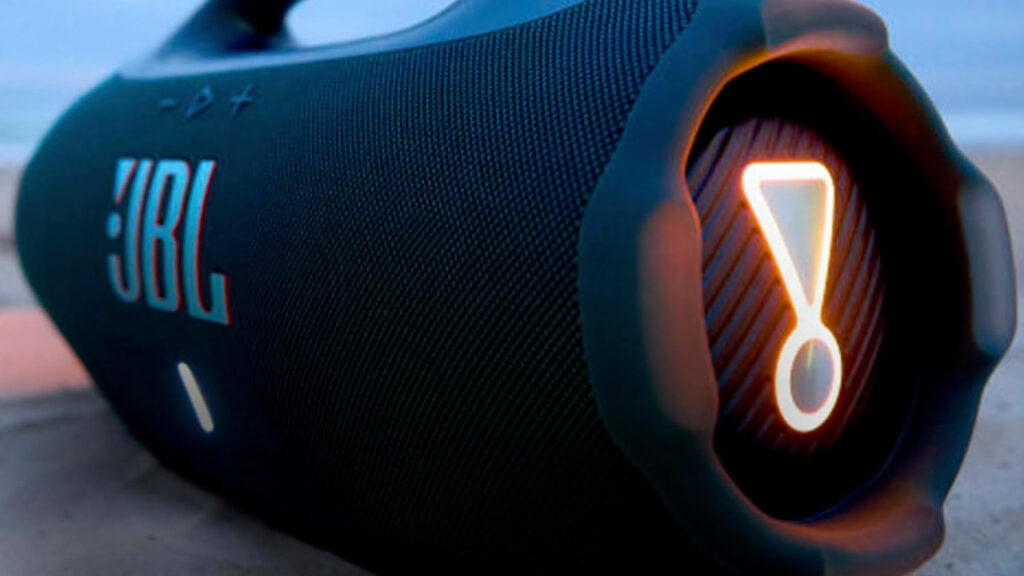
Image credit: JBL
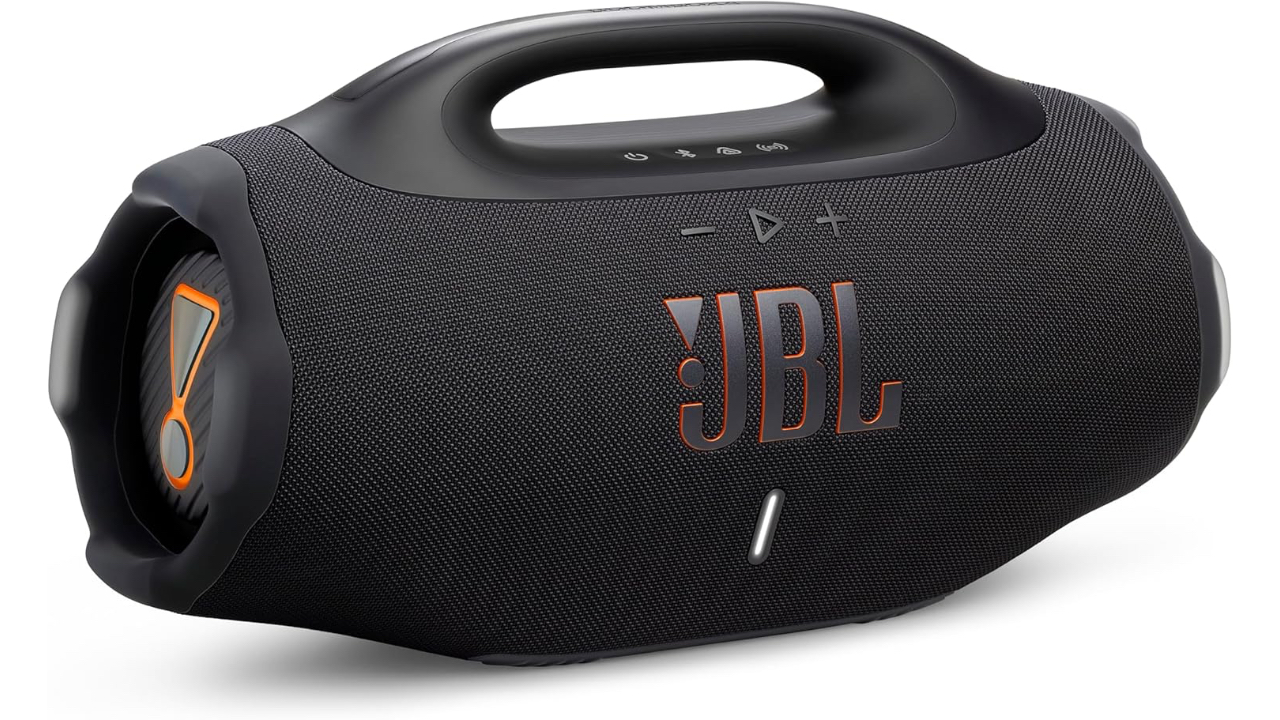
This speaker is built around a clear architecture: two larger woofers, two tweeters, and three passive radiators, tuned to deliver the kind of low-frequency slam you feel in your chest while keeping highs intelligible. The product emphasizes AI Sound Boost, a real time tuning feature that claims to analyze the music and alter the output to reduce distortion at louder volumes. Those hardware choices give the Boombox 4 a sound profile that favors boldness and impact, which is what listeners chasing a party speaker will notice first.
Quantitatively, JBL lists a maximum output power of 65 watts and a signal to noise ratio around 80 decibels. That output is aimed at delivering high average loudness while the multiple radiators help extend perceived bass without muddying mids. For buyers who track specs, the driver sizes are specified: woofers around 123 millimeters and tweeters at 20 millimeters, which is a sensible layout for a speaker that promises both deep bass and vocal clarity.
The speaker also offers two bass modes labeled Deep Bass and Punchy Bass, plus a visual Horn indicator for mode selection. Those modes give quick tonal control without needing an app. If you prefer your music with a heavier bottom end for outdoor parties or a tighter punch for gigging through playlists indoors, those distinct settings make it easy to match the vibe on the fly.
Stuff You Use Every Day
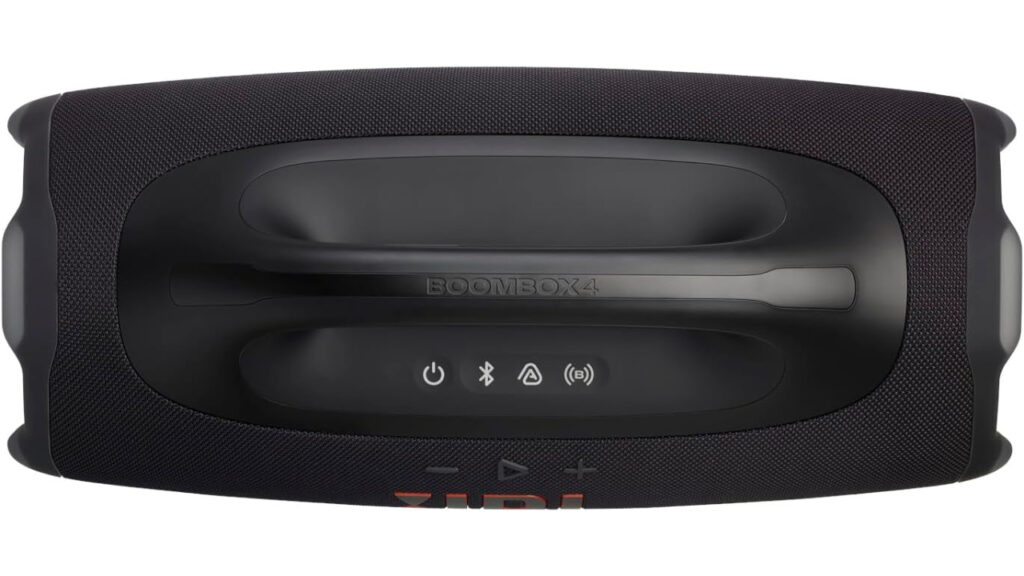
Image credit: JBL
The Boombox 4 is a deliberately physical product: an 8.4-inch depth by 19.9 inch width by 10.4 inch height footprint and a listed weight of about 13 pounds. That makes it large enough to anchor a party but still manageable for one person to move short distances. The exterior materials include post-consumer recycled plastics and fabric for the grille, and packaging is FSC certified, signaling some attention to sustainability and the long-term environmental cost of ownership.
Connectivity is modern and pragmatic. The speaker uses Bluetooth for wireless audio with the current version listed as 5.4, and it also exposes a USB-C port for lossless audio playback from compatible sources. There is Auracast multi-speaker connection for pairing multiple Auracast enabled JBL speakers and an explicit two speaker stereo pairing mode. For practical use this means flexible placement and the ability to expand coverage without complicated wiring.
Controls are located on the top panel and include physical toggles for bass mode and pairing. The design favors straightforward interaction over inundating the user with feature menus. There is no bulleted claim of built-in voice assistant support in the official details, so users expecting that feature should check region specific marketing or future firmware updates. The battery is user replaceable though sold separately, which is a rare plus for devices in this category but does require a separate purchase if you want to keep the unit in service long term.
How It Handles Real Use Cases
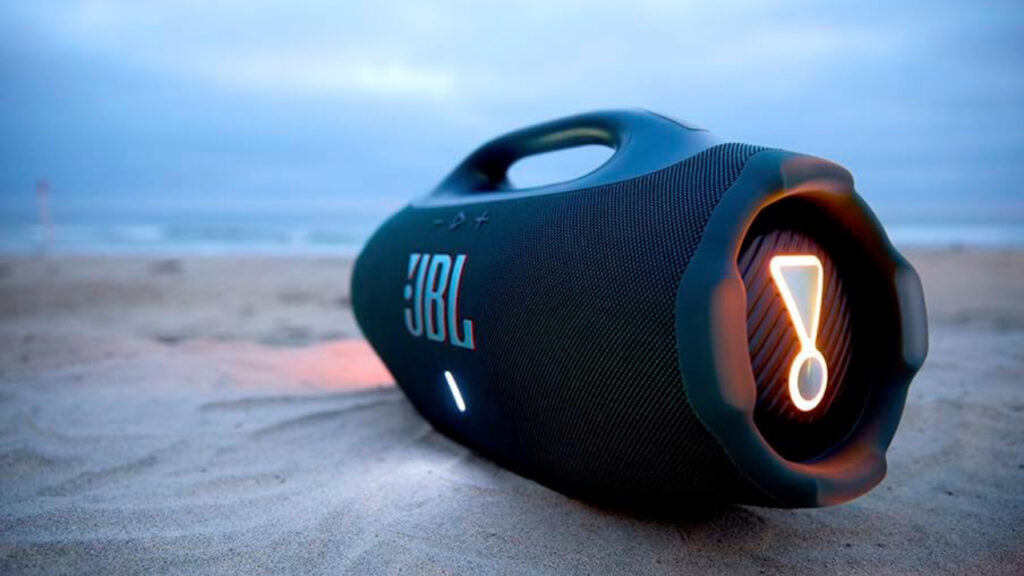
Image credit: JBL
For day long outdoor gatherings and extended playlists, the Boombox 4 is positioned to be a reliable workhorse. JBL advertises up to 28 hours of standard playback with an additional Playtime Boost mode that adds up to 6 hours for a total of 34 hours under the marketed conditions. That kind of runtime removes a lot of battery anxiety for long events and travel. The replaceable battery option also widens the possibility of multi day use without sitting by a wall outlet.
The IP68 waterproof and dustproof rating gives practical protection in environments where splash, dust, or brief immersion can occur. That degree of sealing suits beach days, poolside hangs, and rainy backyard events, and the listed rugged packaging and recycled plastic construction suggest JBL expects this unit to be used away from living room comforts. It is neither the smallest nor the lightest option, but the tradeoff is the bigger driver array and enclosure volume that create the low frequency energy people buy boomboxes for.
There are, however, ownership notes to keep in mind. Even though battery life is long, heavy use at maximum volume will shorten real world runtime. The replaceable battery is a welcome design choice but the extra cost and availability of spares will factor into total cost of ownership. Also, the absence of explicit smart assistant integration narrows hands free control options for some buyers who want voice enabled playback and home assistant routines.
Practical Considerations and Edge Cases
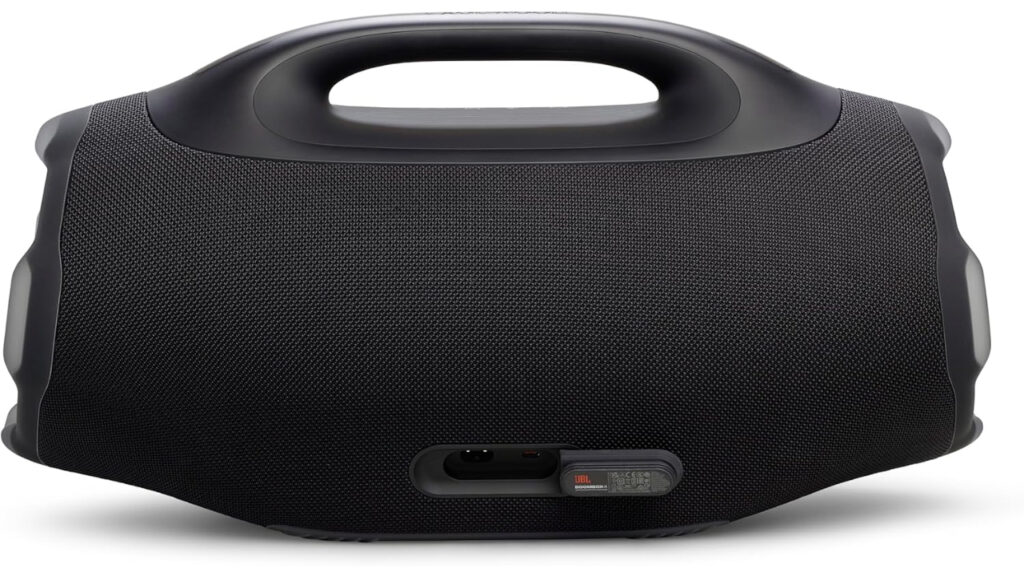
Image credit: JBL
Setup is straightforward: charge the included battery, use Bluetooth 5.4 for pairing, and toggle bass preferences on the top panel. The package contents include the AC power cord, quick start guide, safety sheet, and warranty card. There is no mention of proprietary docking or mandatory subscriptions, so the device functions without additional software purchases, but some advanced features will depend on whether your source supports lossless output over USB-C.
Storage and portability are realistic tradeoffs. While lighter than the previous generation, the speaker’s form factor still requires a fair bit of trunk or porch space. If you plan to carry it long distances by hand the weight and size will be a factor. On the flip side the IP68 rating and replaceable battery make it better suited to rugged itinerant use than many smaller party speakers that cannot be serviced or exposed to water.
Compatibility wise, the Auracast multi speaker feature opens the door to larger setups when more coverage is needed, and the USB-C lossless capability gives listeners with high resolution sources a path to improved fidelity. Buyers who prioritize compactness or integrated voice assistants may want to look at smaller alternatives, but for owners who want physical power and long runtime the Boombox 4’s practical choices line up with those priorities.
Conclusion: Should You Buy JBL Boombox 4?
If your priority is massive, portable sound with an emphasis on bass, long battery life, and outdoor resilience, the JBL Boombox 4 delivers clear, measurable strengths: multiple drivers and passive radiators for deep output, a long-advertised runtime up to 34 hours, and an IP68 rating that supports real world outdoor use. The main tradeoffs are the speaker’s physical size and the extra cost of a replaceable battery if you want extended life beyond the built-in cell. This is a strong pick for people who need a party grade portable speaker and are willing to accept the size and potential accessory costs. Casual listeners who need ultra-compact solutions or integrated voice assistants should consider other formats.