
Philips Portable CD Player Boombox Bluetooth With Cassette Player Review: Old School Tape Energy With Modern Streaming Ease
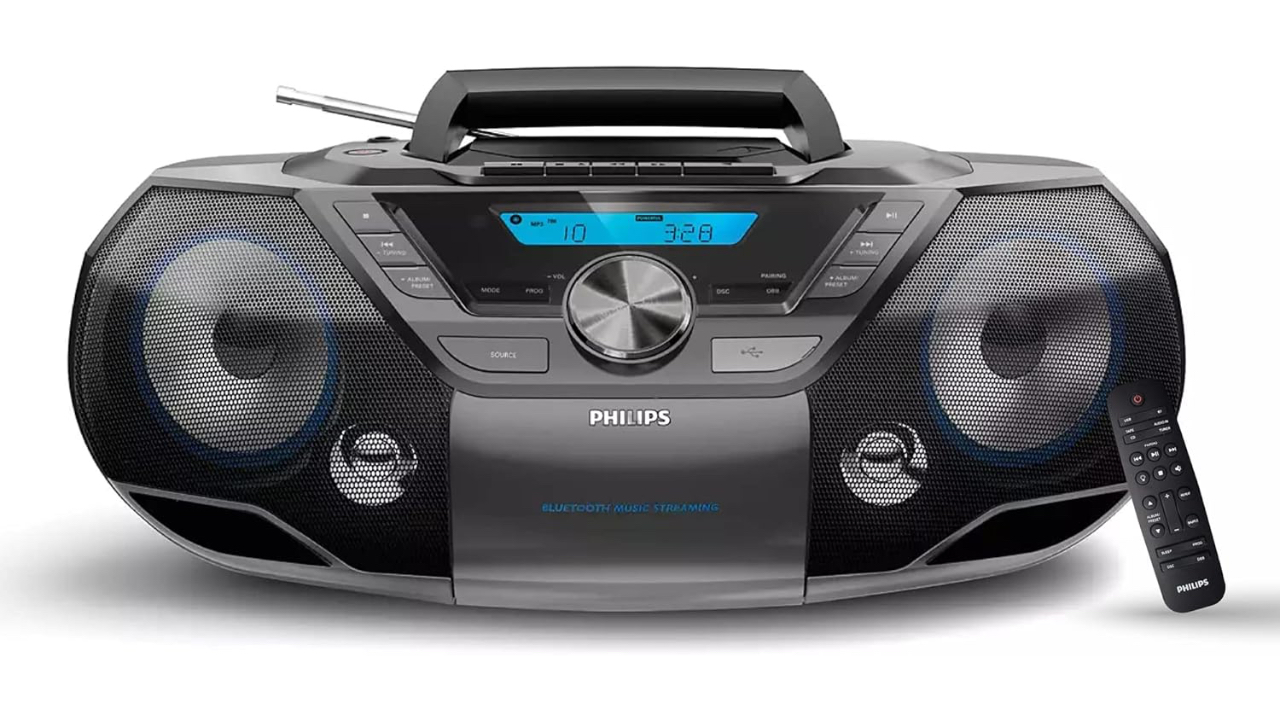
This Philips portable CD player boombox folds classic cassette and CD functionality into a modern Bluetooth and USB-equipped package, aimed at people who want retro playback without giving up today’s conveniences. If you want a single shelf or garage-friendly stereo that can handle cassettes, CDs, FM radio, Bluetooth streaming, and USB sticks up to 128 gigabytes, this Philips boombox review walks you through whether that one-box approach will solve your all-in-one audio needs.
Pros
- True all-in-one playback: CD, cassette, FM radio with 30 presets, Bluetooth wireless streaming, and USB MP3/WMA playback up to 128 GB provide broad format coverage for mixed media collections.
- Dual stereo speakers with bass reflex design offer fuller low end from a compact cabinet; the unit lists a 15-watt AC power rating for home use.
- Practical controls and a backlit LCD make navigation straightforward; remote control included adds convenience for couch or workshop listening.
Cons
- Battery operation requires six LR20 D cells for the main set which increases ongoing cost and weight for portable use.
- USB playback supports FAT32 only, not exFAT or NTFS, so files or very large single files may need reformatting or splitting.
- The design leans toward home and garage use rather than pocket portability given its 10.6 by 17.12 by 6.69-inch footprint.
All Your Music, One Box, Zero Drama
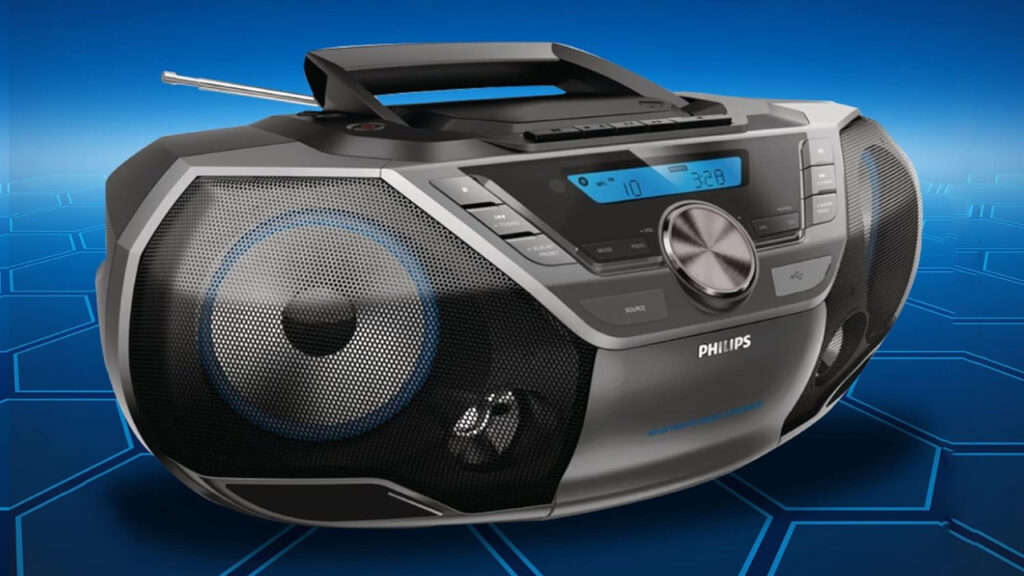
Image credit: Philips
This boombox is built around a multi-format playback philosophy. It pairs a top-loading CD player, front cassette deck, FM tuner with digital tuning and 30 station presets, Bluetooth wireless streaming, and a USB port that reads MP3 and WMA files. The breadth of formats means you can rotate between an old mixtape, a burned CD, live FM, or a phone stream without swapping hardware. The USB input supports drives up to 128 gigabytes formatted FAT32 which gives large libraries a place to live without extra adapters.
Audio hardware centers on dual stereo speakers in a compact cabinet and bass reflex technology to boost low frequency response from a relatively small enclosure. The listing identifies the system as stereo with a 15-watt AC power rating when plugged into 120-volt, 60 hertz mains. For domestic listening the combination of stereo separation and bass reflex design is intended to give a fuller sound than simple mono portable radios while still keeping size and power consumption moderate.
Connectivity extends beyond wireless streaming via Bluetooth. There is an auxiliary in for non-Bluetooth devices and a headphone jack for private listening. Those options preserve flexibility for different listening contexts, like an old MP3 player or a laptop without Bluetooth. In short, the core feature set is broad by design so the unit functions as a single hub for legacy media and modern sources.
Thoughtful Design That Keeps It Simple
The boombox presents a straightforward user interface: large control buttons, a backlit LCD display, and a remote control that uses a single AAA battery. The backlit display and sizable buttons help when you are changing tracks or stations in low light or from across the room. The unit is available in a black and blue colorway and lists item dimensions at 10.6 by 17.12 by 6.69 inches, so it fills a shelf or workbench more than a backpack.
Build and power choices reflect practical tradeoffs. Philips offers both AC power and battery operation using six LR20 D cells for the main set. That gives true portable capability at the cost of weight and running expense when you are away from an outlet. The included AC cord and low 15 watt draw keep plugged-in operation simple for home use while the battery option lets you move the unit around the yard or to a picnic if you are willing to carry the power penalty.
The listing also calls out an upgraded FM antenna for better reception and a USB capacity increase to 128 gigabytes. Those are small but meaningful design choices if you want reliable radio reception and large flash drive playback without juggling multiple devices. The inclusion of both a headphone output and an aux cable in the box keeps the unit useful with wired equipment as long as you accept the physical footprint.
How It Actually Fits into Everyday Listening
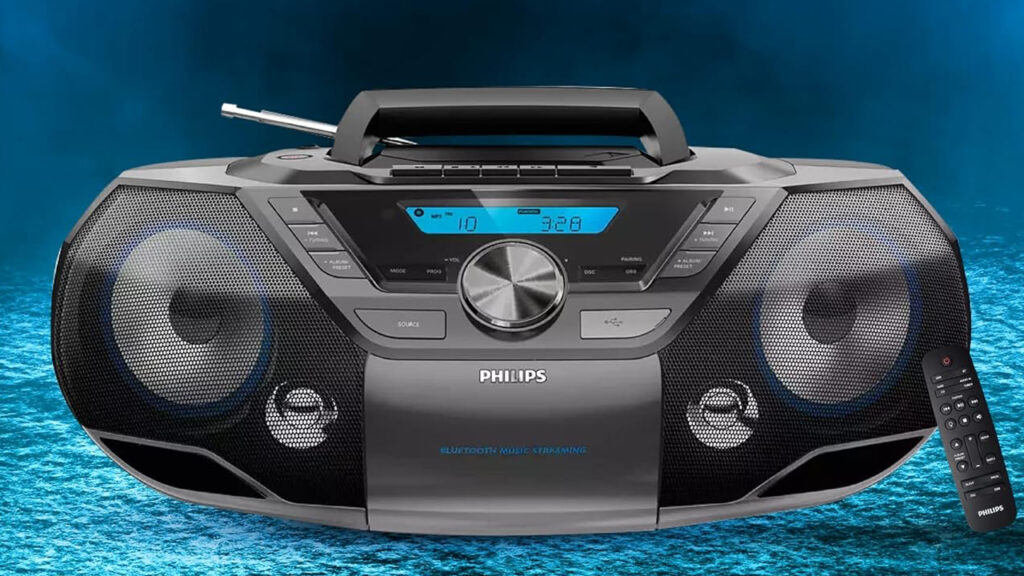
Image credit: Philips
Bluetooth streaming is marketed as stable with extended wireless range for phone or tablet connections. In practical terms this makes the boombox useful for modern playlists and podcast listening when you do not want to plug in a device. The CD and cassette paths preserve legacy collections, with the cassette deck enabling direct tape playback for long standing mixes or archival cassettes. That versatility helps households that still have mixed media lying around.
For radio use, the unit’s digital FM tuner and 30 station presets simplify finding and saving favorite stations. The listing highlights an upgraded FM antenna which should help reception in suburban spaces where antenna gain matters. USB playback supports MP3 and WMA files but requires FAT32 formatting which is an important constraint for very large flash drives or single files over FAT32’s size limits.
Power and portability reflect tradeoffs you will handle in daily life. Running on AC delivers the 15-watt output and avoids the weight of D cell operation. Batteries give mobility with real world costs in terms of battery weight and replacement expense. If your use is mostly home or garage listening the AC option dominates, but if you expect to take this kit to the park or a construction site you will want to factor in the D cell requirement.
The Small Details That Could Make or Break It
Setup should be plug and play for most users. Insert a CD or cassette, pair a Bluetooth device using the standard pairing flow, or plug a USB stick formatted FAT32 into the port. The product ships with a 30-day return policy for refund or replacement which gives a short window to confirm fit and function. The unit is sold through Amazon and appears as an Amazon’s Choice product with hundreds sold in recent months which can be useful context for availability and fast shipping.
Maintenance is straightforward. Keep CD and cassette pathways clean and avoid exposing the cabinet to moisture or high dust for cassette longevity. The cassette deck and mechanical transport are the most service sensitive components over the long term so if you rely heavily on tape playback plan for occasional belt or head maintenance down the road. The inclusion of an aux input and headphone jack reduces wear on the main speakers if you use headphones frequently.
Compatibility limits worth noting are the USB file system requirement and the battery choice. USB drive users will need FAT32 formatting which may require reformatting large drives or using smaller drives. Portable users should budget for LR20 D cells which are less common in everyday carry and add weight. The unit is best suited to shoppers who want a one-box solution that supports both legacy media and modern streaming rather than those seeking ultra-portable or ultra-high-fidelity audio gear.
Conclusion: Should You Buy Philips Portable CD Player Boombox?
If you want a single, no fuss audio hub that plays cassettes and CDs while offering Bluetooth streaming, FM with many presets, and USB playback up to 128 gigabytes, this Philips boombox is a sensible pick for home, workshop, or casual outdoor use; skip it if you need pocket portability or the absolute highest audio fidelity.