
Leaf Blower Safety for Effective Yard Cleanup
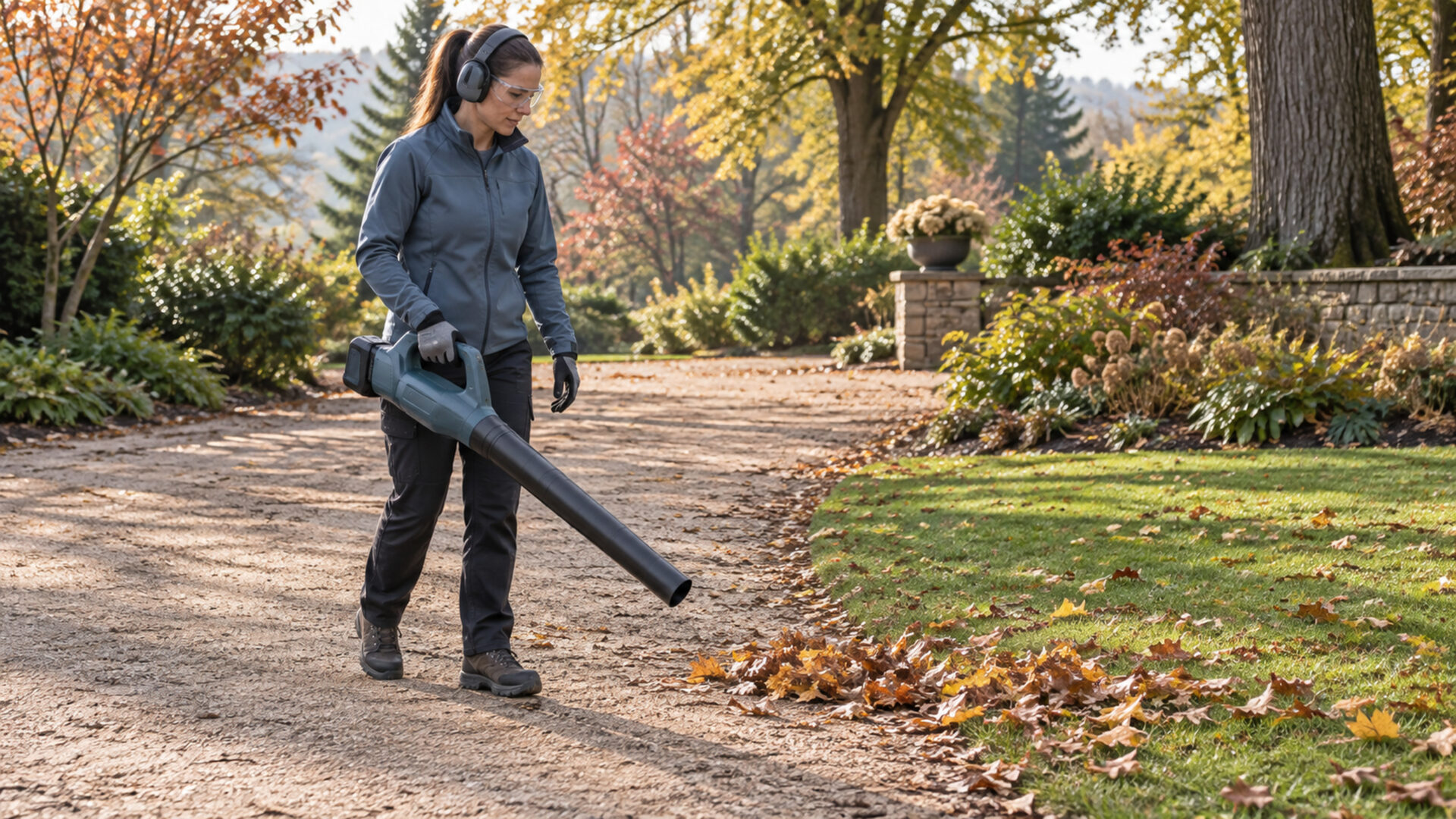
Leaf blower safety starts with the right equipment, a clear work area, and enough control to keep debris where it belongs. The aim is to gather leaves efficiently without sending grit toward a window, dust toward a neighbor, or exhaust into an enclosed space. A few minutes spent checking the tool and planning the route can prevent a cleanup job from creating a second, less pleasant job.
Choose the tool for the route
Match the blower to the places you need to clear. Corded models suit areas within safe extension-cord reach. Battery models make it easier to move between separated areas, while gas backpack machines require fuel preparation and engine care. The best leaf blowers comparison explains those purchase tradeoffs. Whatever the power source, the operator manual for the exact model should be available before assembly or use.
Learn how to stop the blower, adjust its output, and isolate its power before maintenance. Check that the required tube and protective parts are installed correctly. A borrowed tool needs the same preparation as one you own. Familiarity with another blower does not establish the correct fuel mixture, battery compatibility, or extension-cord requirement for this one.
Look at the job before deciding that a blower is necessary. A broom may be easier for a few leaves on a step, and a rake can loosen a compacted patch without sending dust into the air. Using the smallest effective method is often faster than setting up equipment that is excessive for the task.
Dress for flying debris and moving air
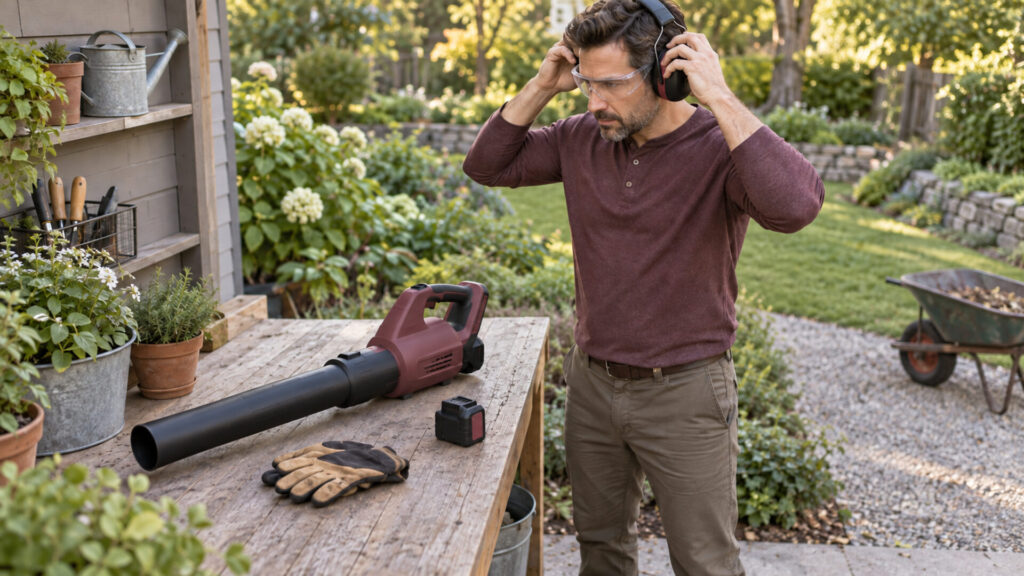
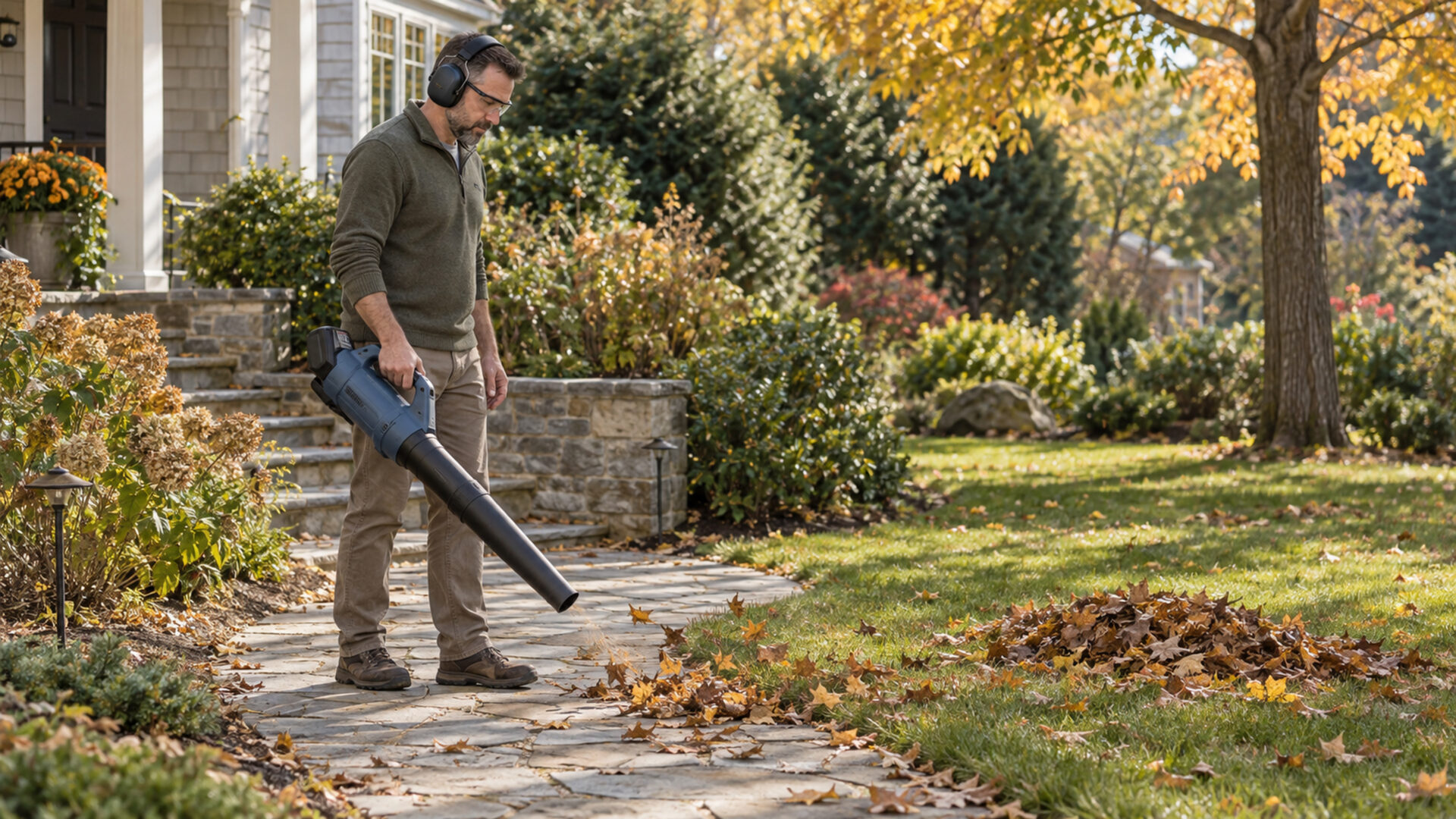
Wear suitable leaf blower safety glasses or goggles, hearing protection intended for noisy work, sturdy closed footwear with secure footing, and appropriate gloves. Ordinary music headphones or active noise cancellation are not a substitute for rated hearing protection. Electric blowers still generate noise, and the absence of an engine does not remove the need to protect your eyes from grit and small debris.
Secure long hair and avoid loose clothing, scarves, dangling jewelry, or anything that could reach the air intake. Choose clothing that allows you to move and see your footing without loose material flapping near the blower. A backpack harness should be adjusted before operation, with straps and attachment points checked for damage. Make sure you can follow the manual’s removal procedure if you need to take it off promptly.
Dust needs prevention as well as protection. Avoid blowing fine dust, chemicals, animal waste, ash, or material that may be hazardous. Use an appropriate cleanup method for the substance instead. Where ordinary yard dust cannot be controlled, follow the equipment guidance for respiratory protection suitable for the exposure. A mask should not become a reason to turn a dusty area into an airborne cloud.
Inspect the area before switching on
Walk the route and remove objects that could become projectiles or cause a trip. Check for stones, glass, toys, loose wire, and branches. Identify parked cars, windows, open doors, people, pets, and neighboring areas that should not receive the debris. Establish a collection point on your property before you begin. Avoid sending leaves into roads, drains, or someone else’s yard.
Keep bystanders and animals outside the exclusion distance specified by the blower’s manual, and stop when anyone approaches. General manufacturer guidance commonly recommends a generous separation, but the instructions for the actual machine control. If the site cannot provide enough separation, wait or use another method. Hearing protection and engine noise can make an approaching person harder to notice, so keep looking around the working area.
Check the blower as well as the yard. Look for a damaged tube, loose connection, blocked intake, leaking fuel, damaged battery, or worn cable. Verify that controls operate correctly before starting the main job. Do not use defective equipment on the assumption that the cleanup will only take a moment. A short task still gives a damaged tool time to fail.
Handle each power source correctly
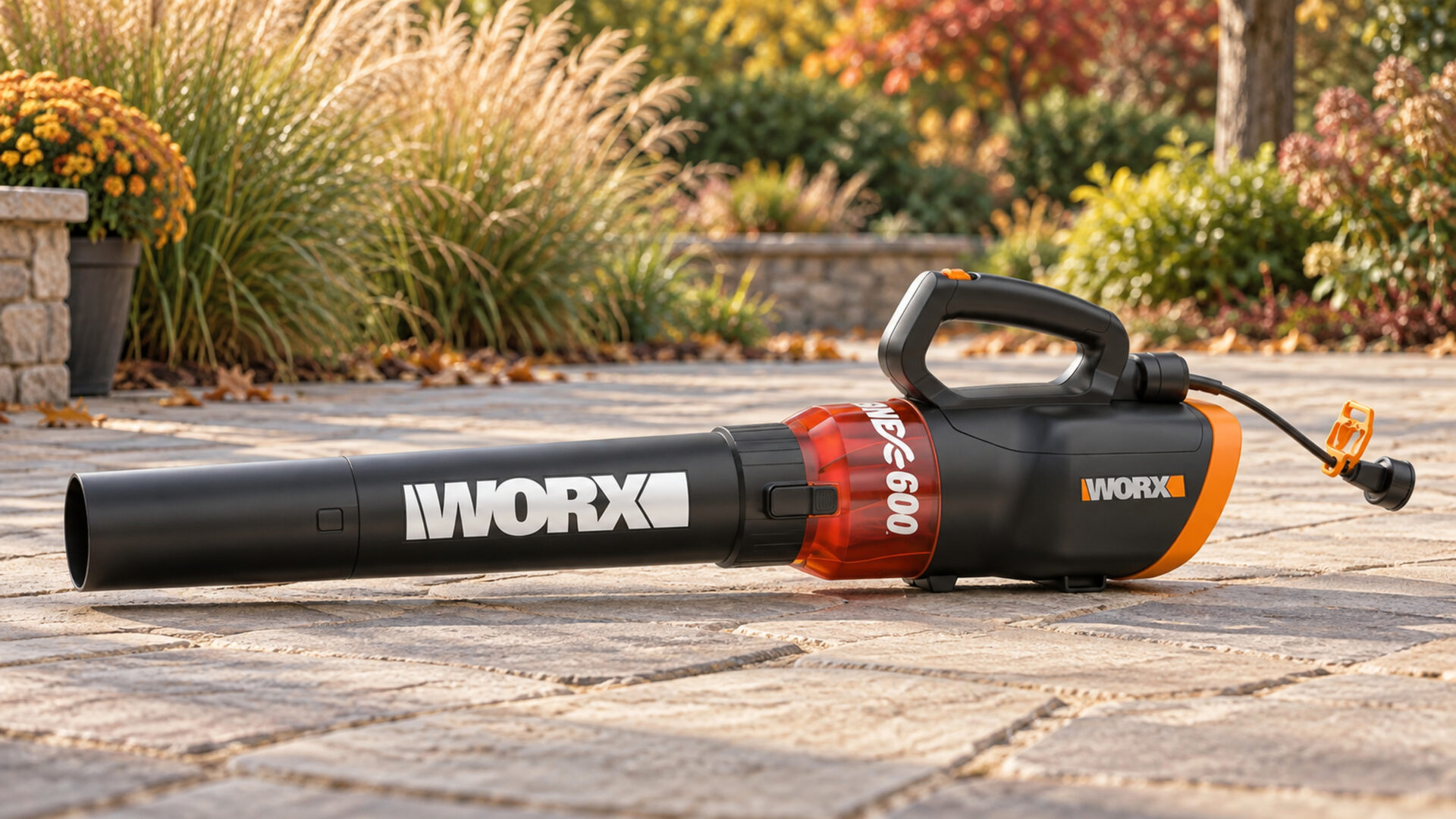
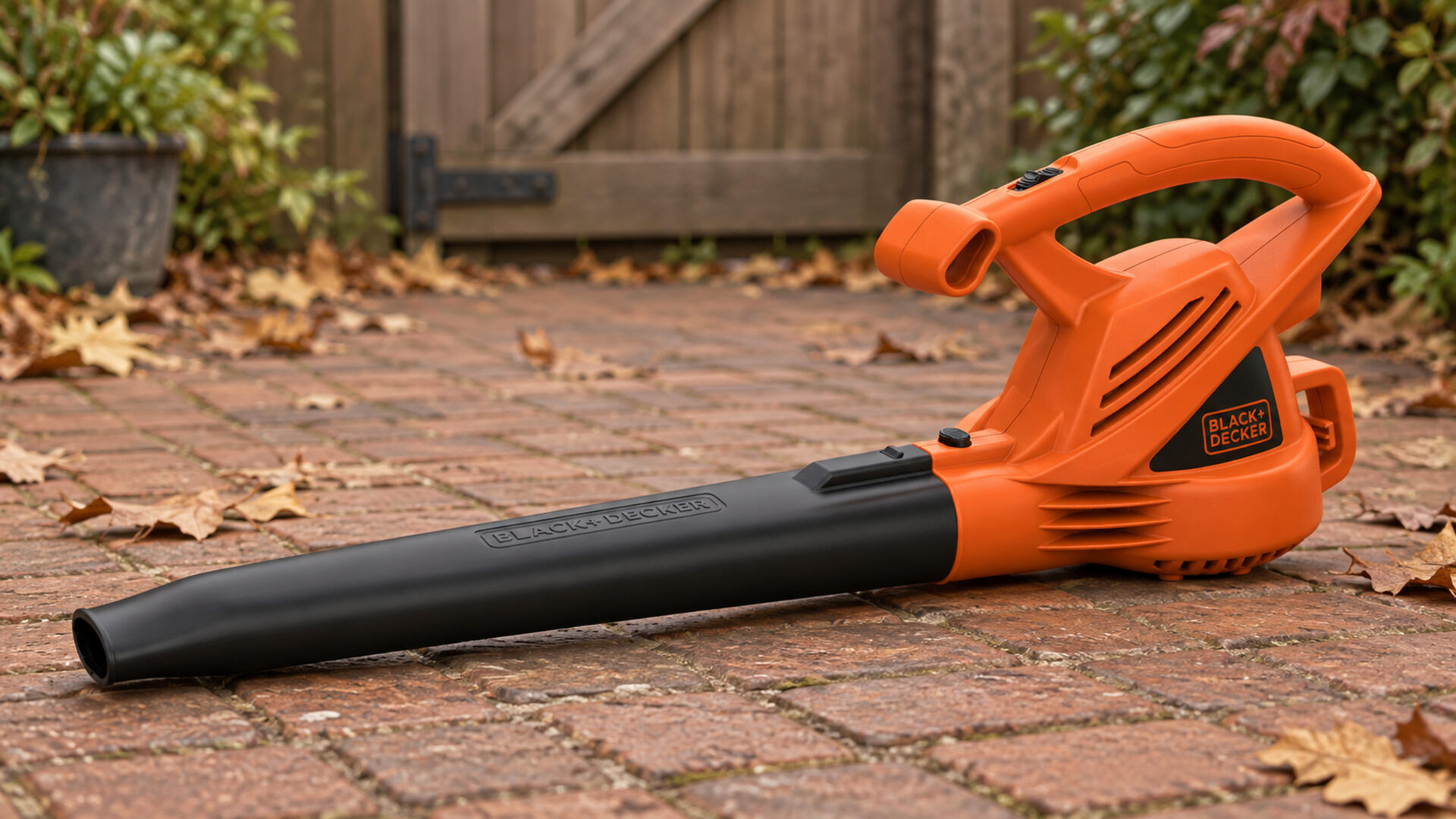
For a corded blower, use an outdoor-rated extension cord of the gauge and length required for the tool’s current draw. Inspect the insulation and plug, use the electrical protection required by the manual, and keep connections dry. Route the cord away from traffic and sharp edges. Stop to release snags rather than tugging on the connection, and unplug before clearing, assembling, or servicing the tool.
For a battery blower, use the approved battery and charger combination. Remove the battery before adjustments, assembly, or cleaning. Do not use a pack with swelling, visible damage, leakage, or abnormal overheating. Keep battery terminals away from loose metal objects and follow the battery instructions for charging and storage temperatures. Charge in the specified environment rather than leaving the charger exposed beside the work area.
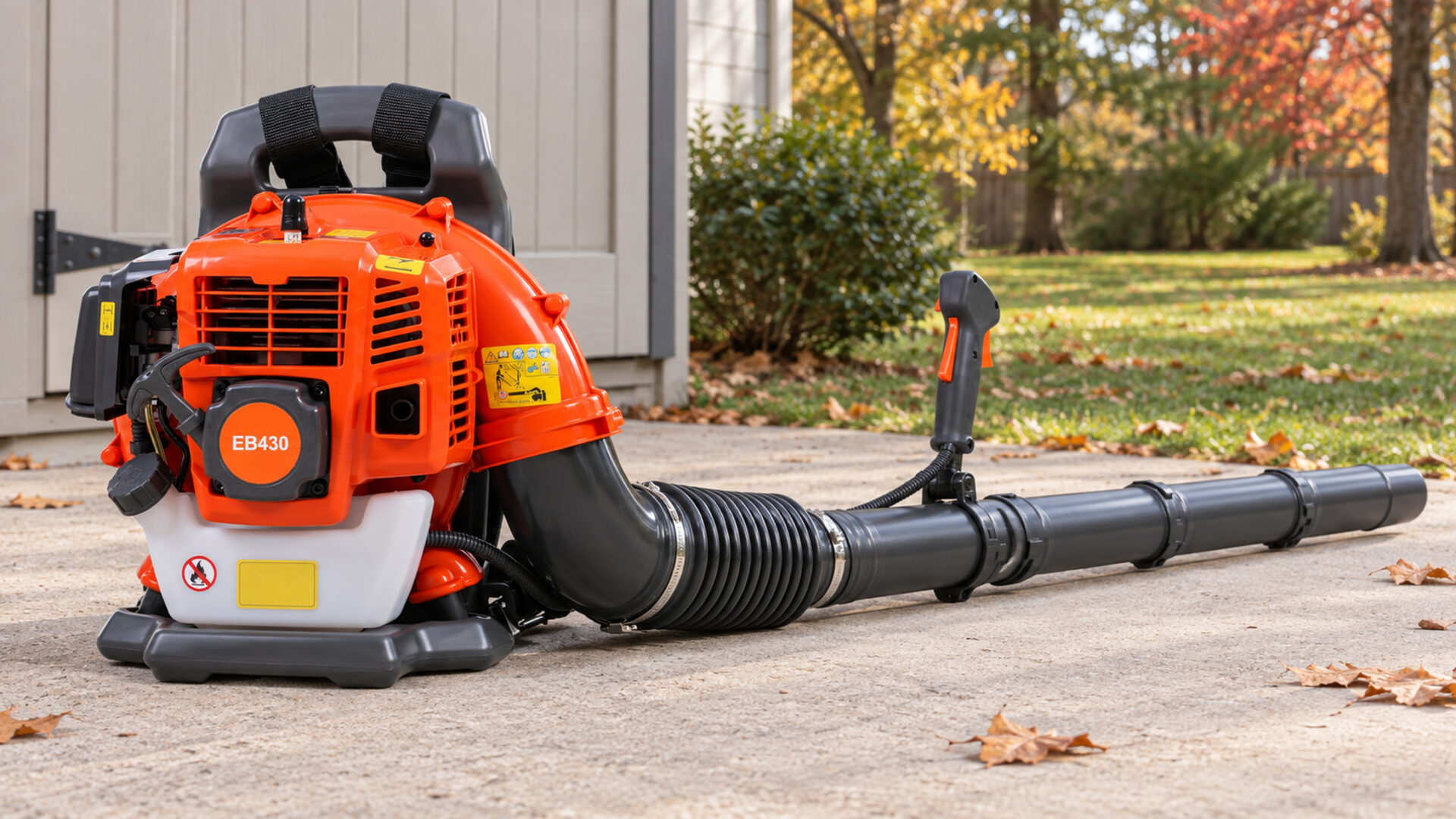
For a gasoline blower, follow the exact model’s fuel and starting instructions. Never guess a fuel-to-oil ratio from another machine. Refuel outdoors with the engine stopped and cooled, away from ignition sources, using an approved container. Address spills or leaks before restarting and follow the manual’s required separation from the fueling area. Operate only outdoors where exhaust cannot build up or enter an occupied space. Do not run a gas blower in a garage, even with the door open.
Move leaves in sections you can finish
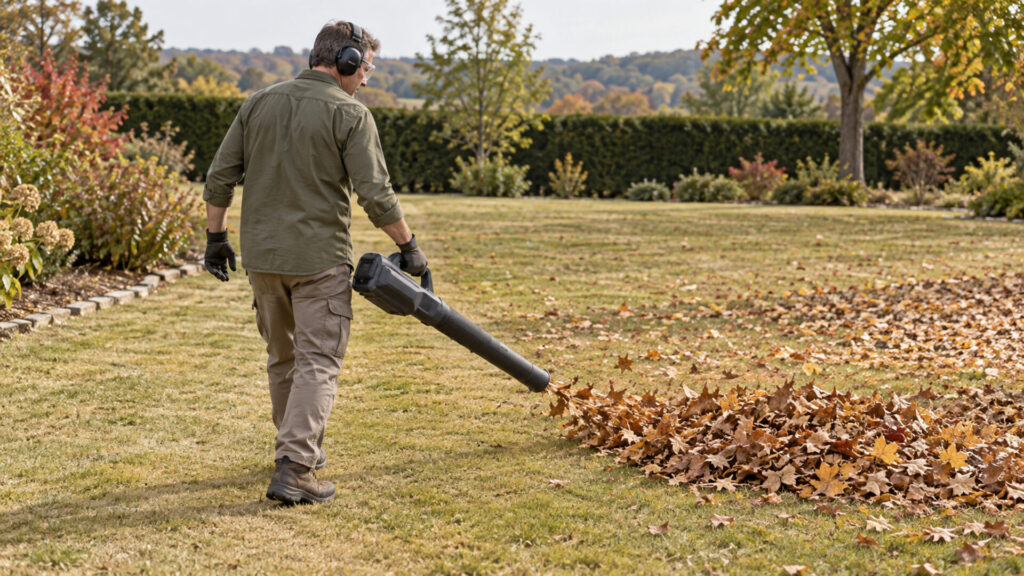
Choose a calm day with conditions permitted by the equipment instructions. Start at the outside of a manageable section and guide the leaves toward the collection area. Keep the nozzle at a useful shallow angle and use controlled passes. Begin with low output when available, then increase only enough to move the material. Maximum power everywhere often means collecting the same leaves twice.
Use your feet to follow the clearing line instead of leaning far forward or twisting your wrist. Keep stable footing and stay on the ground. Do not operate from a ladder or overreach to clear gutters. Special attachments should be used only when approved for the machine and according to their instructions. A nozzle extension is not permission to improvise a safe working position.
Create several manageable piles rather than one growing wall of leaves. Gather each section onto a tarp or into appropriate containers before a gust scatters it again. A rake is useful for the final collection and for leaves tangled in grass. Take breaks to collect material and reassess the route, and stop if you become tired enough that footing or control deteriorates.
Treat wet leaves and wet weather separately
Leaves can remain damp after the weather clears, but that does not establish whether a blower is safe to operate in the surrounding conditions. Follow the exact tool’s rain and moisture restrictions. Keep corded equipment and electrical connections away from wet conditions, and do not assume a battery tool’s weather rating makes it suitable for immersion or unrestricted use in rain.
When damp leaves form a mat, loosen them with a rake or allow them to dry if practical. Trying to move the entire layer at once can waste energy and create an awkward pile. Do not confuse blowing with vacuuming: a blowing-only tool does not draw leaves through its tube for collection. If debris enters an intake or there is an obstruction, stop and isolate the power before inspection, following the manual’s procedure.
Avoid high wind, poor visibility, and unstable footing. Stop if dust or debris is moving where it cannot be controlled. Keep the blower away from fire and hot ashes, and do not use it to disperse fertilizers or chemicals. The tool’s ability to move a material is not evidence that moving it with air is appropriate.
Finish with collection and safe storage
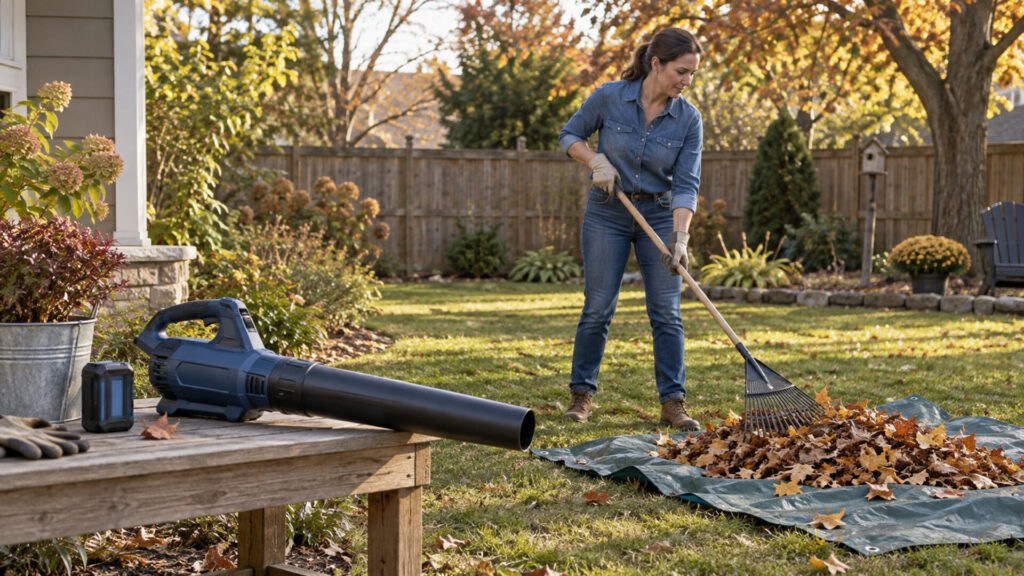
Collect the piles using the disposal or composting method appropriate for the material and local requirements. Leave walking surfaces clear and check that no debris has been pushed into a drain or onto a neighboring area. Where leaves can appropriately remain in a planted area, avoid disturbing them simply to create a uniformly bare surface. Cleanup should have a purpose beyond chasing every leaf.
Stop and isolate the blower’s power before cleaning. Let a gasoline engine cool before storage, and follow its specific fuel-storage instructions rather than applying one universal rule to every engine. Keep the tool dry and secure, store fuel only in approved containers and locations, and follow the battery maker’s storage directions. Inspect the cable or harness as you put the equipment away so damage is addressed before the next use.
Leaf blower safety starts with you. Check local rules for permitted equipment and operating hours. Even when operation is allowed, choose a reasonable time and use only the output needed for the job. Keeping debris under control and the session purposeful is good neighborhood practice. The leaves do not care what time it is. The people next door probably do.