
Best Leaf Blowers for Practical Yard Cleanup
The best leaf blowers match your cleanup area, power access, and tolerance for batteries, cords, or engine maintenance. A small patio beside an outlet calls for a different purchase than a long route around a tree-filled property. More power can help with heavier leaf cover, but it cannot make an awkward extension cord disappear or keep a battery running indefinitely.
| Best Overall | Best for Makita LXT Owners | Best Budget | Best Backpack | Best Corded |
|---|---|---|---|---|
| EGO POWER+ LB6504 | Makita XBU03SM1 | BLACK+DECKER LB700 | Thalorus 52cc T692 Pro | WORX WG520 |
 |  |  |  |  |
| Cordless reach and adjustable output. Includes a 5.0Ah battery and charger; high output shortens runtime. | An 18V LXT kit for routine cleanup. Includes a 4.0Ah battery and charger; allow for charging breaks. | A compact corded option for small jobs near an outlet. Modest airflow and simple on/off control. | Gas backpack format with adjustable output. Consider carrying fit, fuel care, and warranty support. | Substantial airflow with variable speed. No battery charging, but requires a suitable extension cord and outlet. |
These five picks cover cordless convenience, a familiar battery platform, a modest budget, backpack carrying, and sustained corded work. Choose by the job you repeat: how much material you move, where you need to reach, and what happens when the initial charge or tank runs out. The equipment that is easiest to prepare and put away often gets used most.
Best Overall EGO POWER+ LB6504 Leaf Blower
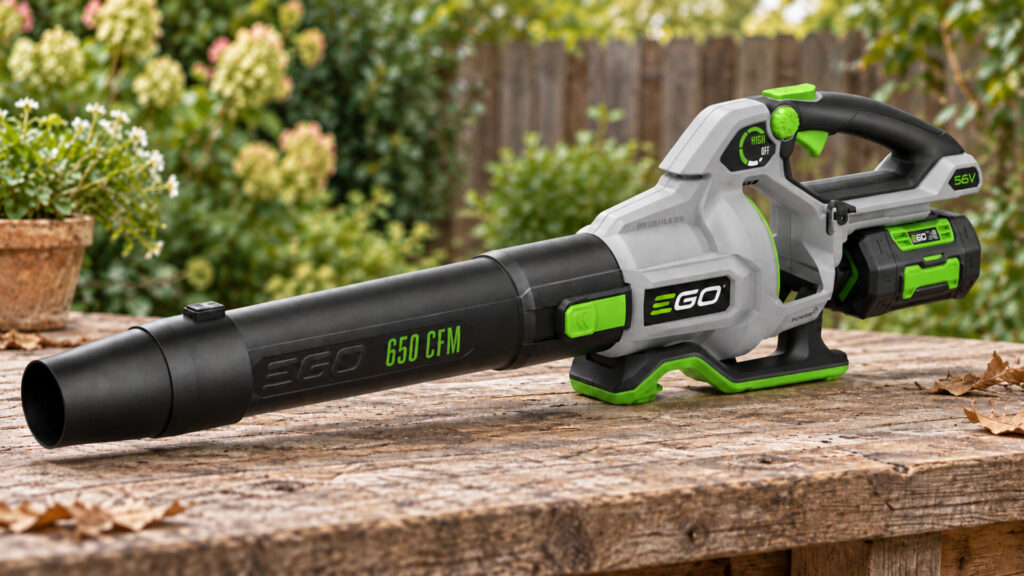
- Cordless reach for moving between separate cleanup areas.
- Adjustable output with a boost setting for tougher patches.
- A 5.0Ah battery and charger included in the kit.
The EGO POWER+ LB6504 Leaf Blower provides the most versatile combination in this selection for homeowners who want to avoid both a cable and a gasoline engine. Maximum airflow reaches 650 CFM, and the included nozzles offer different airflow shapes. The useful distinction is its ability to adjust output as the job changes, from a hard-surface sweep to heavier leaf clearing. Plan around working speed, however: high output uses the battery much faster than gentle cleanup. EGO’s manual gives approximately 15 minutes in boost mode with the 5.0Ah battery. The kit is especially attractive if that battery can serve other compatible EGO equipment. For a long continuous session, allow for charging or another pack rather than assuming cordless means uninterrupted.
Best for Makita LXT Owners Makita XBU03SM1 Cordless Blower Kit
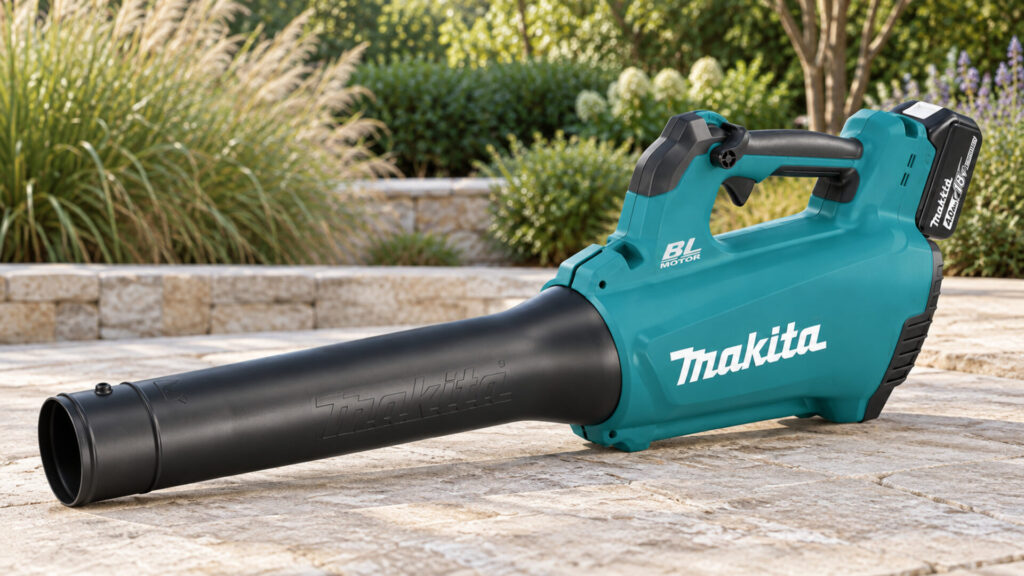
- Fits the Makita 18V LXT battery system.
- Variable trigger and cruise control suit routine cleanup.
- Includes a 4.0Ah battery and charger for a complete starting package.
The Makita XBU03SM1 Cordless Blower Kit is a natural choice when compatible LXT batteries already have a place in the shed. Its 459 CFM maximum airflow suits regular outdoor maintenance, and cordless operation makes scattered cleanup areas easier to reach. This is a better recommendation for short, repeated jobs than for continuous maximum-output leaf clearing. Spare batteries can extend the work, but they add cost if the platform is new to you. Existing owners should compare the included battery and charger with equipment they already have. The value lies in how well the blower joins that system, rather than in an assumption that one kit is always the best bargain for every buyer.
Best Budget BLACK+DECKER LB700 Electric Leaf Blower
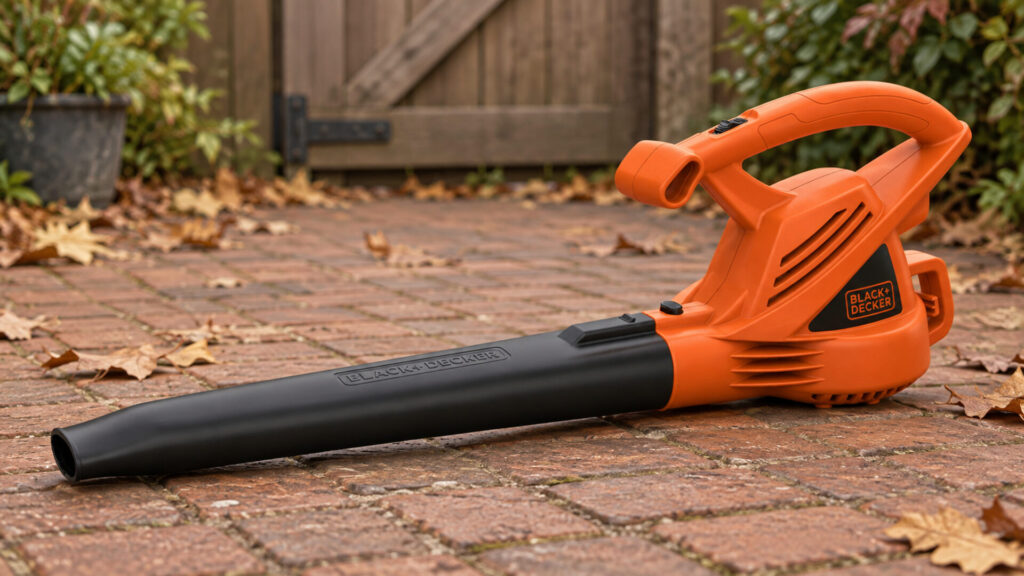
- Simple plug-in operation for occasional outdoor cleanup.
- Compact handheld format for small, accessible areas.
- Cord retention helps prevent accidental disconnection.
The BLACK+DECKER LB700 Electric Leaf Blower is the modest purchase for a modest job. A patio, short walkway, or small driveway close to an outdoor outlet can be a good match for its 7-amp motor and 180 CFM maximum airflow. It avoids a battery charging routine and gasoline preparation, but you need a correctly rated extension cord. The simple on/off control and lower air volume make it less adaptable than the larger options here. Choose it for loose leaves and clippings in manageable sections, not for a deep seasonal carpet across a large lawn. Include the cost and storage of the cable when comparing complete purchase prices.
Best Backpack Thalorus 52cc Gas Backpack Leaf Blower
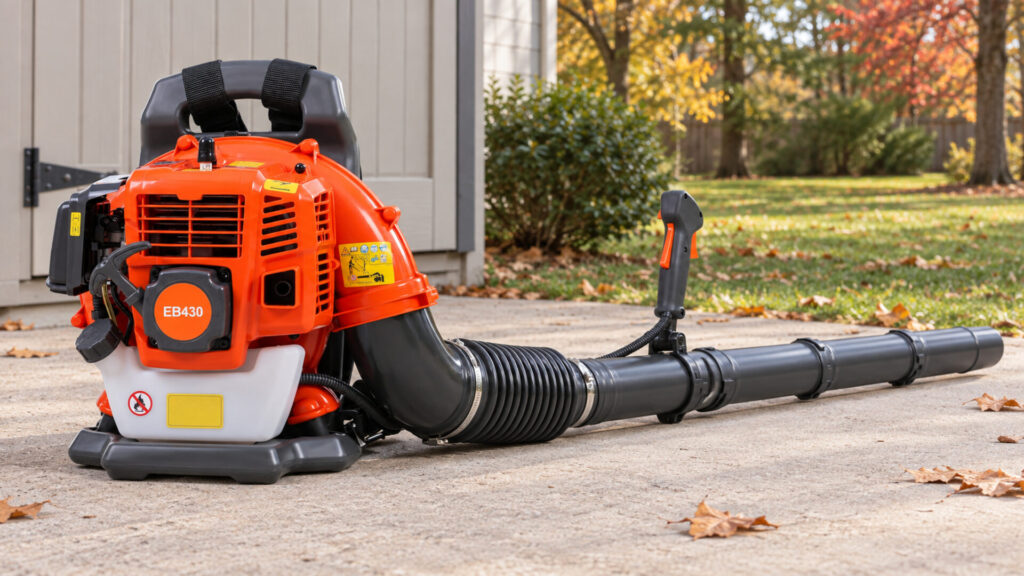
- Backpack format moves the main load away from the working hand.
- Adjustable output and cruise control for longer passes.
- Gas power supports movement beyond extension-cord reach.
The Thalorus 52cc Gas Backpack Leaf Blower fills the backpack role with the orange T692 Pro configuration, advertised at 550 CFM and 230 MPH. Its padded harness and cruise control are relevant for buyers who expect sustained outdoor clearing and prefer to carry the engine on their back. The advertised weight is 17 pounds, so fit and comfort still require attention. Gasoline handling, engine care, and storage are part of ownership, and the advertised two-year manufacturer warranty deserves a check of its actual terms and service arrangements. This is a conditional recommendation for the backpack format, not a claim of independently established durability or a guarantee that one tank will finish a particular property.
Best Corded WORX WG520 Electric Leaf Blower
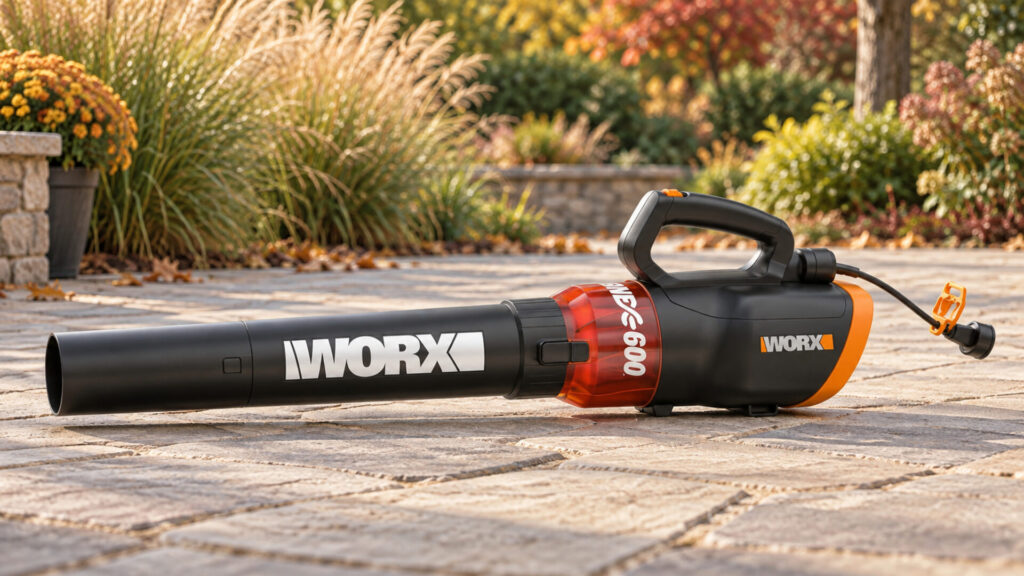
- Up to 600 CFM for residential leaf-clearing work.
- Variable speed helps manage different surfaces.
- Plug-in power avoids battery charging breaks and fuel preparation.
The WORX WG520 Electric Leaf Blower is the stronger corded option for a property that accommodates the cable. Its 12-amp motor provides substantially more maximum air volume than the smaller BLACK+DECKER, while variable speed helps reduce unnecessary disturbance around borders. The 6.4-pound machine still needs a suitable outdoor extension cord, dry connections, and a route that avoids snags. It is appealing for longer sessions within comfortable outlet reach. It does not vacuum or mulch leaves, so have a collection plan once the blowing is finished. When the cable can stay out of the way, steady corded operation can be more convenient than interrupting a job to charge.
Why a leaf blower can earn its storage space
A blower is useful for gathering loose material across hard surfaces and open areas where sweeping or raking every square foot would be slow. It can move leaves out of corners and consolidate them for collection. The best use is selective: clear walking surfaces, gather the material that needs removal, and avoid stripping every planted area simply because air can reach it. A leaf blower moves the debris; it does not make disposal somebody else’s problem.
Regular small cleanups can also be easier than allowing a thick layer to accumulate. Dry, loose leaves generally need less effort to gather than damp, compacted material. A blower can handle the moving while a rake loosens difficult patches and a tarp carries the finished pile. Those tools work well together. The rake has survived several generations of engine technology for a reason.
For a few leaves on the doorstep, a broom may still be quicker once setup and storage are counted. Buy a blower when the recurring work justifies the equipment, rather than expecting every small outdoor task to benefit from a motor.
How to choose a blower for your property
Start with access. If a suitable outlet and extension cord comfortably cover the whole route, corded power can be straightforward. Count obstacles as well as distance: beds, gates, parked vehicles, and furniture all affect cable management. Battery power removes that cable, but its convenience depends on having enough charge for the work. Gasoline offers another way to keep moving, with fuel and maintenance responsibilities in exchange.
Compare complete working packages. A bare cordless tool needs a compatible battery and charger; a corded blower needs an appropriate cable; an engine-powered blower needs the correct fuel arrangements and ongoing care. Existing equipment can change the arithmetic. A battery system already used for other tools is more useful than a brand name considered in isolation.
Read CFM and MPH together. Air volume and airspeed describe different aspects of the output, and neither is a universal score for yard-clearing ability. Variable control can be as useful as the maximum rating when the route includes planted borders or loose surfaces. For battery models, examine runtime at the output you expect to use, not just the longest advertised duration.
Consider carrying comfort and protection. Handheld designs load the arm, while backpacks transfer the main load to the body. Neither arrangement fits everyone. Use appropriate eye and hearing protection, keep bystanders clear, and check local operating rules before buying or using a blower. Noise figures from different listings may use different measurement methods, so a simple decibel ranking can be misleading. The leaf blower safety guide covers preparation, controlled clearing, and storage.
Choose the power source you can live with
The EGO is the flexible overall pick here, Makita suits LXT households, and BLACK+DECKER covers modest work near an outlet. Thalorus provides the backpack option for buyers prepared for engine ownership, while WORX is the substantial corded choice. Choose the route and workload first, then the machine. A well-matched blower should make cleanup easier from the moment it leaves storage until the leaves are collected and the tool is put away.
Best Leaf Blowers FAQ
What is the difference between airspeed and air volume in leaf blowers?
Airspeed (measured in miles per hour, MPH) indicates how fast the air is moving out of the blower, which is useful for moving heavier debris. Air volume (measured in cubic feet per minute, CFM) indicates the amount of air being moved, which is crucial for clearing large areas of leaves and lighter debris. Both metrics are important when evaluating a leaf blower’s performance.
How loud are leaf blowers, and can I find quieter models?
Leaf blowers can be quite loud, with noise levels often ranging from 60 to 100 decibels. Quieter models are available, particularly among electric and battery-powered blowers. If noise is a concern, look for models specifically designed for quieter operation, and always wear hearing protection while using any leaf blower.
What are some tips for using a leaf blower effectively?
To use a leaf blower effectively, follow these tips:
Are leaf blowers suitable for large properties?
Yes, leaf blowers are suitable for large properties, especially gas-powered and high-capacity cordless models, which offer longer run times and greater power. Backpack blowers are particularly useful for large areas due to their powerful performance and ergonomic design, allowing extended use without significant fatigue.
How can I maintain my leaf blower to ensure it lasts?
Proper maintenance includes regularly cleaning the air filters, inspecting and replacing spark plugs if necessary, and keeping the blower free of debris. For battery-powered models, ensure the battery is charged and stored properly. Always follow the manufacturer’s maintenance instructions to keep your leaf blower in good working condition.
What are the environmental considerations when using a leaf blower?
Gas-powered leaf blowers can emit pollutants and contribute to noise pollution. To mitigate environmental impact, consider using electric or battery-powered models, which are quieter and produce no emissions. Additionally, use your leaf blower during appropriate hours to minimize noise disturbances.
Can leaf blowers be used in wet conditions?
While some leaf blowers are designed to handle wet leaves and debris, using electric models in wet conditions can be hazardous due to the risk of electric shock. Gas-powered and certain battery-powered blowers can be used, but caution is advised. Always check the manufacturer’s guidelines for specific recommendations regarding wet conditions.
Are there specific attachments that can make a leaf blower more versatile?
Yes, many leaf blowers come with or have optional attachments available to enhance their versatility. Common attachments include vacuum kits for collecting debris, gutter cleaning kits for hard-to-reach areas, and concentrator nozzles for increased airspeed. These attachments can help tackle a variety of tasks beyond just blowing leaves.
How should I store my leaf blower during the off-season?
Store your leaf blower in a cool, dry place away from direct sunlight. For gas-powered models, drain the fuel before storing to prevent engine issues. Keep batteries charged and store them properly for battery-powered models. Regularly inspect and clean your blower before storing it to ensure it’s ready for use when needed again.