
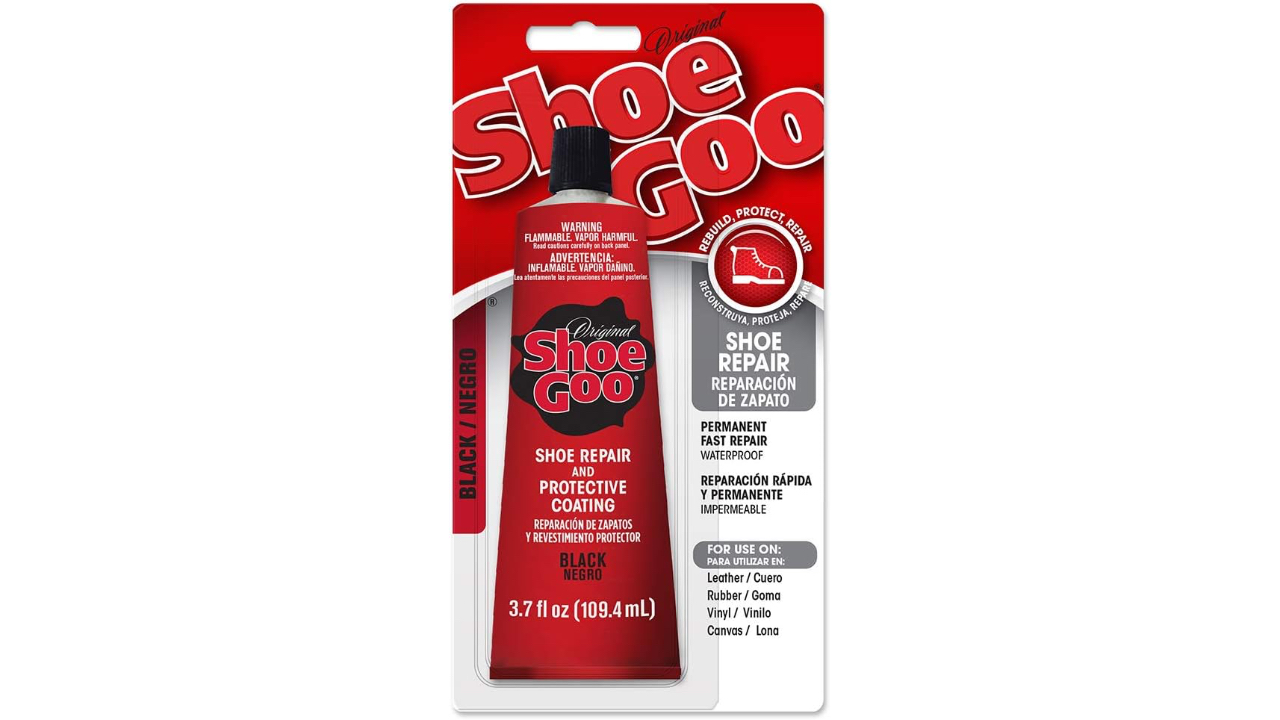
Shoe Goo 110212 Adhesive, 3.7 Fl Oz, Black Review: A Tough, Flexible Fix For Worn Footwear
For anyone who has watched a favorite pair of boots, sneakers, or work shoes begin to fail at the seams, the difference between replacement and repair often comes down to the right adhesive. Shoe Goo 110212 Adhesive is built for exactly that moment, offering a waterproof, flexible bond designed to restore worn soles, rebuild damaged heels, and extend the life of footwear that still has plenty left to give. In a market crowded with quick fixes and generic glues, this formula remains a purpose-built solution for people who value durability over disposability.
Pros
- Waterproof, flexible repair formula designed for shoes, boots, waders, and skate shoes, with clear use cases for sealing and rebuilding worn areas.
- Practical cure profile for repair work, with tack time around 2 to 3 minutes, set time around 20 minutes, and full cure in about 24 hours for thin film applications.
- Strong published performance numbers, including 2,300 psi tensile strength and 1,100 percent elongation, which point to a bond that is meant to flex instead of crack.
- The 3.7 fl oz black tube is a sensible size for repeated repairs on dark footwear and high wear areas.
Cons
- It is solvent based and carries a California Proposition 65 warning for toluene, so ventilation and careful handling are part of the deal.
- Thick applications can take 48 to 72 hours to fully cure, so this is not the right choice when a fully finished repair is needed right away.
- UV resistance is listed as none unless painted over, which means exposed repairs may need some extra thought if they live outdoors full time.
- The formula can thicken in cold storage, and the tube works best when brought back to room temperature before use.
Built For the Parts of Shoes That Fail First
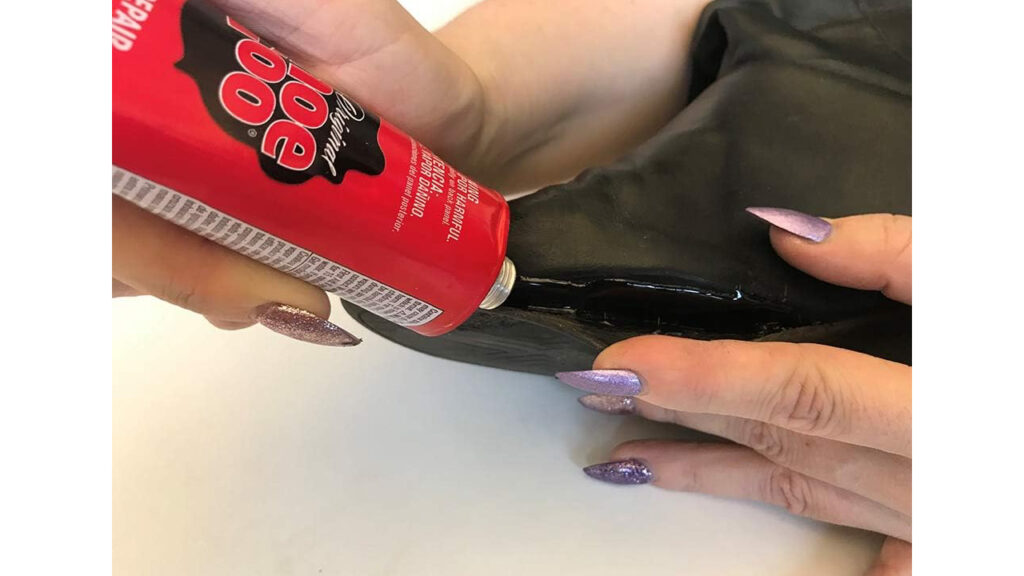
Image credit: Eclectic Products
Shoe Goo is a contact adhesive and sealant, and that description is honest in the best possible way. It is built for the rough jobs that make footwear look tired before the rest of the shoe gives up, including sole separation, heel damage, loose insoles, frayed lace ends, and small holes in boots or rubber gear. The black version in this 3.7 fl oz tube is the model 110212, and the size is generous enough to handle several repairs without feeling like a one and done emergency packet.
The headline technical numbers do a lot of the talking. Tack time lands at 2 to 3 minutes, set time at about 20 minutes, and full cure is 24 hours for thin film work, with thicker applications stretching to 48 to 72 hours. That gives the product a working pace that rewards patience and careful placement rather than frantic squeezing and immediate use. It is the sort of adhesive that remembers the bench tool era, when a repair was something you left alone long enough to become permanent.
The cured material is where the product earns its reputation. The published tensile strength is 2,300 psi, elongation is 1,100 percent, and hardness is 80 Shore A, which points to a bond designed to move with the shoe instead of hardening into a brittle patch. The service temperature range runs from minus 40 to 150 degrees Fahrenheit, with intermittent resistance up to 180 degrees Fahrenheit during use notes in the technical sheet. For footwear that flexes, bends, and gets dragged through weather, that kind of elasticity is the whole game.
How It Handles the Real Work of Repair
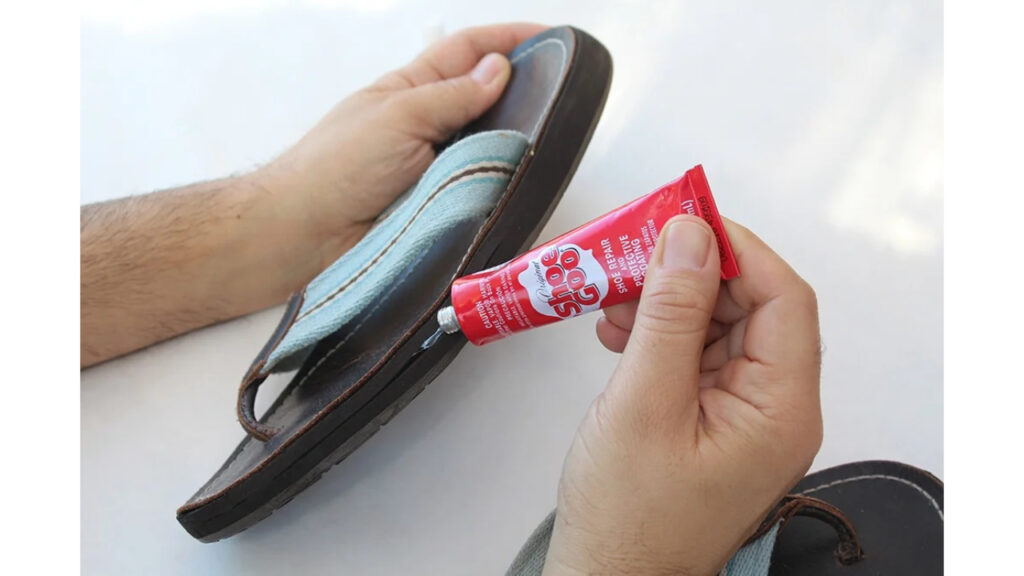
Image credit: Eclectic Products
In day-to-day use, Shoe Goo is built around the kind of repairs that happen when a favorite pair of shoes has already started earning scars. It is intended to bond, protect, and rebuild, and the manufacturer also points to extra traction for skateboards. The materials list is specific enough to be useful, with leather, rubber, vinyl, and canvas called out as suitable surfaces. That keeps the product grounded in actual footwear repair rather than vague all-purpose claims.
The black formula has a practical advantage that is easy to understand without overselling it. On darker shoes, boots, or sole edges, the repair does not draw attention the way a bright clear patch can, especially on high wear areas that are already visually noisy. The tradeoff is that the finish is not meant to vanish into the background the way a clear adhesive can, so this is more of a functional fix than a cosmetic one.
The limits are just as important as the strengths. The datasheet notes that maximum strength can take 48 to 72 hours, depending on material, humidity, and temperature, so the repair window is measured in days, not minutes. The bond is also listed as having no UV resistance unless painted over, which makes sense for a repair compound but still leaves outdoor exposure as a practical consideration. This is a substance that rewards a careful, methodical repair, the sort of thing a person does on Saturday so Monday goes more smoothly.
Setup, Storage, And the Fine Print
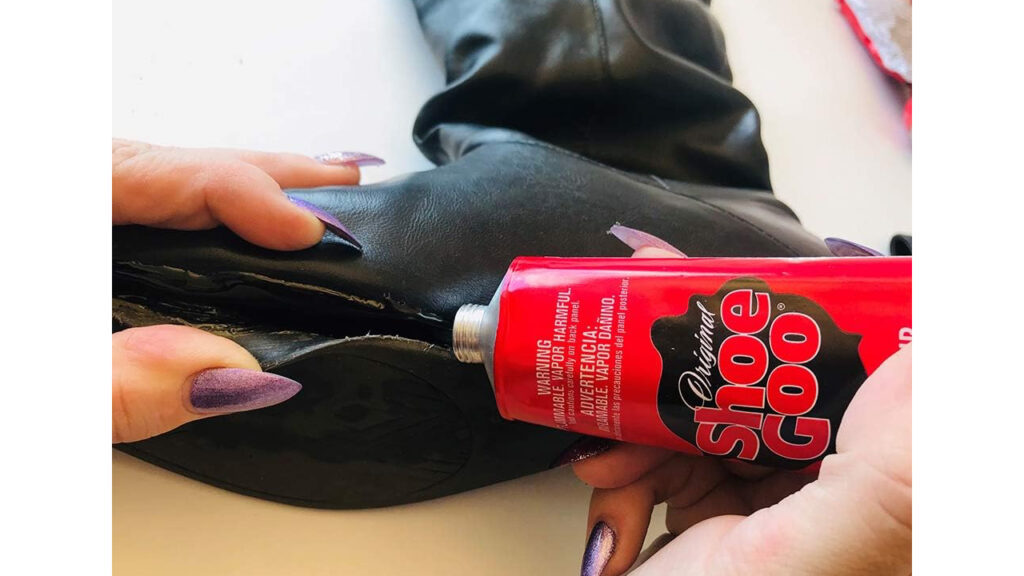
Image credit: Eclectic Products
Preparation is straightforward, but it should not be skipped. The directions call for a clean, dry surface free of dirt, and the adhesive is meant to be applied directly to the area being protected, bonded, or repaired. For waterproofing or protective buildup, thin layers are recommended, with each layer given 3 to 4 hours to set before another is added. That approach is slower than slapping on a thick bead, yet it is the kind of detail that usually separates a durable repair from a lumpy disappointment.
Temperature handling is another practical point. The ideal application range is listed at 50 to 90 degrees Fahrenheit, while the technical data sheet gives an ideal range of 50 to 80 degrees Fahrenheit. The product may thicken in colder storage, but it will not freeze, and warming it back to room temperature before use is recommended. For people who keep repair supplies in a garage, truck, or shed, that detail is more than housekeeping. It affects how easily the tube dispenses and how cleanly the adhesive spreads.
The fine print is worth respecting. The formula contains toluene and petroleum distillates, it is flammable, and uncured adhesive can be cleaned with acetone or citrus based solvents. Shelf life is listed at 2 years unopened, and the product is made in the USA. Put plainly, this is a serious repair compound that asks for a little care in exchange for a lot of utility. People who want a safer, lower odor, or nearly invisible finish may prefer a different product family, but for direct shoe repair, this remains a very purposeful tool.
Conclusion: Should You Buy Shoe Goo?
Shoe Goo is a focused, dependable shoe repair adhesive that makes sense for anyone trying to extend the life of boots, sneakers, skate shoes, or work footwear with a flexible and waterproof fix. Its main strengths are the strong published bond numbers, the elastic cured finish, and the clear repair use cases, while its real drawbacks are the solvent-based formula, the cure time, and the need for careful prep and patience. Buy it for practical footwear repair, especially on dark shoes and high wear areas, and look elsewhere if you need a low odor, UV stable, or fast handling solution.