
Sony BRAVIA 8 OLED TV Review for Movies and Gaming
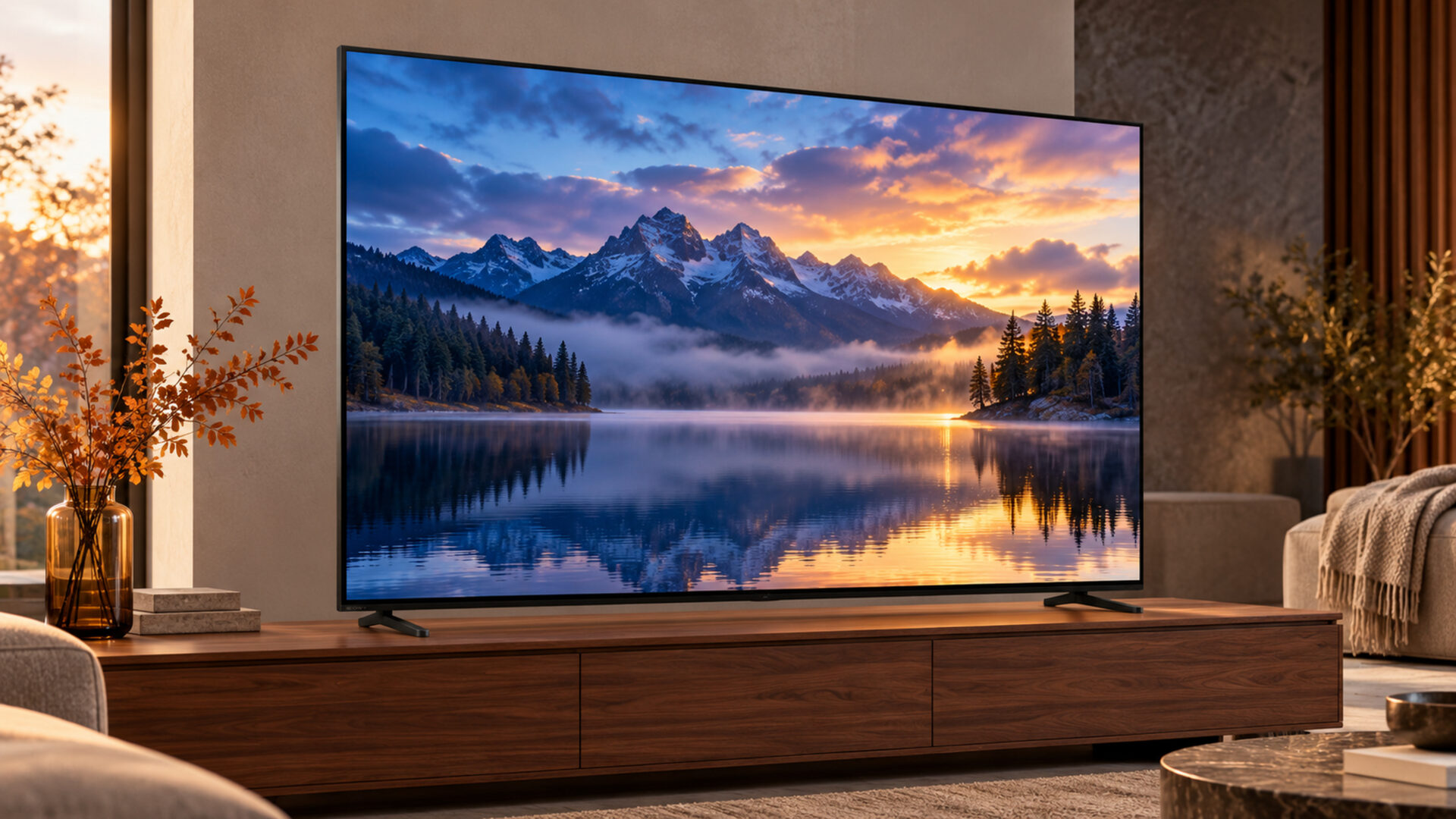
The 77-inch Sony BRAVIA 8 OLED TV combines deep contrast, refined XR processing, and screen-based sound, but limits full HDMI 2.1 support to two ports. Model K-77XR80 is built for movie nights, live sports, streaming, and PlayStation 5 gaming, with a large self-lit panel and unusually capable integrated audio. It is especially well suited to buyers who value dialogue clarity and a slim living-room installation.
Pros
- Self-lit OLED panel produces true black and precise local contrast
- XR Processor handles color, motion, and lower-quality sources
- Acoustic Surface Audio+ anchors dialogue and effects to the screen
- Voice Zoom 3 can raise or reduce dialogue independently
- HDMI 2.1 gaming features include 4K at 120 Hz, VRR, and ALLM
Cons
- Only two HDMI inputs provide the full HDMI 2.1 feature set
- One of those ports also handles eARC for a soundbar or receiver
- OLED remains vulnerable to reflections and prolonged static content
- A 77-inch panel requires careful delivery, furniture, or wall-mount planning
OLED Picture Built for Evening Movies and Sports
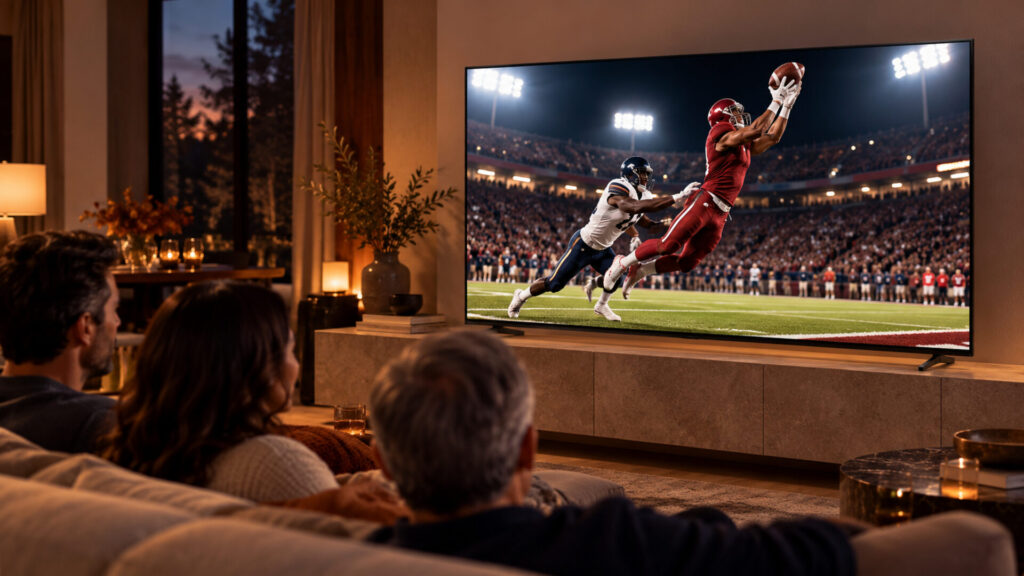
Each OLED pixel produces its own light, so dark portions of the image can turn off rather than glow behind an LCD layer. On a 77-inch screen, that pixel-level control gives star fields, shadowy rooms, and black letterbox bars convincing depth. Bright uniforms and stadium lights remain clearly separated from dark backgrounds instead of creating broad halos.
Sony’s XR Processor works with XR OLED Contrast Pro and XR Triluminos Pro to manage contrast, color, texture, and upscaling. The practical benefit is a composed picture rather than a collection of louder settings. Faces can retain believable skin tones, motion stays readable, and lower-resolution television feeds look less brittle when enlarged across the panel.
The BRAVIA 8 supports Dolby Vision alongside HDR10 and HLG. Its Studio Calibrated modes include Netflix and Sony Pictures Core options for compatible content. Those modes are useful starting points for movie viewing, but room light still shapes the result. Reflections and direct sun can wash across the glossy panel, so curtains or controlled evening light help the television show its best contrast.
OLED also calls for mixed viewing habits. The built-in panel-care features should remain enabled, and static scoreboards, news tickers, or game interfaces should not stay frozen on screen all day. Normal varied use fits the design; continuous signage does not.
Screen-Based Sound and Clearer Dialogue
Acoustic Surface Audio+ uses actuators behind the panel and a sound-positioning tweeter to make the screen itself part of the speaker system. Dialogue appears to come from the person speaking, and effects track the action more naturally than they do from small downward-firing drivers at the bottom of a cabinet.
Voice Zoom 3 adds a particularly practical upgrade. Sony uses machine learning to identify human dialogue, then lets the listener raise or reduce voices without simply increasing every sound. That can help during a noisy holiday gathering, with softly mixed dramas, or when late-night viewing needs intelligible speech at moderate volume.
Dolby Atmos and DTS:X support add compatibility with spatial audio formats, while 3D Surround Upscaling expands ordinary stereo or multichannel material through the television’s speakers. The built-in system is fuller than many thin televisions, but a dedicated soundbar or surround system still produces deeper bass and wider dynamics.
Buyers adding external audio should plan around eARC. The audio-return connection occupies one of the two full-bandwidth HDMI 2.1 inputs, so a soundbar plus several current consoles can create a port shortage. A receiver or soundbar with reliable HDMI pass-through may solve that problem.
Google TV and a Slim Living-Room Design
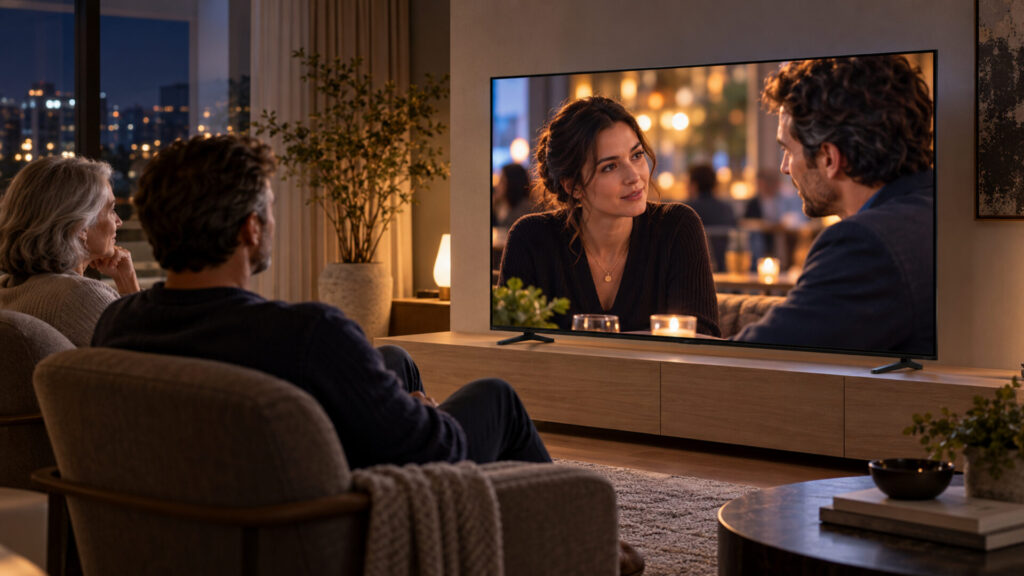
Google TV organizes major streaming services, recommendations, apps, and voice search in one interface. Chromecast built-in and Apple AirPlay cover common phone and tablet sharing, while Google Assistant supports hands-free or remote-based searches depending on the configured privacy settings.
The One Slate design keeps the frame restrained so a 77-inch picture does not feel surrounded by heavy hardware. Sony supplies a multi-position stand that can accommodate different furniture arrangements and create space for a soundbar. The exact stance should be confirmed against the cabinet width before delivery.
A screen this large deserves more planning than its slim profile suggests. Measure elevators, stair turns, doors, and the final viewing wall. Confirm that furniture can carry the television’s weight and that a wall mount is rated for the set and anchored into appropriate structure. Two adults should handle the panel without pressing on the OLED surface.
Once installed, start with a cinema-oriented preset rather than Vivid. Adjust motion handling for the household’s mix of films and sports, and let the television run for several evenings before changing every advanced control. Small, deliberate adjustments are easier to evaluate than a full menu of simultaneous changes.
Strong PlayStation Features With Two Premium Ports
The BRAVIA 8 accepts 4K signals at 120 frames per second and supports variable refresh rate and automatic low-latency mode through its HDMI 2.1 connections. Those features reduce delay and tearing with compatible consoles and games. The Game Menu collects relevant settings so adjustments do not require a trip through the full television interface.
PlayStation 5 integration includes Auto HDR Tone Mapping and Auto Genre Picture Mode. The television and console can coordinate tone mapping during setup and switch picture behavior when the user moves between games and video. These conveniences do not improve every game automatically, but they reduce the chance of leaving the display in the wrong mode.
Port allocation remains the main gaming compromise. Only two of the four HDMI inputs provide the full 2.1 feature set, and one also serves eARC. A household with a PS5, Xbox Series console, gaming PC, and eARC sound system will need to prioritize devices or add a capable switch or receiver.
OLED’s fast pixel response keeps controller movement crisp, and deep black strengthens atmospheric games. Static heads-up displays are part of normal gaming, but varied content and the television’s protection routines remain sensible. The BRAVIA 8 is best for a mixed entertainment room, not a screen left on the same interface around the clock.
Should You Buy the Sony BRAVIA 8 77-Inch OLED TV?
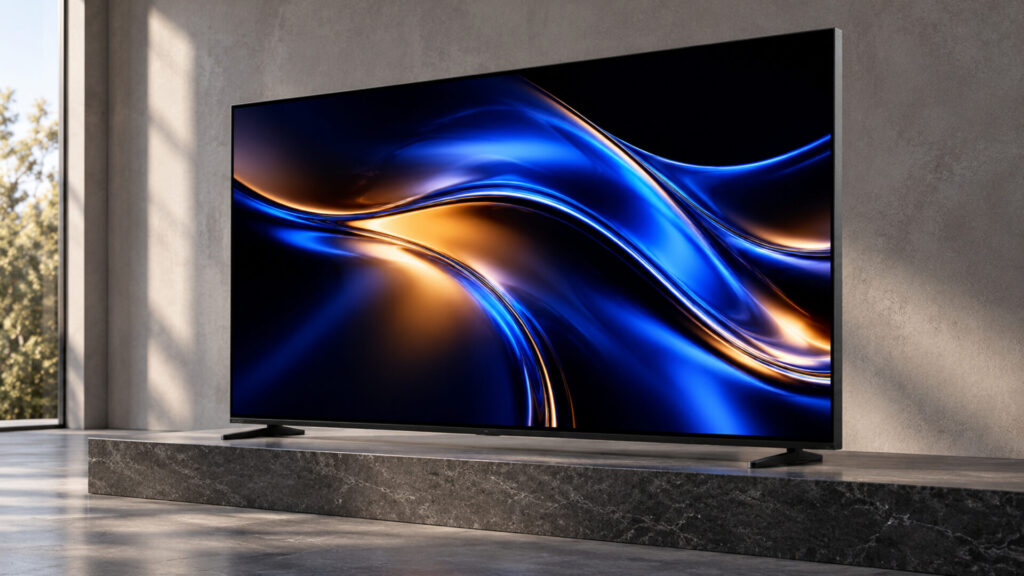
Buy the BRAVIA 8 if you want a current 77-inch OLED for movies, sports, streaming, and PlayStation gaming, and you value clear built-in dialogue more than maximum HDMI flexibility. Its picture processing, screen-based audio, and Voice Zoom 3 make it unusually well rounded for a shared living room.
Choose a premium mini-LED television instead if the room receives strong uncontrolled daylight, or another gaming-focused OLED if four full-bandwidth HDMI 2.1 ports are essential. Measure the room and map every source device before ordering.
For Thanksgiving, the television earns its place after the kitchen work is done. Football benefits from the large, composed picture, movie dialogue remains easier to follow in a busy room, and the slim design does not add visual bulk beyond the enormous screen itself.
For buyers seeking a cinematic centerpiece that also handles everyday television and gaming gracefully, the Sony BRAVIA 8 77-Inch OLED TV is a polished current option for a large shared living room.