
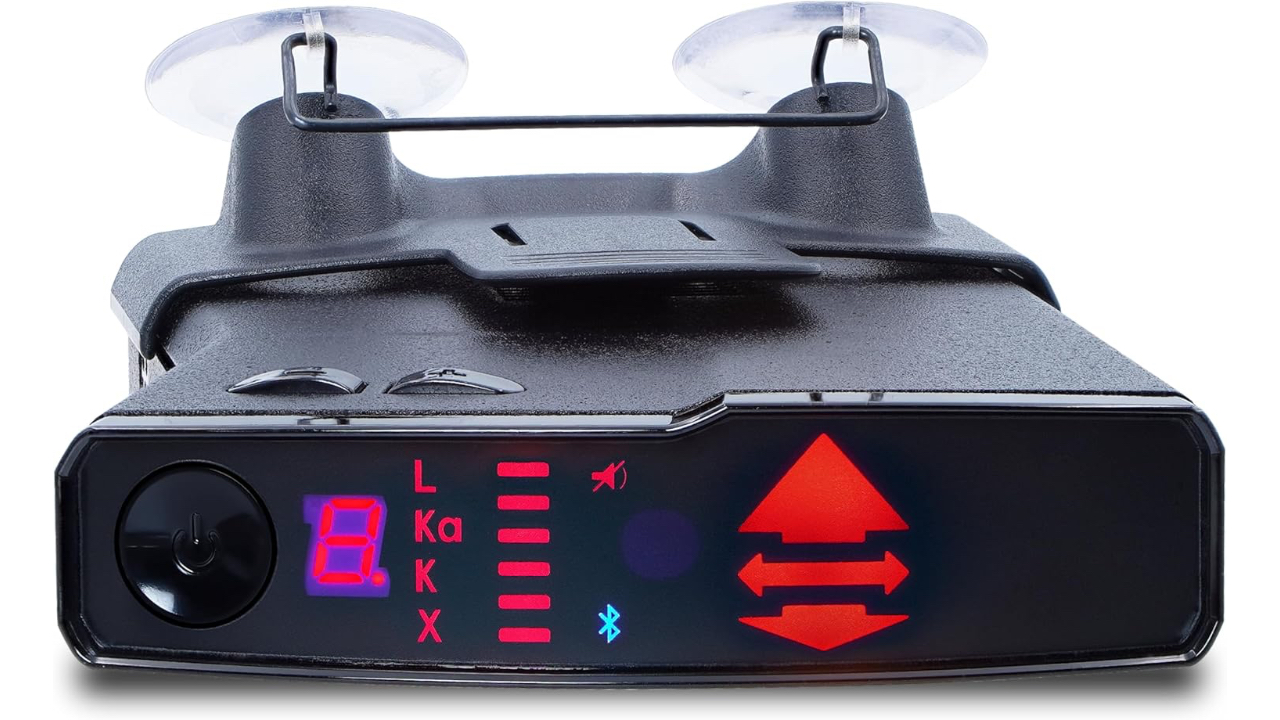
Valentine One Gen2 Review: Precision Alerts for Drivers Who Demand More
The Valentine One Gen2 sits in a premium corner of the radar detector market, built for drivers who want early warnings, directional awareness, and a high level of control over how alerts are handled. This is not a casual plug it in and forget it gadget. It is a purpose-built performance tool for highway commuters, road trip regulars, and enthusiasts who care about situational awareness as much as raw detection range. If you are considering the Valentine One Gen2, you are looking at one of the most technically focused detectors available today, with features aimed squarely at serious drivers who value precision over convenience.
Pros
- Excellent multi band coverage across X, K, Ka, Super Wideband Ka, and Ku bands for broad enforcement detection
- Directional arrows identify whether threats are ahead, beside, or behind, adding real-world context to alerts
- Dual antenna system provides front and rear coverage for stronger situational awareness
- Built-in Bluetooth supports smartphone integration for updates, programming, and advanced filtering
- Compact housing at 4.6 x 3.8 x 1.0 inches keeps windshield footprint manageable
- Magnesium case supports durability and helps reduce detectability by radar detector detectors
- Wide voltage support from 6.0 to 35.0 volts allows compatibility across more vehicle types
Cons
- Premium pricing places it firmly in enthusiast territory
- No built in GPS, which may be a drawback for users who prefer location based lockouts
- Best performance often depends on companion app configuration
- Learning curve is steeper than simpler consumer focused detectors
- Some advanced false alert management requires setup rather than out of box simplicity
Detection That Goes Beyond the Basics
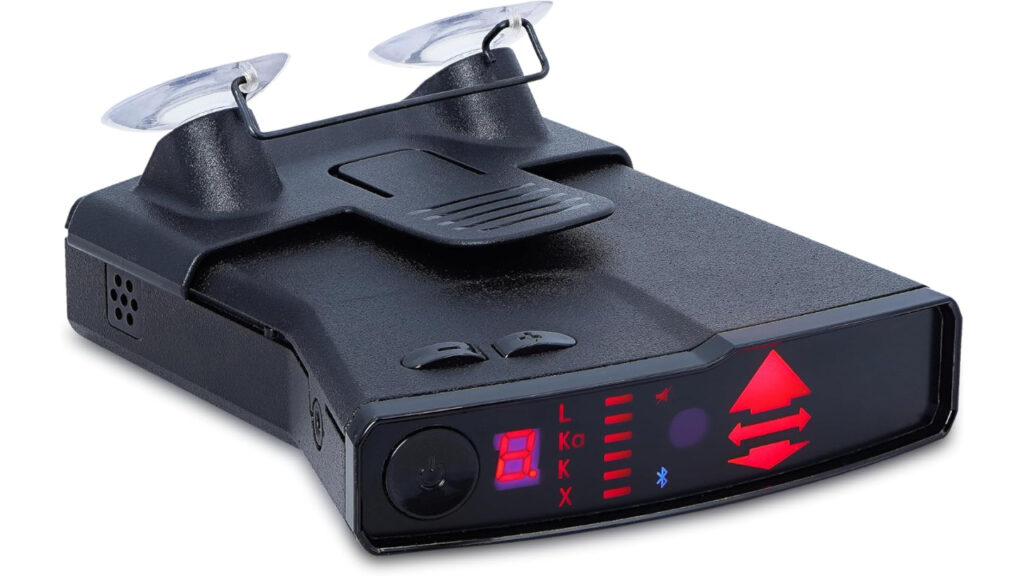
Image credit: Valentine One
The Valentine One Gen2 is built around one mission: identify radar and laser threats as early and accurately as possible. It supports X band from 10.500 to 10.550 GHz, K band from 24.050 to 24.250 GHz, Ka band from 33.400 to 36.000 GHz, and Ku band from 13.400 to 13.500 GHz. Laser detection spans wavelengths from 820 to 950 nanometers. That spectrum coverage gives it the kind of broad readiness expected from a top tier detector, especially for drivers crossing multiple jurisdictions with varying enforcement tools.
What separates it from standard detectors is not just what it scans, but how it interprets what it finds. The patented SAW D2L signal processing system increases scan speed dramatically, enabling the detector to sort legitimate threats from background noise with greater precision. That technical leap is especially important in today’s environment, where driver assistance systems and automotive radar can clutter the airwaves. Faster signal analysis means less wasted attention.
And then there are the directional arrows, the feature that has defined this product line for years. Instead of simply alerting to a signal, the detector indicates whether the threat is ahead, besides, or behind. That extra layer of context transforms alerts into actionable information. For drivers covering long interstate stretches, that distinction can be the difference between a useful warning and a distracting beep.
Smart Engineering with A Purpose
This detector’s physical design is refreshingly focused. At just 6.5 ounces and housed in a magnesium case, it remains lightweight while benefiting from a durable shell that also contributes to stealth performance. Magnesium is not just a premium material choice. It helps contain emissions that could otherwise be detected by enforcement equipment designed to spot radar detectors.
Its dual antenna arrangement is central to the experience. One radar antenna and one laser sensor face forward, while another set monitors the rear. That architecture supports 360-degree awareness and reinforces the directional alert system. In practical terms, it gives drivers a clearer understanding of evolving traffic enforcement situations, especially when threats remain active after passing them.
Connectivity arrives through integrated Bluetooth operating at 2.4 GHz. That allows seamless pairing with smartphones for updates, configuration changes, and expanded alert management. Unlike products that rely entirely on hardware controls, this setup shifts deeper customization into software. It is a modern design decision that prioritizes flexibility, even if it asks users to engage with an app ecosystem.
What Daily Driving Actually Looks Like
In real world use, the Valentine One Gen2 is designed for consistency over gimmicks. Its low noise amplifier technology improves weak signal acquisition, extending detection range, particularly on Ka band where highway enforcement commonly operates. Earlier awareness gives drivers more time to interpret and react, which is the real advantage of a premium detector.
Its K Verifier filtering system is specifically aimed at reducing false alerts from lane change systems, collision avoidance sensors, and other automotive radar sources. In today’s traffic environment, that feature is essential. Without strong filtering, even powerful detectors become exhausting to use. The Gen2’s emphasis on selective alerting makes it more practical for dense commuting and urban fringe driving.
That said, this is not a passive appliance. Drivers seeking the best experience will likely spend time adjusting settings and pairing it with a smartphone. Out of the box performance is strong, but the platform is clearly optimized for users who want to tailor behavior to their region and driving habits. If you appreciate customization, that is a strength. If you want zero setup, it may feel demanding.
Ownership Details That Deserve Attention
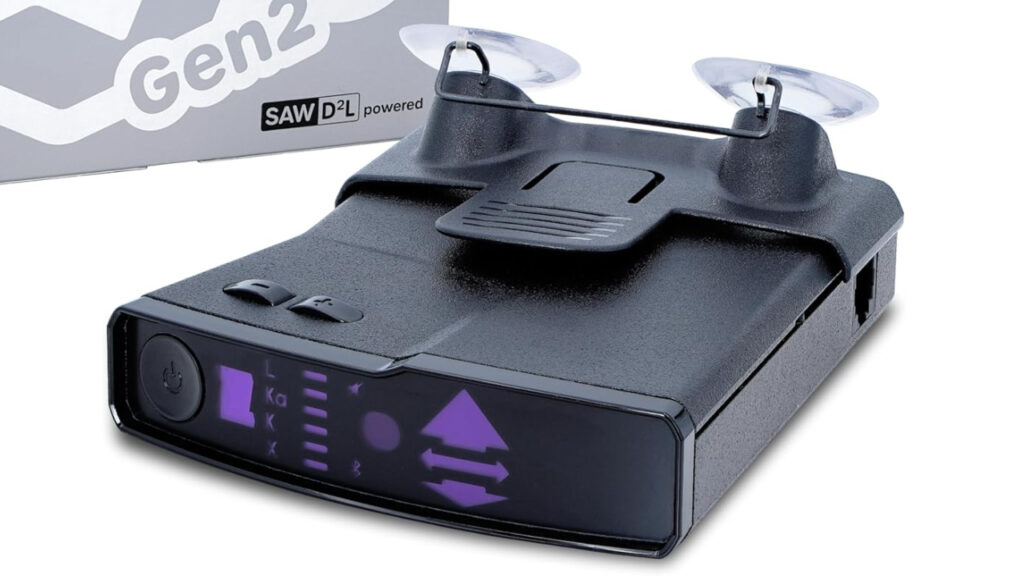
Image credit: Valentine One
Setup is straightforward from a hardware standpoint. Included accessories cover windshield and visor mounting, plus both coiled and straight power cords, a lighter adapter, and a direct wire adapter. That means users can choose between temporary and more permanent installations without buying extra essentials immediately.
Power flexibility is broader than many expect, supporting 6.0 to 35.0 volts DC. That opens compatibility across standard passenger vehicles and some specialty setups. Typical standby consumption is 2.8 watts, rising to 5.2 watts in alarm conditions, which keeps energy draw relatively modest. For hardwired installations, that efficiency supports clean long-term use.
There are practical tradeoffs to understand. There is no built in GPS, so users who rely on location-based muting or camera database integrations will need to use companion software solutions instead. Also, while firmware updates are available through mobile devices, maintaining peak capability requires staying engaged with that update path. This is a product for active owners, not passive users.
Conclusion: Should You Buy Valentine One Gen2?
The Valentine One Gen2 is a highly specialized radar detector built for drivers who prioritize detection intelligence, directional awareness, and configurable control. Its strongest qualities are advanced signal processing, dual antenna coverage, and one of the most useful alert systems in the category. Its drawbacks center on premium cost, the absence of onboard GPS, and a setup process that rewards engaged users rather than casual buyers. If you want a serious driving companion with a technical edge, this is an excellent choice. If you prefer simplified operation with more automated features, other options may better suit your style.