
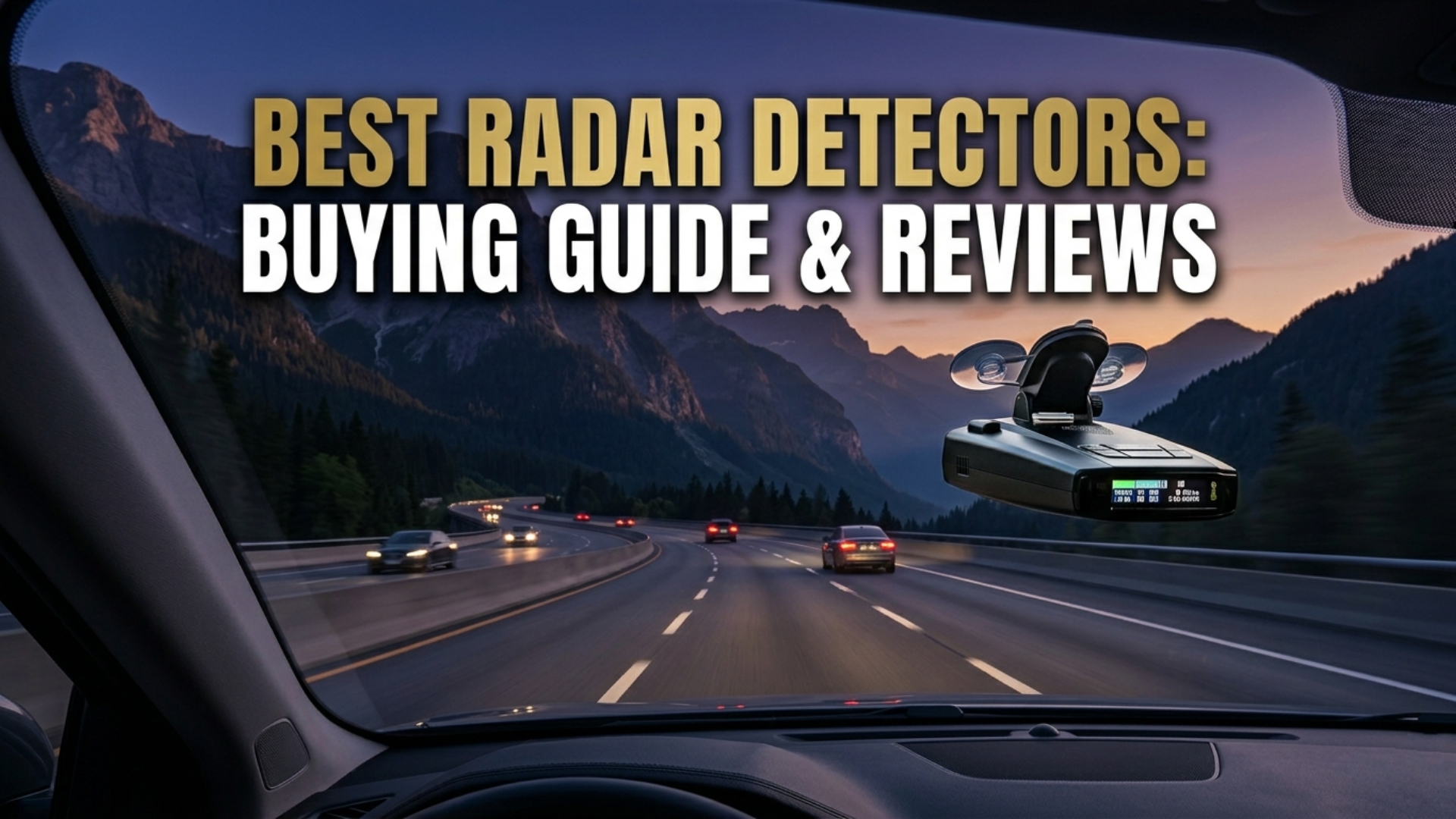
Best Radar Detectors: 2026 Buying Guide and Reviews
The best radar detectors have come a long way from the blunt little dashboard boxes that used to chirp at every grocery store automatic door and then apologize by doing it again 10 seconds later. The current crop is more capable, more selective, and a lot more useful, with GPS memory, directional arrows, app connectivity, and smarter filtering designed to separate real alerts from everyday roadside noise.
| Uniden R8W | Valentine One V1 Gen 2 | Cobra RAD 700i | Uniden R3 | Escort MAX 360c |
|---|---|---|---|---|
 |  |  |  |  |
| A flagship detector with dual antennas, 360-degree awareness, GPS auto-mute memory, Wi-Fi, Bluetooth, and voice alerts. | A classic name with rear radar antenna support, directional indication, Ku band detection, and 360-degree laser protection built in. | A connected detector with AutoLearn filtering, built-in GPS, shared alerts, Apple CarPlay and Android Auto support, and front and rear detection. | A long-time favorite built around strong range, GPS mute memory, voice alerts, and red light and speed camera warnings. | A premium connected radar detector that combines true 360 degree awareness, intelligent false alert filtering. |
That is why choosing the right model is critical. Commuters, highway travelers, road-trip regulars, and drivers who spend a lot of time in unfamiliar territory all tend to value a detector that can stay quiet when it should and speak up when it must. A good unit should fit the way you drive, not just the way the marketing department wants you to feel about driving.
The lineup below covers a useful spread of approaches, from feature-heavy flagships to simpler, more affordable picks that still bring modern detection and filtering to the table.
Uniden R8W: Big Awareness with A Calm Voice
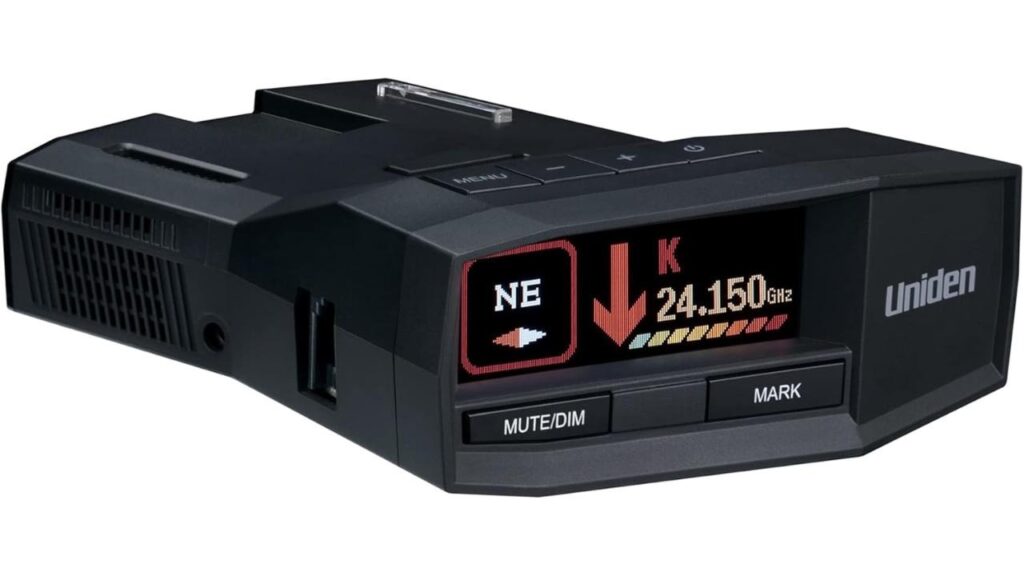
Image credit: Uniden
- Dual antennas with 360-degree directional awareness
- Built in GPS with auto-mute memory
- Wi-Fi, Bluetooth, and real-time voice alerts
The Uniden R8W is the sort of detector that looks at the road ahead and also pays attention to the road behind, and the one beside you, and the one that just changed lanes without signaling. Its dual antennas and 360-degree awareness are meant to give the driver directional context, while the built in GPS and auto-mute memory are there to keep routine false alerts from turning every commute into a public radio drama.
That mix gives the R8W a very modern feel. It is not just listening for radar and laser; it is trying to organize the information in a way that is easier to live with over time. The voice alerts, programmable behavior, and database backed red light and speed camera warnings all point to a detector that wants to act like a road companion instead of a noisy passenger. That is a useful shift, because the old days of constant beeping were not exactly a high point in automotive design.
Drivers who spend real time on highways or in large metro areas should find the R8W appealing because it stacks together the features that reduce fatigue while keeping situational awareness high. If you want a detector that feels built for the present tense, with app friendly connectivity and the kind of awareness that older units only pretended to have, this one fits the brief.
Valentine One V1 Gen 2: A Focused Classic with Directional Clarity
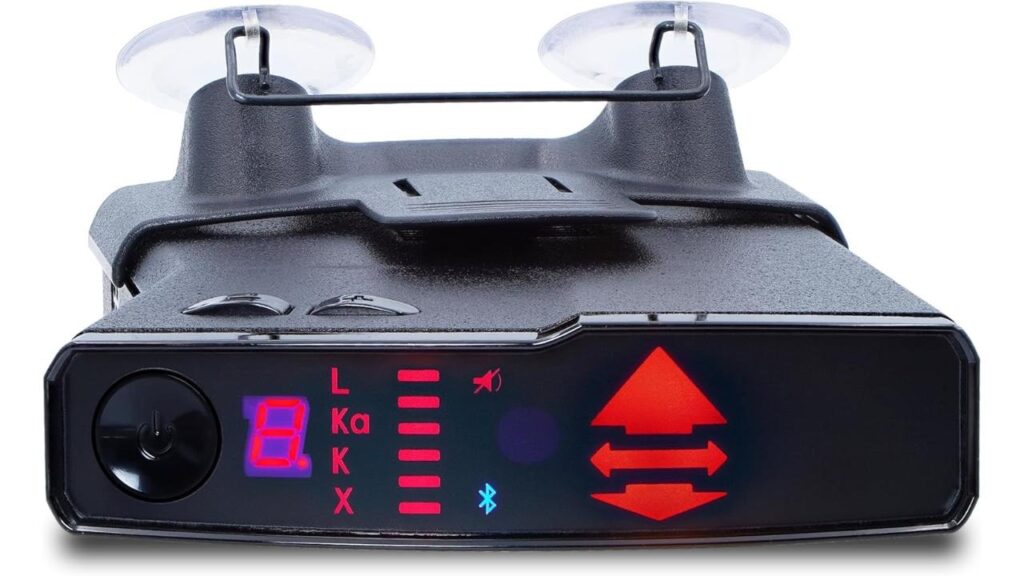
Image credit: Valentine One
- Rear radar antenna support
- Directional indicator
- 360-degree protection against laser and support for X, K, Ka, and Ku bands
The Valentine One V1 Gen 2 has a reputation that is hard to fake because it is built around one of the most practical ideas in the category, telling the driver where a threat is coming from. The directional indicator and rear radar antenna give the unit a clear role, which is to provide context instead of just volume. That is especially useful when an alert lingers and you are trying to decide whether it is dead ahead, behind you, or simply part of the scenery behaving badly.
It also covers the major bands that most drivers care about, including X, K, Ka, and Ku, along with 360-degree laser protection. That gives the V1 Gen 2 a broad detection profile in a compact form factor, and the smartphone and tablet compatibility add a modern layer without turning the product into a rolling software update notification. Some devices try to do everything. This one tries to do the important things clearly.
The V1 Gen 2 is a good fit for drivers who value directional information and a straightforward, serious approach to alerts. It is a detector for people who appreciate knowing not only that something is there, but also where it is coming from. That remains useful technology, even in a decade that insists every object in the cabin needs its own app.
Cobra RAD 700i: Smart Filtering for Everyday Driving
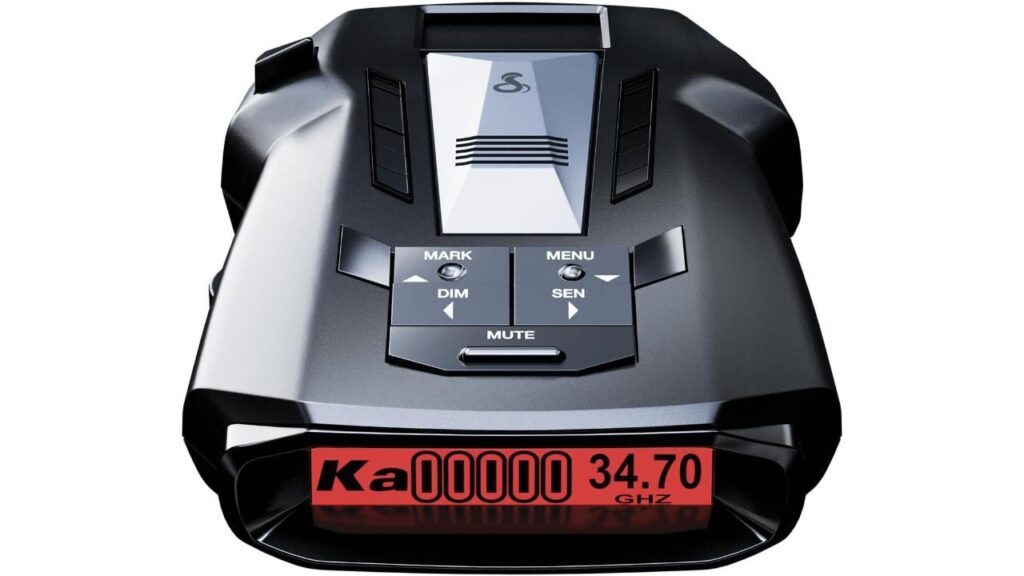
Image credit: Cobra
- AutoLearn Intelligence and built in GPS
- Apple CarPlay and Android Auto compatibility
- Front and rear detection with shared alerts from the Drive Smarter community
The Cobra RAD 700i leans hard into connected convenience. Its built in GPS and AutoLearn Intelligence are designed to help the detector recognize recurring false alerts over time, while the Drive Smarter shared alert system brings in live reports from other drivers. That turns the RAD 700i into more than a simple alert box. It becomes part detector, part data exchange, and part effort to keep the cabin quieter than the road around it.
There is also a distinctly modern angle to the way Cobra handles the display and vehicle integration. Apple CarPlay and Android Auto compatibility let alerts and route information live where many drivers already spend their attention, and the 5 color OLED display gives the unit a cleaner, more customizable look. Front and rear LaserEye detection rounds out the package with coverage that is meant to feel complete without being fussy.
This is a strong choice for drivers who want useful alerts without having to micromanage the device every week. The RAD 700i seems built for people who value a detector that can grow a little smarter through regular use. That is a welcome idea, especially when so much in the car now behaves like it needs a firmware patch just to agree with the weather.
Uniden R3: Proven Simplicity with Serious Range
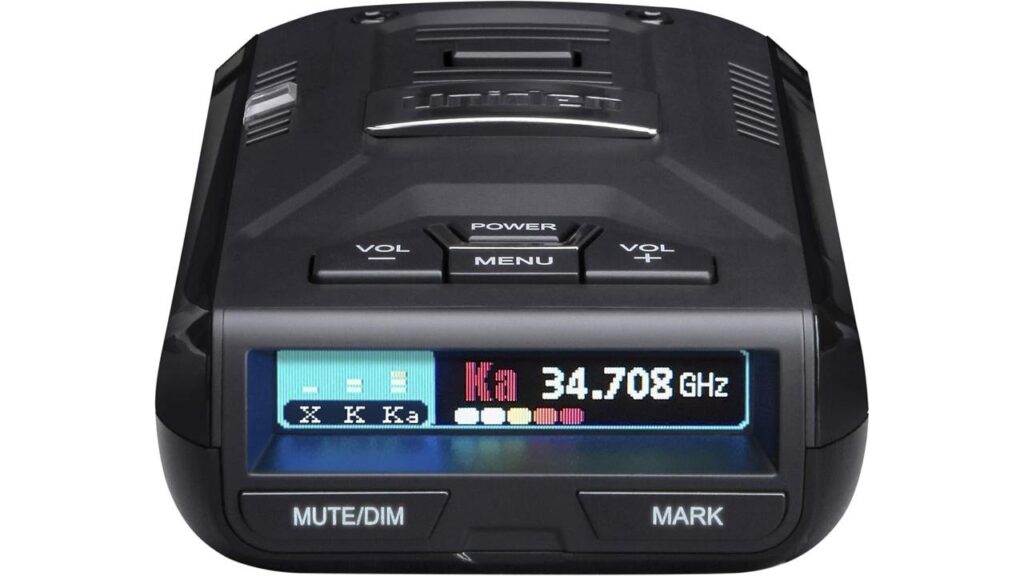
Image credit: Uniden
- Built in GPS with mute memory
- Red light and speed camera alerts
- Voice alerts and a multi color OLED display
The Uniden R3 remains appealing because it keeps its focus on core detector skills. The product is built around range and sensitivity, and the feature list backs that up with GPS based mute memory, preloaded red light and speed camera locations, and voice alerts that let the driver keep eyes up instead of reaching for buttons. It is a reminder that a detector does not need ten blinking extras to be useful.
The multi color OLED display gives the R3 a cleaner readout than the bare bones units many drivers remember from years ago. That matters in daily use because quick visual confirmation helps make sense of an alert before the next turn, exit, or lane change arrives. The detector also supports the major bands and laser detection, which keeps it relevant for drivers who want a practical, established platform rather than a gadget that spends too much time auditioning for the role of smartphone accessory.
The R3 is a sensible pick for buyers who want a detector with a long track record and a simpler ownership experience. It feels especially well-suited to drivers who like dependable tools, clear alerts, and fewer extra layers between the sensor and the road. It’s just good engineering with less theater.
Escort MAX 360c: Premium Awareness With Smart Refinement
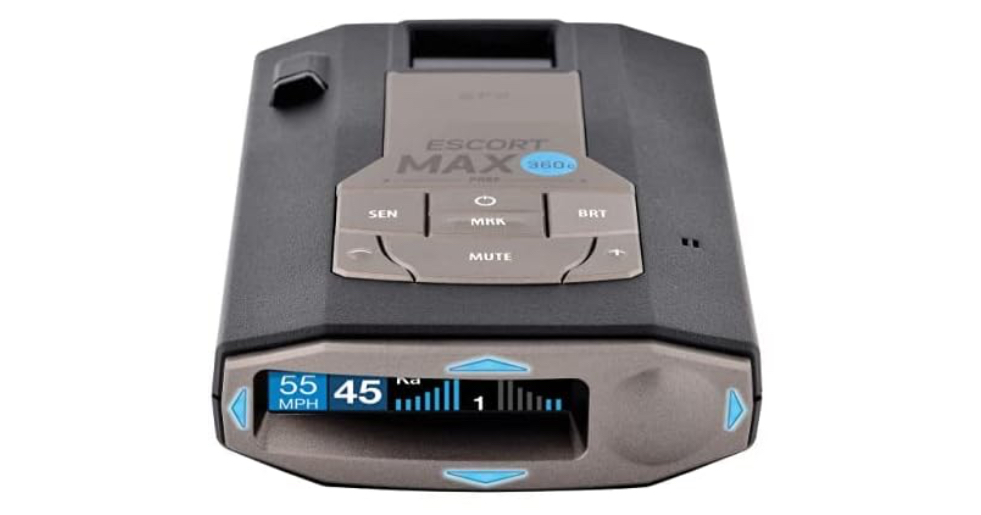
Image credit: Escort
- True 360-degree awareness with directional arrows
- Built in Wi-Fi, Bluetooth, and GPS-based AutoLearn
- Advanced filtering for modern traffic environments
The Escort MAX 360c is built for drivers who expect more than basic alerts and louder beeps. This is a premium radar detector designed around awareness, intelligence, and long-term usability. Dual antennas provide true 360-degree coverage, while directional arrows give immediate context on where signals originate. That kind of situational detail is what separates high-end detectors from simpler units. It turns a warning into actionable information, which is exactly what experienced drivers appreciate most.
Escort’s approach here is not just about sensitivity. It is about reducing noise and improving trust in what the detector tells you. AutoLearn uses GPS to identify repeated false alert locations and silence them over time, while advanced filtering helps cut down interference from collision avoidance systems and blind spot monitoring. In an era where every second vehicle seems to be broadcasting something, that refinement is not a luxury. It is essential. The result is a quieter, more focused driving experience that feels notably more sophisticated than older detectors that treated every signal like a five-alarm emergency.
For drivers who spend serious time on highways or in traffic-heavy metro areas, the MAX 360c delivers the kind of polished ownership experience expected at the premium tier. Built in Wi-Fi allows seamless updates, Bluetooth keeps it connected to Escort’s app ecosystem, and the detector’s processing hardware ensures fast response times when seconds count. Community feedback highlights its strong usability and directional awareness, while also noting that placement and windshield type can affect performance in certain vehicles. Even so, as a premium detector, the MAX 360c remains one of the most fully realized options for drivers who want advanced technology working quietly in the background.
Who Should Buy the Best Radar Detectors

A radar detector is not a niche gadget for thrill seekers or people trying to recreate a highway movie from 1987. At its best, it is a practical driving tool for anyone who spends meaningful time on the road and values awareness. Long distance commuters, sales professionals, delivery drivers, and frequent road trippers all stand to benefit from the extra layer of information a detector provides. Modern units are built less around drama and more around giving drivers context in real time, which is a far cry from the noisy dashboard bricks of decades past.
Drivers who regularly travel unfamiliar highways often see the greatest benefit. New routes bring changing speed zones, hidden enforcement points, and stretches of road where local knowledge is nonexistent. The best radar detectors help bridge that gap by providing earlier notice and clearer awareness of what lies ahead. In metropolitan areas, the right detector can also help reduce stress by filtering out false alerts and only drawing attention when necessary. That sort of selectivity is one of the biggest leaps forward in this category. Older detectors treated every signal like breaking news. Newer ones have learned the value of discretion.
The best radar detectors also make sense for drivers who appreciate technology that quietly improves the experience without demanding constant attention. The best models blend into daily driving, offering GPS memory, intelligent filtering, and connected updates that work in the background. They are not for everyone, especially those who drive infrequently or stay close to familiar neighborhoods. But for people who log serious miles and want more awareness behind the wheel, a radar detector remains one of the more useful automotive tools available. Some upgrades add horsepower. Others simply make the trip smarter.
What To Consider When Choosing the Best Radar Detectors for You
Buying a radar detector is not about chasing the longest feature list. It is about understanding how and where you drive. A commuter navigating city traffic every morning has different needs than someone covering hundreds of interstate miles each week. Range, filtering, GPS integration, and directional awareness all play different roles depending on the environment. The key is finding a detector that aligns with your driving habits rather than one that simply sounds impressive in product descriptions. A detector that is overbuilt for your needs can be just as frustrating as one that falls short.
Filtering should be high on the priority list, especially in modern traffic. Today’s roads are filled with vehicles broadcasting signals from blind spot monitoring, adaptive cruise systems, and collision avoidance sensors. A detector without strong filtering can become exhausting to live with, flooding the cabin with alerts that have little relevance. The best models use intelligent software and GPS memory to learn recurring false alerts and reduce unnecessary interruptions. That kind of refinement has become one of the defining differences between entry level devices and premium units. Years ago, sensitivity was the whole story. Today, selectivity is what separates useful from irritating.
It is also worth considering how much technology you actually want in the experience. Some drivers value smartphone integration, live community alerts, and wireless updates, while others prefer a standalone unit that does its work quietly without extra layers. Neither approach is inherently better. What matters is choosing a detector that fits your expectations for ownership. A premium model with every connected feature available can be a great investment, but only if those features improve the way you drive. Otherwise, simplicity often wins. After all, the best detector is not the one with the brightest screen. It is the one you trust enough to leave on every day.
How the Best Radar Detectors Work
Radar detectors are passive electronic devices designed to identify radio frequency signals used in traffic enforcement. In simple terms, they listen for radar transmissions across bands such as X, K, and Ka, then alert the driver when those signals are detected. Some models also identify laser-based speed measurement systems, though laser alerts often provide less reaction time because of how narrowly those beams are targeted. The detector itself does not interfere with law enforcement equipment. It simply receives signals and interprets them. Think of it as a highly specialized radio that has spent its entire career focused on one job.
Modern radar detectors are far more sophisticated than the early models that earned a reputation for constant false alarms. Today’s units use digital signal processing, GPS databases, and intelligent filtering to distinguish between real threats and background noise. That means they can recognize recurring false alerts, mute them automatically, and focus attention on signals that deserve concern. In practical use, this makes the experience much calmer and more trustworthy. The old detectors of decades past would shout at every supermarket door opener as if civilization were ending. Current models have learned a bit of restraint.
What truly defines a quality detector is how well it balances sensitivity with selectivity. A highly sensitive detector may pick up distant signals, but without strong filtering it can become more distracting than helpful. The best systems are tuned to provide early warning while maintaining enough discipline to avoid unnecessary interruptions. That balance is where modern engineering has made the greatest strides. Detection is no longer just about hearing more. It is about understanding what you are hearing and when it deserves attention.
Are Radar Detectors Legal in Your State
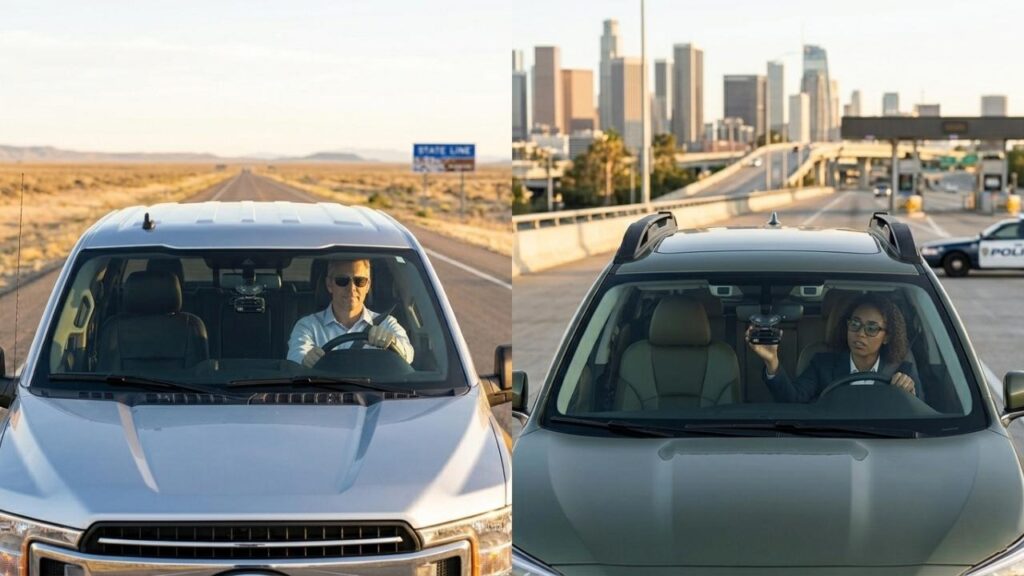
Radar detector legality in the United States is more nuanced than many buyers expect. In most states, radar detectors are legal for private passenger vehicles, which explains their continued popularity among commuters and long-distance travelers. However, there are important exceptions. Virginia and Washington, D.C. prohibit radar detector use entirely, and federal law restricts them in commercial vehicles over a certain weight. That distinction often surprises first time buyers who assume the rules are the same nationwide.
Even where detectors are legal, windshield mounting laws can complicate installation. Some states regulate where devices may be placed on the glass to avoid obstructing the driver’s view. Others allow dashboard mounting but place limits on suction cup placement. These rules are often less publicized than outright bans, yet they can affect how and where you use the device. It is worth reviewing local regulations before settling on a permanent setup. A detector that keeps you informed should not become the reason for an avoidable citation.
The broader point is that legality should be part of the buying decision, not an afterthought. Drivers who travel across state lines need to know the laws of every region they pass through, especially on long interstate routes. A radar detector is a tool, and like any tool, it works best when used with a clear understanding of the rules surrounding it. Technology can help with awareness, but it does not replace common sense or legal responsibility. That part still belongs to the driver.
How To Install and Position a Radar Detector for Best Results
Placement has a direct effect on radar detector performance, and it is one of the most overlooked parts of ownership. In general, the ideal position is high on the windshield, near the center, with a clear view of the road ahead and behind. This location improves radar reception while also helping with rear signal detection in models that use dual antennas. A detector mounted too low can lose range and effectiveness, particularly when dealing with distant threats. The laws of physics have little sympathy for poor placement.
It is also important to consider your vehicle’s windshield design. Some cars use metallic coatings, heated glass elements, or tint layers that can interfere with radar signals. In these cases, placement becomes even more critical, and some manufacturers provide guidance for vehicles with signal-blocking glass. A clean, unobstructed mounting area is always preferred. If your detector offers directional awareness, proper alignment is essential. A crooked unit can still function, but it is hardly operating at its best. Precision matters, even if the road itself is full of improvisation.
Power setup should be treated with the same care. A dangling cable across the dashboard may work, but it rarely feels like a long-term solution. Hardwiring or using an OBDII connection can create a cleaner installation and reduce distraction. The best setup is one that disappears into the driving experience, allowing the detector to do its work quietly and effectively. A good detector should feel integrated, not temporary. After all, if it looks like an afterthought, it often performs like one.
Final Thoughts
The radar detector market in 2026 reflects how much the category has matured. What was once a simple alert box has evolved into a connected, highly selective piece of driving technology. GPS integration, intelligent filtering, real time updates, and directional awareness have transformed the ownership experience. Buyers are no longer choosing between loud and louder. They are choosing between different philosophies of how information should be delivered on the road.
That evolution makes selecting the right detector more personal than ever. Some drivers want a premium unit with every connected feature available, while others prefer a dependable standalone model that focuses on core detection. Neither path is wrong. The best radar detector is the one that fits your driving habits, your tolerance for technology, and the environments you navigate most often. A detector should support the way you drive, not force you to adapt to it.
What remains constant is the value of awareness. On modern roads filled with distractions, shifting enforcement methods, and increasingly complex traffic systems, having reliable information can make a meaningful difference. A radar detector is not about encouraging reckless behavior. It is about giving drivers an added layer of context and confidence. In that sense, the best models of 2026 are not just smarter gadgets. They are better companions for the road ahead.
Previous Best Radar Detectors
Best on a Budget: Uniden DFR7
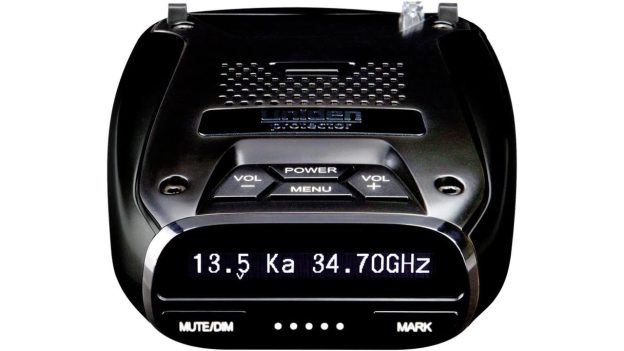
Image credit: Uniden
Pros:
Con:
The Uniden DFR7 radar detector emerges as a standout performer, offering unparalleled long-range sensitivity that provides wide band protection from all radar and laser guns. Its advanced warning capabilities ensure drivers can adjust their speed preemptively, enhancing road safety. Additionally, the device’s GPS technology intelligently filters out common false alerts along frequently traveled routes, minimizing distractions and delivering a smoother driving experience. This sophisticated false alert filtering guarantees that drivers are only alerted to genuine threats, allowing them to maintain focus on the road ahead.
Furthermore, the Uniden DFR7 radar detector features red light and speed camera notifications, with preloaded camera locations and complimentary updates to keep drivers informed about potential violations. Boasting an OLED display for easy readability and voice alerts for hands-free communication, this device offers a perfect blend of convenience and performance. While lacking built-in WiFi for real-time updates, its exceptional features and reliability cement its status as a top choice for drivers seeking cutting-edge radar detection technology.
Best for Long Range: Radenso Pro M
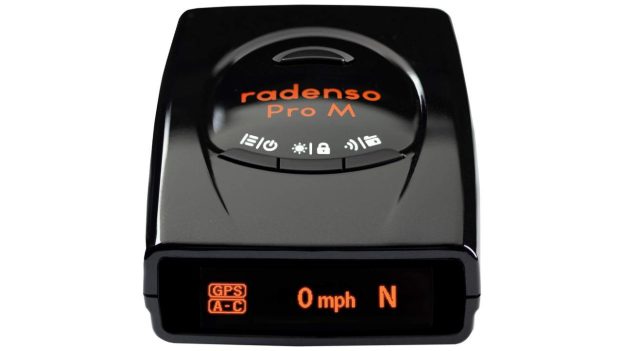
Image credit: Radenso
Pros:
Con:
In the realm of radar detectors, the Radenso Pro M stands out as the pinnacle of long-range detection capabilities, earning its place as the premium pick for drivers seeking uncompromising performance. Its impressive range ensures drivers receive advanced warnings of radar signals from miles away, providing ample time to adjust speed and avoid potential tickets. Moreover, the Pro M’s exceptional sensitivity enables it to detect radar signals with unparalleled accuracy, offering a level of protection that exceeds expectations on open highways and rural roads.
What sets the Radenso Pro M apart is its exceptional false alert filtering technology, which effectively minimizes distractions by distinguishing between legitimate threats and non-threatening sources, such as nearby vehicles’ safety systems. This feature ensures drivers can trust the Pro M to deliver accurate and reliable alerts, enhancing their confidence on the road. Additionally, the Pro M’s GPS lockout technology further enhances its performance by automatically muting common false alerts on familiar routes, providing a quieter and more focused driving experience. While separate accessories like the Direct Wire Kit and Visor Mount are available separately, the Pro M’s compact size and readiness out of the box make it a convenient and effective choice for drivers who demand the best in radar detection technology.
Whistler CR93

Image credit: Whistler
Pros:
Con:
Due to its impressive features and capabilities, the Whistler CR93 radar detector is one of the best radar detectors today. Here’s why it’s great if you’re on a budget:
Firstly, the CR93 offers high-performance radar detection with 360-degree complete perimeter protection. It is designed to detect all radar guns used today, providing comprehensive coverage from all directions—this ensures that drivers are alerted to potential threats from the front, sides, and rear, maximizing their situational awareness on the road.
The CR93 also boasts total laser detection, identifying Laser Atlanta Stealth mode, Laser Ally, and LTI Truspeed S. This feature allows drivers to be aware of various laser-based speed detection technologies, providing valuable protection against laser-based speed traps commonly used by law enforcement.
Furthermore, the CR93 comes equipped with an internal GPS that provides speed and red light traffic camera locations in North America. This information can be updated via USB, ensuring drivers can access the most up-to-date data on camera locations. The integration of GPS technology enhances the detector’s functionality, allowing drivers to stay informed and adjust their speed accordingly to avoid potential violations.
In summary, the Whistler CR93 radar detector offers high-performance radar detection, total laser detection, and integrated GPS capabilities. These features, combined with its 360-degree coverage and ability to detect a wide range of radar guns, make it one of the best radar detectors on the market today. The CR93 provides drivers with the tools to detect potential speed enforcement devices and maintain a safer and more informed driving experience.