
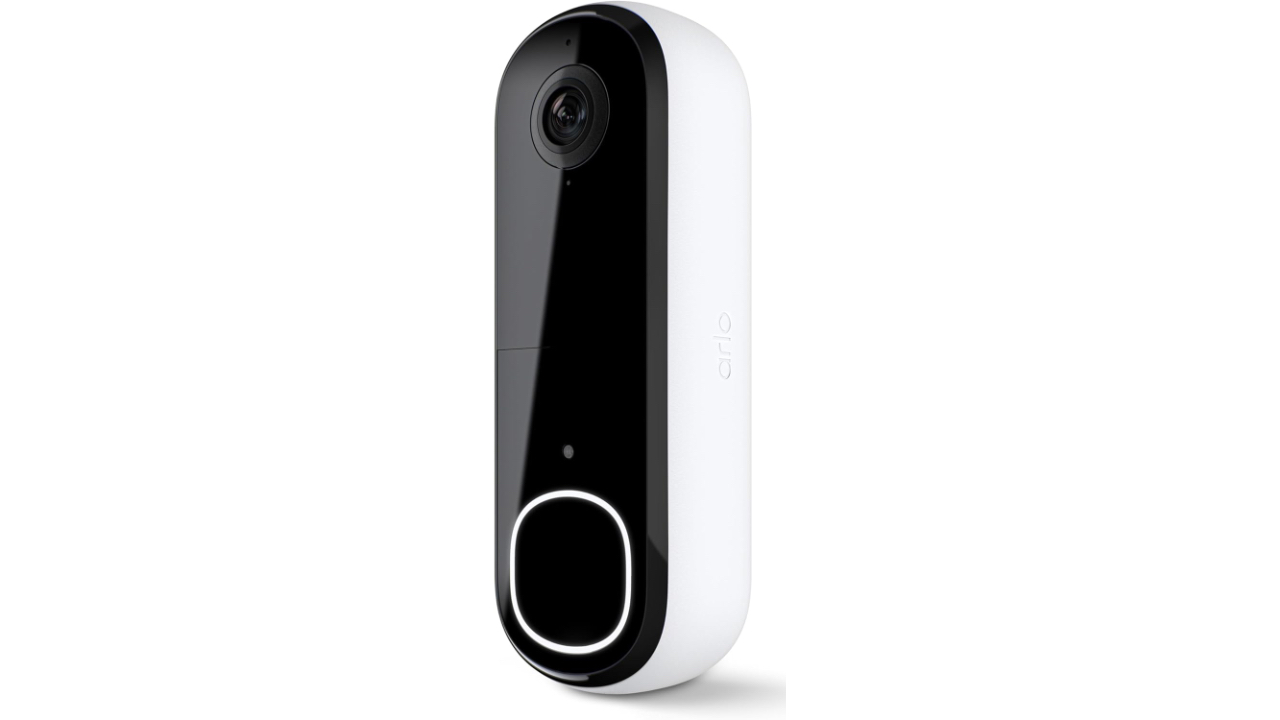
Arlo Video Doorbell 2K (2nd Gen) Review. Clear, wide 180° monitoring.
The Arlo Video Doorbell 2K (2nd Gen) is a compact, weather-rated video doorbell aimed at homeowners who want high-resolution coverage of their front door without committing to a whole-house hardwired system. The Arlo Video Doorbell pairs a 2K (≈1,944-pixel effective) image sensor with a very wide, 180° field of view to deliver a “head-to-toe” perspective intended to capture packages, faces, and delivery activity in a single frame. And it supports either battery operation or wired power depending on installer preference.
Pros
- 2K effective resolution (≈1,944 pixels) and a 180° field of view for broad doorstep coverage.
- Dual power options: integrated 4,730 mAh battery (non-removable, charges via USB-C) or wired installation for continuous power.
- IP65 water resistance and a compact footprint (1.85 × 4.72 × 1.45 in; ~7.2 oz) for exposed front-door mounting.
- Built-in spotlight, night-color mode, and H.265 encoding for more efficient storage and streaming.
- Includes accessories (angled mounting plate, wire extension kit, charging cable) and 1-month Arlo Secure trial.
Cons
- Key detection features (Person, Vehicle, Package recognition, and extended cloud storage) require an Arlo Secure paid subscription after the trial.
- Setup is limited to 2.4 GHz Wi-Fi networks, which can complicate placement where 2.4 GHz coverage is weak.
- Some specification entries are ambiguous (battery vs. “Batteries Required? No”) — customers must read the full product details to understand included power options.
Big Picture Features: What Makes the Arlo Video Doorbell Tick
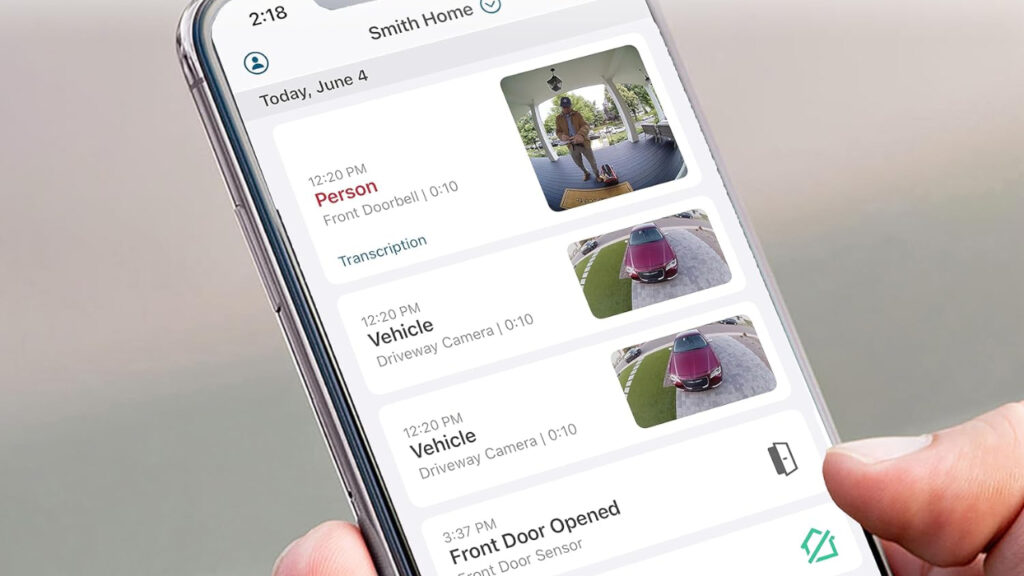
Image credit: Arlo
The headline technical strengths are the sensor and optics combination: Arlo lists the unit as a “2K” doorbell with an effective video resolution of 1,944 pixels and a 180° viewing angle. That pairing is intended to provide a single, tall frame that captures a person from head to toe and a package on the step without relying on multiple cameras. The listing also specifies a digital zoom capability (12:1) and H.265 video encoding to reduce bandwidth and storage requirements compared with older codecs.
Nighttime and low-light operation are part of the core package: the doorbell lists “Night Color” low-light technology and infrared/LED light sources, with a stated night-vision range of up to 20 feet. A built-in spotlight is called out in the product highlights for improving color detail at night, and Arlo explicitly pairs those optics with on-device processing and motion activation for real-time notifications through the Arlo app. These elements are framed as part of the camera’s ability to detect and record relevant events around the front door.
Beyond imaging, Arlo positions the device as flexible in power and connectivity: the product information lists the device as battery powered with an integrated, non-removable 4,730 mAh battery that charges via USB-C, while also supporting wired installation. For many buyers that means the doorbell can be used in retrofit situations without chime wiring, or hardwired where continuous power (and no interim recharging) is preferred. Arlo also lists Wi-Fi (2.4 GHz) connectivity and compatibility with Alexa voice/display devices for hands-free viewing.
Design That Works: Small, Smart, and Built for Your Doorstep
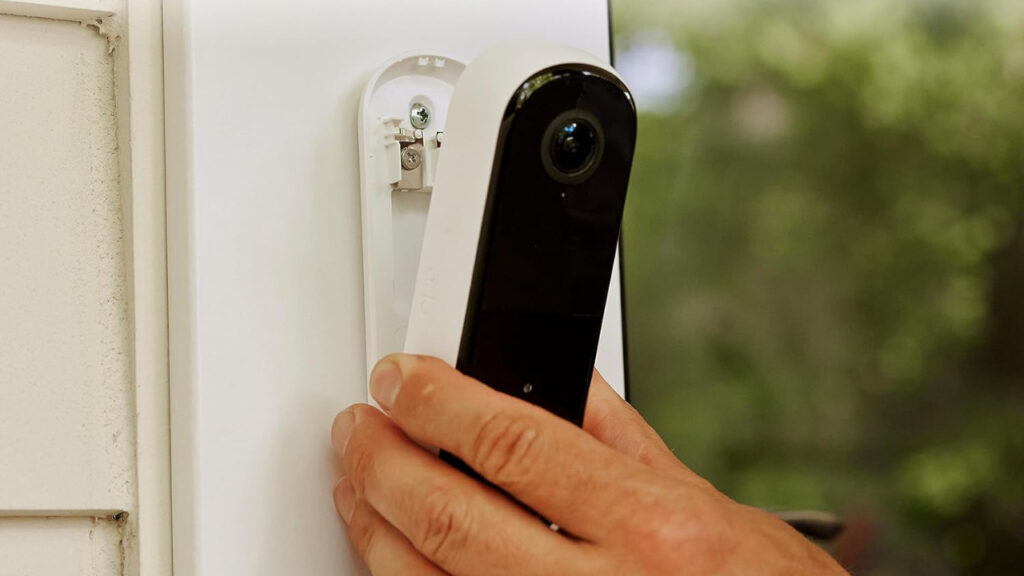
Image credit: TK
Arlo’s accessory and mounting choices reflect practical installation scenarios. The retail package lists a flat mounting plate and an angled mounting plate plus a wire extension kit and charging cable, which indicates Arlo expects users to adjust the doorbell’s aim to suit recessed or angled doorways. The unit’s rectangular dimensions (1.85 × 4.72 × 1.45 inches) and 7.2-ounce weight make it compact compared with many doorbells, which can be an advantage on narrow trim or decorative door frames.
Materials and ingress protection are summary points rather than full material-spec calls: the listing states an IP65 rating, described on the product page as weather resistant for outdoor use. That rating means the unit is designed to handle dust and low-pressure water jets rather than being fully submersible; for most front-porch placements this is the appropriate consumer-grade protection level but buyers with exposed coastal or irrigation-spray locations should note the distinction. The product’s color options and white finish are shown on the listing as the standard offering.
Arlo includes integration choices as part of the design narrative: compatibility with Chime 2, Arlo Security Tags, and Arlo cameras is listed, plus “Works with Alexa” is prominently shown. That ecosystem positioning makes it straightforward to add the doorbell to an existing Arlo install and to surface live video on Amazon Echo Show devices. The listing also notes app-based controls, remote siren activation and two-way audio, which align with typical expectations for modern smart doorbells.
How It Performs: Real-World Doorstep Coverage
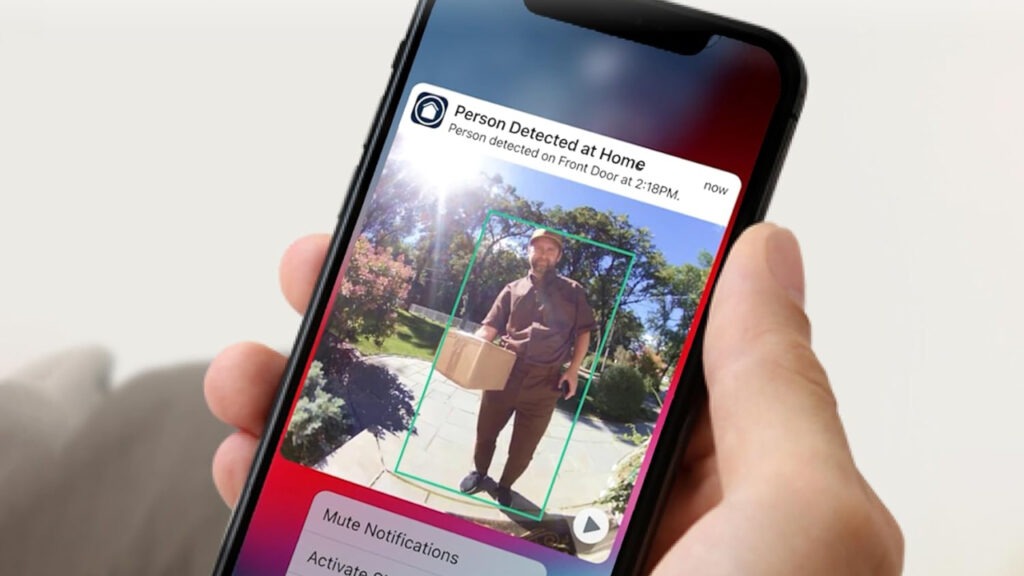
Image credit: Arlo
On paper the 2K resolution and 180° field of view should reduce the need for multiple cameras at the entryway: the effective resolution (1,944 pixels) paired with H.265 encoding supports sharper stills and more efficient video storage, while the tall field of view is explicitly marketed as “head to toe” coverage. Those specifications suggest the doorbell is optimized for identifying packages and people at typical doorstep distances; the listing’s emphasis on package detection and person/vehicle recognition underscores that intent. Note, however, that these higher-level detection features are tied to Arlo’s cloud subscription (Arlo Secure) for full functionality.
Connectivity choices influence real-world reliability: the listing specifies setup on 2.4 GHz Wi-Fi networks (and notes many routers are dual-band, exposing a 2.4 GHz SSID alongside 5 GHz). For homes with strong 2.4 GHz coverage this is usually fine, but in environments where 2.4 GHz is congested or the router is distant from the doorbell site, users may see degraded latency or intermittent connection unless they rearrange their network or add range extenders. The wired option mitigates power concerns but does not change the Wi-Fi requirement for cloud features and app access.
Storage and feature access are an important practical tradeoff: Arlo supplies a one-month Secure trial with the product listing, and the listing explicitly states that advanced alerts (Person & Vehicle Recognition, Package detection and multi-day cloud retention up to 60 days) require a paid Arlo Secure subscription after the trial. For buyers who want subscription-free, indefinite local storage, the listing does not promise that level of service; the product is positioned toward users willing to use Arlo’s cloud services to unlock the full set of AI detection features.
The Practical Stuff: Setup, Maintenance, and Compatibility
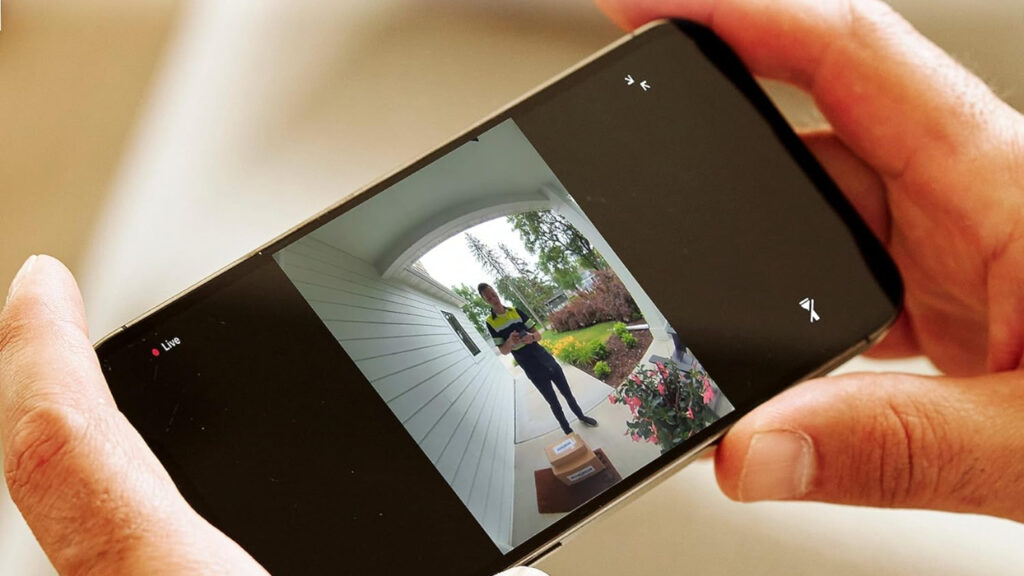
Image credit: Arlo
Setup and maintenance considerations are part of the purchase decision: the package lists a quick start guide and the physical accessories that help with angled installations, and Arlo points buyers to in-app setup via the Arlo app. The listing also contains warranty and return information (30-day return window through Amazon and manufacturer warranty request via customer service), which matters for buyers who want a defined return or support path. For households that expect to rely on battery power, Arlo’s stated integrated 4,730 mAh battery gives a concrete figure to compare with competing doorbells. Though the listing does not translate that capacity into specific runtime, so buyers should decide whether they prefer wired power to eliminate recharge cycles.
Compatibility and ecosystem fit are practical constraints: the listing calls out interoperability with Arlo devices (chimes, tags, cameras) and Amazon Alexa devices. If you already use Arlo devices, the doorbell fits neatly into that ecosystem and gains features such as cross-device notifications. Conversely, buyers committed to other ecosystems (e.g., heavily Google-centric setups) may find that the Arlo cloud features and integrations are optimized for Arlo’s own platform and Amazon services. The listing also highlights regional caveats for some services, and points users to Arlo’s Secure plan pages for details about availability.
Edge-case users should also note the product’s stated IP65 rating and the manufacturer guidance on accessories for battery backup and cellular fallbacks: the listing includes disclaimers that some features (like extended battery backup or certain insurance discounts) require additional Arlo accessories or subscriptions sold separately and may not be available in every country. Read those product notes carefully if your use case requires offline recording, cellular backup, or third-party insurance integrations.
Conclusion: Should You Buy Arlo Video Doorbell 2K?
The Arlo Video Doorbell 2K (2nd Gen) is a technically capable, compact doorbell that prioritizes wide, head-to-toe coverage (180°) and higher-resolution capture (~1,944 effective pixels) while offering flexible power options and a solid set of accessory choices for angled installs. It is especially well suited to buyers who want clear doorstep coverage and who accept Arlo’s cloud subscription model to unlock person/vehicle/package recognition and multi-day cloud storage.
If you prefer subscription-free, local-only storage or rely on a 5 GHz-only network, you should evaluate alternatives or plan network adjustments. For most homeowners seeking an Arlo-centric, high-coverage doorbell with night-color capability and ecosystem integrations (Alexa, Arlo chimes/cameras), this model is a sensible purchase; for those who resist recurring subscription fees, the listing makes clear the tradeoffs up front.