
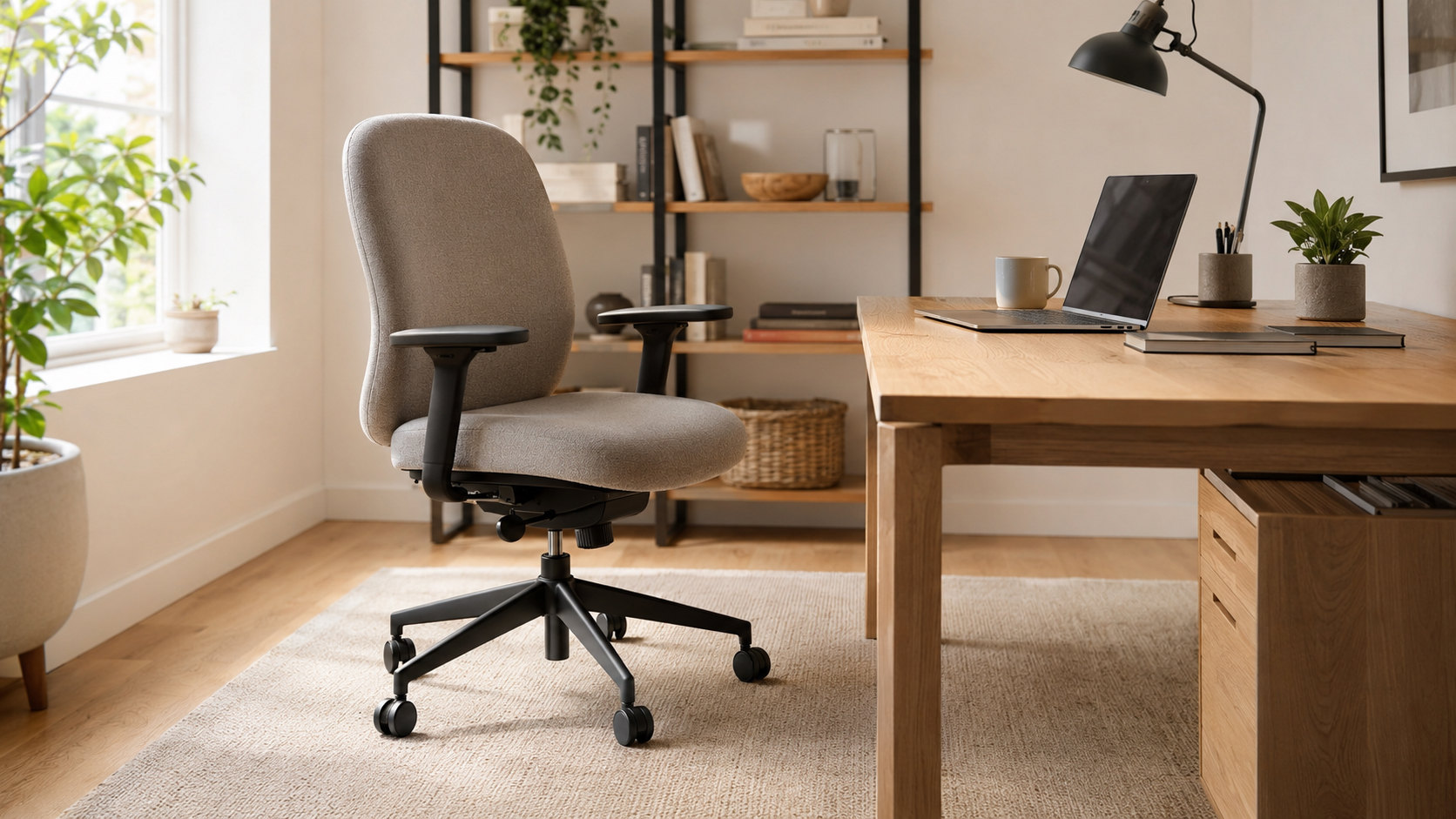
Best Office Chairs for Better Workdays in 2026
The best office chairs balance fit, support and movement without turning every adjustment into a mechanical puzzle. A chair can look impressive on a product page and still fight your body by lunch if the seat is too deep, the arms collide with the desk or the lumbar support lands in the wrong place.
Price alone does not solve those problems. This lineup covers five genuinely different approaches, from a straightforward budget mesh chair to a premium responsive back and an unconventional saddle seat. The strongest choice is the one that matches your height, desk, daily sitting time and tolerance for firm support, not simply the model with the longest feature list.
| Best Overall | Best Value | Best Budget | Best Premium | Best for Active Sitting |
|---|---|---|---|---|
| Branch Verve Chair | Steelcase Series 1 | Amazon Basics Mesh Chair | Haworth Fern Executive Chair | HAG Capisco 8106 |
 |  |  |  |  |
| A polished, breathable chair with six useful adjustments and a fit range that works especially well from 5 to 6 feet tall. | Compact Steelcase ergonomics, responsive controls and highly adjustable arms in a configuration built for carpeted floors. | A straightforward mesh-backed task chair for occasional work, homework stations and buyers who need to keep the price low. | A fully assembled premium chair with a responsive Wave Suspension back, 4D arms and a Digital Knit finish. | A saddle-style chair for people who prefer to perch, lean and change position instead of settling into one conventional pose. |
Why Buy a Better Office Chair?
A desk chair is one of the few pieces of furniture expected to support hours of concentrated work while remaining almost invisible to the person using it. When the seat height, depth and arm position fit correctly, the keyboard and monitor are easier to approach without shrugging the shoulders or reaching forward. When they do not, the chair becomes a low-grade distraction that keeps collecting interest as the day continues.
A better chair also gives the user room to change position. No adjustment can make prolonged sitting healthy by itself, so movement remains essential. The goal is not to lock the body into a showroom-perfect posture. It is to create several supported positions and make transitions between them easy. The office-chair comfort guide explains how seat height, foot support, monitor placement and small accessories can improve an existing setup before another purchase becomes necessary.
Durability deserves equal attention. Gas cylinders, tilt mechanisms, casters and arm caps absorb thousands of small movements. Established warranties and replaceable components are valuable because a chair that lasts through several work setups can cost less over time than a sequence of disposable seats. The premium models here charge heavily for that engineering, while the budget entry offers fewer adjustments and a shorter likely service horizon.
How to Choose the Best Office Chair for Your Needs
- Start with body fit. Compare the stated height range, seat depth and weight limit with the actual user. A seat should support the thighs without pressing behind the knees.
- Match the armrests to the desk. Adjustable arms are useful only when they can support relaxed shoulders and still slide beneath or beside the work surface.
- Choose lumbar intensity deliberately. Some people prefer a pronounced adjustable pad, while others respond better to a flexible back that spreads pressure more gently.
- Estimate daily use honestly. Occasional homework and full-time remote work place very different demands on cushioning, adjustment and warranty coverage.
- Check the selected configuration, not the general model family. Headrests, lumbar inserts, caster types, upholstery and lift heights often change from one listing option to another.
- Leave room for movement. Tilt, forward perch and seat-depth controls can support position changes, while a nearby standing surface can break up long sitting periods.
Readers building a sit-stand setup can also browse the Standing Desks archive. A tall chair is not a substitute for a properly adjusted desk, but the two can work together when their height ranges overlap.
Best Overall: Branch Verve Chair
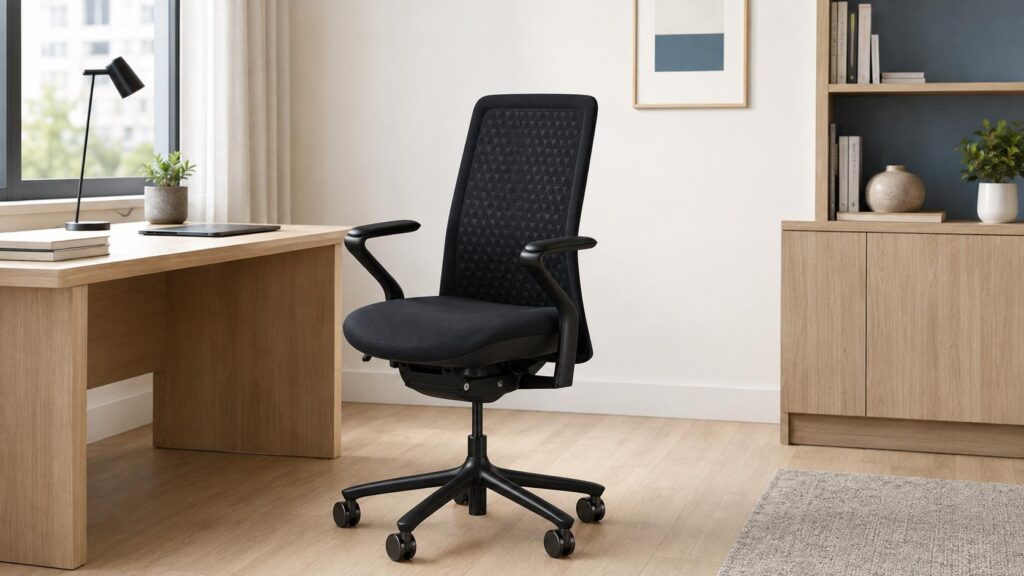
- Six adjustment points cover seat height, seat depth, tilt, lumbar height and armrest height.
- The ventilated 3D-knit back and high-density foam seat balance airflow with support.
- Its Galaxy finish and coordinated frame create a more polished look than most task chairs.
The Branch Verve Chair is the easiest chair here to recommend broadly because it combines useful adjustment with a design that does not make a home office resemble an equipment cage. The contoured seat and V-shaped back encourage an upright position, while the sliding lumbar element can be placed where the lower back actually needs it. Branch recommends this configuration for users between 5 and 6 feet tall and up to 275 pounds, so buyers near either edge should compare their measurements carefully. The armrests are visually clever but can move more easily than some people prefer. That quirk does not erase the chair’s strong balance of comfort, ventilation, fit and style.
Best Value: Steelcase Series 1
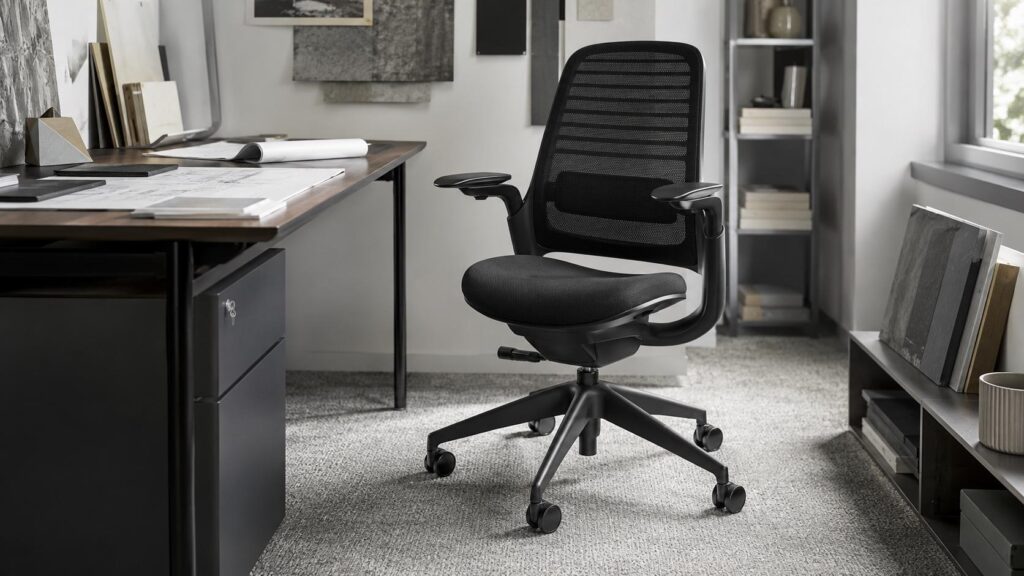
- Weight-activated controls reduce the amount of lever hunting required during setup.
- The seat is height- and depth-adjustable, with flexible edges that ease pressure behind the legs.
- This Licorice configuration includes carpet casters and adjustable arms without an included headrest.
The Steelcase Series 1 Office Chair brings a recognizable commercial-office approach into a compact frame. Steelcase builds the seat around adaptive bolstering and a flexible edge, then adds a responsive back and highly adjustable arm caps. The selected Amazon configuration is the Licorice chair with carpet casters, not the separate headrest package. Its backrest is shorter and its adjustments are less expansive than premium Steelcase models, but the essentials are present and sensibly organized. It is a smart middle ground for a smaller office where a bargain chair feels too limited and a four-figure flagship would be financial overkill.
Best Budget: Amazon Basics Mesh Chair
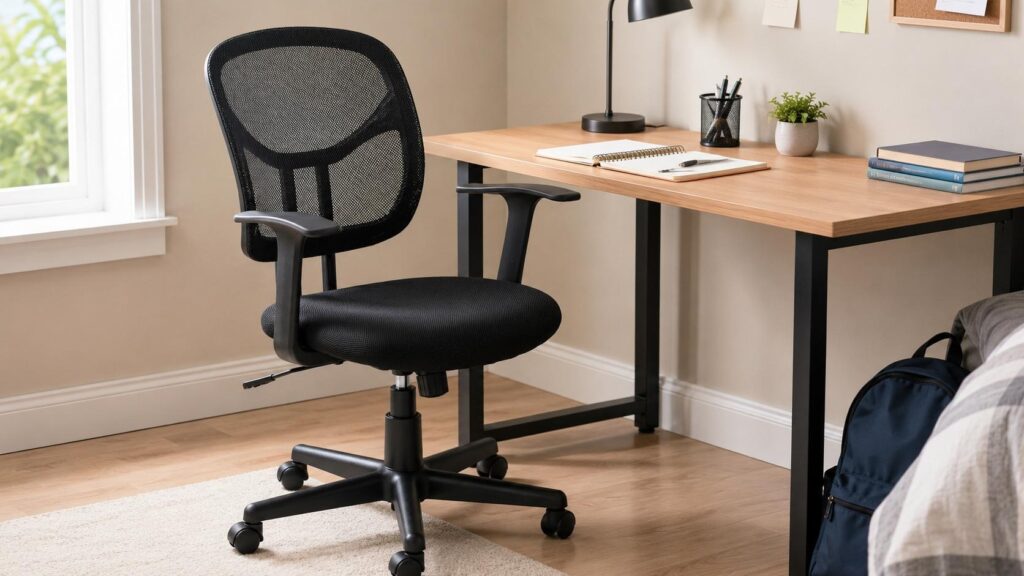
- A breathable mesh back and padded seat cover the basics for short and moderate desk sessions.
- Pneumatic height adjustment, swivel action and dual-wheel casters make everyday positioning simple.
- The 275-pound capacity and BIFMA certification provide clearer limits than many anonymous budget chairs.
The Amazon Basics Breathable Mesh Mid-Back Office Chair makes a disciplined case for buying only the chair you need. It has fixed curved arms, a mid-back mesh panel, a padded seat, height adjustment and tilt tension. There is no adjustable lumbar mechanism, seat-depth control or elaborate arm system waiting beneath the desk. That simplicity is acceptable for a homework station, guest workspace or occasional home-office shift. People who routinely sit for a full workday should spend more for better fit control, especially if fixed arm height conflicts with the desk. For basic duty at a low price, however, this model is refreshingly easy to understand.
Best Premium: Haworth Fern Executive Chair
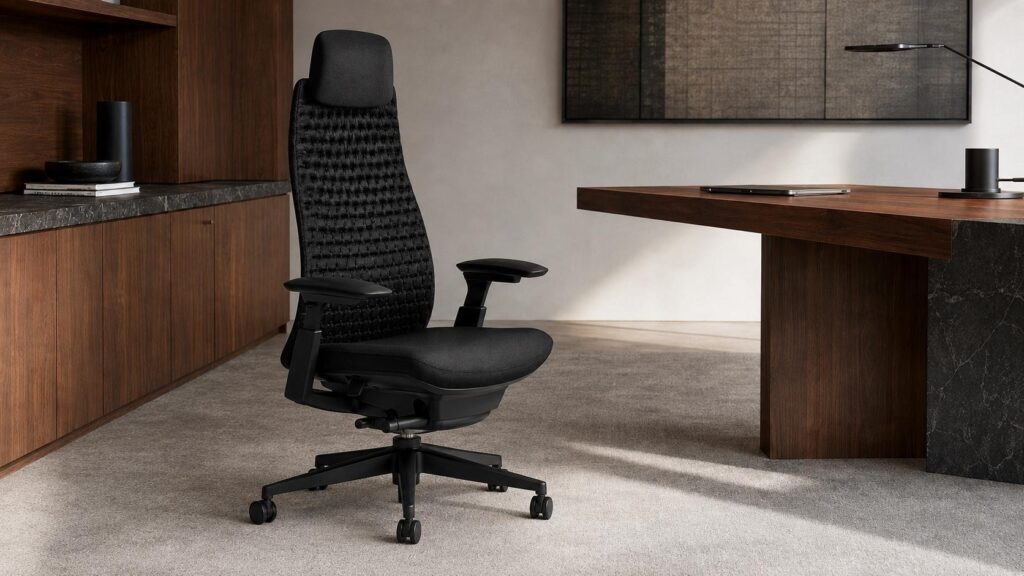
- Fern’s Wave Suspension back flexes with movement instead of forcing the torso against a rigid panel.
- The exact chair includes 4D arms, seat-depth adjustment, forward tilt, a headrest and soft casters.
- It arrives fully assembled and carries a 12-year warranty for the original purchaser.
The Haworth Fern Executive Office Chair is the premium choice for buyers who want a chair that responds smoothly as they shift from focused typing to a reclined reading position. This Charcoal Black version uses Haworth’s Digital Knit upholstery and includes an adjustable headrest, but it does not include the separate lumbar-support insert. The distinction is important because the flexible Wave Suspension structure still supports the back, just without the more pronounced optional pad. It supports up to 325 pounds and arrives assembled, which saves the awkward ritual of balancing a large backrest over a half-finished base.
Best for Active Sitting: HAG Capisco 8106
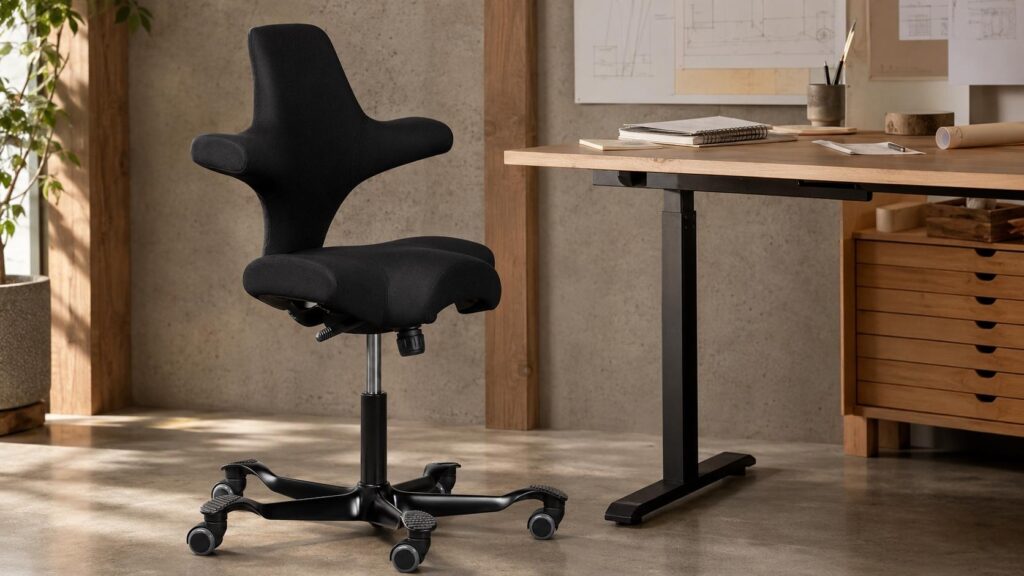
- The saddle seat supports forward, backward and sideways positions for frequent posture changes.
- Seat depth, back height, tilt tension and a two-position back lock provide useful active-sitting control.
- The selected 200mm lift provides a listed seat-height range of 19 to 26 inches.
The HAG Capisco 8106 Adjustable Sit-to-Stand Desk Chair treats movement as the feature rather than a failure of discipline. Its sculpted saddle seat encourages perching, leaning and turning, while the winged backrest can support the torso from several directions. The exact black polyester configuration uses the standard 19-to-26-inch range, which works with ordinary desks and many adjustable setups but should not be confused with the optional extra-high lift. The firm seat also feels very different from a conventional cushioned chair. Buyers seeking a soft place to settle for eight motionless hours should keep scrolling. People who already change position constantly may finally feel understood.
Finding the Right Seat
The Branch Verve offers the strongest overall blend for most home offices, but the rankings are not a universal seating chart. The Steelcase Series 1 is the sharper value for compact spaces, the Amazon Basics chair handles light duty at a low price, and the Haworth Fern gives demanding buyers a more fluid premium experience. The HAG Capisco belongs to a different school entirely, one where changing position is the point.
Treat fit as the final authority. Measure the desk, compare seat dimensions and use a return window when possible. A chair that encourages relaxed shoulders, supported feet and frequent movement will do more useful work than one that merely photographs well. More office and seating coverage is available in the Furniture archive.