
Branch Verve Chair Review: Style With Real Support
The Branch Verve Chair combines six useful adjustments, breathable support and unusually polished styling for a modern home office.
It lands in a particularly useful middle ground: more supportive and adjustable than a bargain task chair, less imposing than a corporate heavyweight, and handsome enough to live in a bedroom or living room after the laptop closes. Buyers from roughly 5 to 6 feet tall should consider it when comfort and appearance carry equal weight.
Pros
- Six meaningful adjustments cover the controls most people use regularly.
- Breathable 3D-knit back and high-density foam seat suit longer work sessions.
- Coordinated Galaxy color and sculpted lines look refined in visible living spaces.
- Seven-year warranty and replaceable components support longer ownership.
Cons
- Armrests can shift more easily than firmly indexed designs.
- Recommended fit range tops out around 6 feet and 275 pounds.
- Optional headrest costs extra.
- Assembly is manageable but still involves several large components.
Six Adjustments Without a Cockpit Full of Levers
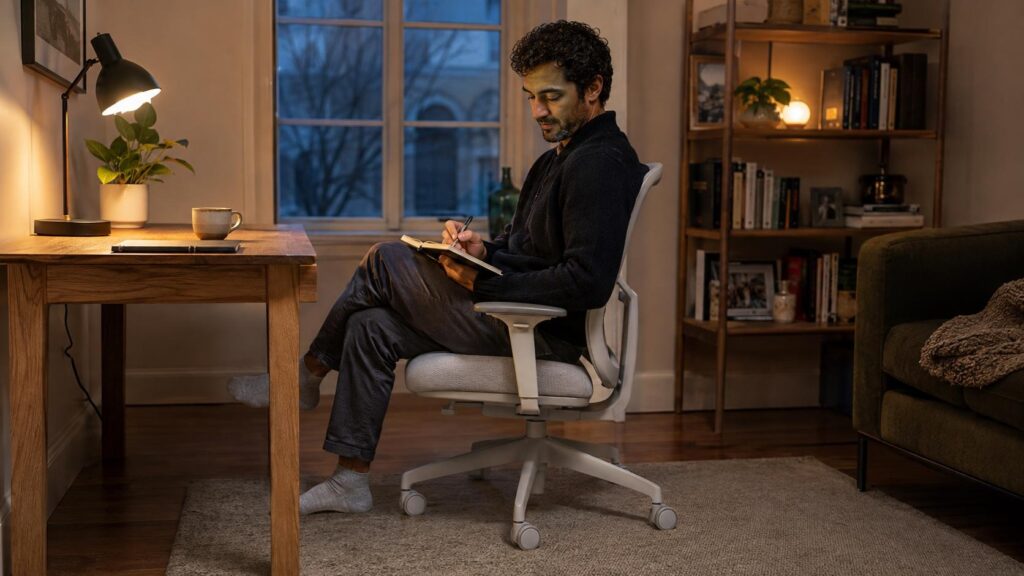
The Verve focuses on the controls that change everyday fit: seat height, seat depth, tilt tension, tilt lock, lumbar height and armrest height. That is enough range to align knees, hips and elbows without turning the underside of the seat into a flight simulator. The seat slider is particularly useful because depth determines whether the front edge supports the thighs or presses behind the knees. Shorter users can pull the seat inward, while longer-legged users have room to extend it.
The V-shaped back contains an integrated spine-support structure with a lumbar element that moves vertically. It is medium rather than aggressive support, so it guides the lower back without feeling like a fist tucked behind the beltline. Anyone who prefers a hard, pronounced lumbar pad may want more intensity. For many users, however, the softer curve is easier to tolerate across a complete workday.
At 5 to 6 feet tall and up to 275 pounds, the Verve’s intended fit range is fairly clear. A buyer near 6 feet should compare seat depth and back height instead of assuming the chair will scale indefinitely. The old internet ritual of declaring one chair perfect for every body has produced enough sore backs already.
A Knit Back That Belongs in the Room
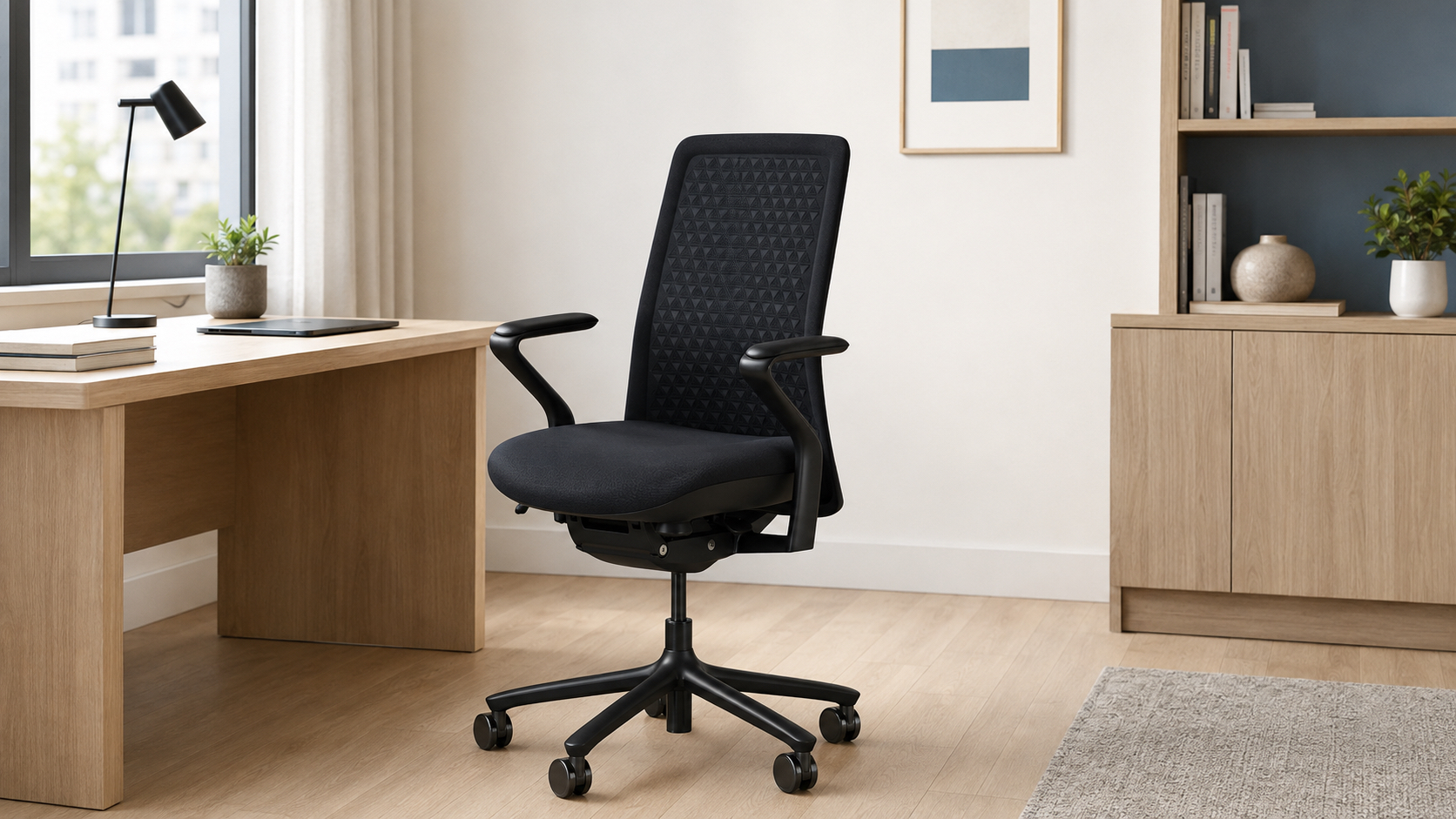
Many ergonomic chairs wear their mechanisms like exposed plumbing. The Verve takes a more architectural approach. Its knit back, color-matched frame and sweeping arms give it the presence of intentional furniture, not surplus equipment borrowed from a conference room. Galaxy is a restrained gray-blue that works with wood, white or darker desks without shouting for attention.
The 3D-knit panel allows air to circulate and flexes as the torso moves. Underneath, the glass-reinforced polyamide frame supplies structure while an aluminum base keeps the chair planted. The seat uses high-density foam rather than a suspended mesh pan. That creates a warmer, more cushioned feel, but it also avoids the hard frame edge that some mesh seats reveal when the user shifts sideways.
The polished styling and supportive back are easy to like. The recurring reservation is the armrests. Their sculpted shape looks excellent, but the adjustment can feel less secure than the ratcheted arms on some business-focused chairs. They may stay put perfectly well during typing, then shift when used to push the chair away from the desk. That will annoy some people far more than others.
The optional headrest can extend the upper support, but it costs extra. Buyers who rarely recline may not miss it, while people who read or take calls in a leaned position may value the addition. Because the headrest changes both cost and silhouette, it should be treated as a deliberate accessory rather than an automatic completion badge.
Comfort Comes from Setup, Not Wishful Thinking
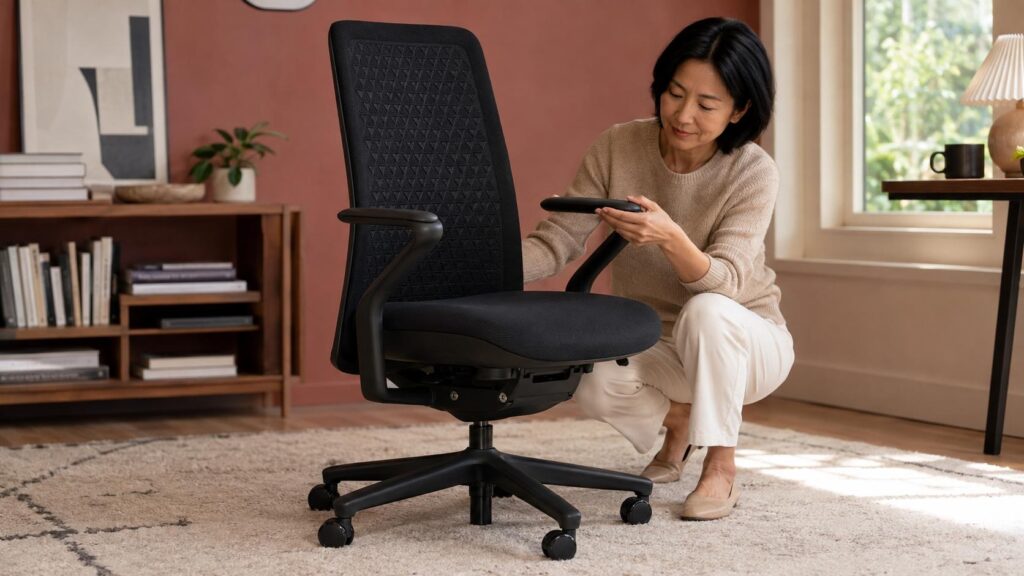
A supportive chair can still feel wrong when dropped at the wrong height. Start by placing both feet flat and setting the seat so the knees rest near a right angle. Then slide the seat until a small gap remains behind the knees. Move the lumbar support into the natural curve above the beltline, lower the shoulders and bring the armrests up only far enough to support relaxed forearms.
Tilt tension should allow a controlled recline without requiring a wrestling match. Locking the back upright can help during short focused tasks, but leaving some movement available is usually more comfortable across a longer session. The Verve is not a lounge chair, and that is a compliment. Its best posture is alert and supported, with enough give to keep the torso from feeling pinned.
The site’s office-chair comfort guide covers foot support, monitor height and other setup details that change how a chair feels. A footrest can be especially useful for shorter users who need to raise the seat to meet a tall desk. No lumbar slider can compensate for feet dangling several inches above the floor.
The Price Sits Between Bargain and Boardroom
The Verve costs more than anonymous mesh chairs and less than flagship models from Haworth or Steelcase. That middle position is competitive because the money is visible in the materials, color integration and useful adjustment range. The chair also carries a seven-year warranty, which gives the purchase a longer horizon than a low-cost seat bought with crossed fingers and a tiny hex key.
The closest alternative in this lineup is the Steelcase Series 1. Steelcase offers a more conventional commercial-office feel, particularly around the arms and responsive controls. The Verve looks more at home in a multipurpose living space and provides a taller, more sculpted visual statement. Buyers choosing between them should prioritize body fit and arm behavior before aesthetics.
For the broader field, the best office chairs comparison places both models beside budget, premium and active-sitting options. The Verve wins overall because it asks for relatively few compromises from the largest portion of the audience. Its limits are real, but they are legible.
Should You Buy the Branch Verve Chair?
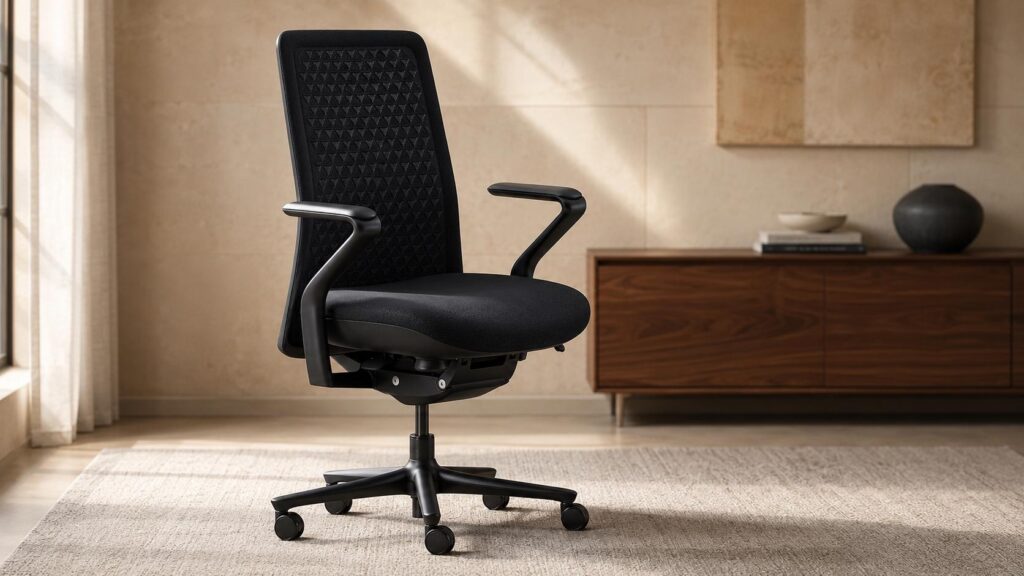
The Verve is a strong fit for a 5-to-6-foot user who wants breathable support, a conventional foam seat and enough adjustment to refine posture without studying a lever map. It is especially appealing when the office shares space with a bedroom or living room and the chair will remain visible after work ends.
Skip it if the 275-pound limit, back height or easily moved armrests conflict with your needs. Taller and larger users should seek a chair designed around a broader fit range, while buyers who want aggressive lumbar pressure may prefer a different back system.
For the right body and workspace, the Branch Verve Chair earns its best-overall position with a rare combination of support, ventilation and grown-up design.