
Jackery Explorer 2000 v2 Portable Power Station, 2042Wh LiFePO4 Home Backup Battery, 2200W Solar Generator, USB-C PD 100W Fast Charging for Emergencies, Power Outages, Camping(Solar Panel Optional)
Jackery Explorer 2000 v2 is really just what happens when a power station stops pretending to be a gadget and starts acting like a calm, indoor-friendly backup system. With 2042Wh of capacity, 2200W of AC output, and a 39.5-pound frame, it is built for buyers who want serious reserve power for outages, CPAP use, networking gear, camp setups, and other situations where silence and reliability are better company than fumes and fuss.
Pros
- 2042Wh of LiFePO4 storage with 2200W continuous output and 4400W surge capacity gives it real headroom for essential household loads.
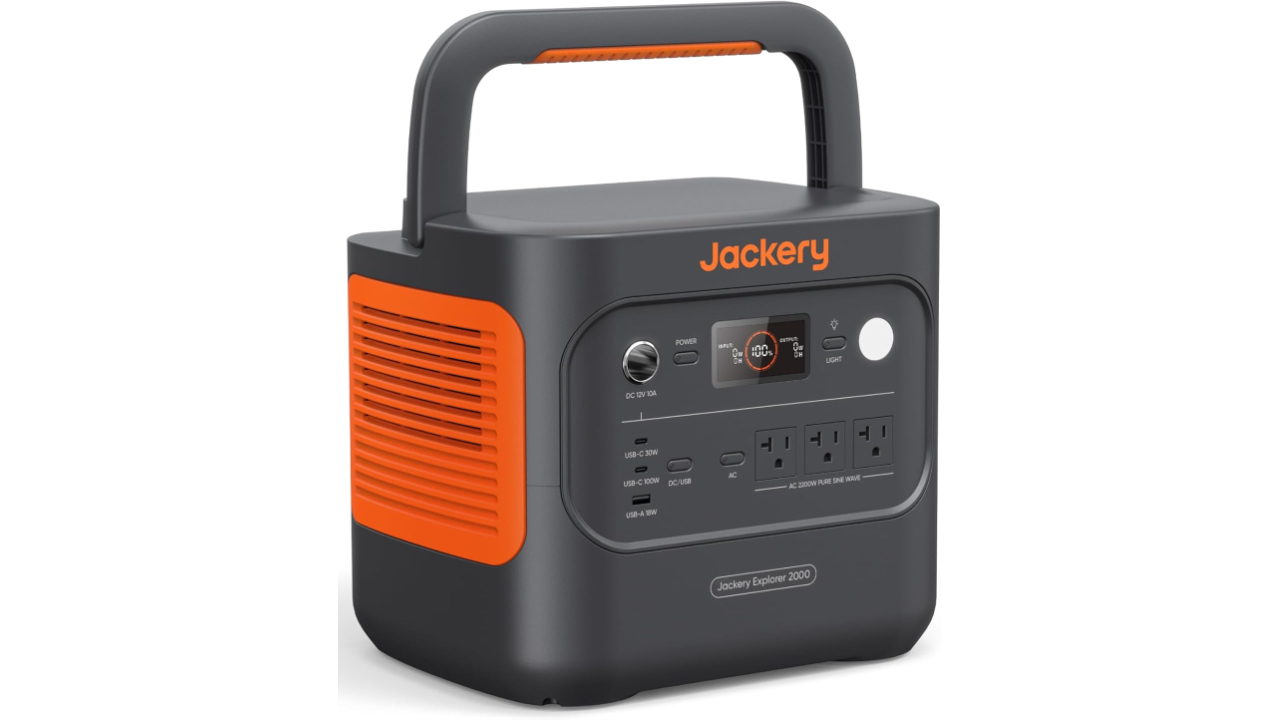
- Three AC outlets, one 100W USB-C port, one 30W USB-C port, one 18W USB-A port, and a 12V car port make it well suited to mixed-device use.
- The 3 plus 2-year warranty and 4000 cycle rating to 70 percent plus capacity point to long service life.
- Under 20ms UPS switching and roughly 1.75-hour AC charging make it unusually ready for emergency use.
Cons
- At 39.5 pounds, it is portable in the broadest sense, not the whimsical, toss it over your shoulder sense.
- Solar charging is listed at 7.5 hours and car charging at 24 hours, so wall charging is clearly the sensible recovery path.
- The outlet mix is practical, but buyers with lots of high draw accessories may wish for more than three AC sockets and one high power USB-C port.
- Its operating window is defined, with charging allowed from 32 to 113 F and discharge from 14 to 113 F, which asks for some climate awareness.
Big Energy, Tucked into A Manageable Shell
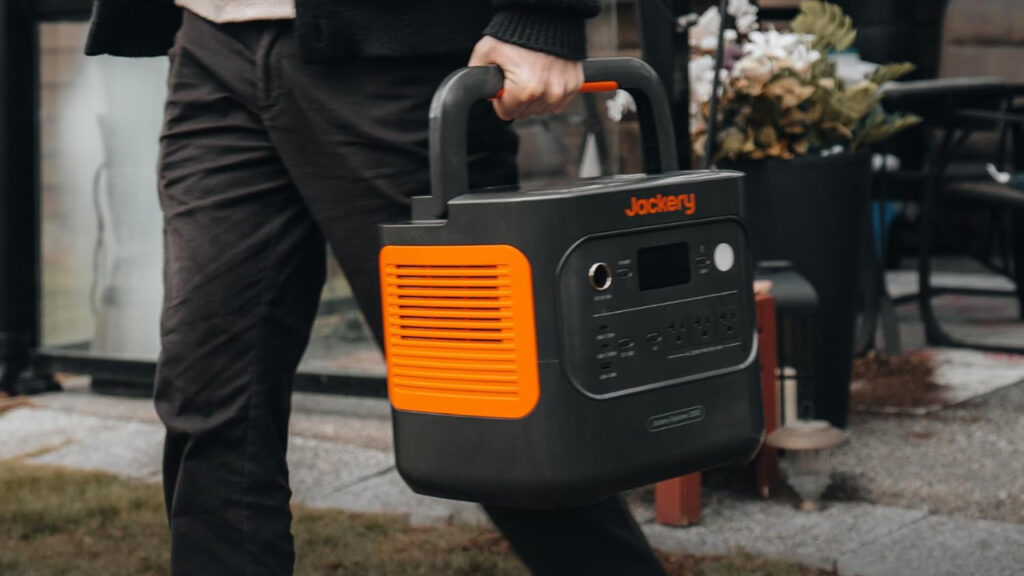
Image credit: Jackery
The heart of the Jackery Explorer 2000 v2 is its 2042Wh battery, paired with 2200W of rated AC output and a 4400W surge ceiling. In plain terms, that is the kind of specification sheet that signals genuine backup capability rather than decorative convenience. Jackery pairs that capacity with LiFePO4 chemistry and a battery rated for 4000 cycles to 70 percent plus capacity, which is the sort of long runway buyers appreciate when they are spending on preparedness rather than novelty.
The output layout is sensible and, mercifully, not overcomplicated. There are three AC outlets, two USB-C ports, one rated at 100W and one at 30W, plus an 18W USB-A port and a 12V car port. That mix makes it easier to keep a household router alive while also charging a laptop, phone, or small accessory without carrying a separate nest of adapters, which is the kind of domestic order that feels almost botanical in its neatness.
Charging behavior is just as important as output, and here the unit reads as a practical emergency tool. Jackery lists AC charging at about 1.75 hours, solar charging at 7.5 hours, and car charging at 24 hours. The site also describes under 20ms UPS switching, which is the kind of detail that gives confidence to anyone trying to keep a router, computer, or NAS online during a brief outage rather than waiting for the house to notice the grid has blinked.
Built With Utility, Not Theater
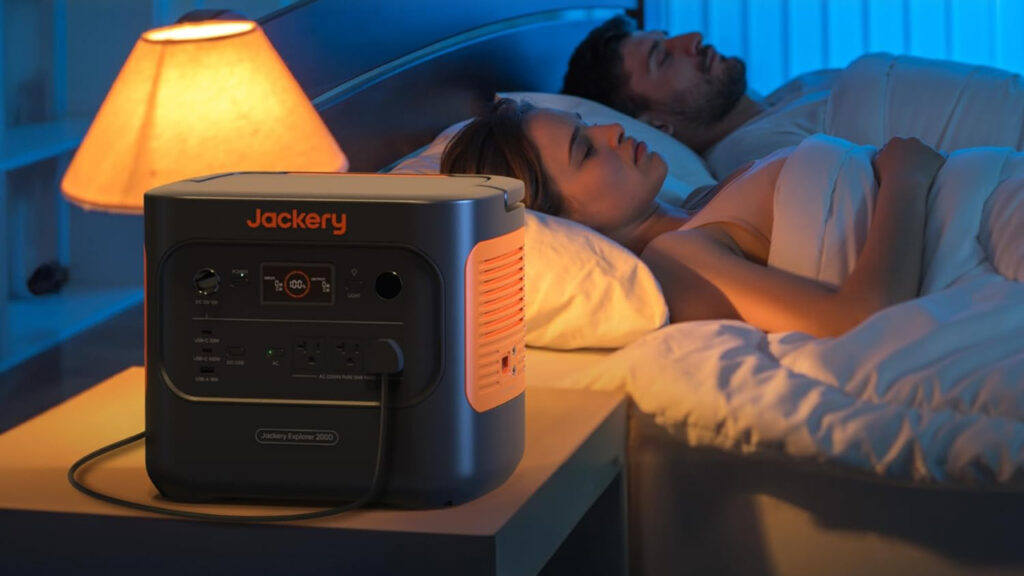
Image credit: Jackery
The physical design reinforces the same message. At 39.5 pounds and 13.2 by 10.4 by 11.5 inches, the Explorer 2000 v2 is compact for a 2kWh unit, but it is still a serious object, not a dainty carry-on. That makes it much better suited to planned movement between a wall outlet, a vehicle, a garage, or a campsite than to spontaneous carrying from place to place. It feels like something meant to be placed intentionally, then moved only when necessary.
Jackery also highlights Cell to Body Technology and a compact structure, and the physical specifications support that claim well enough. The product has the dense, tidy footprint of a device designed to maximize usable energy without sprawling across the floor. For buyers who value space efficiency, that is a pleasant engineering choice, because the machine does not ask for a whole corner of the room to justify its existence.
The practical finishing touches are strong too. The warranty is listed at 3 plus 2 years, the battery is rated for long cycle life, and the product is presented as an indoor friendly solution with no fumes and no installation required. Jackery also lists a 95 percent charge retention figure after 12 months, which suggests a unit that can sit ready without constant babysitting, a very welcome quality in something meant to spare you the performance art of panic during a blackout.
What Daily Use Should Feel Like
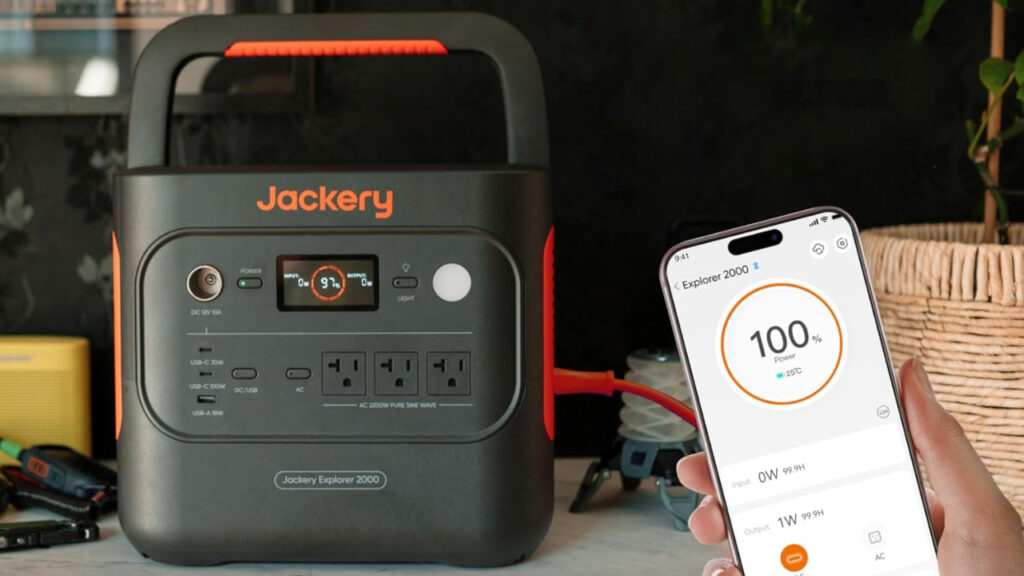
Image credit: Jackery
Jackery positions the Explorer 2000 v2 around essential appliances and real household continuity, not around tiny electronics alone. The official materials explicitly call out refrigerators, microwaves, coffee makers, routers, computers, and NAS devices, and that is the right neighborhood for a 2200W power station of this size. It is a machine for keeping the important corners of life moving when the lights go out, not for pretending to be an unlimited substitute for the grid.
Noise also looks well judged on paper. Jackery states that it operates at just 30 dB in Quiet Mode and 45 dB at full load, with the noise measured at a distance of one meter. That is useful because many buyers looking at a power station of this class are trying to solve a sleeping, working, or overnight backup problem, and a loud fan would ruin the spell. Here, the numbers point toward a unit that can sit nearby without making itself the star of the room.
The 20ms switching time is another feature that belongs in the real world rather than the brochure world. It is fast enough to support sensitive electronics during brief outages, and Jackery says the unit is UL1778 test certified for uninterruptible power supply use. That gives the Explorer 2000 v2 a more serious credibility than a casual camping battery, and it is one of the clearest reasons it makes sense for home backup buyers who do not want a dramatic pause every time the utility company sneezes.
The Trade Offs You Should Look at Closely
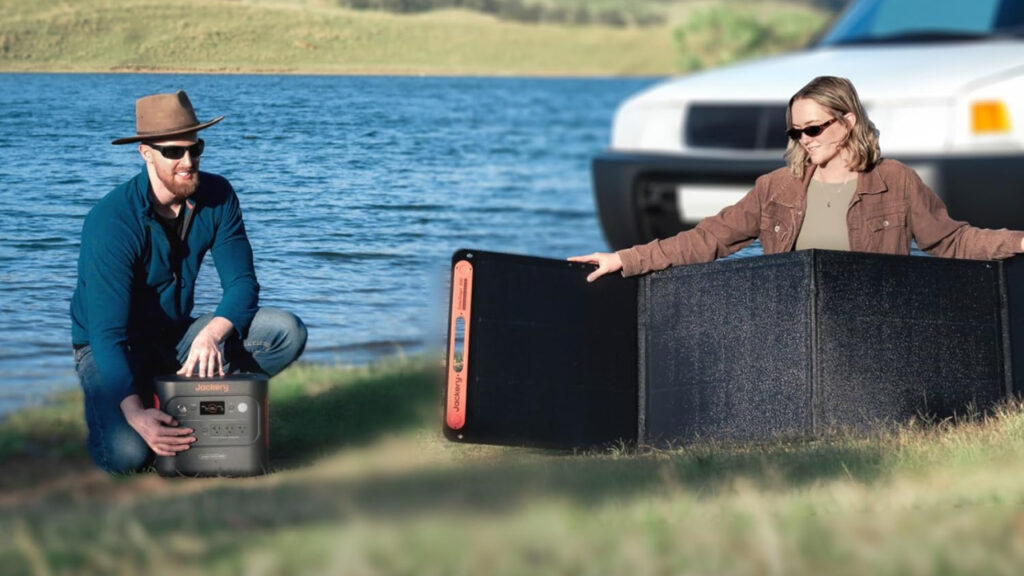
Image credit: Jackery
The biggest trade off is simple, and it is written right into the weight. At 39.5 pounds, this is not the kind of unit you buy for carefree hauling. The good news is that the same weight comes with a 2kWh class battery and a sturdy output package, but the buyer should still think of it as a moveable backup appliance rather than a casual travel companion. In that sense, it is honest about its job, which is more than can be said for many products that show up dressed like luggage and behave like furniture.
Setup is refreshingly straightforward. Jackery says no installation is required, and the listing shows the included contents as the Explorer 2000 v2 and an AC charging cable. Solar remains optional, with bundled options available on the official site, so buyers who want off grid charging can build that path deliberately instead of paying for it by default. For some households, that modularity is a blessing. For others, it will feel like one more thing to price out, which is fair enough.
There are also sensible environmental boundaries to keep in mind. The charge temperature range is 32 to 113 F, and the discharge range is 14 to 113 F, so this is not a device that wants to loaf around in harsh cold while pretending to be invincible. Jackery’s 95 percent charge retention figure after 12 months is reassuring, but the slower recovery paths, especially 24-hour car charging, make clear that wall power is the natural home for this machine.
Conclusion: Should You Buy Jackery Explorer 2000 v2 Portable Power Station?
The Jackery Explorer 2000 v2 is a well specified, quietly competent power station for buyers who want real emergency backup, a long life LiFePO4 battery, under 20ms UPS switching, and enough output to handle essential home loads without theatrics. Its real drawbacks are the expected ones, chiefly the 39.5-pound weight and the slower recovery paths for solar and vehicle charging, so it is best for people who want a serious backup companion rather than a featherweight travel toy. For home preparedness, networking gear, CPAP use, and planned camping, it is a very sensible purchase; for buyers chasing lighter carry or more expansive off grid flexibility, the fit is less tidy.