
Osprey Atmos AG 65: Ventilated Multi-Day Comfort
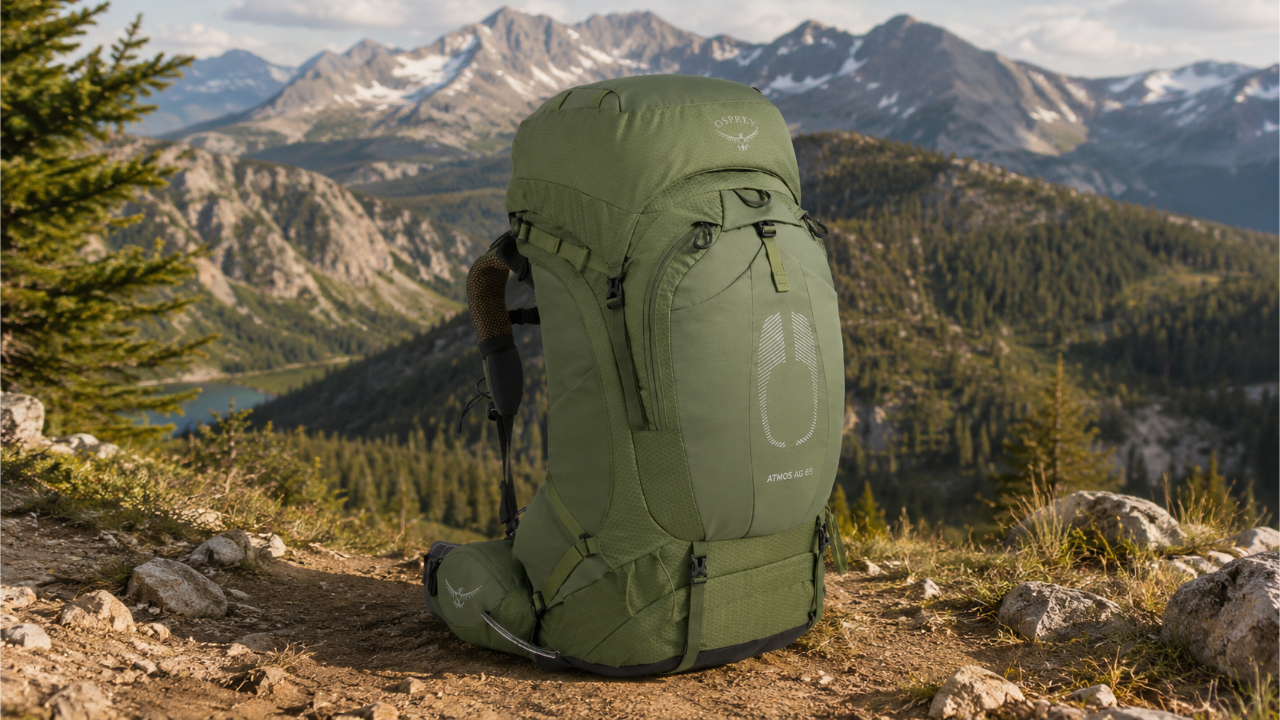
The Osprey Atmos AG 65 combines 65-liter capacity, AntiGravity suspension, fine-tuned fit, and ventilation for long trail days. It is a structured, feature-rich backpack for men carrying traditional backpacking loads, especially when comfort and organization matter more than shaving every possible ounce.
Pros
- AntiGravity suspension spreads contact across the back and hipbelt
- 30- to 40-pound manufacturer load range
- Fit-on-the-Fly harness and hipbelt adjustments
- Integrated raincover and dual side-zip main-compartment access
- 65L S/M and 68L L/XL capacities
- Strong hydration, pole, sleeping-bag, and pocket organization
Cons
- About 4.6 to 4.8 pounds before gear is added
- Premium price compared with basic framed packs
- Large suspension profile can feel bulky for minimalists
- More pockets and straps than ultralight hikers may want
AntiGravity Suspension Changes the Carry
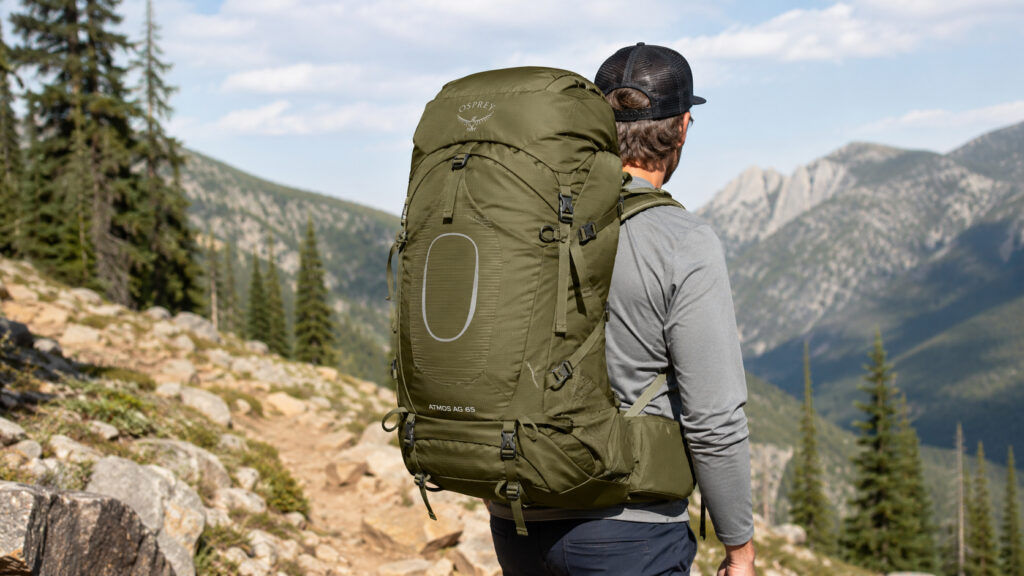
Heavy packs become uncomfortable for several different reasons. Shoulder straps can take too much weight, hipbelts can slide, and a flat back panel can trap heat until every uphill section feels warmer than it should. The Atmos AG 65 attacks those problems with Osprey’s AntiGravity suspension, a continuous tensioned-mesh structure that follows the back and wraps into the hip area. The goal is not to make 35 pounds physically weigh less; it is to spread contact and transfer load in a way that avoids concentrating pressure in one or two hot spots.
Osprey lists a 30- to 40-pound load range for the Atmos AG 65. That range is a useful guide because it describes where the frame and suspension are designed to work. A full three-season setup with food, water, shelter, and a few comfort items can land squarely in that window. The pack feels most logical for conventional backpackers rather than ultralight hikers whose entire kit may weigh less than the Atmos is designed to carry comfortably.
Ventilation is the other major advantage of the suspended mesh. Air can move between the pack body and the back instead of forcing the entire load against a shirt. No backpack eliminates sweat on a steep summer climb, but an open channel and tensioned mesh can reduce the clammy, heat-soaked feeling produced by thick foam pressed directly against the spine.
The tradeoff is complexity and weight. The S/M Atmos weighs about 4.61 pounds, and the L/XL is about 4.81 pounds. That is meaningful before a single tent stake enters the pack. The suspension earns its place when loads are substantial and comfort is a priority; it is harder to justify for a stripped-down overnight kit that could ride in a pack half the weight.
A Fit System Worth Measuring for
The Atmos comes in S/M and L/XL sizes, and Osprey provides torso ranges that overlap through part of the middle. The S/M is aimed at roughly 17- to 21-inch torsos, while the L/XL covers about 19 to 23 inches. Torso length should be measured before ordering because a mis-sized frame can place the shoulder harness, load lifters, and hipbelt in the wrong relationship to the body.
Fit-on-the-Fly adjustments at the harness and hipbelt help refine the contact points after the correct pack size is chosen. The hipbelt can be extended to better wrap the iliac crest, and the harness can be tuned so the shoulder straps follow the torso without carrying the majority of the load. Small changes matter more after several hours than they do during a five-minute living-room try-on.
Packing technique still matters. Dense items such as food and cooking gear belong close to the spine and near the middle of the pack rather than hanging far from the back. A sleeping bag and other lighter compressible pieces can fill the lower area. Once the load is balanced, the hipbelt should take the majority of the weight, the shoulder straps should sit close without biting, and the load lifters should gently draw the upper pack toward the body.
The Atmos is not a pack to buy in an oversized volume and hope the compression straps solve everything. The S/M holds 65 liters, while the L/XL is technically 68 liters. Both are large enough for true multi-day use. Hikers with compact gear may find the pack more than they need, but those carrying bulkier sleep systems, cold-weather layers, or group equipment gain room without giving up the supportive frame.
Organization That Saves Trail Time
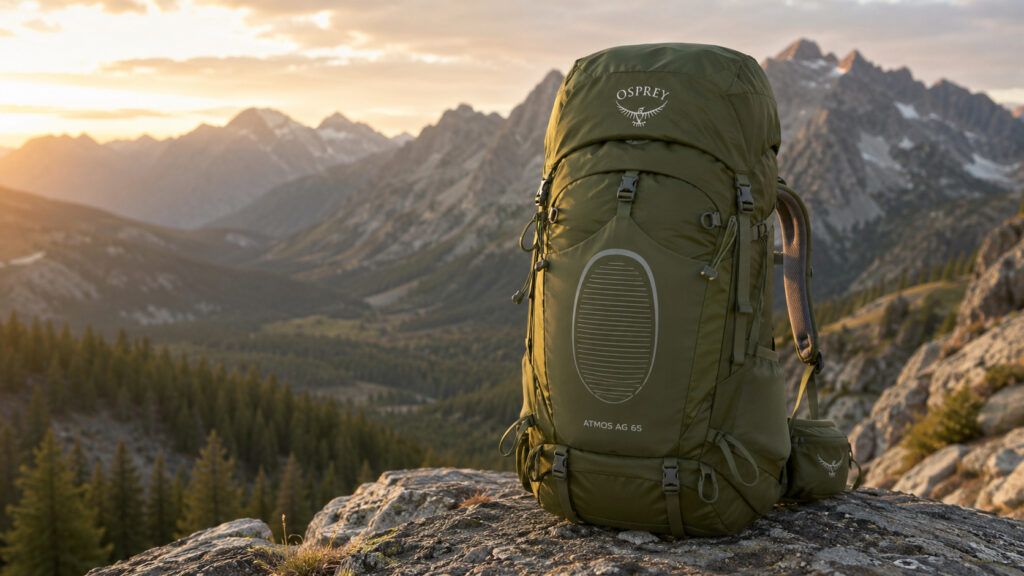
Large backpacking packs often become deep storage tubes. The item needed now is usually beneath the item that can wait until camp. The Atmos avoids some of that frustration with curved side zippers on both sides of the main compartment. They allow direct access to interior gear without removing the top lid and unpacking every layer above it.
The lower sleeping-bag compartment includes a removable divider. Keeping the divider in place creates a separate bottom zone for a sleeping bag or other soft items; removing it turns the pack into a single larger cavity. That flexibility is useful because packing styles change with seasons. A summer quilt may need very little room, while a colder synthetic bag can consume a significant part of the lower pack.
External storage is equally thoughtful. Tall dual-access side pockets let a bottle enter from the top or the side, which improves reach while walking. Zippered hipbelt pockets keep small trail items close. A front shove-it pocket handles a damp shell or quick-grab layer, and Stow-on-the-Go pole attachments provide a way to secure trekking poles without fully stopping and opening the pack. There are also ice-axe loops, compression straps, and an internal reservoir sleeve with a center-back hose exit.
The integrated raincover deserves attention because weather protection is often purchased separately. It is not a substitute for waterproof stuff sacks or a pack liner when critical insulation must stay completely dry, but it helps protect the pack body and external pockets during sustained rain. The combination of raincover, side access, and compartmentalized storage makes the Atmos easier to manage when the trail day involves changing weather and repeated gear changes.
Built for Multi-Day Loads, Not Minimalist Miles
The strongest use case for the Atmos AG 65 is a backpacker carrying enough equipment to benefit from a real suspension system. Three- to seven-day routes, colder-weather weekends, group trips where one person carries shared gear, and traditional setups with roomier tents or sleeping bags all fit its design. The pack is also appealing to hikers who have learned that discomfort, not pure weight, is what ends enjoyable mileage early.
Ultralight backpackers should look elsewhere. A hiker carrying a 12-pound base weight gains little from a nearly five-pound pack with a 40-pound load range. The suspension, pockets, frame, and access zippers become unused overhead. The Atmos makes sense when those features are solving real load-management problems, not when they are being carried because they might become useful someday.
The pack also rewards disciplined fit checks. The hipbelt should center over the iliac crest, the torso length should align the shoulder harness correctly, and the load lifters should angle back toward the frame without pulling the shoulder straps away from natural contact. A properly fitted Atmos can distribute weight exceptionally well; a poorly fitted one can still create pressure and rubbing because no suspension system can compensate for incorrect sizing.
For men who consistently carry 30 to 40 pounds and want ventilation, supportive load transfer, and highly accessible storage, the Atmos AG 65 sits in a premium but defensible position. The price is significant and the empty weight is impossible to ignore. Those are honest costs. The benefit is a backpack designed around carrying a substantial multi-day load with less fuss and fewer concentrated pressure points.
Conclusion: Should You Buy the Osprey Atmos AG 65?
The Osprey Atmos AG 65 is an excellent match for men carrying traditional multi-day backpacking loads in the 30- to 40-pound range. Its AntiGravity suspension, adjustable harness and hipbelt, side access, integrated raincover, and extensive organization emphasize comfort and trail efficiency. Hikers chasing the lowest possible base weight should choose a simpler pack, but anyone who routinely values supportive load transfer over ultralight minimalism gets a highly capable 65-liter platform.