
Best Hiking Backpacks of 2026 for Every Kind of Trek
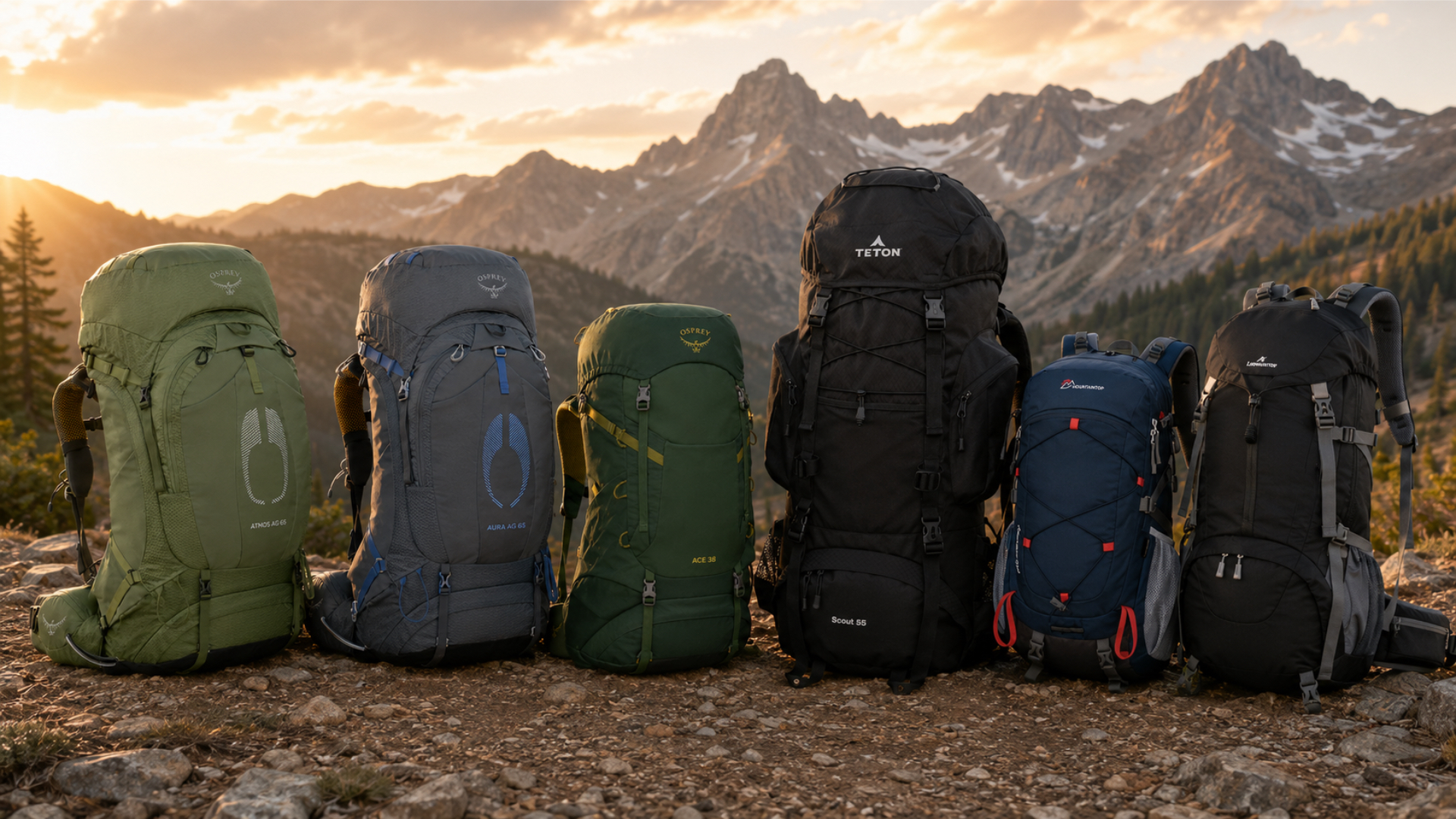
The best hiking backpacks of 2026 balance fit, load support, ventilation, and organization for day hikes, weekend trips, and longer treks. A pack can have impressive capacity on paper and still become miserable by mile six if the hipbelt slips, the torso length is wrong, or every snack is buried beneath a sleeping bag. The six packs below cover serious multi-day comfort, women-specific fit, youth sizing, value-focused internal frames, and two affordable ways to carry a lighter kit.
| Best Load-Carrying Comfort for Men | Best Women-Specific Fit | Best Youth Hiking Backpacks | Best Value Internal-Frame Pack | Best Affordable Weekend Pack | Best Budget Capacity Pick |
|---|---|---|---|---|---|
| Osprey Atmos AG 65 | Osprey Aura AG 65 | Osprey Ace 38 | Teton Scout 55L | MOUNTAINTOP 40L Backpack | Loowoko 50L Backpack |
 |  |  |  |  |  |
| A premium 65-liter men’s pack with AntiGravity suspension, fine-tuned fit adjustments, and strong multi-day organization. | A women’s 62- to 65-liter backpack built around ventilated AntiGravity suspension and an adjustable harness and hipbelt. | A 38-liter youth pack for growing hikers, with four inches of torso adjustment, AirSpeed suspension, and an included raincover. | A 55-liter internal-frame backpack with adjustable torso length, a sleeping-bag compartment, hydration space, and a raincover. | A lightweight 40-liter pack with hydration compatibility, useful external storage, and enough room for streamlined weekend gear. | A frameless 45+5-liter pack that keeps weight low while adding a raincover, six external pockets, and plenty of attachment points. |
Capacity is a big deal, but finding the right fit is critical. 65-liter hiking backpacks suit bulky sleep systems and multi-day food loads, while 38 to 55 liters can be a better match for youth trips, compact gear, and shorter itineraries. The strongest choice is the one that matches torso length, expected load, trip duration, and how much organization is genuinely useful on the trail.
Osprey Atmos AG 65: Best Load-Carrying Comfort for Men
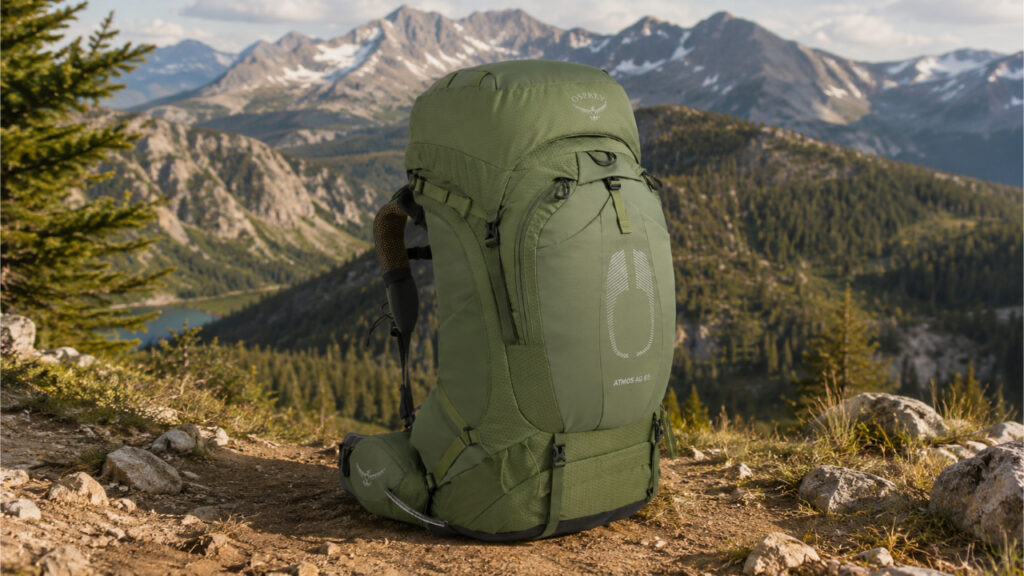
- AntiGravity suspension wraps the back and hips in tensioned mesh
- 65 liters in S/M and 68 liters in L/XL, with a 30- to 40-pound load range
- Integrated raincover, side-zip access, hydration sleeve, and trekking-pole storage
The Osprey Atmos AG 65 is the comfort-first choice for men carrying traditional multi-day loads. Osprey rates the pack for 30 to 40 pounds, and the defining feature is the AntiGravity suspension: a continuous tensioned-mesh structure designed to spread contact across the back and hipbelt while creating space for airflow. That combination makes the Atmos especially appealing on warm climbs and long days when dense foam can feel hot and pressure points become difficult to ignore.
Fit-on-the-Fly adjustments at the harness and hipbelt provide more room to fine-tune the carry than a fixed-size budget pack. The S/M version holds 65 liters and weighs about 4.6 pounds; the L/XL expands to 68 liters and weighs about 4.8 pounds. It is not an ultralight backpack, but that extra structure pays for a supportive, feature-rich carry when the gear list includes a full sleep system, stove, food, layers, and several days of supplies.
Organization is unusually complete. Curved side zips reach the main compartment without forcing a full top-down unpack, the sleeping-bag compartment has a removable divider, and tall side pockets allow top or side bottle access. Add the integrated raincover, hipbelt pockets, internal reservoir sleeve, and Stow-on-the-Go trekking-pole attachment, and the Atmos feels built for hikers who would rather spend time moving than digging through a single cavernous compartment.
Osprey Aura AG 65: Best Women-Specific Fit
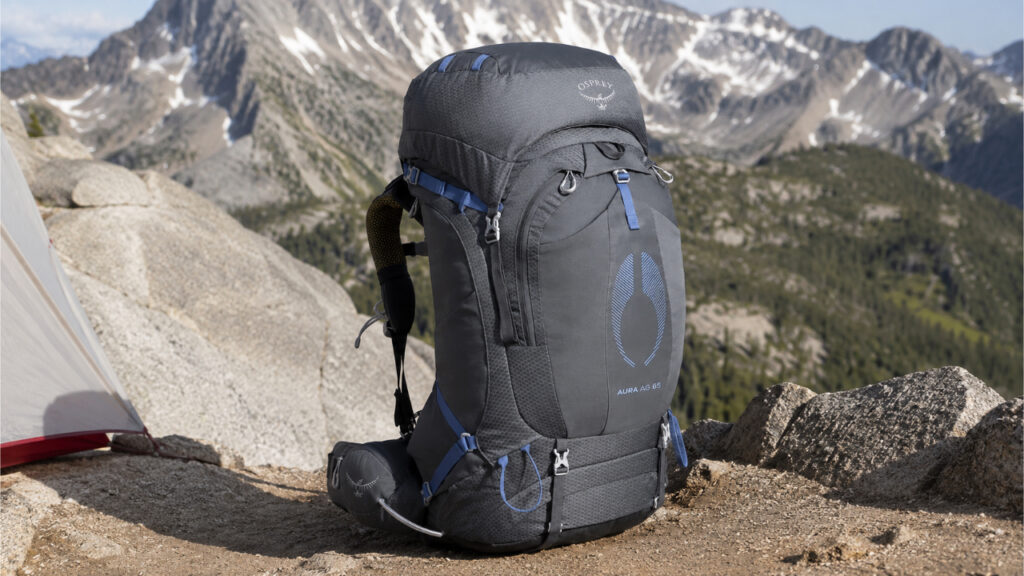
- Women-specific AntiGravity suspension and harness geometry
- 62 liters in WXS/S or 65 liters in WM/L, with a 30- to 40-pound load range
- Dual side access, integrated raincover, sleeping-bag compartment, and hydration sleeve
The Osprey Aura AG 65 takes the same ventilation-and-support philosophy as the Atmos and shapes the fit around women-specific harness and hipbelt geometry. For hikers who have struggled with shoulder straps sitting too wide, hipbelts riding in the wrong place, or torso ranges that never quite line up, that dedicated fit is more meaningful than a cosmetic label. The tensioned AntiGravity mesh follows the back and hips while helping move a 30- to 40-pound load through the frame and into the hipbelt.
Pack volume varies by size: the WXS/S holds 62 liters and weighs about 4.47 pounds, while the WM/L provides 65 liters at roughly 4.6 pounds. Those numbers put the Aura firmly in the full-featured backpacking category rather than ultralight territory. The payoff is adjustment, airflow, and a supportive platform for heavyweight weekends or weeklong routes where a minimalist pack may feel less forgiving.
The storage layout is practical without becoming fussy. Curved zippers on both side panels open into the main compartment, two front zippered pockets handle smaller gear, and a reinforced shove-it pocket gives wet layers or maps a fast place to land. The integrated raincover, removable sleeping-bag divider, sleeping-pad straps, hydration sleeve, hipbelt pockets, and trekking-pole attachment create a pack that can adapt to changing weather and changing trail routines without requiring a separate collection of add-on pouches.
Osprey Ace 38: Best Youth Backpack
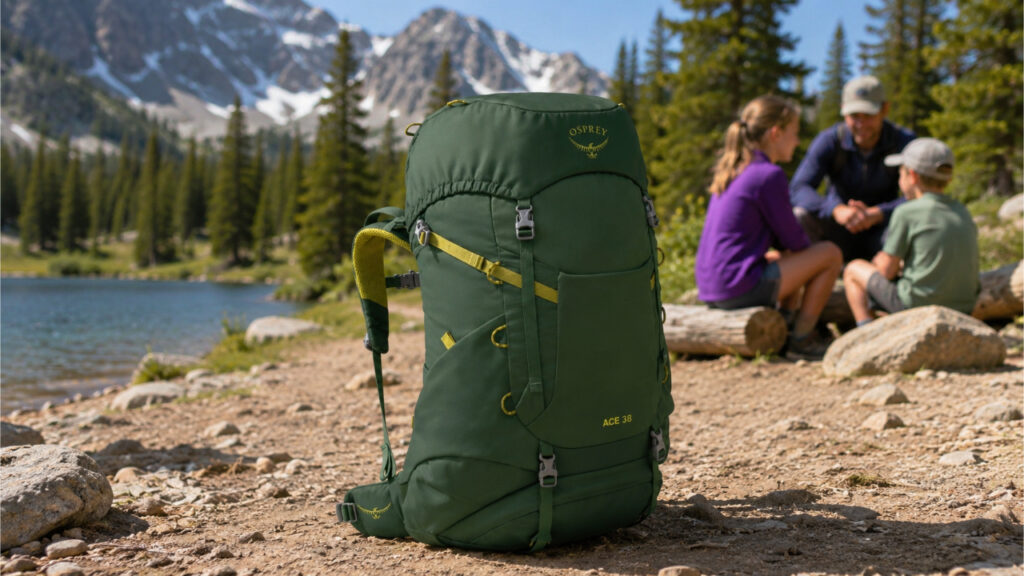
- Four inches of torso-length adjustment for growing hikers ages 8 to 15
- 38-liter capacity and a listed weight of about 2.98 pounds
- AirSpeed suspension, top-loading access, and an included rain cover
Youth hiking backpacks have to solve a problem adult packs rarely face: the hiker may be noticeably taller by the next camping season. The Osprey Ace 38 addresses that with four inches of torso-length adjustment and sizing aimed at ages 8 to 15. The adjustability gives families a better chance of getting several seasons from the same pack while still keeping the shoulder harness and hipbelt in the right places as a young hiker grows.
The 38-liter capacity is enough for a carefully planned overnight kit or a lightweight weekend setup without encouraging a child to carry adult-sized loads. At about 2.98 pounds, the Ace is not a featherweight daypack, but it includes a real suspension system. Osprey’s AirSpeed back panel uses tensioned mesh to create ventilation and keep the load from sitting directly against the back, a useful feature for summer camps, family backpacking trips, and warm-weather trails.
Top-loading access keeps the design straightforward, while adult-style details make the pack useful beyond a first backyard campout. A hipbelt pocket keeps snacks close, side pockets handle bottles, the raincover is included, and the pack uses recycled bluesign-approved fabrics with a PFAS-free DWR treatment. The strongest reason to choose the Ace is not maximum capacity; it is the combination of youth-specific fit, real load support, and enough adjustment to stay useful as trail skills and body size change.
Teton Scout 55L: Best Value Internal-Frame Pack
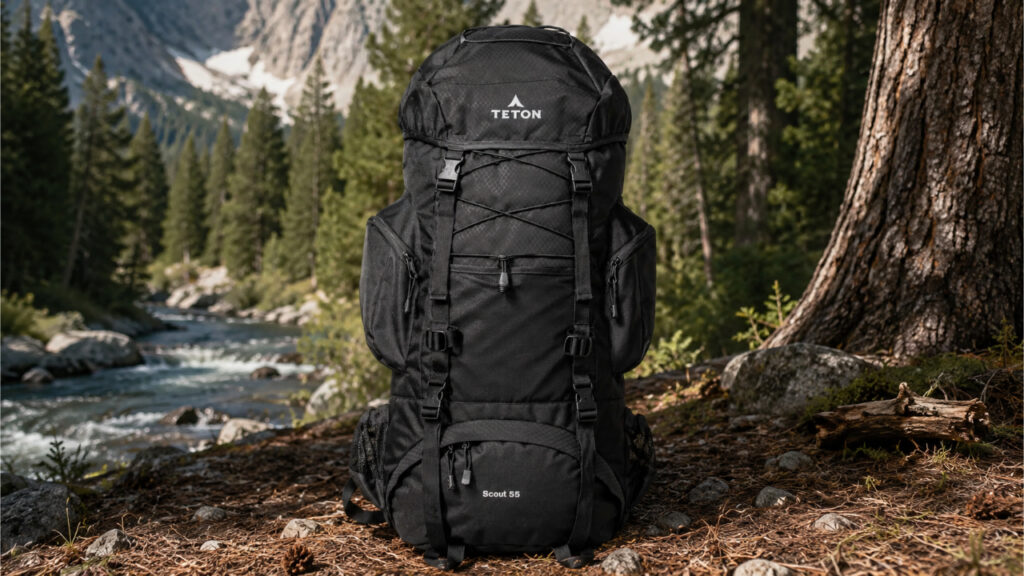
- 55-liter capacity with an internal frame and 15- to 19.5-inch torso adjustment
- Sleeping-bag compartment, 3-liter hydration space, and integrated raincover
- About 4.5 pounds with a comfort-focused lumbar pad and airflow channels
The Teton Scout 55L is the sensible middle ground for hikers who want an actual internal-frame backpack without stepping into premium-pack pricing. Its 55-liter capacity suits one- to three-day backpacking trips, and the adjustable torso system covers roughly 15 to 19.5 inches. Teton describes the Scout as a smaller-fit pack, which makes torso measurement especially important for taller hikers, but the adjustable back panel and straps give it far more fit range than a one-size frameless rucksack.
At about 4.5 pounds, the Scout is heavier than the budget packs below. That weight comes with a frame, a padded lumbar area, molded airflow channels, and a sleeping-bag compartment. The design is better suited to traditional backpacking loads that need structure and separation. A hydration sleeve accommodates up to a 3-liter bladder, and the integrated raincover means sudden weather does not require an extra purchase.
The Scout also offers the sort of external compression and compartmentalization that makes packing easier for newer backpackers. Gear can be divided by purpose instead of stacked in one deep cylinder, while compression straps help stabilize a partially filled pack. Experienced ultralight hikers may find the weight excessive, and long-torso users should verify fit carefully. For value-focused backpackers carrying conventional gear, however, the Scout delivers a useful mix of structure, capacity, and trail-ready features.
MOUNTAINTOP 40L Backpack: Best Affordable Weekend Pack
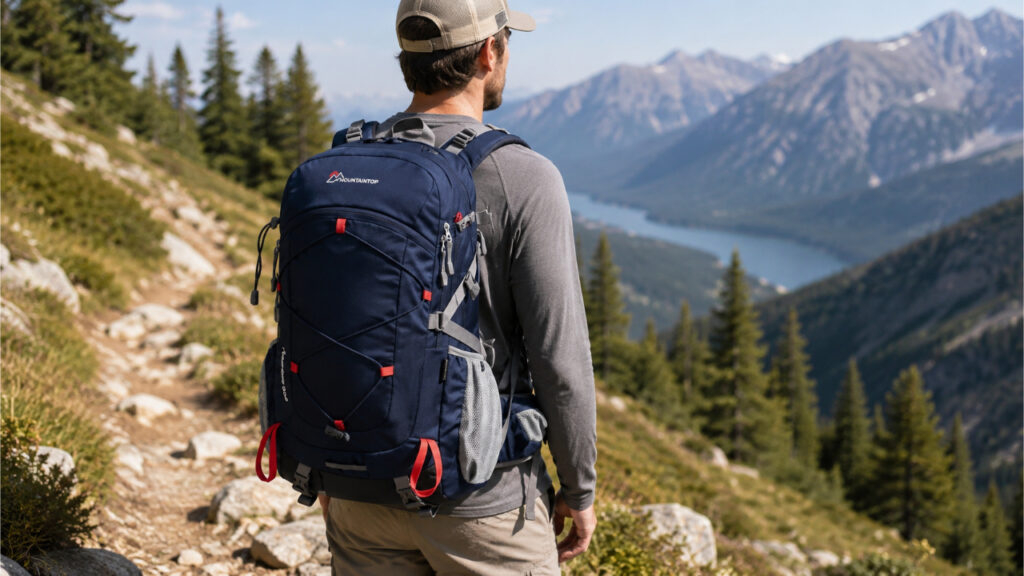
- 40-liter capacity in a 2.2-pound pack
- Water-repellent 400D polyester with hydration compatibility
- Two front zip pockets, two bottle pockets, front lashing, and a waist-belt pocket
The MOUNTAINTOP 40L Backpack works best when the gear list is already compact. At a listed 2.2 pounds, it is dramatically lighter than the premium 65-liter packs and the framed Teton Scout, yet it still provides 40 liters of space for a streamlined two- or three-day trip. That makes it a practical fit for hikers using a compact sleeping bag, smaller shelter, and lightweight cooking kit rather than bulky car-camping equipment.
The pack uses water-repellent 400D polyester and includes a hydration-bladder compartment, though the bladder itself is not included. Breathable mesh on the shoulder straps and back panel adds ventilation, and the sternum strap uses a whistle buckle. The carrying system is simpler than a true load-hauling frame, so careful packing matters: dense items should stay close to the spine and the waist and sternum straps should be adjusted to keep the bag centered.
Organization is a strong point for the price tier. Two zippered front pockets separate small essentials, two side pockets hold bottles, the waist-belt pocket keeps a phone or snack accessible, and the front stretch cord can secure a shell or other quick-grab layer. A 16-inch laptop can fit in the main compartment, which adds crossover value for travel. The best match is a weekend hiker, traveler, or casual camper who wants useful capacity without paying for a sophisticated suspension system.
Loowoko 50L Backpack: Best Budget Capacity Pick
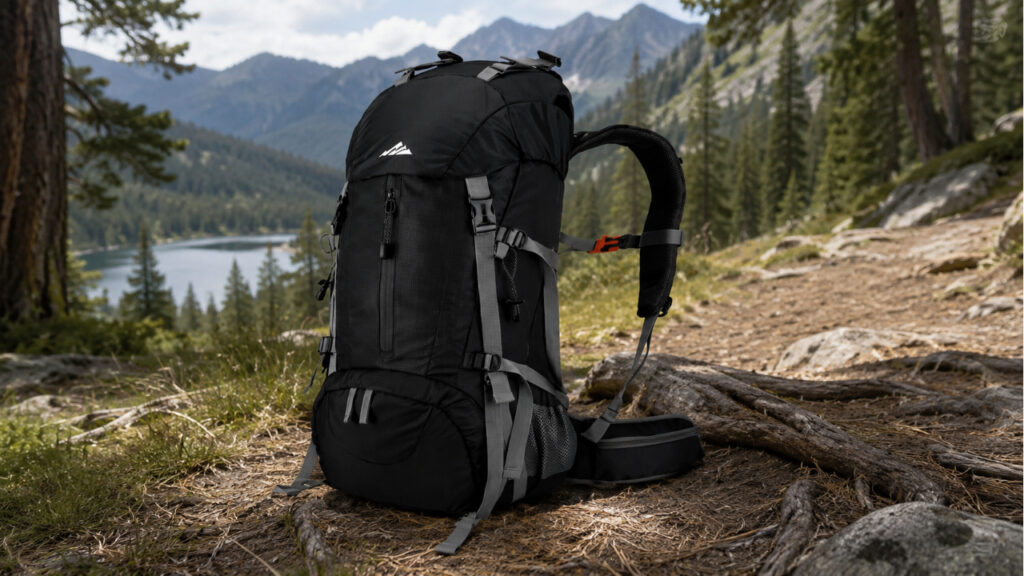
- 45+5-liter layout with a listed weight around 2.1 pounds
- Included raincover and water-resistant, tear-resistant fabric
- Six external pockets, lower access, compression straps, and gear attachment points
The Loowoko 50L Backpack prioritizes volume and organization at a budget-friendly level. Its 45+5-liter layout offers more room than the MOUNTAINTOP while keeping listed weight near 2.1 pounds. That capacity can support several days of lightweight travel or backpacking gear, but the pack has no internal frame, so it rewards disciplined packing and moderate loads rather than an everything-but-the-kitchen-sink approach.
Padded S-shaped shoulder straps, a breathable back panel, chest strap, and waist belt provide the basic tools needed to stabilize the load. They cannot create the same rigid weight transfer as the Atmos, Aura, or Scout, but they can make a well-packed moderate load comfortable enough for budget-minded trips. A separate included raincover is stored in a bottom pouch, giving the pack a useful layer of weather protection beyond the water-resistant main fabric.
Storage options are the standout feature. The main compartment is joined by a lower-access zipper, a separate shoe or gear area, six external pockets, deep side mesh pockets, compression straps, and attachment points for items such as trekking poles, a sleeping pad, or tent components. The Loowoko suits hikers who value capacity and organization more than technical suspension. Keeping the load realistic is the key to making its low weight and low price work in its favor.
How to Choose the Right Hiking Backpacks
Start with torso length, not height. Two hikers who are the same height can need different pack sizes because torso length and hip shape determine where the frame and hipbelt should sit. Measure from the C7 vertebra at the base of the neck to the top of the iliac crest, then compare that number with the manufacturer’s sizing chart. A premium pack in the wrong size can feel worse than a simpler pack that actually fits.
Next, match capacity to the real gear list. A 65-liter pack is useful for colder sleep systems, longer food carries, family gear, and traditional backpacking equipment. A 38- to 55-liter pack can be easier to manage for youth hikers, efficient weekend kits, and warmer-weather routes. Extra space is not automatically an advantage; empty volume often invites extra weight.
Finally, be honest about load. Framed packs with structured hipbelts are better choices when the total is pushing into the 30- to 40-pound range. Frameless budget packs make more sense with lighter, compact kits. Features such as raincovers, hydration sleeves, sleeping-bag compartments, side access, and trekking-pole storage should support an existing trail routine rather than become reasons to carry more gear.
The Trail Starts With Fit
The Osprey Atmos AG 65 and Aura AG 65 lead on load-carrying comfort and ventilation, while the Ace 38 gives growing hikers a real youth-specific suspension system. The Teton Scout 55L offers internal-frame value for shorter trips and conventional gear, and the MOUNTAINTOP 40L and Loowoko 50L keep cost and pack weight lower for hikers who can manage a lighter load.
Any of these hiking backpacks can be the right choice when its capacity, fit, and suspension match the trip. Measure carefully, build the gear list before choosing volume, and keep the heaviest items close to the body. The result is less pack adjustment, fewer pressure points, and more attention left for the trail ahead.