
Osprey Aura AG 65: Women-Specific Multi-Day Support
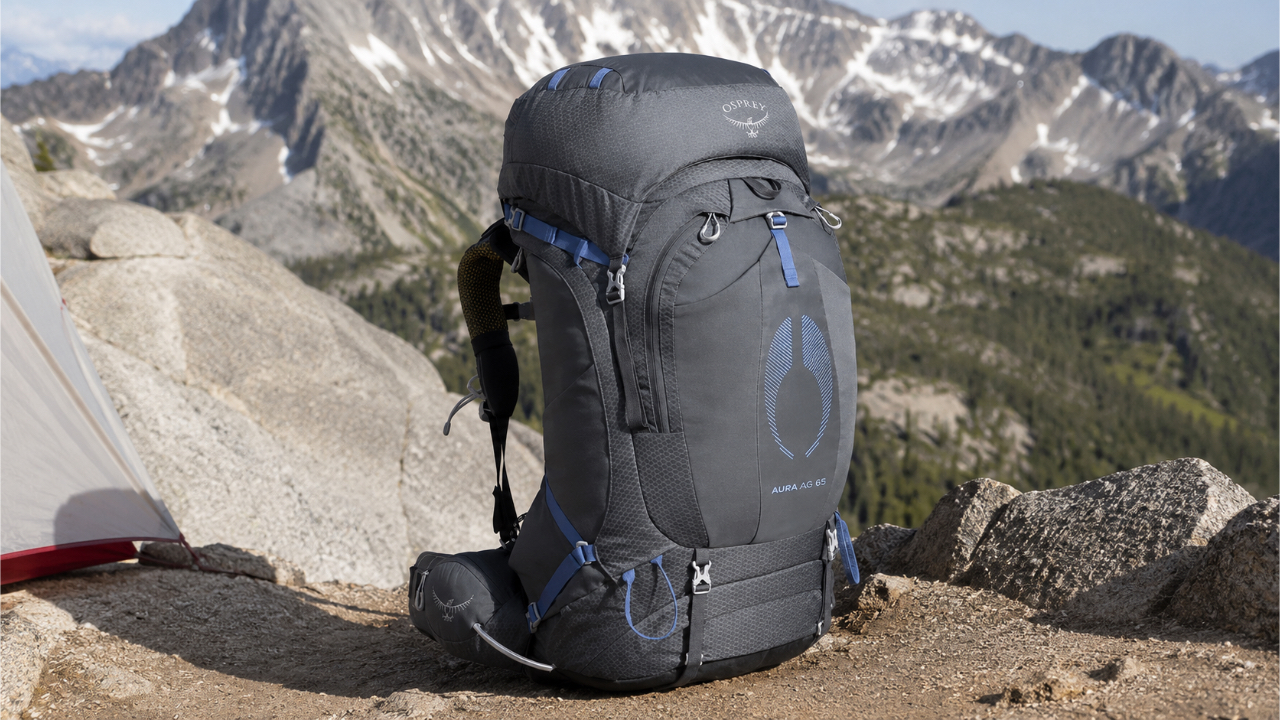
The Osprey Aura AG 65 combines women-specific fit, AntiGravity suspension, and 62 to 65 liters of capacity for multi-day trips. Adjustable harness and hipbelt elements, dual side access, and an integrated raincover make it especially appealing for longer trips where comfort and organization have to hold up day after day.
Pros
- Women-specific harness and hipbelt geometry
- AntiGravity suspended-mesh back system
- 30- to 40-pound manufacturer load range
- Fit-on-the-Fly harness and hipbelt adjustment
- Dual side access and strong external organization
- Integrated raincover and sleeping-bag compartment
Cons
- About 4.47 to 4.60 pounds empty
- Premium price
- Full suspension can feel bulky with very light loads
- WXS/S capacity is 62L rather than the full 65L
Women-Specific Fit Is the Main Event
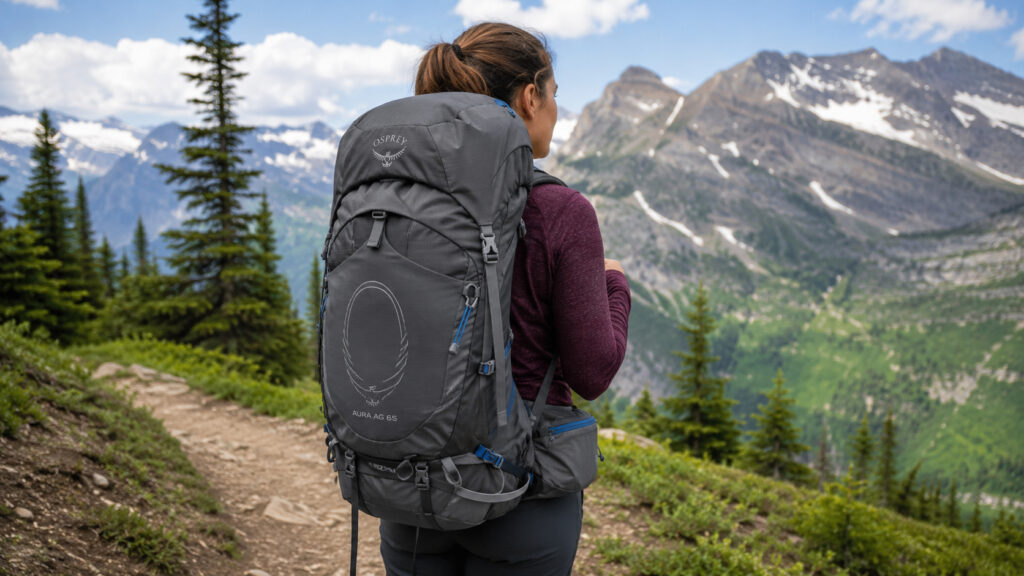
The most important difference between the Aura AG 65 and a generic unisex pack is the shape of the carrying system. Shoulder spacing, harness curves, torso range, and hipbelt geometry all influence where a backpack contacts the body. A pack can have enough volume and a strong frame yet still feel wrong if the straps sit too wide or the hipbelt cannot wrap the pelvis securely. The Aura is built around women-specific geometry rather than treating fit as a color change.
Osprey offers WXS/S and WM/L sizes. The smaller size generally fits torso lengths from about 13 to 17 inches, while the larger size covers roughly 16 to 20 inches. There is overlap, which gives some hikers a choice, but torso measurement should come before volume preference. The WXS/S holds 62 liters and weighs about 4.47 pounds; the WM/L holds 65 liters and weighs about 4.60 pounds.
Fit-on-the-Fly adjustments add another level of tuning. The harness and hipbelt can be refined so the hipbelt cups the iliac crest and the shoulder straps follow the upper torso without becoming the primary load-bearing points. The process is worth taking slowly. Load the pack with realistic weight, loosen the straps, secure the hipbelt first, then work upward through shoulder straps, load lifters, and sternum strap.
The 30- to 40-pound manufacturer load range is also important. The Aura is not designed to be the lightest possible container for a minimalist kit. Its suspension and frame exist to manage substantial backpacking loads. Women carrying conventional multi-day gear, colder-weather layers, or shared equipment are far more likely to benefit from that structure than hikers whose entire loaded pack remains in the teens.
AntiGravity Support With Real Ventilation
Osprey’s AntiGravity suspension uses a full-length tensioned mesh panel that continues into the hipbelt area. Instead of pressing a large foam pad directly against the spine, the system creates a ventilated space between the back and the pack body. The mesh also spreads contact across a broad area, which helps reduce the sense that one narrow belt or shoulder strap is doing all the work.
No backpack can make a 35-pound load disappear. The advantage is better distribution. When the torso length and hipbelt position are correct, the frame directs more of the load toward the pelvis while the upper harness stabilizes the pack. This reduces shoulder fatigue and can make the load feel more controlled on uneven terrain, especially when stepping over rocks or moving through switchbacks with a tall pack.
Ventilation becomes increasingly valuable in warm weather. A suspended back panel still gets sweaty, but it allows more air movement than a dense slab of padding. The open structure is particularly useful on long climbs where a damp shirt can turn into a cold layer as soon as the trail reaches exposed wind or the temperature drops near camp.
The tradeoff is pack weight and depth. The suspension adds material and creates a more structured silhouette. The Aura will not fold flat into a suitcase or disappear into a closet like a soft frameless bag. For hikers who regularly carry 30 pounds or more, the structure has a clear purpose. For a lightweight overnight load, the system may be more pack than the trip requires.
Access and Organization for Changing Weather
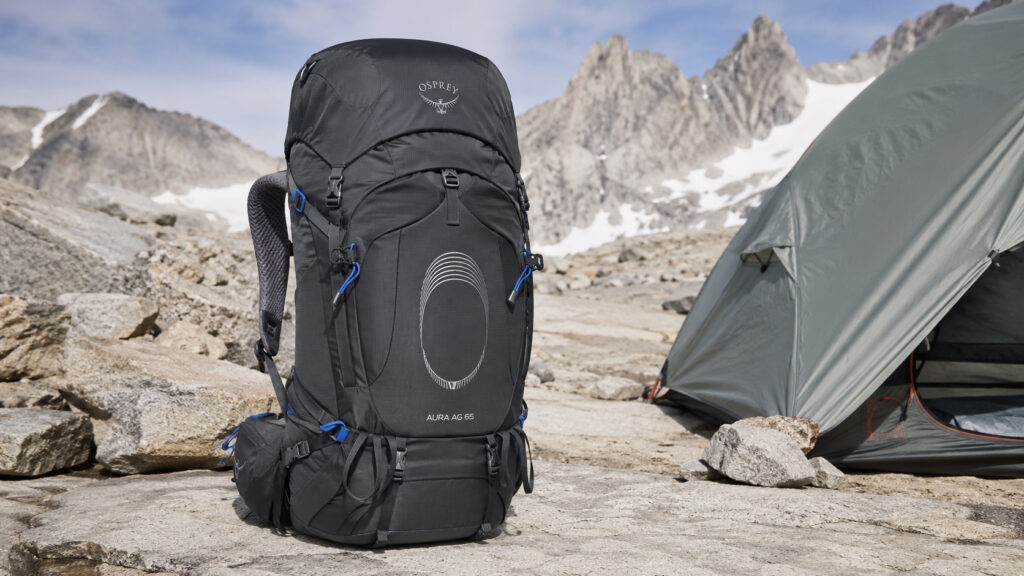
The Aura AG 65 uses curved zip access on both side panels, a feature that becomes more valuable as the pack fills. A rain shell buried halfway down can be reached without pulling the top lid, unpacking food, and exposing insulation to weather. Side access also makes camp setup easier when specific gear needs to come out in a particular order.
The front of the pack combines a reinforced shove-it pocket with two zippered organization pockets. Wet layers, sandals, or a map can sit in the shove-it area, while smaller items gain more secure storage. Tall dual-access bottle pockets accept gear from the top or side, and zippered hipbelt pockets keep snacks, lip balm, or a compact phone within reach.
The sleeping-bag compartment includes a removable divider, and the sleeping-pad straps can also be removed when they are not useful. An internal hydration sleeve routes the hose through the center back. Trekking poles can use the Stow-on-the-Go attachment system, and ice-axe loops provide additional gear options for more technical routes. The floating lid adds lash points and extra storage above the main compartment.
The integrated raincover is made with PFAS-free DWR materials and stores with the pack. It helps keep the exterior from becoming saturated during rain, although critical insulation and electronics should still use waterproof interior protection. That layered approach works well on multi-day trips: the raincover protects the pack and pockets, while a liner or dry bags protect the items that cannot tolerate moisture.
A Premium Pack for Women Carrying Real Weight
The Aura AG 65 is easiest to justify when the load is heavy enough to use its suspension. Weekend trips with bulky gear, weeklong backpacking routes, shoulder-season trips with extra insulation, and group outings with shared equipment all fit the pack’s strengths. The 62- to 65-liter capacity leaves room for a complete backpacking system without forcing every item into a tiny compression sack.
Women who have struggled with unisex packs may find the dedicated geometry more important than any pocket. A hipbelt that wraps properly and a harness that follows the torso can reduce sliding, gapping, and concentrated pressure. The adjustment range also makes it possible to refine the fit as layers change. A pack fitted over a thin summer shirt may need a small change when a fleece and shell are added.
The pack is less convincing for ultralight hikers. Nearly 4.6 pounds is a serious share of a low base weight, and the Aura includes features that may be unnecessary on a minimal gear list. Hikers carrying under 20 pounds most of the time can find lighter women-specific packs that trade access and structure for simplicity.
For women regularly carrying 30 to 40 pounds, the Aura AG 65 delivers a compelling balance of ventilation, load support, and usable storage. Its high price should be considered alongside trip frequency and expected loads. A backpack used for multiple multi-day trips every season can earn the investment through comfort and fit; a pack used for one light overnight trip a year may not.
Conclusion: Should You Buy the Osprey Aura AG 65?
The Osprey Aura AG 65 is a strong women-specific backpack for multi-day loads, warm-weather ventilation, and hikers who need more fit adjustment than a basic unisex pack provides. AntiGravity suspension, dual side access, a supportive hipbelt, and extensive organization make it especially capable in the 30- to 40-pound range. The empty weight and premium price are substantial, but the design has a clear purpose for women carrying real backpacking loads.