
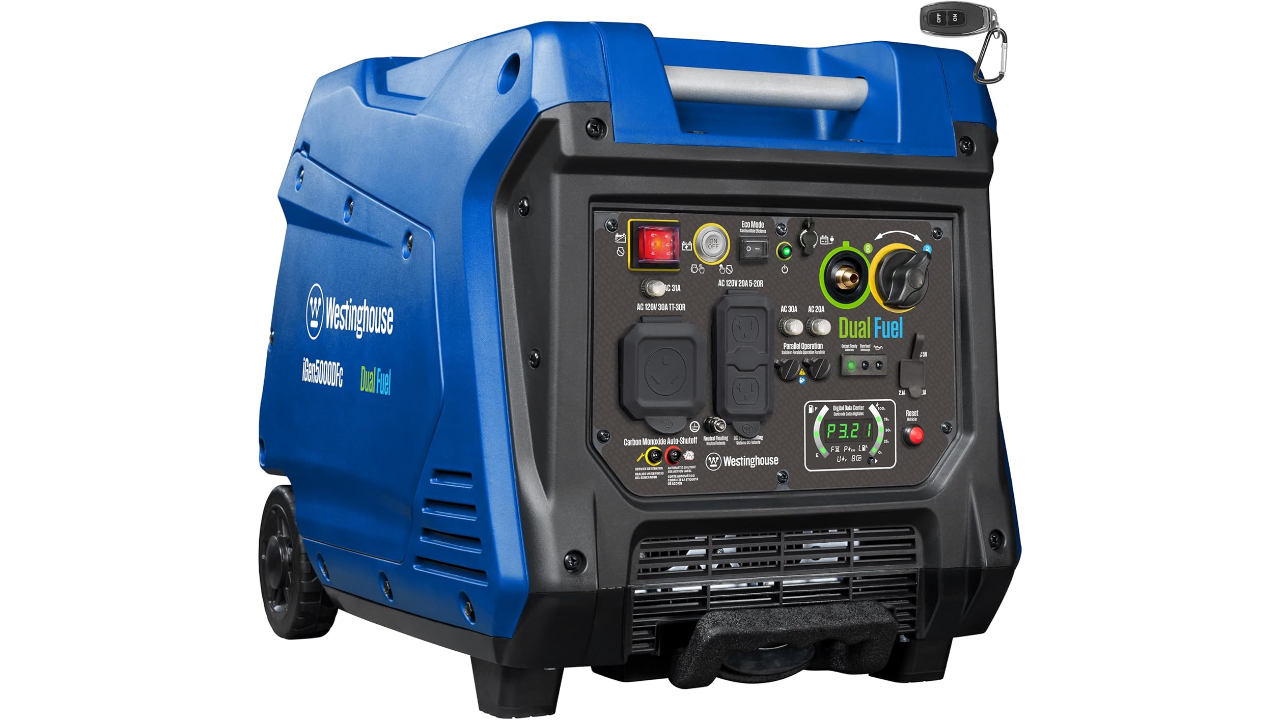
Westinghouse iGen5000DFc Review: Quiet Dual-Fuel Power
The Westinghouse iGen5000DFc sits in a very practical corner of the generator world, where reliability, fuel flexibility, and noise control matter more than bravado. This dual fuel inverter generator is aimed at RV owners, homeowners preparing for outages, and anyone who wants portable power that can handle sensitive electronics without turning the backyard into a construction site. It is built to solve a simple problem: keep essential systems running with minimal drama, whether the fuel of the day is gasoline or propane.
Pros
- Dual fuel operation provides flexibility between gasoline and propane, allowing users to adapt to fuel availability or storage preferences without changing equipment.
- Clean inverter output with total harmonic distortion at 3 percent or less supports sensitive electronics such as laptops, phones, and modern appliances.
- Strong runtime performance, with up to 18 hours on gasoline and up to 22 hours on propane at lighter loads.
- Remote start, push button start, and recoil backup provide multiple ways to bring the generator online.
- Quiet operation rated at 52 dBA, making it suitable for campsites and residential use where noise control is important.
- RV ready outlet (TT 30R) plus household outlets and USB ports cover common power needs without adapters.
- CO sensor, low oil shutdown, and overload protection add meaningful safety layers for unattended operation.
- Telescoping handle and never flat wheels improve mobility despite its heavier weight class.
Cons
- At 105.8 pounds dry, it is heavy enough that transport requires wheels and planning rather than casual lifting.
- Not transfer switch ready, limiting direct home integration for whole home backup setups.
- Not CARB compliant, restricting use in certain regulated regions.
- Outlet selection is functional but limited, with only a basic household duplex, RV outlet, and USB ports.
- Surge handling still requires load management due to the generator’s mid-range running wattage ceiling.
Power That Feels Practical Rather Than Excessive
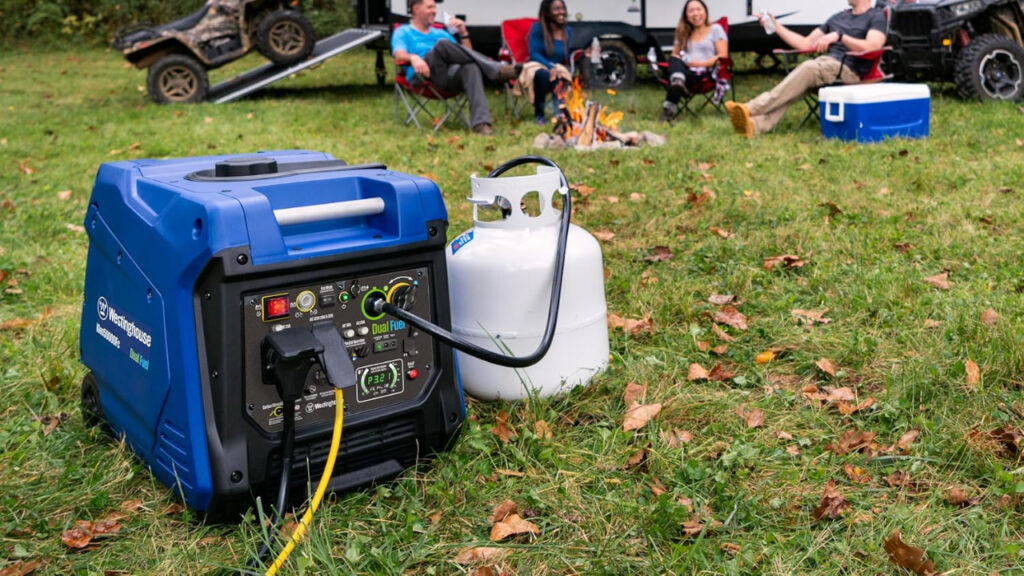
Image credit: Westinghouse
The iGen5000DFc sits in a very deliberate output class where the numbers are strong enough for RV systems and household essentials, but not so high that efficiency or portability fall apart. On gasoline it delivers up to 5,000 peak watts and 3,900 running watts, while propane lowers that to 4,500 peak and 3,500 running watts. That split is not cosmetic. It reflects the real tradeoff between convenience fuel and maximum output, which becomes relevant when managing startup surges from appliances like refrigerators or pumps.
At the center of its electrical performance is inverter technology that keeps total harmonic distortion at or below 3 percent. That figure is what separates “general power” from “electronics safe power.” It allows the generator to support devices with sensitive circuitry, including modern TVs, laptops, routers, and battery chargers, without introducing the instability associated with older non-inverter designs. The 120V, 60Hz output is standard household-grade power, meaning compatibility is not something users need to overthink.
The outlet arrangement reinforces its intended use pattern rather than trying to be everything at once. The inclusion of a TT-30R RV outlet positions it clearly for travel and campground use, while a duplex 5-20R covers standard household loads. Two USB ports handle low-draw electronics directly, avoiding the need for extra adapters. It is a controlled ecosystem of outputs rather than an overloaded panel, which actually reduces confusion when the generator is in active use under stress or low visibility conditions.
Design That Prioritizes Usability Over Frills
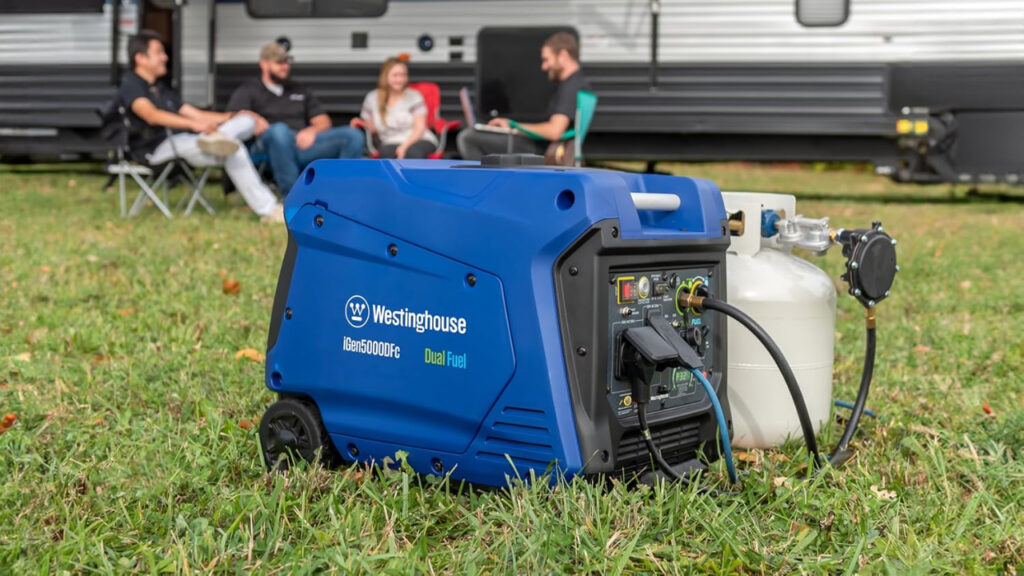
Image credit: Westinghouse
The design language of the iGen5000DFc is centered on reducing friction during operation rather than adding unnecessary complexity. Remote start via key fob is the headline convenience feature, supported by push-button start and a recoil backup system. That layered approach ensures the generator is not dependent on a single electrical subsystem, which is important in emergency use cases where battery charge state may be uncertain.
The control interface is built around a real-time LED data center that cycles through key operational metrics including runtime, fuel level, output load, voltage, and total operating hours. This is more than cosmetic feedback. It gives users a clear picture of consumption and remaining capacity, which is especially useful when running on propane where fuel visibility is not as intuitive as gasoline. The floating neutral grounding system and included CO sensor add another layer of operational safety and compatibility awareness.
Physically, the generator is designed for mobility within a realistic constraint. At roughly 105.8 pounds dry, it is not lightweight, but the telescoping handle and never-flat wheels convert that mass into something manageable over flat terrain. The suitcase-style form factor is a deliberate compromise. It sacrifices lifting convenience in exchange for rolling stability and compact storage footprint. In practice, it behaves like equipment meant to be moved with intention rather than carried casually.
Real World Behavior Under Load
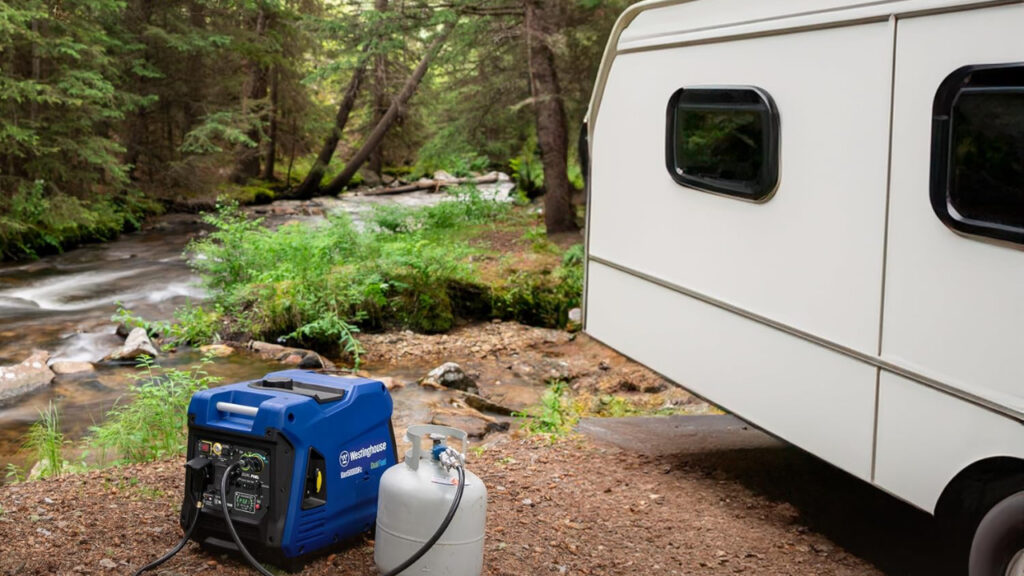
Image credit: Westinghouse
Runtime is one of the strongest practical assets in this generator’s profile. On a 3.4-gallon gasoline tank, Westinghouse lists up to 18 hours at 25 percent load, while propane extends that up to about 22 hours under similar conditions. These figures are not theoretical marketing language. They reflect low-load efficiency behavior driven by variable engine speed, which reduces fuel consumption when full output is not required.
That variable speed system is central to how the generator achieves both its runtime and its noise rating. At lighter loads, the engine does not need to maintain constant high RPM, which contributes to the relatively quiet 52 dBA operating level. That places it in a category where it can be used in close residential or campground proximity without dominating the environment, assuming typical load management practices are followed.
Performance consistency is strongest when users operate within the mid-range of its rated capacity rather than pushing sustained high loads. While it can handle higher peak demands, its 3,900-watt running ceiling on gasoline defines the practical limit for continuous use. That means load balancing becomes part of ownership rather than an afterthought. In real terms, it excels when powering layered essentials like refrigeration, lighting, communication devices, and small appliances, rather than acting as a substitute for full home electrical service.
Everyday Ownership and Practical Limits
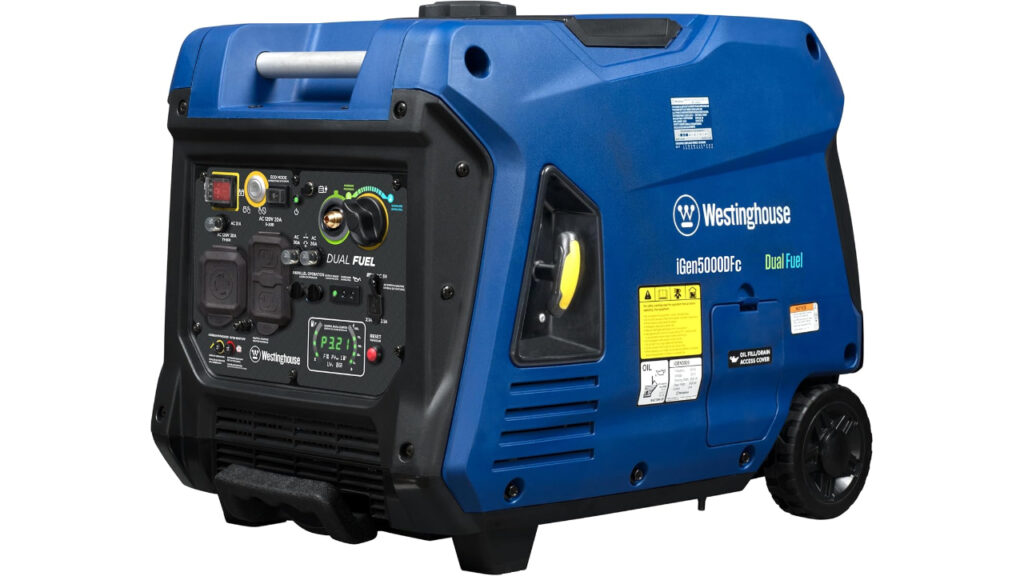
Image credit: Westinghouse
Ownership experience is shaped heavily by the inclusion of maintenance and safety systems designed to reduce failure risk during unattended operation. Automatic low oil shutdown protects the engine from damage due to insufficient lubrication, while overload protection prevents electrical stress beyond rated capacity. The carbon monoxide shutdown system is especially important for enclosed or partially enclosed environments, where exhaust buildup can become hazardous.
Setup is relatively streamlined thanks to included accessories such as engine oil, funnel, spark plug wrench, propane regulator and hose, and a battery float charger. These additions reduce the barrier to first operation, which is often where portable generator ownership becomes frustrating. The engine itself uses a standard 224cc OHV four stroke design with 10W30 oil compatibility, making ongoing maintenance straightforward and broadly serviceable.
The primary limitation emerges in system integration. The unit is not transfer switch ready, which means it is not designed for direct hardwired home backup installations without additional electrical planning. Combined with its CARB compliance limitations depending on configuration, this positions it more firmly as a portable and supplemental power source rather than a permanent residential energy solution. It performs best when treated as a flexible backup tool rather than a full electrical infrastructure replacement.
Conclusion: Should You Buy Westinghouse iGen5000DFc?
The Westinghouse iGen5000DFc is a well-balanced dual fuel inverter generator that focuses on clean power, quiet operation, and practical runtime rather than raw expansion or heavy-duty permanence. Its strengths lie in flexibility, user friendly design, and stable electrical output, while its limitations center on weight, regulatory constraints, and lack of whole home integration support. It is best suited for RV users, emergency preparedness setups, and anyone needing reliable portable power with modern electronics in mind. Buyers seeking a lighter unit or permanent home backup solution will likely find better alignment elsewhere.