
Blink Outdoor 4 Review. Affordable, Long-Life 1080p Outdoor Camera.
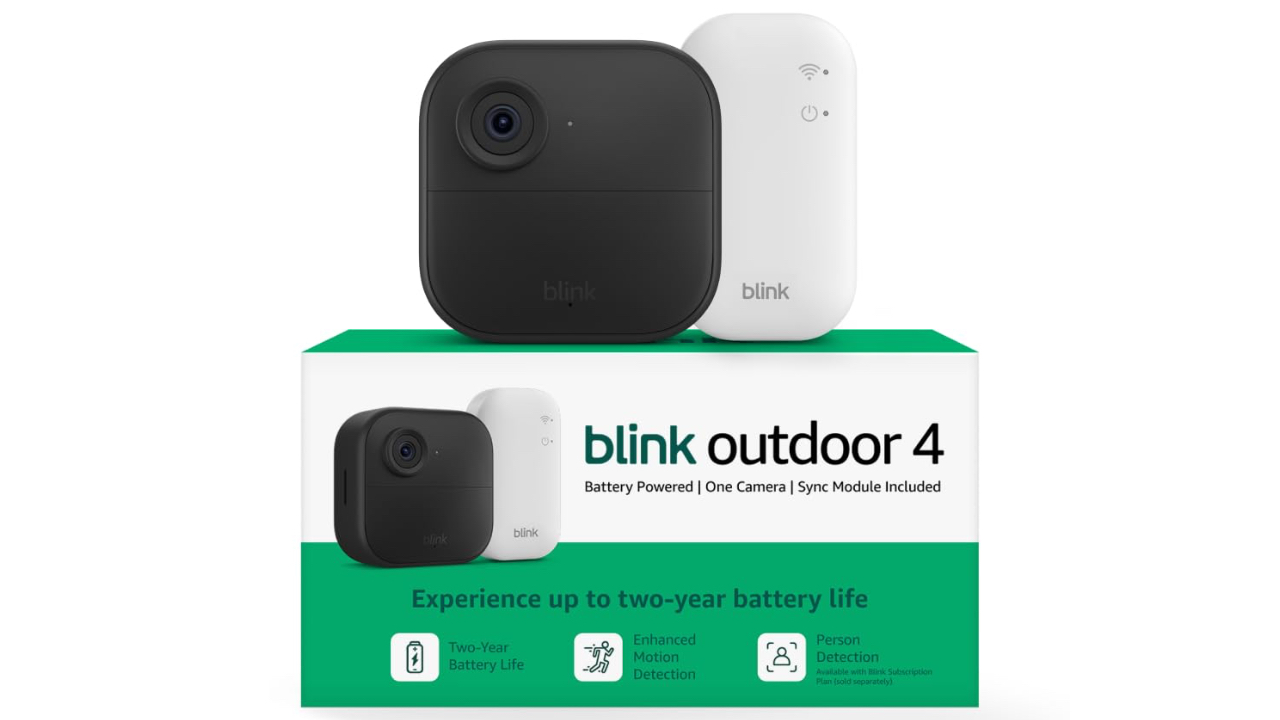
The Blink Outdoor 4 is a battery-powered outdoor security camera aimed at homeowners and renters who want low-maintenance perimeter monitoring without hardwiring. Blink Outdoor 4 offers 1080p live view, IR night vision, two-way audio, and, most prominently, up to two years of battery life with the included Sync Module Core and Energizer lithium AA cells.
Pros
- Up to two years of battery life with the included Sync Module Core and two AA Energizer lithium batteries, which reduces frequent battery maintenance.
- 1080p HD live view with infrared night vision and two-way talk for basic monitoring and interaction.
- Sync Module Core included in the box and supports multiple Blink devices, simplifying initial setup for most homes.
- Free 30-day trial of Blink Subscription Plus included to try cloud features such as person detection.
Cons
- The included Sync Module Core does not provide local storage; local backup requires purchasing a Sync Module XR (microSD) or Sync Module 2 (USB) separately.
- Advanced detection features (person detection, advanced clips) are tied to Blink subscription tiers, adding potential ongoing costs.
- Public listing omits some lower-level technical details (frame rate, bitrate, IP rating specifics), so buyers seeking enterprise-grade specs may need further documentation.
What You Actually See and How Long It Lasts

Image credit: Blink
Blink’s official listing places 1080p HD video at the center of the Outdoor 4’s imaging claim, paired with infrared night vision for low-light capture and two-way audio for short interactions through the Blink app. That combination targets everyday perimeter monitoring needs, identifying visitors at typical residential distances and allowing brief verbal exchanges from your phone. The listing frames these as the practical baseline for home security rather than high-bandwidth continuous surveillance.
The headline spec, “up to two-year battery life”, is explicitly tied to using the supplied AA Energizer lithium batteries together with the included Sync Module Core. Blink explains the Sync Module helps extend battery life through on-device optimizations and by acting as the system hub; for many buyers, this is the single most meaningful operating-cost metric because it reduces how often you need to climb a ladder to swap batteries. That said, the listing’s “up to” phrasing implies actual lifetime will vary with motion frequency and recording settings.
Motion detection and alerting are positioned as the primary method the camera uses to turn video into actionable events. The product copy highlights dual-zone enhanced motion detection and configurable activity zones to reduce nuisance alerts, and it advertises person detection as an available capability through Blink’s subscription. For shoppers, this clarifies which intelligence features are included in the basic package and which are behind a paid plan.
Built to Last (And What Comes in the Box)
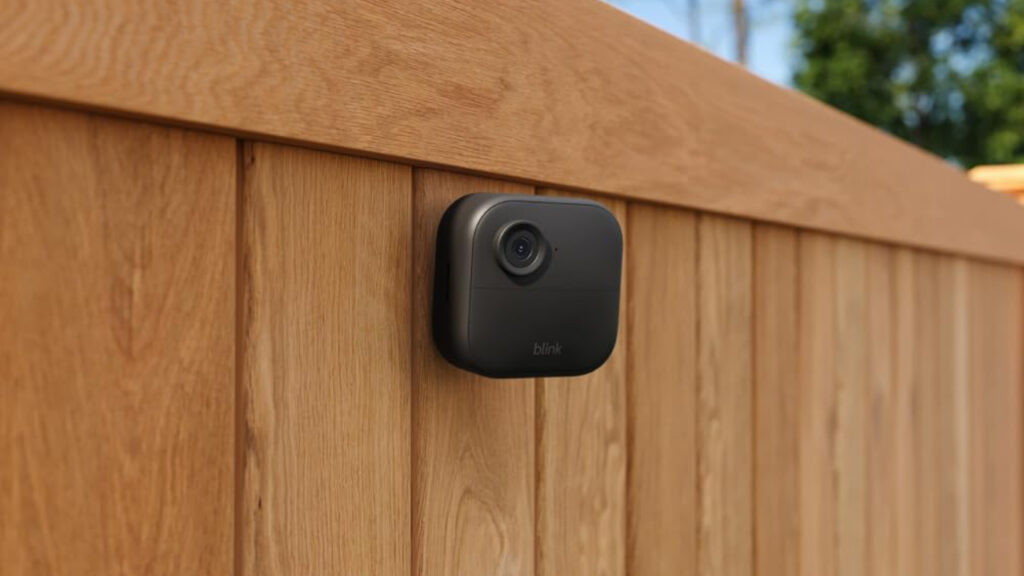
Image credit: Blink
Inside the box Blink lists the Outdoor 4 camera, a Sync Module Core, two AA Energizer lithium batteries, a mounting kit, a USB-C cable, and a power adapter, effectively a ready-to-install package. Including the Sync Module Core and batteries removes a common initial barrier (a separate hub purchase or sourcing batteries), so consumers can typically set up and run the system immediately. The presence of a mounting kit suggests standard angled placement and basic mechanical adjustability for most mounting surfaces.
The listing describes the camera as weather-resistant and suitable for flexible placement around the home but does not publish a numeric IP ingress rating or detailed operating-temperature limits in the Amazon copy. That wording indicates Blink positions Outdoor 4 for typical domestic outdoor conditions rather than extreme industrial environments; buyers who require precise environmental tolerances should consult more detailed manufacturer documentation. The design focus here is consumer convenience, wireless placement, simple mounts, and a lightweight housing over heavy-duty enclosure engineering.
On connectivity and ecosystem choices, Blink emphasizes Alexa compatibility for multi-camera live view and basic voice controls. The Sync Module Core serves as the local hub and is noted to support up to ten Blink devices, which is a practical scale for whole-home setups. However, the Sync Module Core does not provide local backup storage, meaning Blink favors a cloud-forward default experience paired with optional local-archive upgrades (Sync Module XR or Sync Module 2) for users who prefer to keep recordings off the cloud. This split shapes both convenience and long-term storage strategy.
Everyday Performance Without the Headaches

Image credit: Blink
Blink emphasizes prompt motion alerts and enhanced motion detection as the Outdoor 4’s operational strengths: dual-zone detection and configurable activity zones aim to minimize false triggers while delivering faster notifications. The listing does not publish frame-rate or bitrate figures, which signals Blink’s focus on effective event capture over constant, high-frame-rate recording. For most residential users who care about catching motion events and receiving immediate alerts, this architecture is appropriate; users needing continuous, cinematic recording should check higher-tier alternatives.
Because the included Sync Module Core lacks local storage, Blink steers users toward cloud retention via its subscription plans for extended clip history and advanced features such as person detection. The listing includes a free 30-day trial of Blink Subscription Plus so buyers can evaluate cloud features before committing. For households that prefer subscription-free long-term retention, the product page clearly states local backup is possible but requires purchasing a Sync Module XR (microSD up to 256 GB) or a Sync Module 2 with a USB flash drive, an explicit hardware tradeoff buyers must factor into total cost of ownership.
Integration into a smart-home ecosystem is modest but serviceable: Alexa compatibility covers voice-activated multi-camera viewing and basic controls, which will suit many Amazon-centric households. The listing does not highlight wide third-party platform support beyond Alexa, so buyers who require broad interoperable flows (for example, certain third-party NVR systems or Home Assistant integrations) should verify compatibility separately. Overall, the product is tuned for straightforward consumer deployments rather than flexible pro-grade integration.
Quick Setup, Low Maintenance, Smart Storage
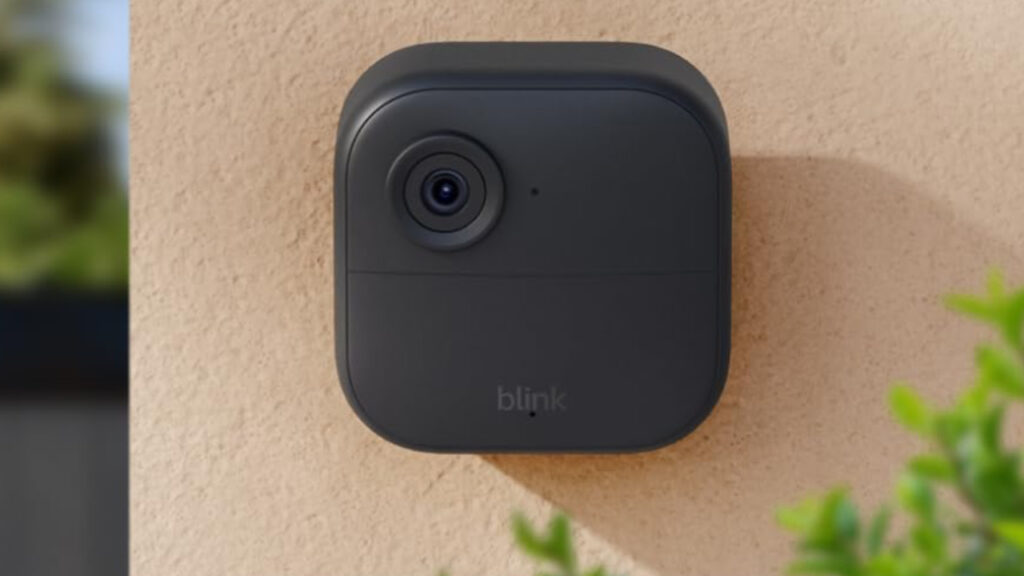
Image credit: Blink
Setup is framed as straightforward: the package includes the Sync Module Core and batteries, and Blink markets the system as ready to place almost anywhere around the home. The Sync Module Core’s support for up to ten Blink devices gives a concrete scalability number for multi-camera installs. Still, because core features like person detection rely on the subscription tier, new buyers should weigh the included trial period against expected ongoing cloud costs when planning long-term use.
Maintenance commitments are split between infrequent battery swaps (the advertised two-year window) and potential subscription fees for advanced cloud features. The listing’s emphasis on two-year battery life addresses physical maintenance pain points, but Blink’s “up to” qualifier means real-world longevity will depend heavily on motion frequency and recording settings; buyers in very active locations should plan for more frequent replacement. Additionally, users who want local-only storage must budget for the separate Sync Module XR or Sync Module 2 and compatible storage media.
Finally, the Outdoor 4 is best suited for consumers seeking a low-touch, cloud-capable camera that’s easy to install and manage through Blink’s app and Alexa. It is less appropriate for buyers who need subscription-free cloud features by default, enterprise-grade environmental ratings, or detailed technical telemetry like published frame-rates and bitrates. The product page clarifies these limits, so purchasers can match expectations to the camera’s consumer-focused design.
Should You Buy Blink Outdoor 4?
Blink Outdoor 4 is a well-documented, consumer-focused option for buyers who prioritize low maintenance, simple installation, and event-driven monitoring: 1080p HD, IR night vision, two-way audio, and the significant operating benefit of up to two years of battery life with the included Sync Module Core and Energizer lithium AAs. The primary compromises are the lack of included local storage and the fact that advanced detection and extended cloud retention are subscription-tied (or require purchasing additional Sync Module hardware). If you want an inexpensive, low-touch outdoor camera and accept Blink’s cloud-or-additional-hardware storage model, the Outdoor 4 is a reasonable, clearly specified choice; if you need subscription-free archiving or enterprise-level specs out of the box, consider alternative models or add the required Sync Module XR/Sync Module 2 for local backup.