
A turkey fryer delivers speed and crisp skin, but the margin for error is slim, and the consequences of a mistake can turn a holiday gathering into an emergency in seconds. Follow these turkey fryer safety tips for a safe and enjoyable holiday season!
Set the Fryer on Stable Ground Far From the House
Positioning determines whether a mishap becomes a contained spill or a structural fire. Fryers belong outdoors on level concrete or bare soil, well clear of garages, decks, and overhangs. Investigators routinely trace holiday fires to setups placed on wooden surfaces or within a few feet of siding. Distance also protects the propane tank, which should sit slightly apart from the burner so spilled oil cannot reach it.
Thaw the Turkey Completely Before It Nears the Pot
Frozen moisture expands violently when it meets hot oil, and even a modest ice pocket deep in the cavity can force oil over the rim. Thawing in the refrigerator for several days or in cold water changed every 30 minutes prevents the flash-steam reaction that causes most fryer fires. Drying the turkey with care, inside and out, further reduces splatter when it enters the oil.
Measure the Oil Level With a Water Test Rather Than Guessing
Determining fill height with the turkey and water avoids the overfills that push oil toward the burner. Once the cook notes the correct line and dries the pot thoroughly, the oil can be added to a precise and safe depth. This simple step, urged by fire officials every year, eliminates one of the most common causes of flare-ups.
Heat the Oil Slowly and Monitor It Continuously
A fryer has no built-in thermostat, and oil can move from simmering to smoking in moments. A thermometer helps keep it around 350 degrees Fahrenheit, and any sign of smoke is a signal to shut off the burner before ignition occurs. Unattended cooking remains the leading factor in holiday fire statistics; staying within arm’s reach is the only reliable safeguard.
Lower the Bird Into the Oil With Deliberate, Steady Motion
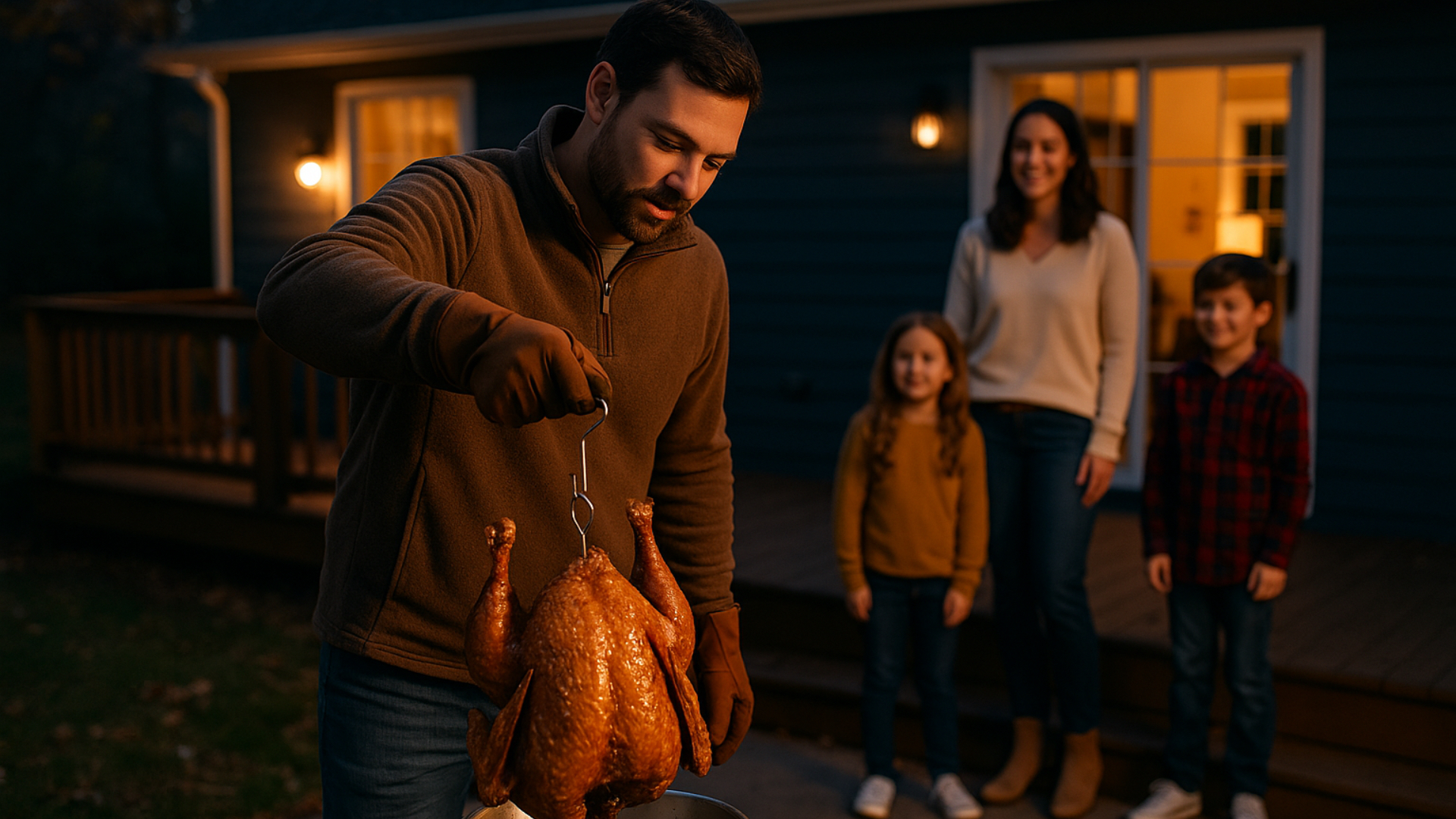
Most severe burns happen in the instant when a cook loses grip or rushes the final step. Protective gloves, long sleeves, and a patient pace give the oil time to settle around the turkey instead of surging over the pot’s rim. A moment spent adjusting footing or grip beats the hours that follow an avoidable burn.
Keep Children and Pets Outside the Work Zone
A three-to-five-foot buffer prevents distractions and accidental bumps around equipment that can tip easily. Emergency physicians report that many burns stem not from the cook’s error but from trying to avert a collision or catch falling gear. Treat the fryer perimeter as a no-go zone until the flame is extinguished and the pot cools.
Prepare for the Possibility of Fire Before Lighting the Burner
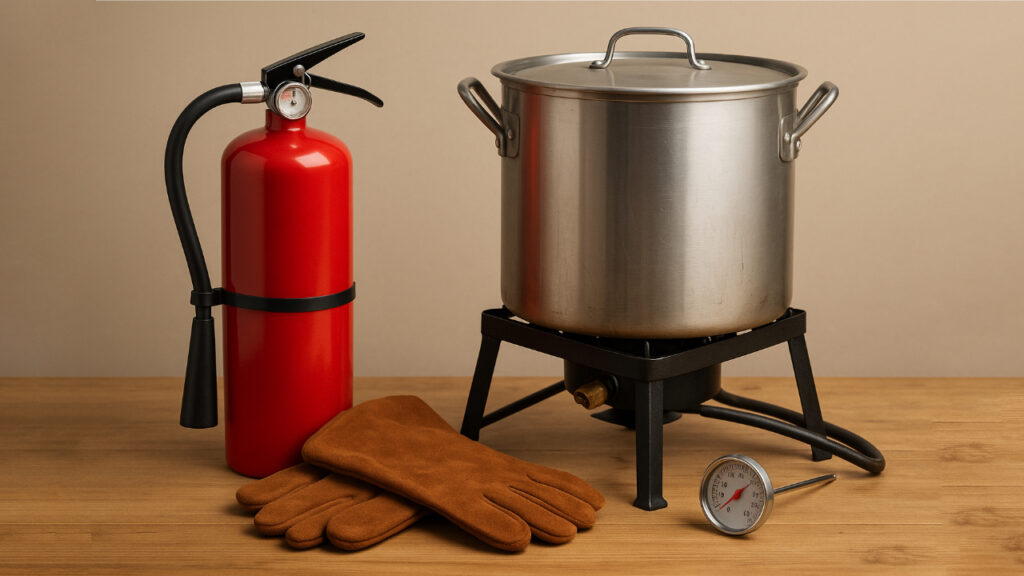
A Class K or ABC extinguisher belongs within reach, and every cook should know that water thrown on burning oil will spread flame instantly. A metal lid or baking soda can smother small flare-ups, but once a fire grows beyond the pot, evacuation and a call to 911 are the only safe responses. Moving a burning fryer, no matter how tempting, nearly always worsens the situation.
Cook According to Food-Safety Standards, Not Folklore
Federal guidelines call for an internal temperature of at least 165 degrees in the deepest parts of the turkey, checked with a thermometer rather than by timing alone. Smaller birds, often 12 pounds or less, cook more predictably in fryers. Once carved, leftovers should reach refrigeration within two hours to limit bacterial growth.
Review Insurance Coverage Before Attempting High-Risk Cooking
Homeowner policies generally cover fire damage, but liability for injuries can vary, and insurers see some of their costliest seasonal claims tied to grease fires. A quick conversation with an agent can clarify what is covered if guests are injured or if the damage extends beyond the property.
Consider Safer Alternatives When Conditions Make Frying Uncertain
Weather, crowd size, and equipment quality all influence risk, and many fire agencies recommend oil-less or electric models that include thermostats and enclosed heating elements. When wind, uneven ground, or unfamiliar gear complicate the process, choosing another cooking method is the more prudent course.
Final Thoughts on Turkey Fryer Safety Tips
A turkey fryer can deliver a memorable meal, but it demands a cautious cook, a controlled environment, and a respect for the realities of hot oil. Approaching each step with patience and planning keeps attention on the gathering rather than the hazards simmering beside it.