
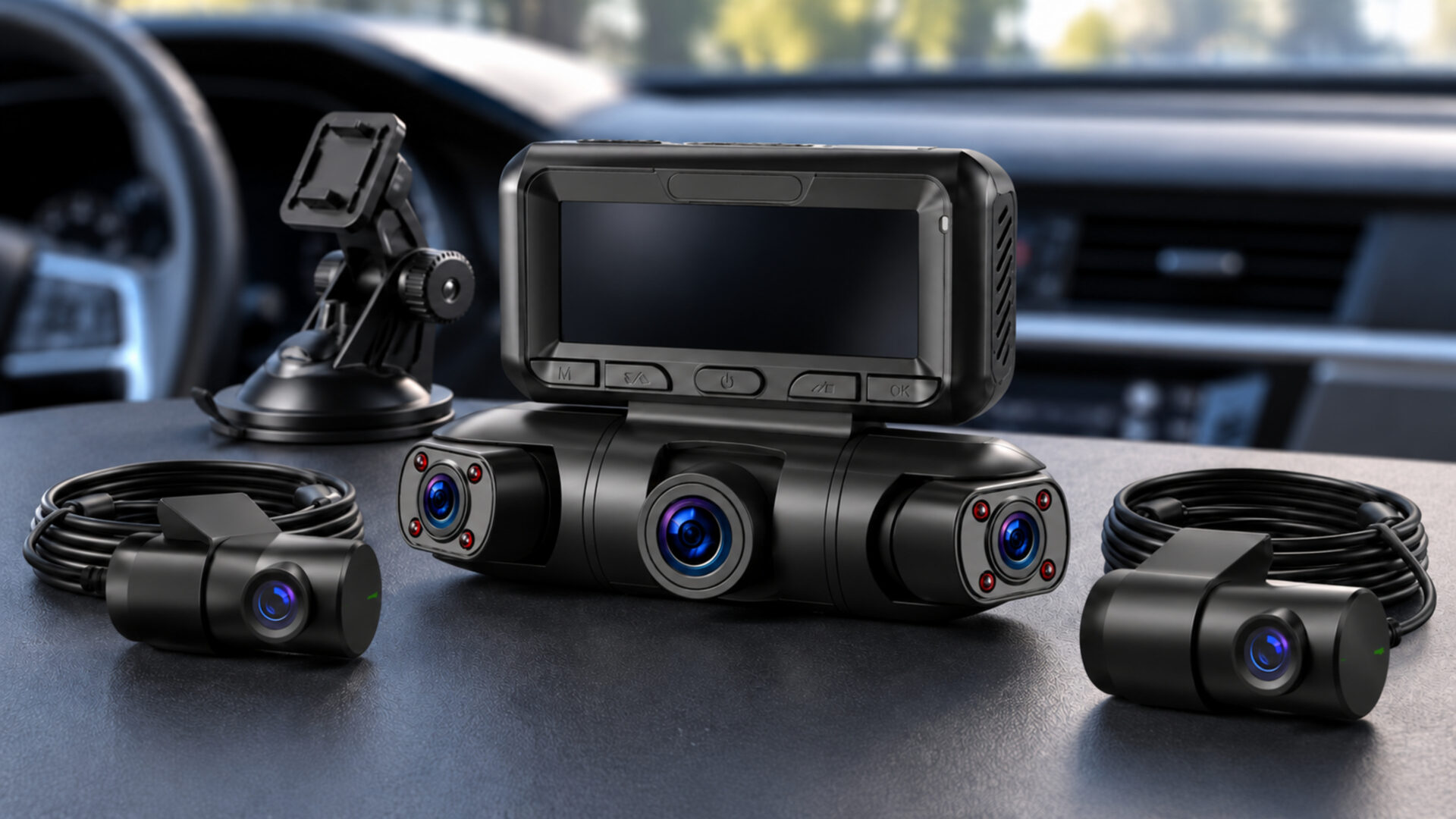
PRUVEEO NEW-D88-5CH Review: More Views for Busy Driving Days
An incident beside a car can unfold outside a forward-facing camera’s view. The PRUVEEO NEW-D88-5CH brings five recording views to drivers who want more context around their vehicle. Its appeal is the combination of front, rear, side, and cabin coverage, particularly for frequent passenger pickups or crowded parking areas. Choosing it requires more attention to camera placement, however, and its broad coverage should not be confused with proven plate-reading performance in every direction.
Pros
- Five recording views can document activity beyond the road ahead.
- Adjustable viewing angles help tailor coverage to the vehicle.
- GPS and local Wi-Fi add useful tools for organizing and retrieving footage.
Cons
- Five cameras do not guarantee an unobstructed view around the entire car.
- Simultaneous resolution for every channel is not sufficiently clear to promise five high-resolution feeds.
- Parking recording requires a separately purchased ACC hardwire kit.
Five Views Are Useful Only When They Show Different Things
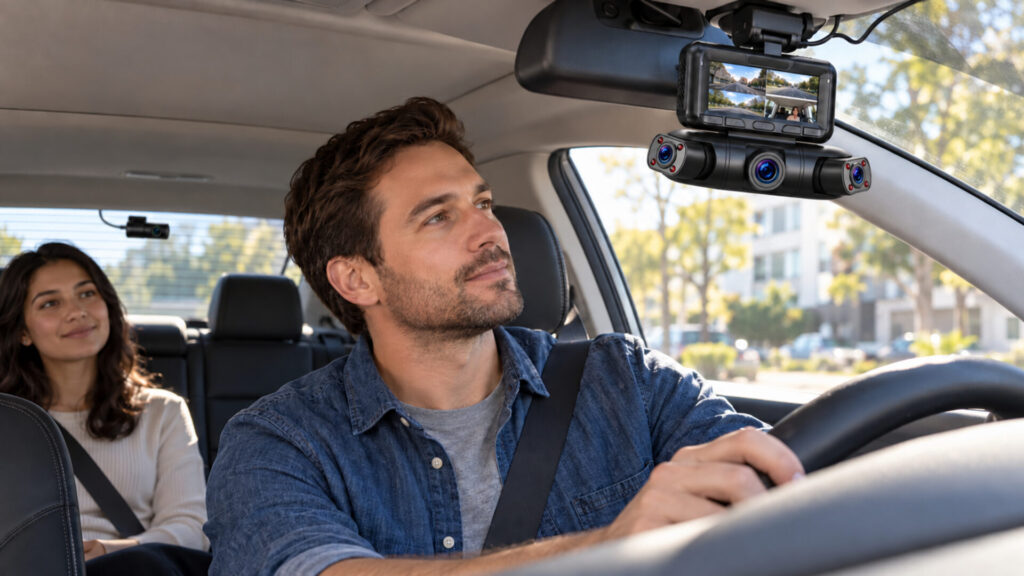
The D88’s strongest argument is situational awareness. A front recording might show a traffic signal while a side-facing view adds the approach of a vehicle in the next lane. A cabin recording can provide context for an interaction during a pickup. Those perspectives serve different purposes, so the camera count is useful only if the installed angles actually cover the areas you care about.
Start with the driver’s seat and a parked car. Check what each view includes before permanently securing anything. The mirror, windshield pillars, front seats, passengers, and window frames can obstruct different parts of the scene. A wide angle does not let a camera see through those objects. Aim for complementary views rather than several recordings dominated by the same piece of dashboard.
Side coverage deserves particular attention. A camera looking through a window may capture a nearby person or passing vehicle, but its usable view depends on seating position, glass, and bodywork. Open and close the doors during your setup check, then inspect the footage with someone seated normally inside. That is a more practical assessment than adding field-of-view numbers together and assuming the result represents seamless coverage.
For a driver whose main concern is documenting rear-end collisions, a conventional front-and-rear system may be easier to live with. Five channels become more compelling when the additional views answer a specific need. They also create more clips to review after an event, which is a real ownership cost even if the cameras themselves are affordable.
Coverage Breadth Does Not Establish Image Detail
The D88 supports 2160p and 1080p recording, but the available documentation does not establish the simultaneous resolution of all five channels clearly enough to treat every view as 4K. That distinction should influence the purchase. A large video frame and a useful view are different things; neither alone demonstrates how clearly a moving plate will appear after dark.
Treat this as a coverage-focused option. Before relying on it, examine original files from each view on a larger screen. Look at nearby vehicles, changing light, and the parts of the picture near the edges. Check that the view you expected to record a passenger doorway or adjacent lane actually does so. A small preview can conceal softness or an awkward camera angle.
Infrared illumination supports the cabin camera in darkness. That is particularly relevant when passengers are inside an otherwise dim car. It should not be interpreted as illumination for distant traffic outside. Cabin visibility and nighttime road detail are separate jobs, and performance in one does not prove performance in the other.
Drivers who put front-and-rear image detail ahead of additional perspectives should also consider the VIOFO A229 Pro review. Its two-camera configuration is a different proposition. For the D88, the sensible reason to buy is the extra viewpoints, with expectations set by actual sample recordings rather than an assumption that more cameras must produce better evidence.
Make Retrieving a Clip Part of the Initial Setup

Local Wi-Fi lets a nearby phone connect to the camera for footage access. The 5 GHz connection is a wireless transfer feature, not a cellular service. It does not by itself let you watch the vehicle from another city, receive continuous remote updates, or recover a stolen camera’s recordings from a cloud account. Those expectations belong to a different kind of system.
GPS adds location, speed, and route information to the recording workflow. That can help identify where a trip or incident occurred, but it is not a substitute for cellular vehicle tracking. Set the correct date and time, then check a saved file rather than assuming every overlay is ready immediately after installation. Accurate organization makes searching through several channels less frustrating later.
The selected bundle includes a 128GB card. With five views producing files, storage should be treated as a rotating record, not a permanent trip archive. Loop recording makes room for new footage, while incident locking helps retain detected events. Neither removes the need to copy an important sequence to another device promptly, including the minutes leading up to an incident when available.
Practice that process while parked. Find the relevant time, identify the useful channels, export the original clips, and confirm that the copies open without the camera connected. Keep a backup before editing or sharing. A short trial exposes practical issues such as confusing channel names or a phone connection that needs attention, while there is still time to resolve them calmly.
Parking Coverage Depends on the Installation
Parking recording needs the separate ACC hardwire kit. The normal driving-power arrangement should not be assumed to provide an overnight recording service. Budget for the compatible kit and, if necessary, installation help. The total investment is the camera plus the power arrangement that supports the job you actually want it to do.
A supercapacitor supports the camera’s power-down process; it is not a battery for hours of independent recording. The camera still needs an appropriate external power supply. Heat also remains an operating consideration. Keep within the product’s operating instructions and check that recording resumes normally after the vehicle has been parked, particularly during seasonal temperature extremes.
Time-lapse recording can reduce storage demands, but condensed footage is not equivalent to ordinary continuous video. Decide whether your priority is a broad record of activity over time or detailed event sequences. Then confirm how the selected parking setting behaves with the installed power kit. Do not assume that every mode saves audio or the moments before an impact.
Long-term usefulness depends on a modest inspection routine. Check that mounts remain secure, clean the viewing surfaces, and open a recent file from every channel occasionally. Recheck the angles after interior cleaning or moving a mount. A five-camera system gives you more perspectives to work with, but it also gives you more views that can drift out of position without being obvious from the driver’s seat.
Should You Buy the PRUVEEO NEW-D88-5CH?
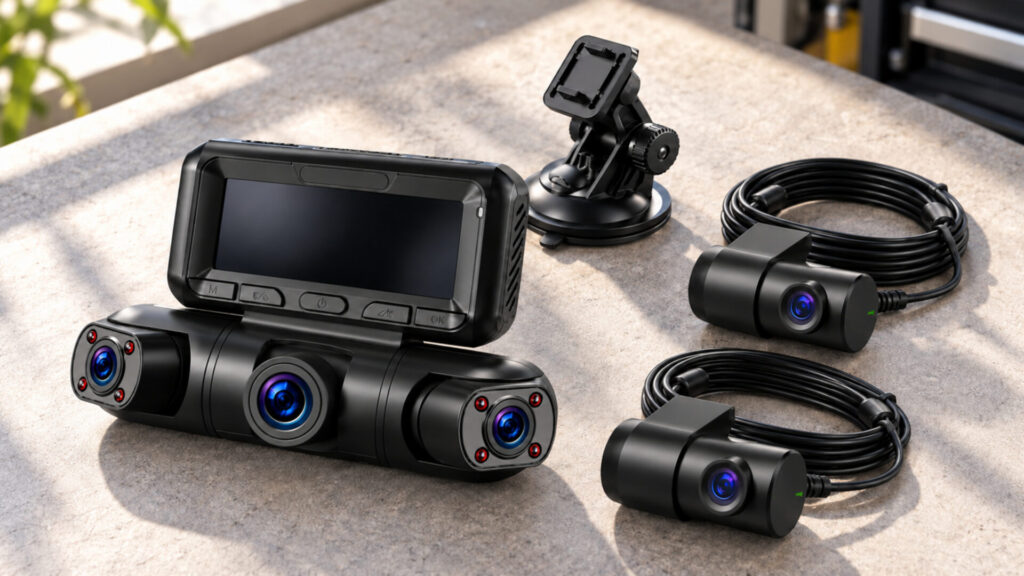
Consider this camera if your driving regularly involves passenger pickups, close activity beside the vehicle, or situations where a front view alone leaves too much unexplained. Its five perspectives offer a useful reason to accept additional setup and file management. The recommendation is narrower for buyers primarily chasing nighttime plate detail, because independent evidence for this exact model is limited.
The best dash cams comparison can help separate coverage needs from image-quality priorities. Be prepared to verify each channel, learn the export process, and price the parking-power accessories. With those expectations, the PRUVEEO NEW-D88-5CH is a coverage-first choice for a driver with a specific use for all five views.