
BLACK+DECKER LB700 for Small Outdoor Cleanup Jobs
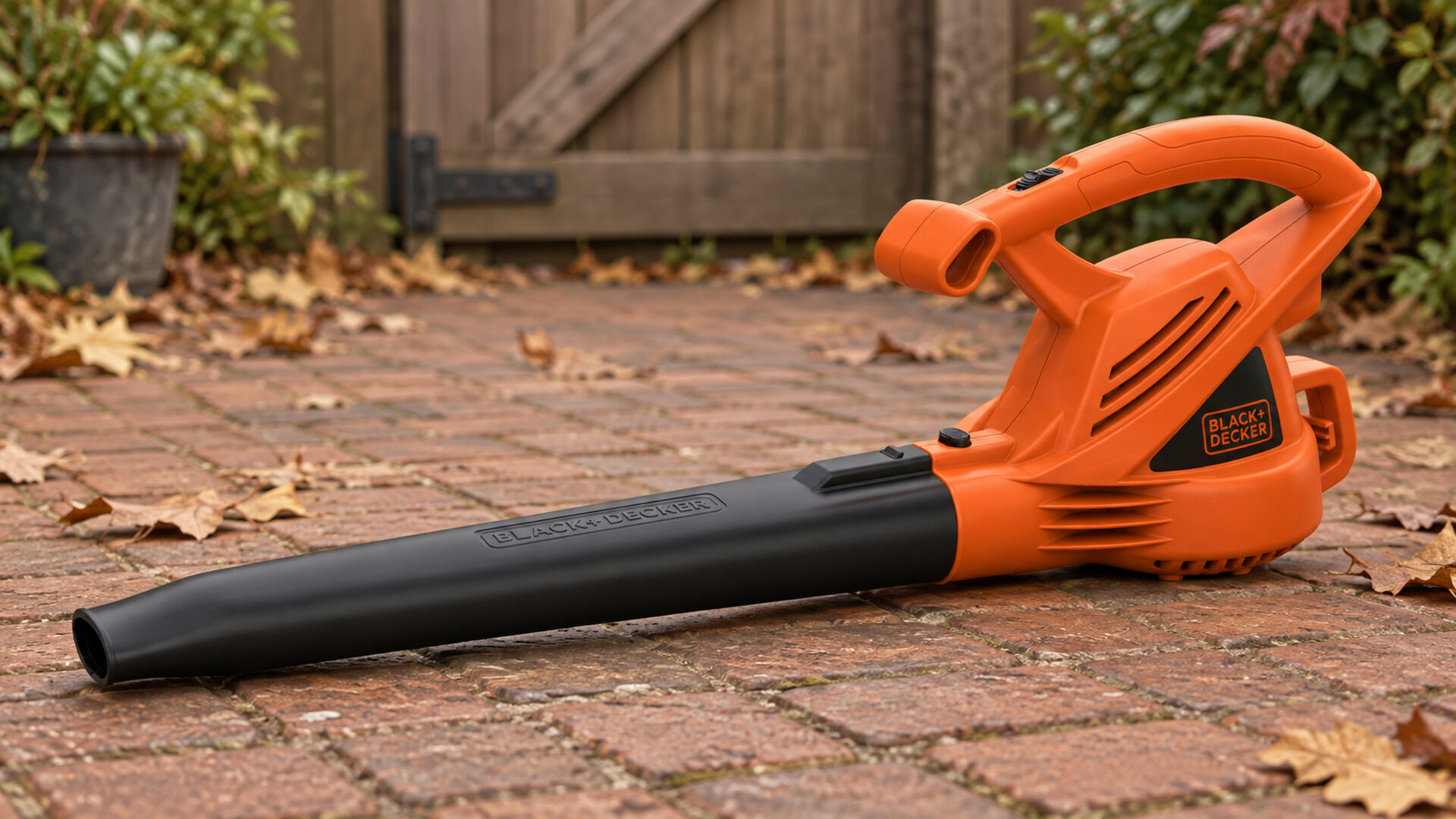
Not every patio needs a battery collection and a charging schedule. The BLACK+DECKER LB700 is a simple corded blower for small cleanup jobs, with light weight and limited reach. The BLACK+DECKER LB700 Electric Leaf Blower offers a straightforward way to move loose leaves and clippings when an outdoor outlet is close by. Its 7-amp motor and compact design make sense for modest spaces and occasional use. The compromise is both the extension cord and the relatively low airflow volume, which keep its ambitions closer to the front steps than a lawn buried in wet leaves.
Pros
- Compact handheld design is suitable for short cleanup sessions.
- No battery charging or gasoline preparation is required.
- Cord retention helps keep the extension connection secure.
- A sensible budget role for small areas close to an outlet.
Cons
- Extension-cord reach and routing limit where it can work.
- Lower airflow volume than the larger blowers in this selection.
- Simple switching offers less control than a variable-speed model.
- The extension cord is an additional item to choose and store.
Start with the patio rather than the whole property

The LB700’s most convincing use is ordinary maintenance around a small outdoor space. Dry leaves collect on steps, grass clippings spill onto the driveway, and debris finds its way into corners beside the shed. For those jobs, a small corded blower can save the effort of sweeping every surface by hand. The useful question is whether those places are accessible from a suitable outlet, without running a cable through awkward routes or across a shared walkway.
BLACK+DECKER gives maximum figures of 180 MPH and 180 CFM. The matching numbers measure different things. Airspeed is the speed of the airstream; airflow volume is how much air moves. A relatively high MPH figure does not make this a direct equivalent to a blower moving several hundred more cubic feet per minute. It is better suited to gathering loose material in manageable sections than to pushing a wide, dense bank of leaves across grass.
On a hard surface, begin at the far edge of a small section and move leaves toward a collection point. Work around pots and furniture without directing debris toward doors, people, or parked cars. If the leaves are damp and stuck down, loosen them with a rake or wait for better conditions. The blower should reduce the work, not encourage a prolonged contest with material that a simple hand tool could move more easily.
The extension cord becomes part of the tool
Corded power removes a charging cycle, but it introduces setup. You need an outdoor-rated extension cord with a gauge and length suitable for the blower’s current draw. Follow the LB700 manual’s cord requirements rather than assuming any cable from the garage will do. A longer cable is not automatically a better cable. Inspect the insulation and connections, use the required protected electrical supply, and keep the connection dry while you work.
The built-in cord retention feature helps prevent the connection from pulling apart as you move. It cannot compensate for an undersized or damaged cable, and it does not stop the cord from catching around a planter. Arrange the route before switching on. Leave enough slack for the working area, keep the cable out of traffic, and stop to reposition it when necessary. Pulling harder on a snag usually rearranges more than the leaves.
This is where the shape of the property can outweigh its size. A short, open driveway beside an outlet may be easy to cover. A similarly sized garden divided by fences, raised beds, and gates can be much less convenient. If you repeatedly need to move to the far side of those obstacles, a cordless model may suit the work better. The Makita XBU03SM1 kit is one alternative, particularly for buyers already using compatible LXT batteries.
Light weight is useful when the task stays modest
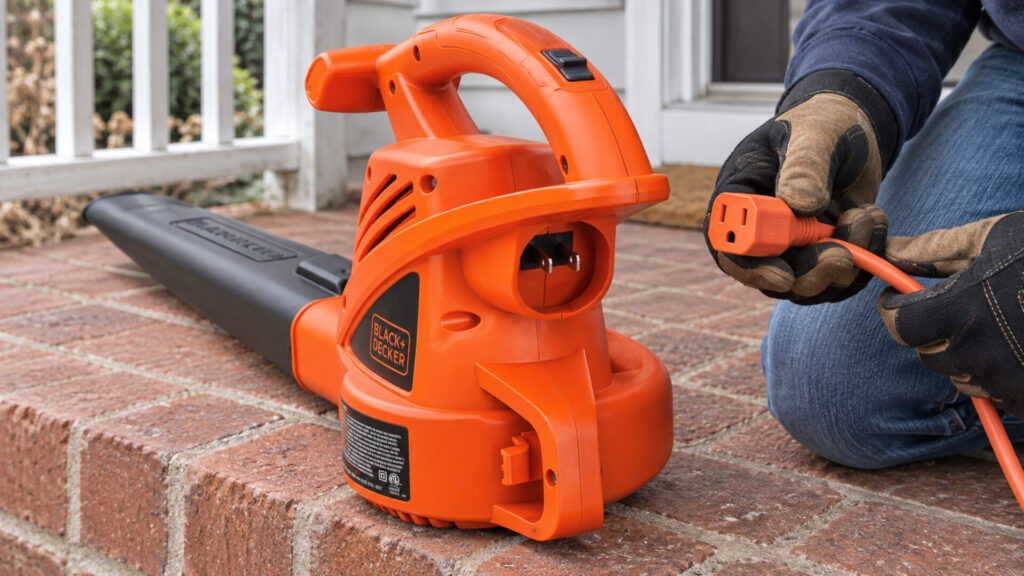
The manufacturer’s descriptive specifications give the LB700 a 4.4-pound weight. That is a useful attraction for a handheld blower used in short bursts. There is no attached battery pack or fuel tank to carry, although the cord still needs to be managed. Comfort depends on more than the number: the handle fit, the direction of the airflow, and your ability to keep a relaxed posture all influence how pleasant the job will be.
The controls are simple. This is an on/off blower rather than a model with a variable trigger for fine output adjustment. Around loose mulch, delicate plants, or gravel, the practical response is to keep the stream away from material you want to leave in place and use another tool when precision is needed. Do not mistake simplicity for a hidden low-speed mode. If frequent delicate cleanup is a priority, adjustable output is a worthwhile feature to buy deliberately.
Compact storage is another advantage for occasional users. The blower and extension cord can occupy a regular dry storage area instead of needing battery charging space or fuel storage. Unplug before cleaning or checking the tube, and keep the intake free of accumulated debris. Check the switch and cord connection before each use. A tool that spends weeks unused still deserves an inspection before it returns to service, especially if other equipment has been stacked around it.
Spend for the work you actually have
The budget recommendation is about the scale of the purchase, not a promise of today’s lowest checkout price. Include the cost of an appropriate extension cord if you do not already own one. Then consider how often the blower will be used and whether the outlet covers the job. For a small patio and short walkway, a simple corded tool can be a reasonable use of money. For a long, heavily shaded lawn, buying too little capacity can create more work than it saves.
The WORX WG520 is the more capable corded option in this selection, with higher maximum airflow and variable speed. It keeps the same basic outlet-and-cord requirement, so it addresses a need for more output rather than a need for more mobility. That distinction is useful when comparing them. If the cable is the problem, a stronger corded blower will still have a cable. If leaf volume is the problem, additional airflow may be worth the larger tool.
Avoid buying the LB700 for tasks that call for a different machine. It blows material into a place where you can collect it; it does not vacuum leaves into a bag or mulch them. It is also unnecessary for every little mess. A broom can be quicker for a few dry leaves on the doorstep once plugging in, unwinding, and putting away the cable are included. Save the blower for enough loose debris to justify the setup.
Basic protection remains part of that setup. Wear eye and hearing protection, keep others away, and work in appropriate dry conditions. A modest motor does not make flying grit harmless. Stop before inspecting anything near the air opening, and disconnect the power before maintenance. When the tool is stored, coil the cable without tight bends or damage and keep everything out of reach of children. Low maintenance is welcome; no attention at all is a different proposition.
Should You Buy the BLACK+DECKER LB700 Electric Leaf Blower?
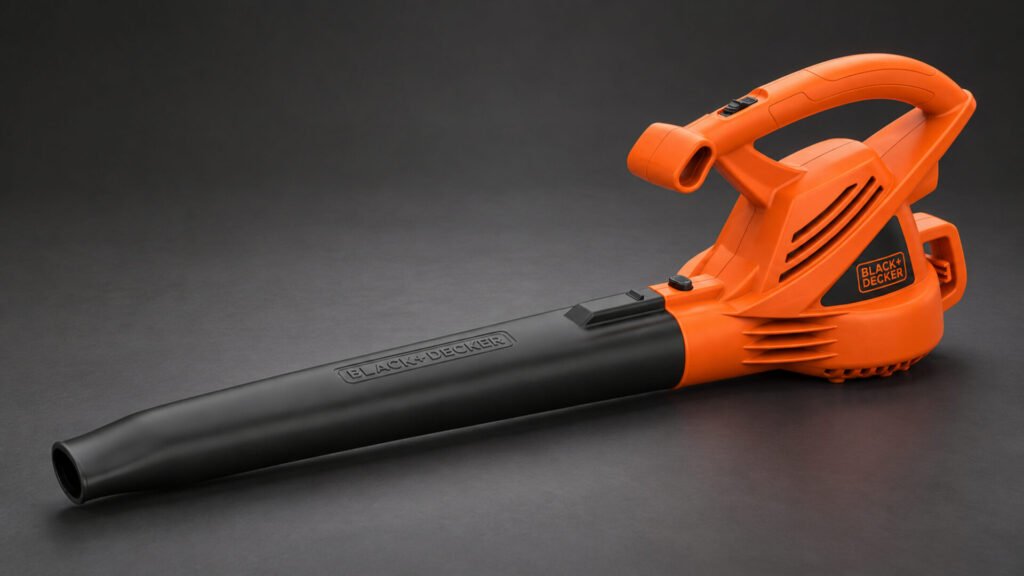
The BLACK+DECKER LB700 Electric Leaf Blower is a sensible budget choice for small, accessible areas and loose debris. Its appeal is a light, uncomplicated tool that does not need a battery or gasoline. Accept the cord, allow for its modest airflow, and it can fit a straightforward cleanup routine. Choose a larger blower for substantial leaf cover, a variable-speed model for more output control, or cordless power when obstacles make cable management awkward. Matching the tool to a modest job is good economy; expecting it to behave like a larger machine is not.