
WORX WG520 for Steady Corded Leaf Clearing
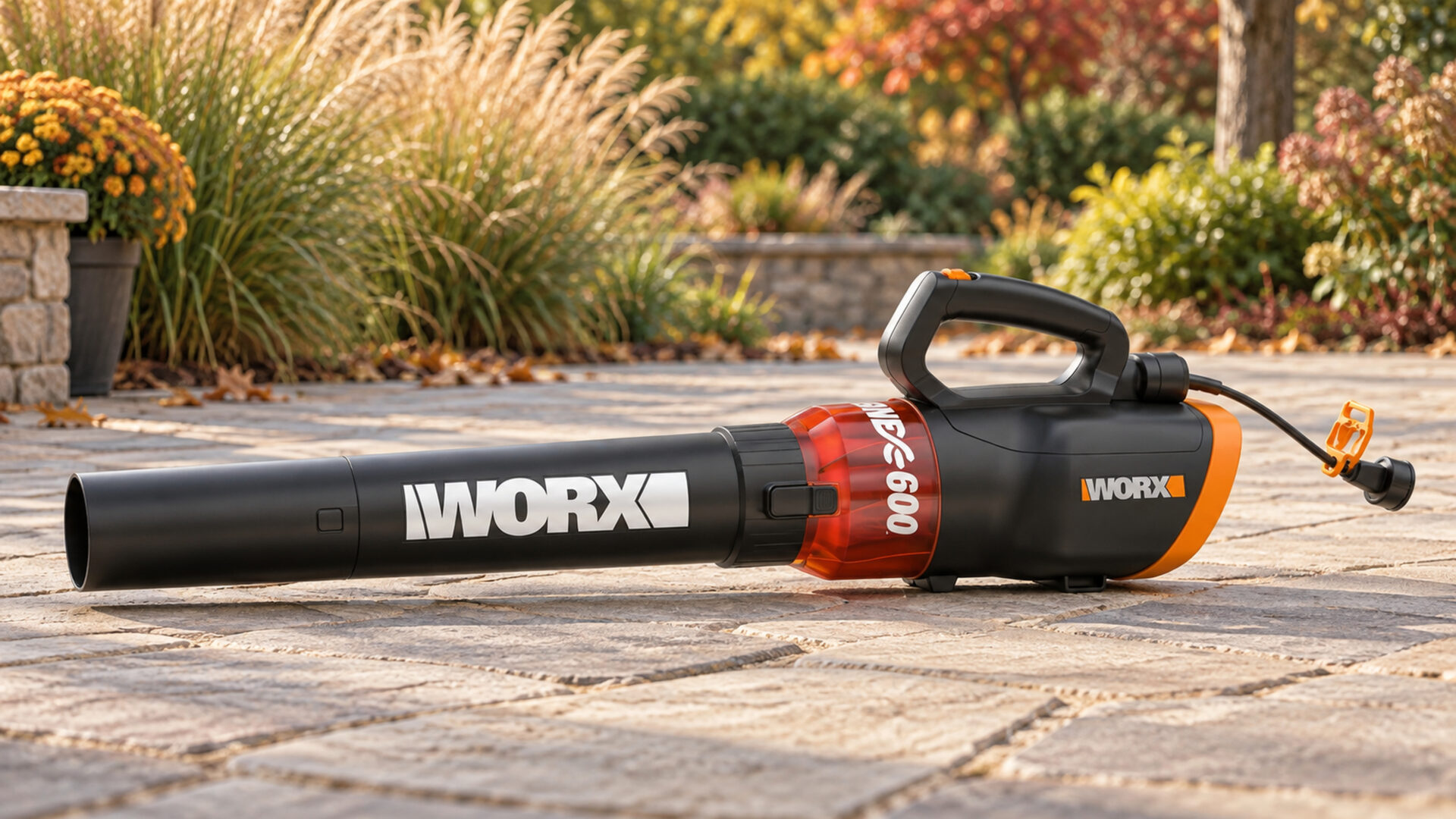
A long cleanup session does not have to revolve around a battery gauge. The WORX WG520 delivers substantial corded airflow for leaf clearing, provided an outdoor outlet and suitable cable cover the job. The WORX WG520 Electric Leaf Blower uses a 12-amp motor, variable speed, and up to 600 CFM of airflow to make corded power a serious option for residential yards. It suits buyers who want more clearing capacity than a small patio blower without adding gasoline to the routine. Its main limitation follows behind it: the extension cord must reach the work and stay manageable along the way.
Pros
- Up to 600 CFM of airflow for residential leaf clearing.
- Variable speed helps adjust output around different surfaces.
- No battery charging pauses or fuel preparation.
- Cord retainer and included Hyper-Stream nozzle add practical utility.
Cons
- Reach depends on a suitable extension cord and outlet location.
- The cable can snag around beds, gates, and outdoor furniture.
- It blows debris but does not vacuum or mulch it.
- Dry operating conditions and careful electrical setup are essential.
Air volume is the reason to consider it
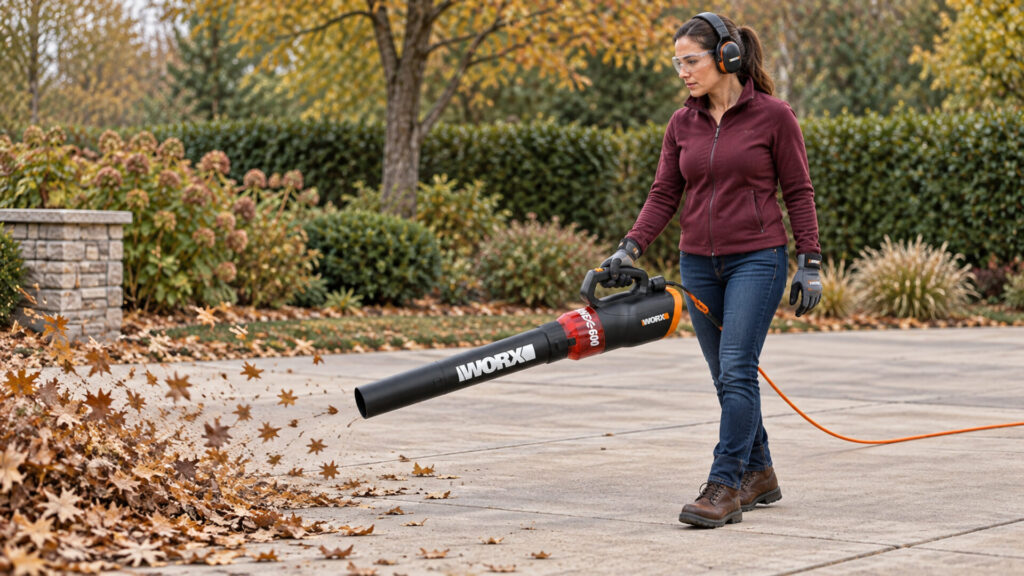
The WG520’s appeal begins with moving a useful volume of air. Its published output ranges from 320 to 600 CFM, with airspeed figures of 60 to 110 MPH. Those ranges describe different measurements: the amount of air and its speed. A blower advertised with a higher MPH figure is not automatically better at moving a broad layer of leaves. For comparing machines, consider the airflow controls, the work surface, and the amount of material as well as the maximum numbers.
Variable speed is valuable because cleanup rarely stays on one surface. A driveway can tolerate a different approach from a planted border covered in bark mulch. Use lower output where the material is loose or where stronger airflow would disturb the surroundings. Increase it for the sections that need more force. Moving leaves without moving everything beneath them is the useful result. There is no prize for sending the mulch farther than the leaves.
The included Hyper-Stream nozzle offers a more directed airstream for difficult areas. It is an attachment for blowing, not a conversion to leaf collection. Stop and unplug the tool before changing or checking parts. Work in narrow passes, keep the tube aimed toward the collection area, and loosen compacted leaves with a rake when needed. The machine can move material, but the operator still has to choose where that material should end up.
Make the cord route part of the plan
A corded blower can keep working without waiting for a battery to recharge, but only with an appropriate electrical setup. The WG520 is a 12-amp tool. Choose an outdoor-rated extension cord whose gauge and length meet its manual’s requirements, and use the required protected outlet. Inspect the cable and plug before use and keep the connections dry. An unsuitable cord is not a harmless inconvenience; it can affect operation and create an electrical hazard.
Lay out the route before switching on. A wide driveway beside an outlet may be straightforward, while a smaller yard with raised beds, gates, and furniture can demand repeated cable repositioning. Keep the cord away from traffic and avoid pulling it across sharp edges. The retainer helps keep the connection together, but it cannot release a snag around the far side of a planter. Stop and free the cable rather than dragging the whole arrangement behind you.
It helps to divide the area into sections that can be reached comfortably from one setup. Finish and collect the leaves in a section before moving the cable to another. This limits unnecessary backtracking and keeps a growing pile from being scattered during the next pass. If most of your route lies beyond suitable cord reach, choose cordless power instead of stretching the electrical arrangement to fit. The EGO LB6504 is an alternative when mobility is the deciding factor.
Handling a stronger handheld blower
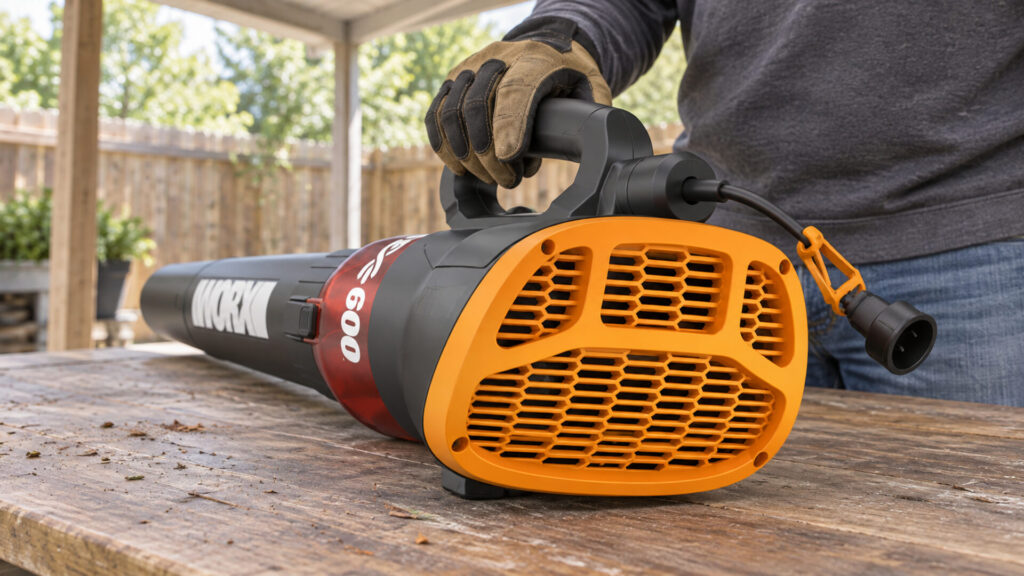
WORX specifies a machine weight of 6.4 pounds. That avoids an attached battery’s weight, although you still have a handheld tool to guide and a cable to manage. How it feels depends on the handle, your posture, and the output setting. Keep the blower at a comfortable working angle and step forward as the clearing line moves. Leaning across a bed or twisting the wrist to reach a corner adds strain without making the airflow more useful.
The controls allow one-handed operation, but that does not mean every person will find a long session comfortable. Take breaks to collect the material, reposition the cable, and assess the next section. Long stretches at maximum output are not always the quickest overall method if the leaves keep scattering beyond the intended pile. A little restraint can reduce both the number of passes and the amount of material that needs to be moved twice.
Keep the intake unobstructed and loose clothing or hair away from it. Eye and hearing protection remain part of the job even without a gas engine. A blower can send grit and small debris toward surfaces or people nearby, so clear the work area first. Avoid directing the airstream toward vehicles, windows, or neighboring property. The leaf blower category guide can help distinguish the situations where a smaller machine or another power source makes more sense.
A straightforward tool with a specific job
The WG520 is designed to blow yard debris. It does not vacuum leaves or shred them into a collection bag. Plan for a rake, tarp, or other suitable collection method at the end of the route. This is particularly relevant if storage space is limited and you expect one purchase to replace several tools. A blowing-only machine can be simple to use, but it cannot supply a collection function that is not part of its design.
Maintenance is less involved than gasoline-engine care. Unplug it before cleaning, keep the ventilation openings clear, and inspect the tube and cable connection for damage. Follow the manual’s cleaning directions and do not spray the tool with water. Store the blower and extension cord dry and protected from damage. The absence of fuel and batteries removes some ownership tasks, while leaving the ordinary responsibility to keep an electrical appliance in safe working condition.
Value depends on how much of your cleanup area is accessible. If a suitable cord already lives in the shed, the WG520 can be a practical step up from a small blower. If you need to buy a long, properly rated cord and repeatedly rearrange it around obstacles, include both that expense and that effort in the comparison. A corded tool is convenient when the site suits it. It is not automatically the cheapest complete solution for every property.
For a few leaves on a porch, the BLACK+DECKER LB700 offers a smaller, simpler option. The WORX is easier to justify when leaf volume and longer sessions call for more airflow. Both need an outlet, so the distinction is about the work done within cord reach. Buyers who routinely travel beyond that boundary should compare battery or backpack machines instead of buying more corded output and hoping the cable will become less noticeable.
Should You Buy the WORX WG520 Electric Leaf Blower?
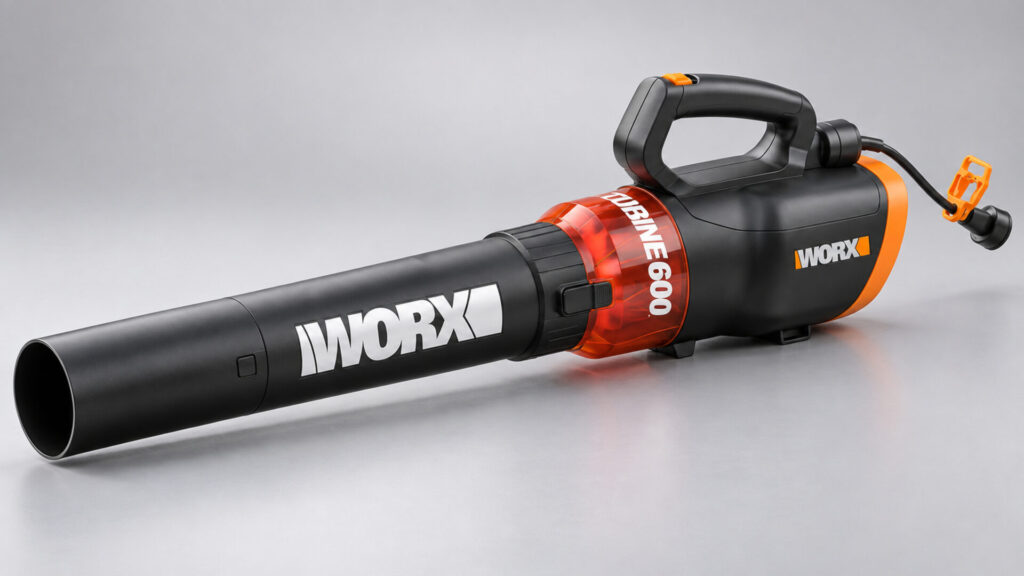
The WORX WG520 Electric Leaf Blower is a strong fit for homeowners who want substantial residential clearing capacity and can work comfortably within suitable cord reach. Variable output makes it more adaptable than a basic on/off blower, while plug-in power avoids battery charging and fuel preparation. Choose it for a property that accommodates the cable, and keep a separate plan for collecting the leaves. If the yard is divided by obstacles or extends far from an outlet, the freedom of a cordless machine may be worth its different costs and runtime limits.