
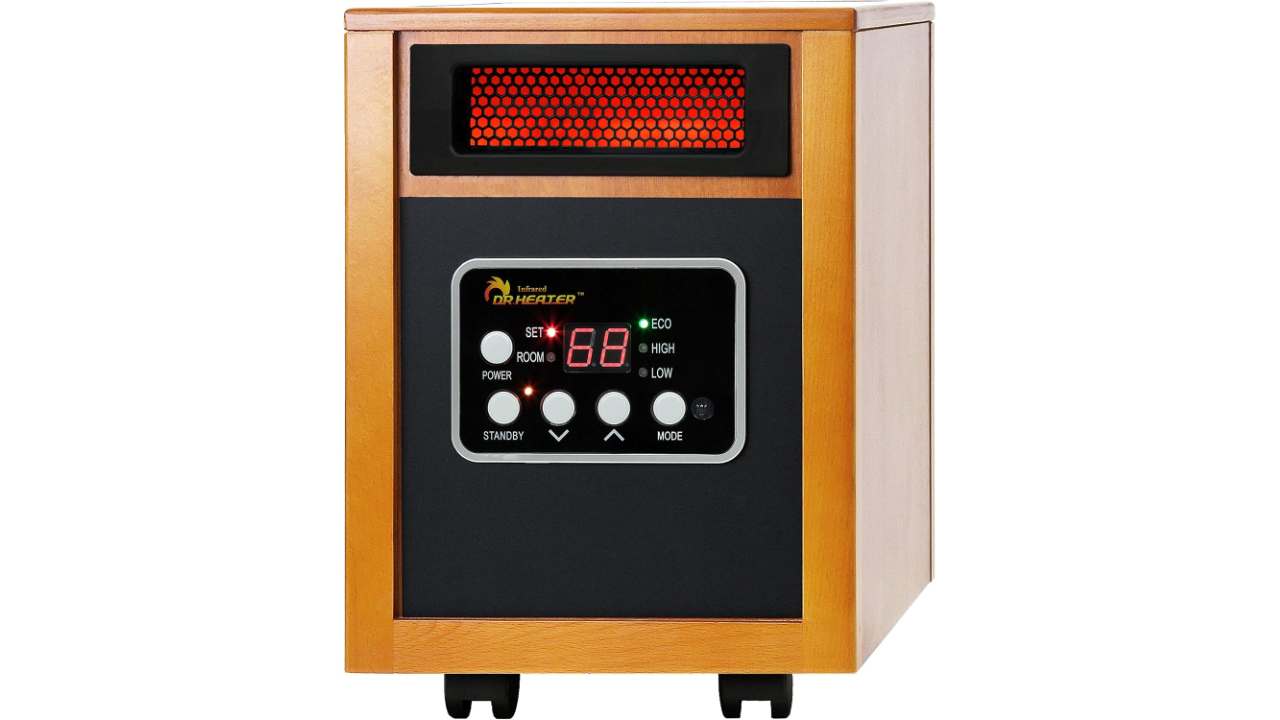
Dr Infrared Heater Review: A Good Living Room Fit
Cabinet styling and a remote make the Dr Infrared DR-968 a good fit for a frequently used sitting room. The Dr Infrared Heater DR-968 combines a digital thermostat, adjustable heat output, and casters in a wood-look enclosure that can stay in place through winter. It is an appealing choice when you want supplemental warmth you can adjust from your chair. The main tradeoff is portability: this cabinet is bulkier to carry than a small ceramic heater, and its fixed outlet does not sweep air across the room.
Pros
- Cabinet format and casters suit a regular position in a sitting room.
- Remote control and a digital thermostat make adjustments convenient.
- Adjustable heat output and a shutoff timer offer flexibility during supervised use.
Cons
- Fixed airflow does not oscillate across multiple seating positions.
- Bulkier to carry between floors than a compact personal heater.
- Infrared branding does not establish lower electricity costs for equivalent heat.
Cabinet Styling Works Best with a Permanent Spot
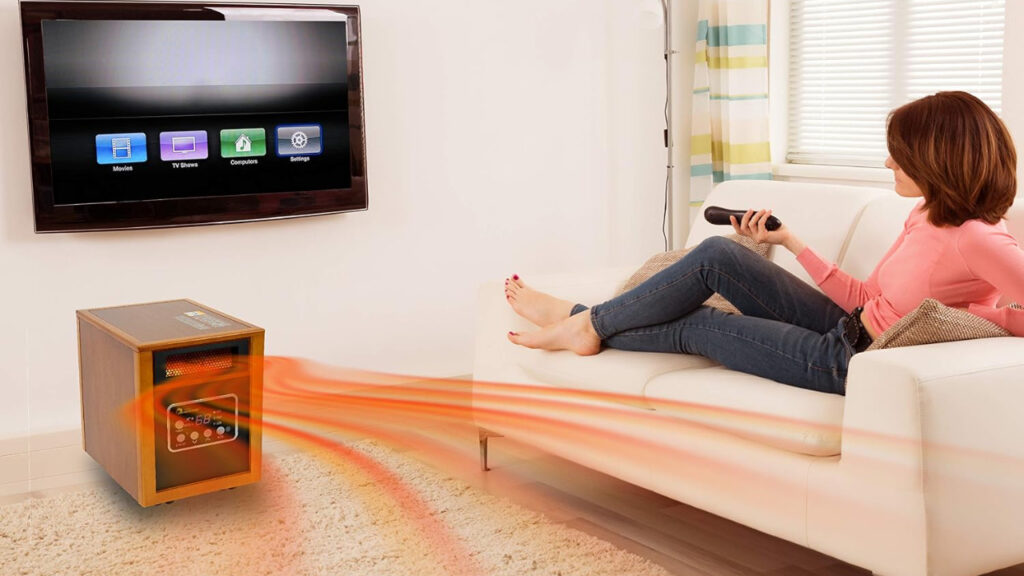
Image credit: Dr Infrared
The wood-look cabinet is a distinctive part of the DR-968’s appeal. It has a more traditional presence than a narrow tower and may look more at home alongside a chair or other living-room furniture. That visual fit is useful if supplemental heat is part of your daily routine and the heater will remain out during the colder months. It is less persuasive when you need a lightweight appliance to carry from room to room several times a day.
Casters help with repositioning on a suitable floor, but stairs and thresholds still mean lifting a relatively bulky cabinet. Plan its location before buying and leave enough space for both the heater and people walking past it. A cabinet that looks comfortably tucked beneath a side table may not have the clearance its airflow requires. Appearance should follow the safe location, rather than determine it.
Do not treat the flat top as extra furniture space. Books, folded clothing, bags, and decorative items can create obstructions or bring combustible material too close. The appliance needs to remain visibly recognizable as a heater in daily household use. If an empty top is difficult to maintain in the intended room, a different form factor may be a more practical choice.
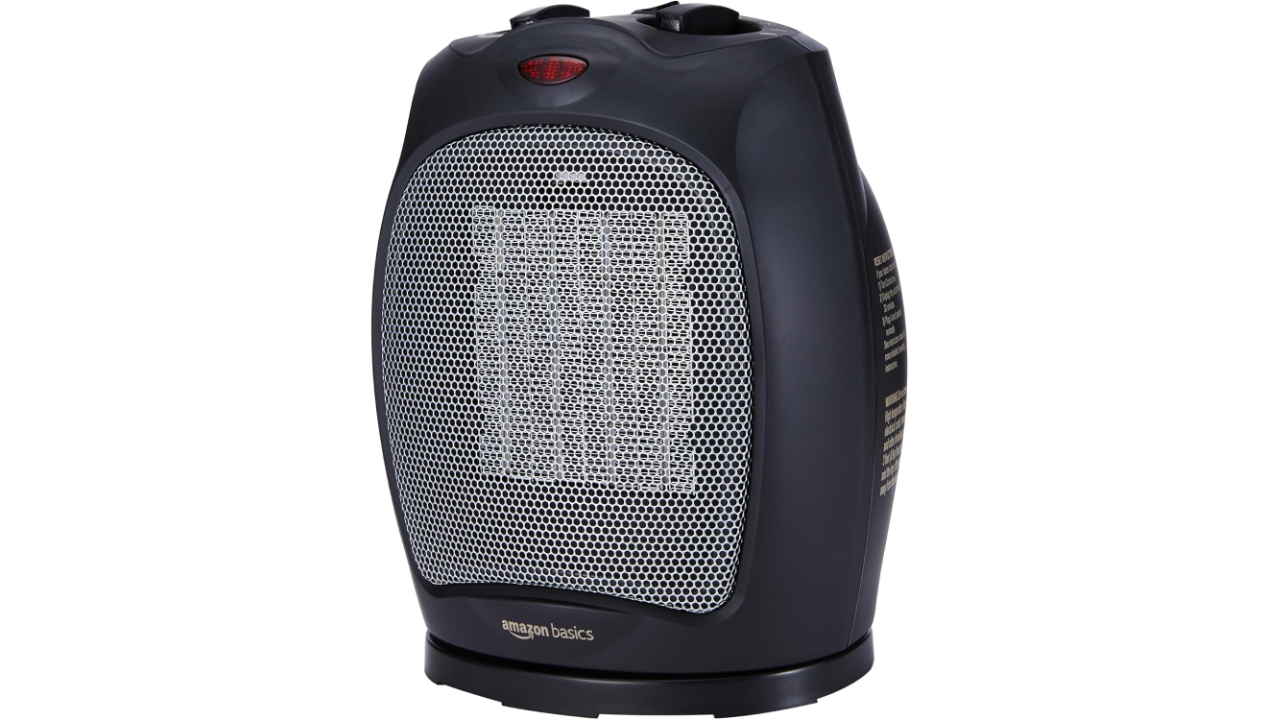
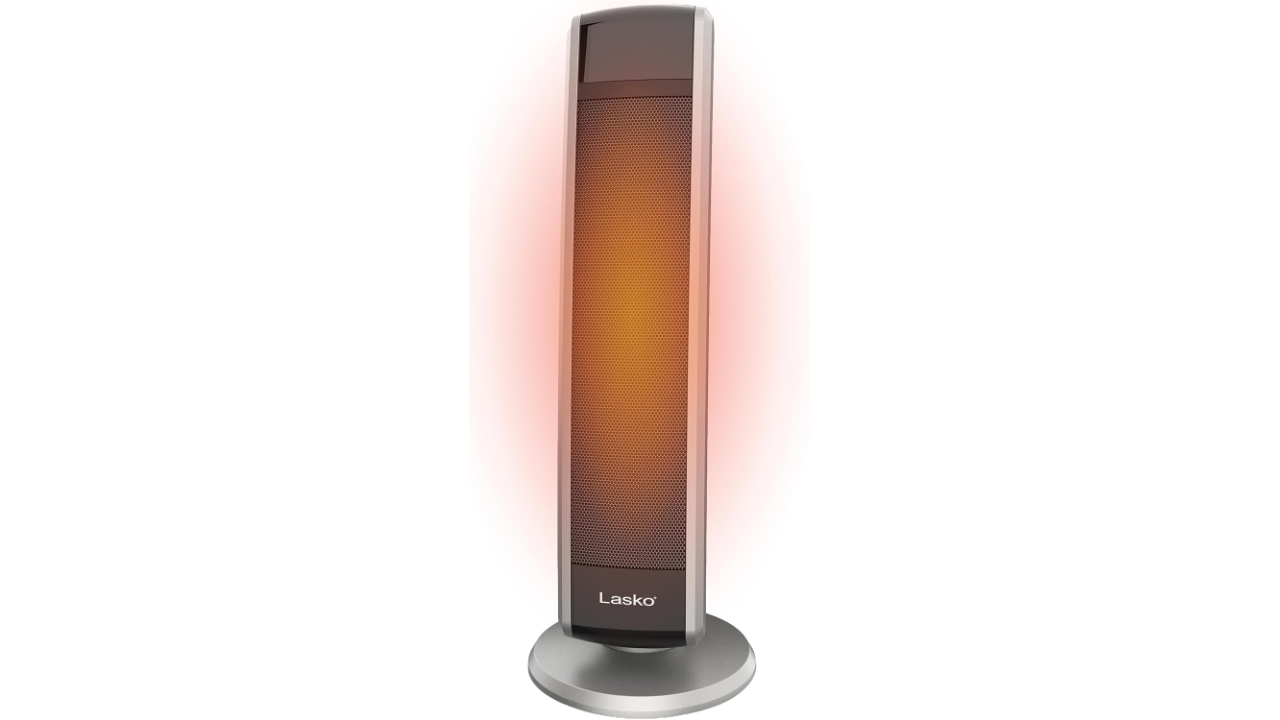
The smaller Honeywell UberHeat 5 HCE210B is easier to accommodate for personal warmth near a workspace, while the Lasko 5586 Ceramic Tower Heater offers a taller outlet and oscillation. Neither has the same cabinet appearance. Choose the DR-968’s shape because it suits the room and your handling needs, not because a larger enclosure guarantees a larger heated area.
Infrared and Ceramic Elements Share a Power Limit
The DR-968 combines an infrared quartz element with a PTC heating element and a blower. Despite the name, it is not a silent radiant panel that warms only what sits directly in front of it. Air movement is part of the system, so you should expect fan operation as well as heat. That makes the airflow path and clean intake important to both everyday comfort and maintenance.
Maximum electrical input is 1,500 watts. Like other electric resistance heaters, it converts the electricity it uses into heat within the room. Infrared branding does not turn that electrical input into unlimited heating capacity or establish a special discount on each unit of warmth. The cabinet and blower can affect distribution and how comfortable a particular position feels, but those differences should not be confused with producing more total heat from the same energy.
Be cautious about large-room coverage promises. Ceiling height, insulation, outdoor temperature, air leakage, and the support provided by central heating all influence the result. An already heated sitting room that needs a small boost is a much easier task than a cold open basement. If a room remains uncomfortable with ordinary supplemental heat, addressing drafts or the main heating system may be more useful than choosing a more impressive-looking portable heater.
For cost planning, an hour of continuous 1,500-watt heating uses 1.5 kilowatt-hours. At an illustrative 20 cents per kilowatt-hour, that is 30 cents. The thermostat can reduce the time spent heating, but it cannot eliminate the room’s demand for warmth. Any savings depend on avoiding enough central-heating use to offset the heater’s added consumption, as the space-heater savings guide explains.
Digital Controls Help Manage an Occupied Room
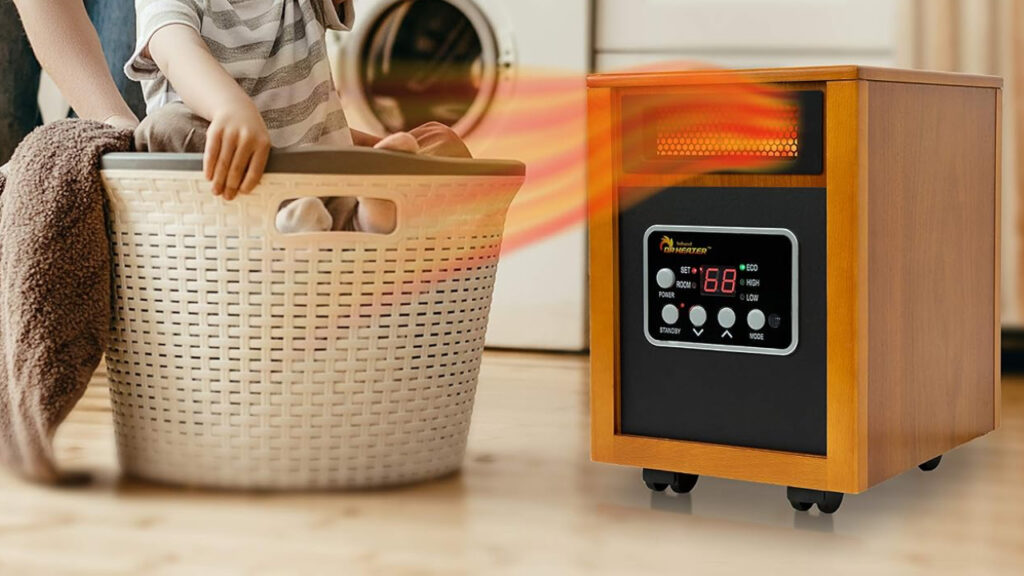
Image credit: Dr Infrared
The digital thermostat provides a temperature range from 50 to 85 degrees Fahrenheit. That is more explicit than an unmarked comfort dial, particularly if several people use the heater and want to restore a familiar setting. It still measures conditions near the appliance. The temperature at a chair across the room can differ, so treat the selected number as a control target rather than a promise about every part of the space.
Selectable output and automatic control give you ways to moderate the heat once the room feels comfortable. Avoid treating the highest temperature setting as a faster warm-up button. When the appliance is already calling for maximum heat, a higher target mainly asks it to continue for longer. A moderate setting, enough time to respond, and a suitable position are more useful than repeatedly chasing a higher number.
The remote allows adjustments from your seat, and the timer can end operation after a chosen period, up to 12 hours. Those features fit a long stretch of supervised reading or home-office work, but a long timer does not make unattended or overnight heating appropriate. Turn the appliance off when you leave or prepare to sleep. Follow the manual’s shutdown procedure, including allowing the fan’s cooling operation to finish when applicable.
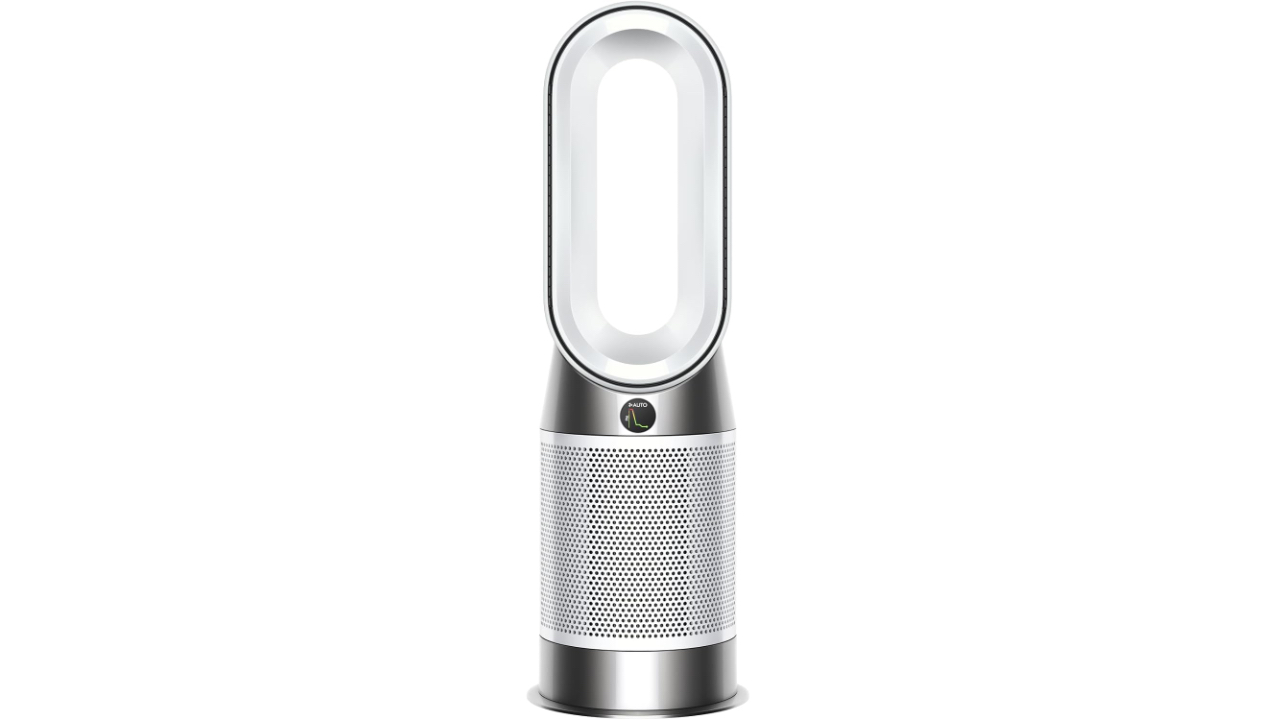
The intake filter also needs routine attention. Unplug the unit, let it cool, and clean it according to the instructions supplied with your heater. Its purpose is to keep dust from interfering with the appliance’s airflow. It should not be mistaken for the dedicated HEPA air-purification system offered by the Dyson in this category.
Position the Cabinet for Clear Airflow
The DR-968’s fixed outlet rewards a little planning. Choose a position that sends warm air toward the occupied part of the room without placing the cabinet against furniture or in a walking route. It does not oscillate, so sharing warmth across chairs in different directions may take more thought than with a sweeping tower. Check the arrangement before the heater is running, when it is easier to move the cooled cabinet safely.
Keep the intake accessible as well as the front outlet. A position that forces you to move furniture every time the filter needs cleaning makes routine care unnecessarily awkward. Dust removal is part of keeping the blower’s airflow unobstructed, particularly in rooms with pets or carpet. Follow the manual’s cleaning instructions, let any cleaned components dry as directed, and reinstall them correctly before using the heater again.
Tip-over and overheat protection provide automatic safeguards, but the heater still requires supervision. Maintain at least three feet between it and combustible materials, follow the manual’s additional clearances, and keep fabrics away from the airflow openings. Turn the heater off before leaving the room or going to sleep. The cabinet’s familiar furniture-like appearance should not change those habits.
Connect directly to a suitable grounded wall outlet, without a power strip or extension cord. Keep the cord out of walking routes and do not use the heater around water. When putting it away after the heating season, unplug it, allow it to cool, and clean it as directed. An accessible spot for storage is worth considering if carrying the cabinet upstairs would be inconvenient.
Should You Buy the Dr Infrared Heater DR-968?
Choose this model for a living room where you want adjustable warmth, a readable temperature setting, and a remote within reach of your chair. The cabinet appearance and casters make particular sense when it will remain on one floor and spend much of the season in the same room. Those practical benefits earn it the Best Cabinet Heater position in the lineup.
A compact personal heater is easier to carry between floors, and an oscillating tower is more flexible when several seating positions need airflow. For a regular sitting-room location, though, the Dr Infrared Heater DR-968 is a good choice for convenient supplemental heat. Buy it for the cabinet format and controls, with realistic expectations about room coverage and electricity costs.