
Honeywell UberHeat Review: Great for a Chilly Office
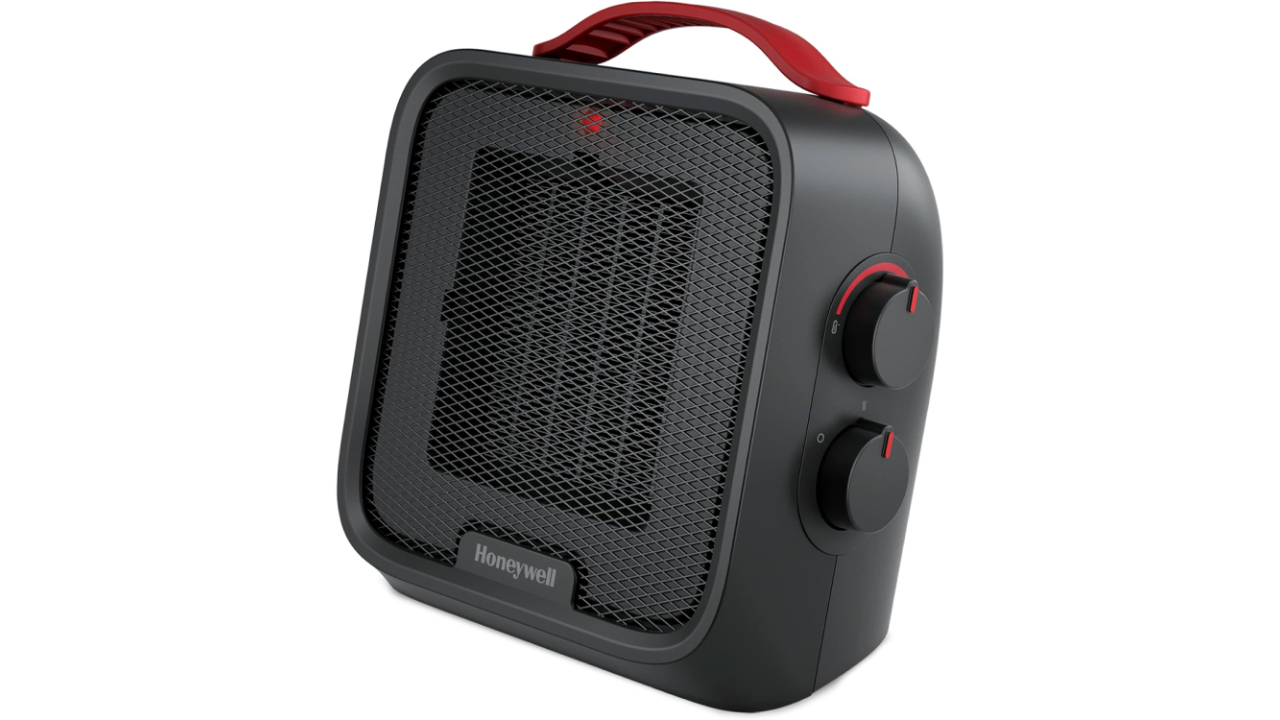
A chilly office is a good match for the Honeywell UberHeat 5 when simple controls and fixed airflow are enough. The Honeywell UberHeat 5 HCE210B is a compact ceramic heater with two knobs and two heat settings, well suited to straightforward personal warmth in an occupied office. Its appeal is easy to understand: small size, uncomplicated controls, and automatic tip-over and overheat protection. You give up oscillation, a remote, and a timer, so it works best when a fixed stream of warm air and manual adjustments are enough. It is a personal heating option, not a promise of whole-room comfort in every space.
Pros
- Compact format suits a small workspace with an appropriate clear operating area.
- Separate mode and thermostat knobs keep adjustments straightforward.
- Tip-over protection and two overheat sensors provide automatic safeguards.
Cons
- No oscillation, remote control, or shutoff timer on the HCE210B.
- Thermostat dial does not display a numerical temperature target.
- Fixed airflow is less flexible when several people need warmth.
A Compact Heater for One Occupied Workspace
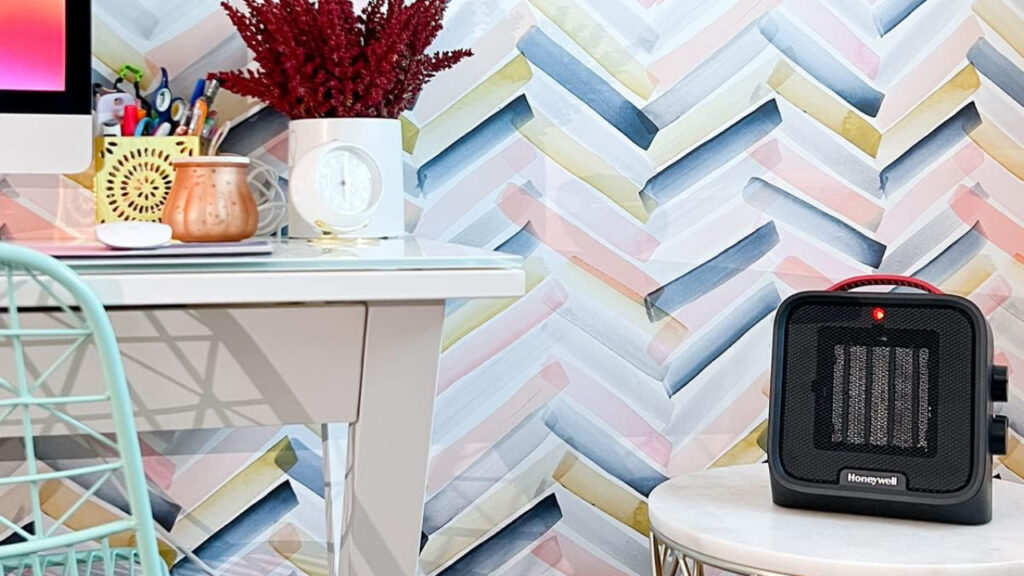
Image credit: Honeywell
The UberHeat 5 is about 8.5 inches tall, giving it a much lower profile than a tower heater. Its rounded case can be easier to accommodate in a home office where floor space already competes with a chair, desk, and storage. Measure the available clear area, however, rather than simply measuring whether the case fits. Heater clearance extends well beyond the outline of the product.
A spot beneath a desk can look tempting, but chair movement, papers, bags, and hanging fabric can make it unsuitable. Choose a stable location that meets the manual’s surface and clearance requirements, allows unobstructed airflow, and stays away from water. The power cord should reach a suitable wall outlet directly without crossing a route where someone could trip over it. If those conditions cannot be met, portability will not solve the placement problem.
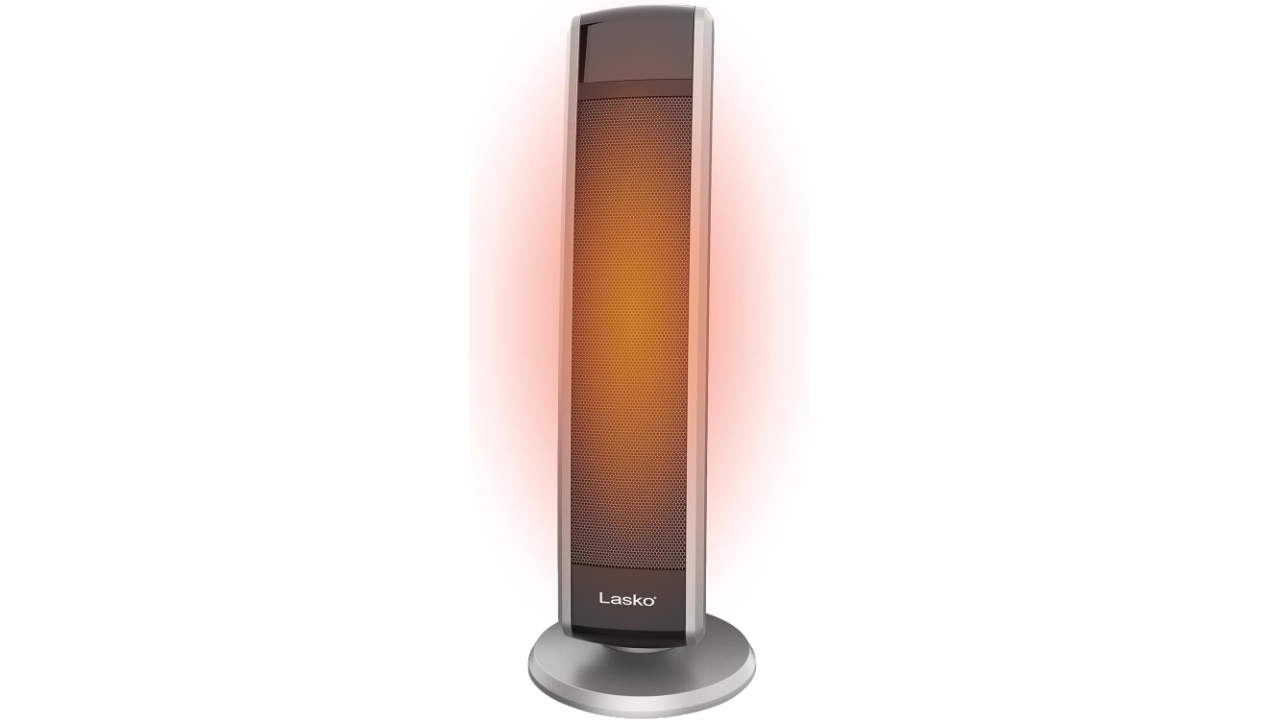
The fixed outlet suits one nearby working area better than a broad sweep across several chairs. That makes this a useful personal-office option when central heating already keeps the room reasonably warm and one person wants an extra boost. It is less compelling for a gathering space where people sit in different directions. The Lasko 5586 Ceramic Tower Heater offers oscillation and remote control for that different arrangement, although it lacks tip-over shutoff.
Two Knobs Keep the Learning Curve Short
One knob chooses the operating setting, while the other adjusts the thermostat. There is no screen to read, menu to navigate, or phone connection to maintain. That simplicity can be helpful when you want a heater to do one job without extra setup. It also means that the control scale expresses relative comfort rather than an exact temperature such as 68 or 72 degrees.
The manual’s approach is straightforward: allow the area to warm, then turn the thermostat back until it clicks and stops calling for heat. The heater can subsequently cycle to maintain conditions near that setting. Expect to make small adjustments as the room, weather, or position changes. A dial mark that feels right beside one desk may not produce the same comfort level in another room.
Thermostat sensing happens at the appliance, not at your hands or feet. If the heater is drawing colder air from a drafty location, it may operate differently from what you expect at the chair. Before continually turning up the dial, consider whether the position is appropriate and whether a draft is the real source of discomfort. Correcting a leaky window can make both central and supplemental heat more effective.
The absence of a remote is manageable when you can reach the controls safely, but it becomes irritating if you need to stand and cross the room for every change. There is also no automatic shutoff timer on this HCE210B model. Make switching it off part of leaving your workspace, rather than assuming a feature from another UberHeat model will handle that task for you.
High and Low Heat Serve Different Demands
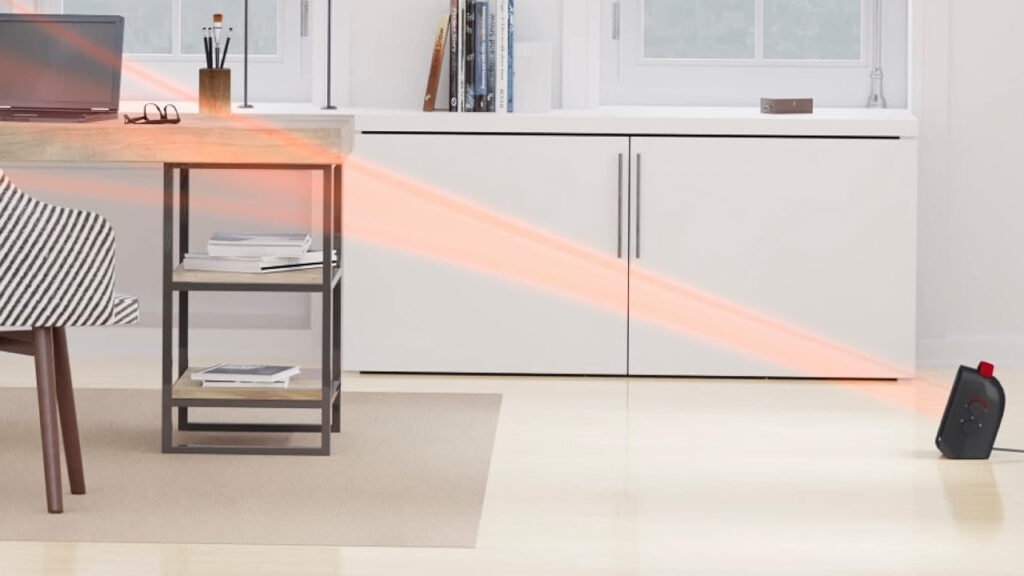
Image credit: Honeywell
High heat uses up to 1,500 watts and low heat uses 900 watts. Those are output choices rather than different kinds of heating. High supplies more warmth while the element is running; low reduces both electrical demand and heat output. Low may be enough when the room is already near a comfortable temperature and you need only a small adjustment around your working position.
This is a fan-forced ceramic heater, so warm air is actively moved out of the case. Do not expect the silent operation of an appliance without a fan, and do not assume its small size makes the airflow unnoticeable. Without a controlled comparison in your room, a universal quietness promise would be unhelpful. Consider how close the heater will sit to your microphone, reading chair, or concentration space.
For an example of running cost, continuous high heat at 20 cents per kilowatt-hour costs about 30 cents an hour. Continuous low heat costs about 18 cents an hour at the same rate. Thermostat cycling can reduce total consumption, but low heat may run longer if the room needs more warmth. A lower wattage setting does not automatically create the same comfort with proportionally less energy.
The savings opportunity is using supplemental heat while reducing enough central-heating demand elsewhere. Running the UberHeat with an unchanged central thermostat usually adds to electricity use. The guide to saving money with a space heater explains how to compare the added cost with the heating you actually avoid. That comparison is especially important when the home already uses an efficient heat pump.
Automatic Safeguards Still Need a Clear Space
Tip-over protection cuts operation when the heater is knocked over, and two overheat sensors provide additional protection against abnormal temperatures. These are useful features, particularly in a compact appliance that is easy to relocate. They remain backup safeguards. Neither their presence nor the cool-touch housing description makes the heater suitable for an unsupervised room, a crowded corner, or a location where children can readily reach the outlet grille.
Keep combustible materials at least three feet away and follow the manual’s additional requirements. Curtains, loose paper, bedding, and clothes deserve particular attention because their position can change after the heater is switched on. A desk chair can also push a bag or garment closer to the appliance. Check the area at the start of each use rather than relying on yesterday’s arrangement.
Connect directly to a wall outlet without an extension cord or power strip. Turn off and unplug the heater when you finish, and never leave it heating while you sleep. If a plug or outlet becomes hot, loose, discolored, or otherwise suspect, stop using that outlet and have the problem addressed. An automatic sensor inside the heater cannot correct faulty household wiring or a worn receptacle.
For cleaning, unplug the appliance and allow it to cool before removing accumulated dust according to the manual. Keep liquid out of the housing and do not obstruct the intake or outlet. After moving it to another room, recheck stability, cord routing, and clearance. The practical benefit of a small heater is being able to place it where it is useful, provided each new location is appropriate.
Should You Buy the Honeywell UberHeat 5 HCE210B?
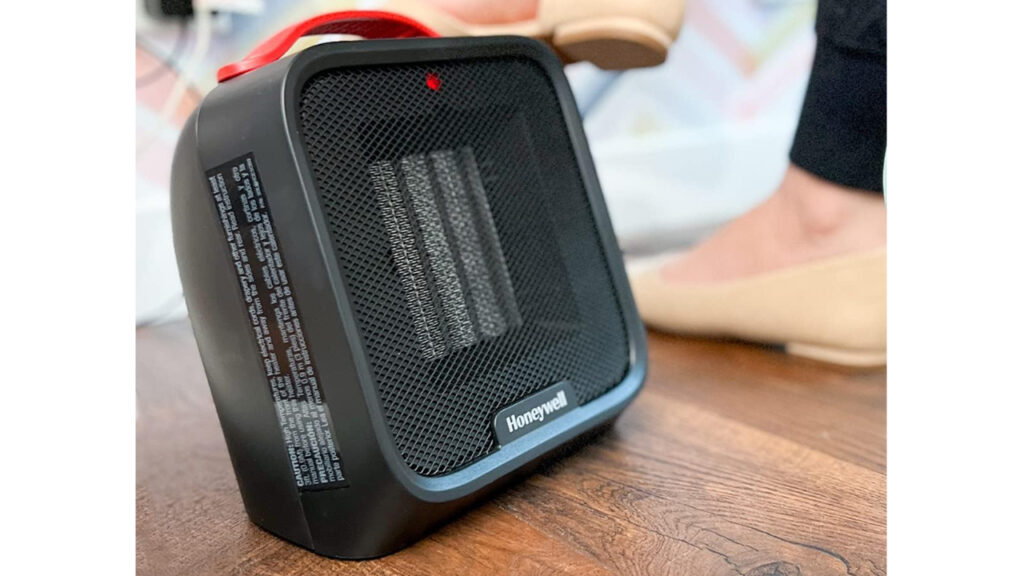
Image credit: Honeywell
Choose this model when you want simple, fixed-direction warmth for an occupied workspace and do not need remote adjustments or an electronic display. The two heat settings and dial thermostat give you useful control without much to learn. Its compact format and automatic safeguards make a coherent package for that limited job.
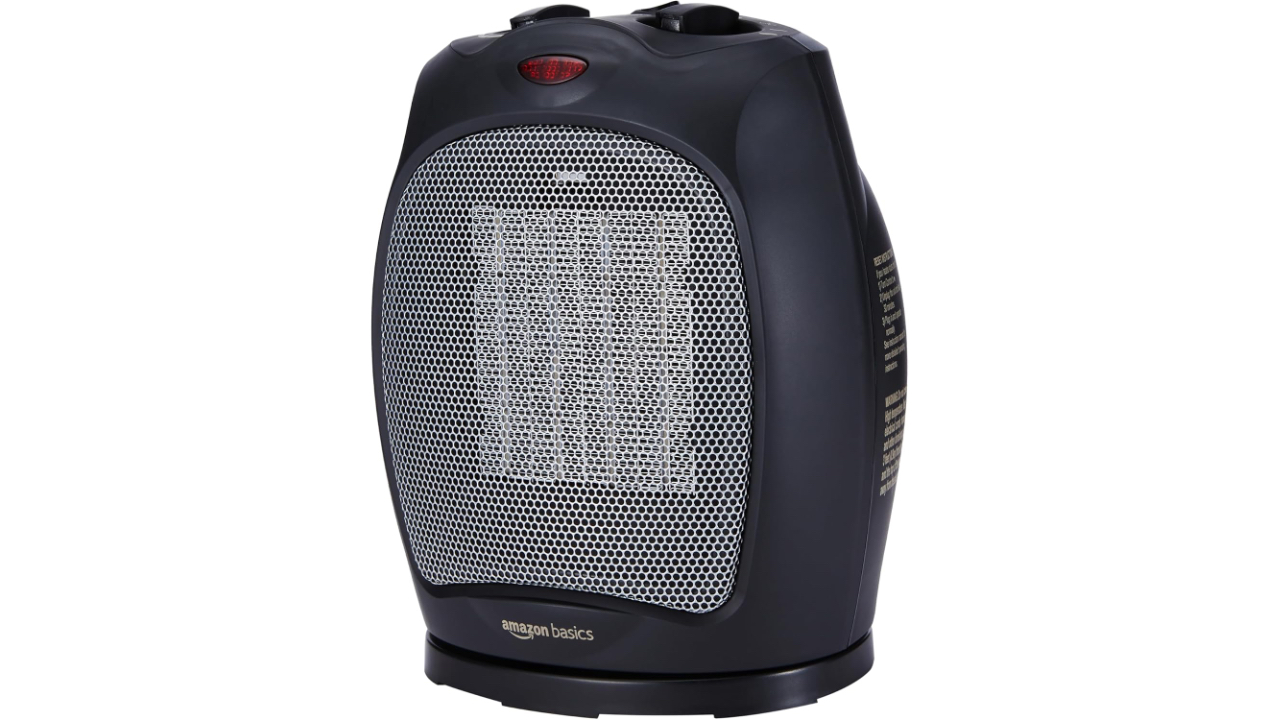
If you want the airflow to sweep, consider the Amazon Basics Oscillating Ceramic Heater. If you prefer fewer controls and a stationary outlet, the Honeywell UberHeat 5 HCE210B is a sensible personal-office choice, as long as the workspace has a genuinely clear place to operate it.