
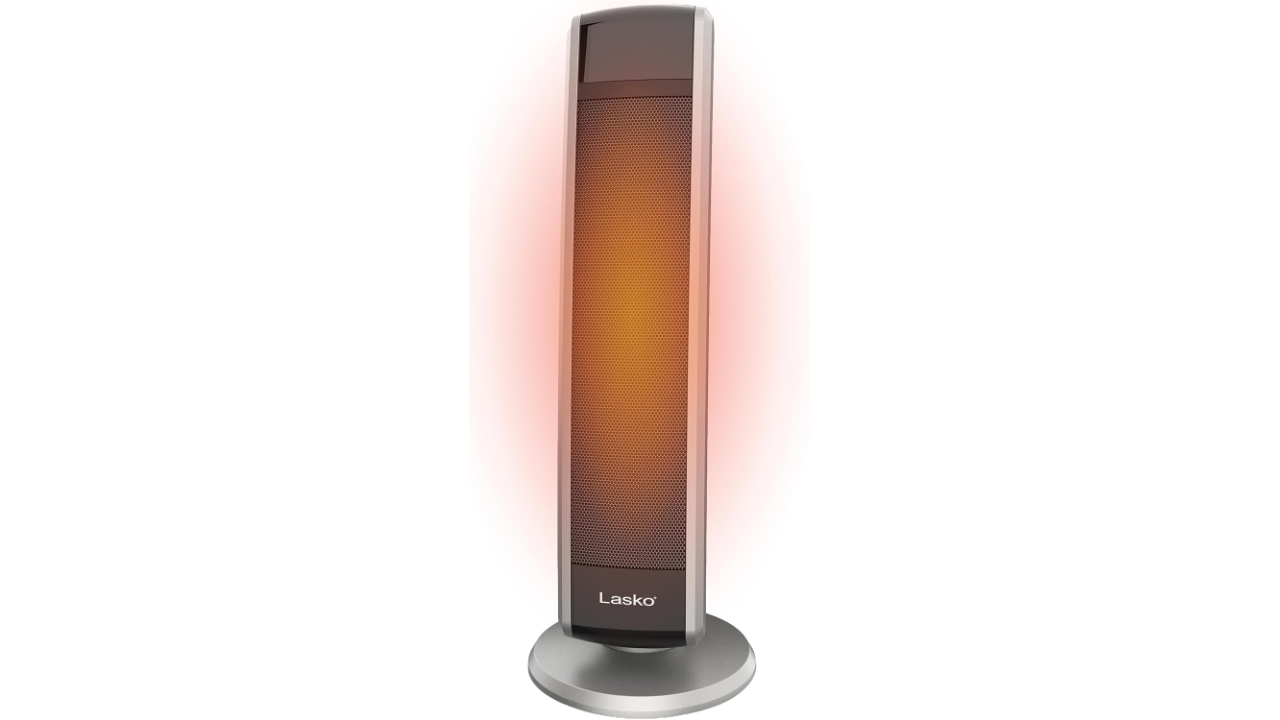
Lasko 5586 Review: Good Value With a Remote
The Lasko 5586 brings convenient remote-controlled warmth to a chair across the room, but lacks tip-over shutoff. The Lasko 5586 Ceramic Tower Heater combines a remote, oscillation, and a digital thermostat in a tall, narrow design. It is a useful step up from a basic dial heater for an occupied living room or home office, earning its Best Value Tower position through convenience rather than unusual heating power. The important limitation is safety: overheat protection is included, but this model lacks a tip-over shutoff. Its location needs particular care, especially where children, pets, or passing feet could knock it over.
Pros
- Remote control puts temperature, timer, and oscillation adjustments within reach.
- Narrow tower format suits rooms with limited available floor space.
- Digital thermostat and an eight-hour maximum timer offer more control than basic dials.
Cons
- No tip-over shutoff, an important limitation in busy rooms.
- Automatic thermostat operation uses the high heat setting.
- The tower needs base assembly and a clear, stable floor location.
A Tall Outlet Brings Heat Into the Seating Area
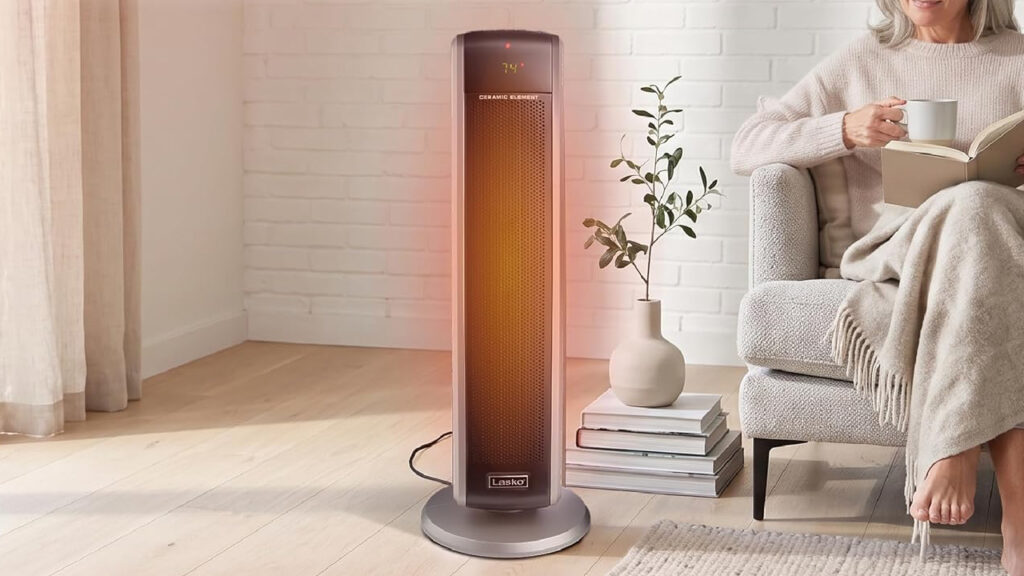
Image credit: Lasko
At roughly 29 inches tall, the Lasko puts its outlet higher than a small heater sitting near your ankles. That can suit a room where people are seated on a sofa or working at a desk. The tower still needs to stand on an appropriate stable surface with clear space around it. Its relatively narrow shape helps with placement, but does not make the gap between a couch and a curtain a suitable operating location.
Oscillation sweeps the warm airflow from side to side. You can use it to share the output across nearby seating, or leave it stationary when one position needs attention. There is no requirement to use the sweep all the time. A fixed direction may feel more comfortable when you are the only person in the room, while oscillation avoids continually aiming the tower by hand when several people are gathered nearby.
The high setting draws up to 1,500 watts, a familiar ceiling for this type of household heater. The tower’s height does not mean it produces several times the heat of a smaller 1,500-watt unit. Its advantage lies in the position and distribution of airflow. Insulation, ceiling height, drafts, and open doorways determine whether that output is enough to make a particular room comfortable. Treat it as supplemental heat for the room you occupy.
The Thermostat Has a High Heat Limitation
The digital controls make selecting a target temperature more understandable than turning an unlabeled dial and waiting. Once the selected temperature is reached, the heater cycles its heating operation rather than continuously delivering full output. That can prevent unnecessary heating after the room becomes comfortable. It does not guarantee that every seat matches the displayed setting, because the heater measures temperature at its own location.
One detail deserves attention before you buy: the automatic temperature function works with high heat. The low setting is available for reduced output, but it does not provide the same automatic thermostat operation. If you want a specific temperature maintained while deliberately restricting the heater to its lower power setting, that combination is not what this model offers. Choose between its lower-output mode and its high-output automatic temperature control with that distinction in mind.
Start with a moderate target, then let the room settle before changing it again. A heater beside a cold exterior wall can sense a different temperature from the chair it is meant to warm. Moving the appliance to an appropriate location may be more useful than repeatedly increasing the setting. Always preserve the required clearance and direct connection to the wall outlet when considering a different position.
The timer allows one to eight hours before shutoff, which can be handy for a planned period of supervised use. It should be a backup to turning the heater off when you finish, not a reason to leave it operating after you go out or fall asleep. No timer knows whether a blanket has fallen toward the grille or an animal has disturbed the appliance.
Remote Convenience Comes With a Placement Decision
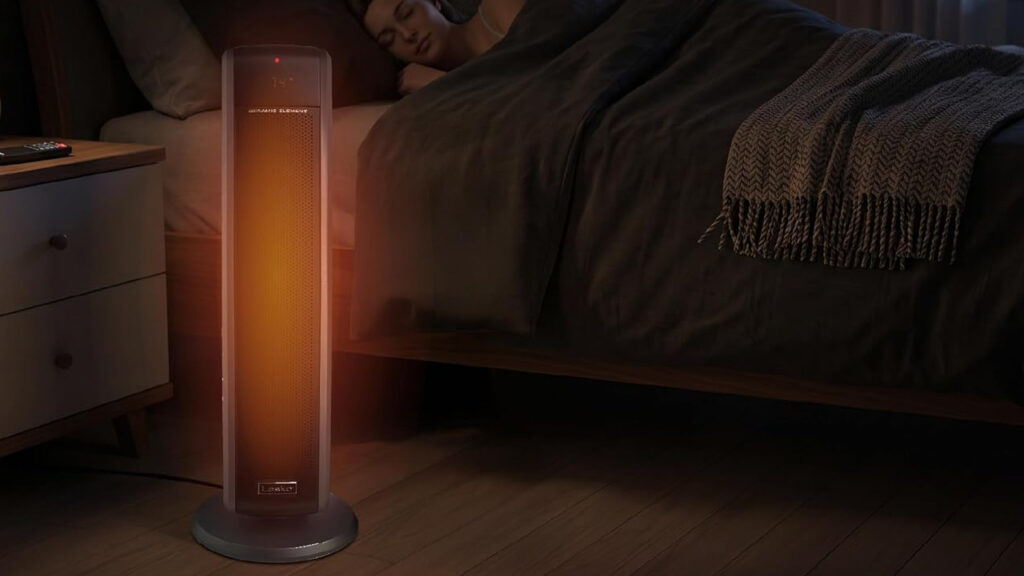
Image credit: Lasko
The remote is a meaningful improvement if the heater’s safe location is several steps from your chair. It lets you adjust operation without repeatedly crossing the room, and the controls on the tower remain available when the remote is not nearby. Keep spare AAA batteries in mind, since the remote requires two and the manual specifies that they are not included. It is a small ownership detail that can otherwise delay the feature you bought it for.
Assembly is another difference from a compact heater that arrives ready to place. The tower’s base must be fitted securely using the supplied hardware and the procedure in the manual. Set aside a Phillips screwdriver and a few unhurried minutes. Check the completed base before operation rather than assuming a loose or uneven fit will correct itself when the heater is standing upright.
Because this model lacks tip-over shutoff, consider traffic through the room before settling on it. Overheat protection responds to a different problem; it is not interchangeable with a switch that cuts heating when the unit falls. A household where children or pets regularly pass close to the intended spot may be better served by another design. The compact Honeywell UberHeat 5 HCE210B includes tip-over protection, although it gives up the Lasko’s remote and oscillation.
Running Costs Depend on Heating Time
At full output, a 1,500-watt heater uses 1.5 kilowatt-hours for each hour it heats continuously. With an illustrative electricity rate of 20 cents per kilowatt-hour, that is 30 cents an hour. The thermostat can reduce total heating time once the room reaches its target, but a cold or drafty room may keep demanding heat. The purchase price and the operating cost are separate decisions.
For possible savings, lower the central heating demand while keeping necessary background warmth elsewhere, then use the Lasko in the room you occupy. Simply adding it while leaving the central thermostat unchanged adds another electrical load. The space-heater savings guide explains the arithmetic and why a home with an efficient heat pump requires particular caution about savings claims.
Maintenance is uncomplicated but worth scheduling. The manual calls for regular vacuuming of the intake, with cleaning about every two weeks during use. Switch off, unplug, and let the heater cool first. Keep the grille and intake clear, and never cover the unit to dry clothes. Use a suitable wall outlet directly, without an extension cord or power strip, and keep combustible materials at least three feet away. A cool-touch housing description does not make the air outlet harmless.
Should You Buy the Lasko 5586 Ceramic Tower Heater?
The combination of a remote, oscillation, and a readable thermostat makes this a sensible tower to consider for supervised heating in a stable, low-traffic location. It is particularly appealing when you want convenient adjustments from a chair and do not need air purification or phone control. The main compromise is substantial enough to shape the buying decision: no tip-over shutoff means placement deserves more weight than the convenience features.
Choose the Lasko 5586 Ceramic Tower Heater when its tower format and controls suit the room and you can keep it secure. If a lower profile or tip-over protection is essential, start with a different model rather than trying to work around a mismatch after purchase.