
Best Space Heaters for Offices and Everyday Room Comfort
The best space heaters make an occupied room more comfortable without demanding features you will never use. A basic ceramic heater can handle personal warmth, a tower adds convenient airflow control, and a heater with air purification serves a different year-round purpose. Start with the room, its available outlet, and a safe operating location. Price and appearance come after those essentials.
| Best Heater and Air Purifier | Best Value Tower | Best Budget | Best Cabinet Heater | Best for Personal Office Warmth |
|---|---|---|---|---|
| Dyson HP10 | Lasko 5586 | Amazon Basics Oscillating | Dr Infrared DR-968 | Honeywell UberHeat 5 HCE210B |
 |  |  |  |  |
| Choose this heater and air purifier when you want filtered airflow and supplemental warmth from one appliance. Budget for its premium price and replacement filters. | This oscillating tower offers a remote and digital thermostat for convenient heating from your chair. Choose a secure location because it lacks tip-over shutoff. | This compact ceramic heater provides oscillating warmth and simple dial controls for a limited budget. Choose it when you can do without a remote or timer. | This cabinet heater pairs a digital thermostat and remote with casters for repositioning on one floor. Choose it for a regular sitting-room spot rather than frequent carrying. | This compact ceramic heater provides fixed-direction warmth with two simple control knobs. Choose it for an occupied office where you do not need oscillation or a remote. |
Best Heater and Air Purifier: Dyson Purifier Hot+Cool Gen1 HP10
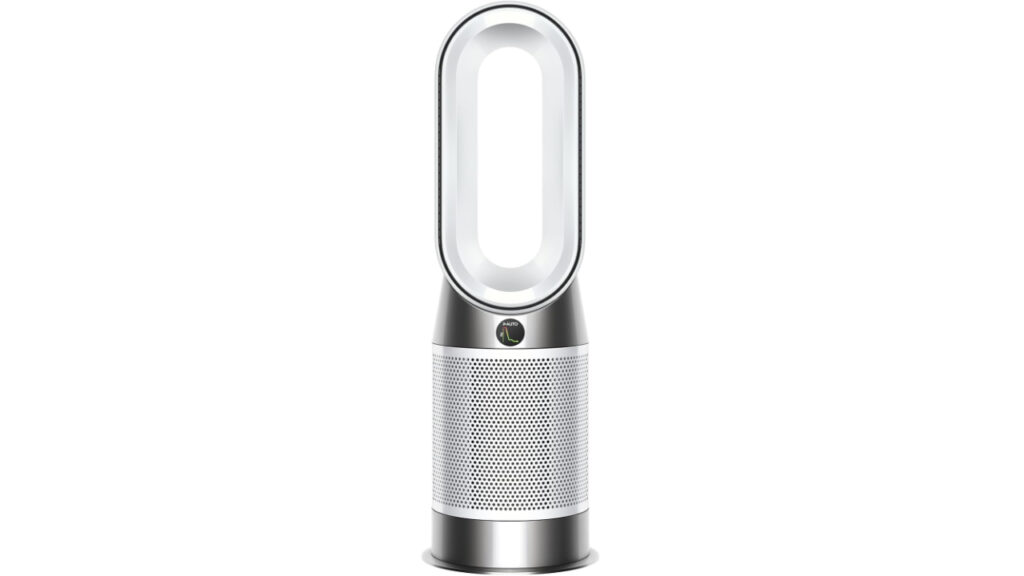
Image credit: Dyson
- Combine supplemental heating and air purification in one appliance.
- Adjust oscillation to distribute airflow across a seating area.
- Keep using filtered fan airflow when the heating season ends.
The Dyson Purifier Hot+Cool Gen1 HP10 makes sense when a heater and an air purifier are both on your shopping list. HEPA and activated-carbon filtration add a function that the other heaters here do not provide, while the remote and air-quality display support everyday use. Its premium purchase price and replacement-filter costs are harder to justify when warmth is the only priority. The fan provides a breeze rather than air conditioning, and its filtration claims should not be mistaken for an instant whole-room cleaning guarantee. Choose it for the combined job, rather than an assumption that expensive heat costs less to produce.
Best Value Tower: Lasko 5586 Ceramic Tower Heater
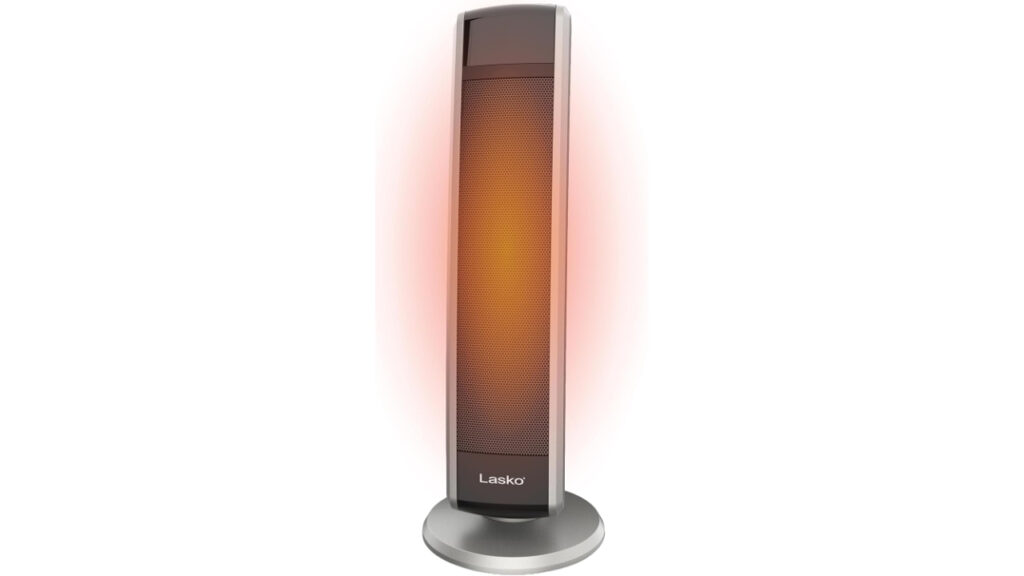
Image credit: Lasko
- Change settings from a chair using the included remote.
- Sweep warm air across nearby seating with oscillation.
- Use a digital thermostat and timer for supervised heating sessions.
The Lasko 5586 Ceramic Tower Heater is a practical upgrade from a basic dial heater when convenience matters. Its approximately 29-inch tower raises the outlet, and the remote saves repeated trips across the room. Automatic thermostat operation works on high heat; the low setting does not offer that same automatic control. More significantly, the heater lacks a tip-over shutoff. Overheat protection is included, but it addresses a different hazard. A stable, low-traffic location is essential, and households concerned about children or pets knocking it over should consider another design. The timer does not make unattended or overnight use appropriate.
Best Budget: Amazon Basics Oscillating Ceramic Heater
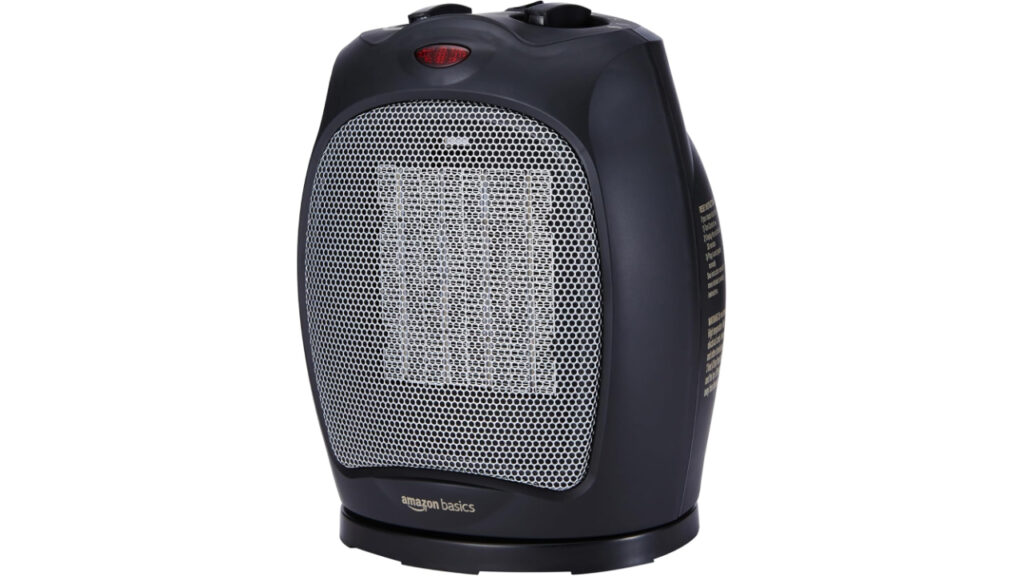
Image credit: Amazon
- Get basic adjustable heat without paying for a display or remote.
- Choose 1,500-watt high heat or a 900-watt reduced-output setting.
- Add a modest airflow sweep with 45-degree oscillation.
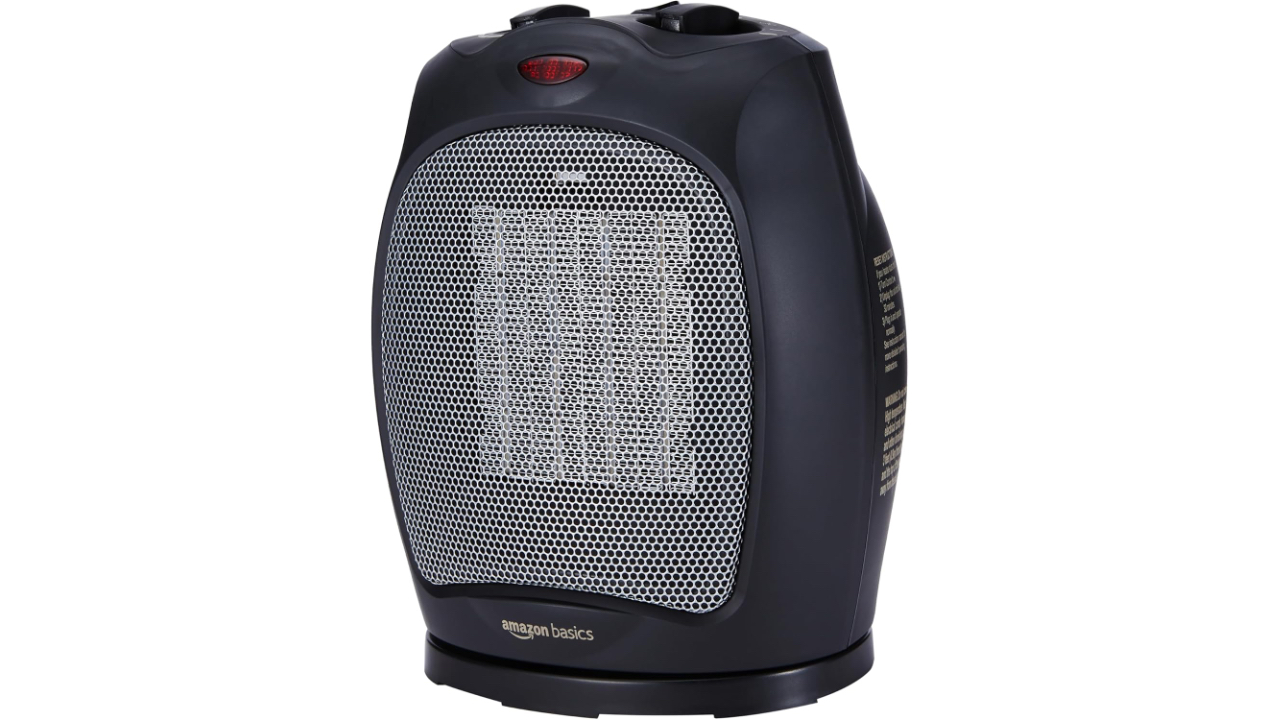
The Amazon Basics Oscillating Ceramic Heater focuses on the essentials: a dial thermostat, two heat settings, fan-only operation, and a compact case. Tip-over and overheat protection are included. It is a useful budget option for an occupied workspace where you can reach the controls safely and do not need a precise displayed temperature. The small case is convenient to move after cooling, but does not reduce the necessary clearance around fabrics and furniture. Its fan-only mode moves air without providing dedicated air purification, and the absence of a timer means shutoff remains a manual habit.
Best Cabinet Heater: Dr Infrared Heater DR-968
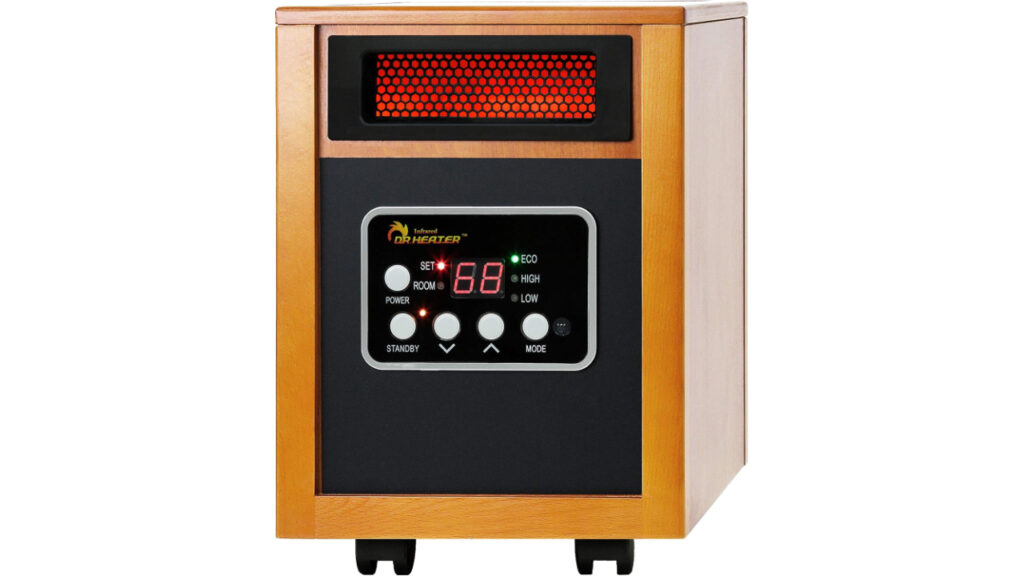
Image credit: Dr Infrared
- Choose a cabinet appearance for a regular living-room location.
- Adjust the thermostat and operation with a remote.
- Reposition the cooled appliance on a suitable floor using its casters.
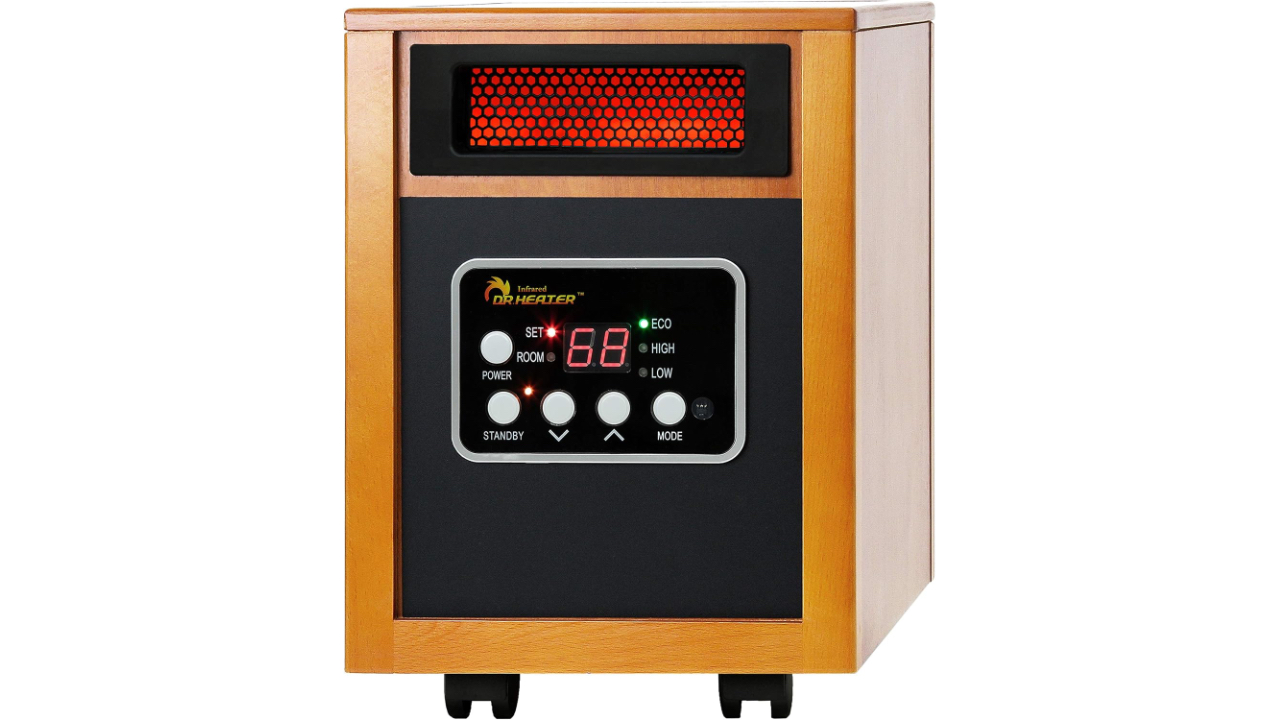
The Dr Infrared Heater DR-968 is a good fit for a sitting room where you want adjustable warmth in a cabinet-style appliance. Its digital thermostat and remote let you change settings from a chair, while casters help reposition the cooled heater on a suitable floor. Infrared and PTC elements work with a blower to deliver supplemental heat. The cabinet is bulkier to carry than a compact personal heater, and its fixed outlet does not oscillate. Choose it for a regular living-room location and convenient controls, rather than expecting infrared heating to guarantee lower electricity bills or unusually large room coverage.
Best for Personal Office Warmth: Honeywell UberHeat 5 HCE210B
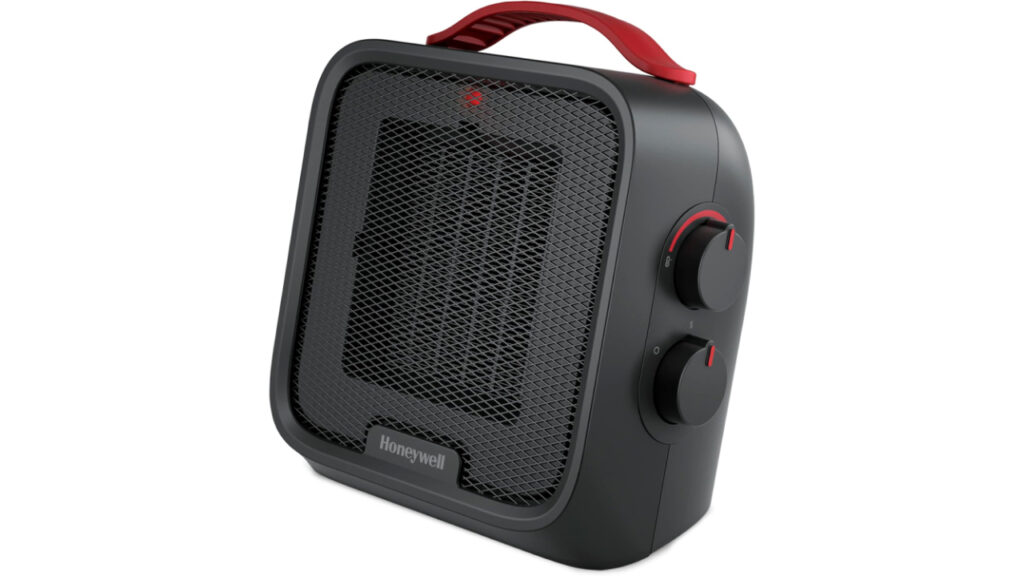
Image credit: Honeywell
- Add focused supplemental warmth to an occupied workspace.
- Adjust heat and thermostat settings with two straightforward knobs.
- Get tip-over protection and two overheat sensors in a compact design.
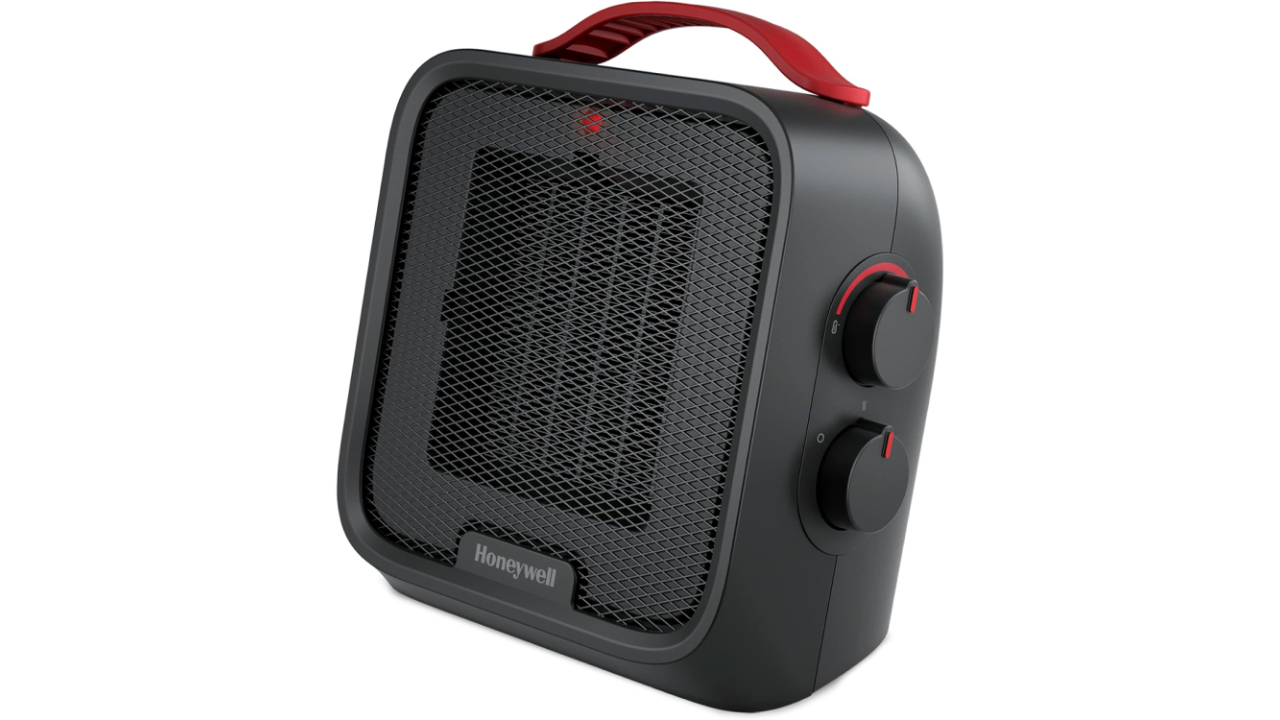
The Honeywell UberHeat 5 HCE210B suits a personal office where a fixed air stream and manual controls are enough. It offers 1,500-watt high and 900-watt low heat, with a thermostat dial instead of a numerical display. This particular model does not oscillate and has no remote or timer. Those omissions make it less flexible for a shared seating area, but leave little to learn for a straightforward heating task. Confirm that the workspace has a stable, clear operating location away from papers, bags, and chair movement; a compact heater still needs space around it.
Why Buy a Space Heater?
A space heater is useful when one occupied room needs more warmth than the rest of the home. That might be a home office near a drafty exterior wall or a sitting area used by someone who prefers a higher temperature. Supplemental heat can address the local comfort problem without asking everyone else to live with a warmer central-thermostat setting.
Possible energy savings require a change in how the home is heated. If the central system keeps running as before and you add a portable heater, the new appliance adds consumption. Savings become possible when the avoided central-heating cost exceeds the electricity used in the occupied room. The home’s heating fuel, equipment efficiency, local rates, and room conditions all matter. A space heater is not a universal utility-bill coupon.
The space-heater savings guide provides a calculation you can adapt to your bill. It also explains why an efficient heat pump can make the economics less favorable than a heater’s low purchase price suggests. Buy first for a specific comfort need, then check whether the operating plan is likely to save money.
How to Choose the Best Space Heaters
Begin with placement and protection. Use a stable location with the manufacturer’s required clearances, keep combustible materials at least three feet away, and connect directly to a suitable wall outlet. Do not use an extension cord or power strip. Choose tip-over protection when accidental knocks are plausible, while remembering that every portable heater requires supervision. Turn heating off before leaving the room or going to sleep.
Next, match airflow to the occupied area. A fixed outlet may be enough for one chair. Oscillation can be useful for several nearby positions, while a higher tower outlet changes where the warm air is delivered. None of those features replaces adequate heating capacity for a drafty or unusually large space. Be skeptical of a square-footage claim that ignores insulation, ceiling height, and outdoor temperature.
Choose controls you will actually use. A dial thermostat is simple but does not show an exact target. A digital display makes settings explicit, and a remote helps when the safe operating location is across the room. Check whether automatic temperature control works in the heat mode you intend to use. A timer is a convenient shutoff aid, not a substitute for being present.
Finally, consider ownership beyond the first day. A cabinet is less convenient to carry upstairs; a tall tower needs a secure base; a purifier requires replacement filters. All fan heaters need clear air openings and cleaning according to their manuals. Compare those practical demands alongside the purchase price rather than allowing a feature count to choose for you.
Choose the Heater That Fits the Room
The Dyson is the most relevant choice when filtration is part of the job. The Lasko adds remote-controlled tower convenience, while Amazon Basics keeps the budget and controls simple. Honeywell suits fixed-direction personal office warmth. The Dr Infrared suits a regular living-room location where cabinet styling and remote adjustments are priorities. In every case, a suitable location and supervised use matter more than a long list of features.
Best Space Heaters FAQ
What size space heater do I need for my room?
Generally, a 1,500-watt space heater can comfortably heat rooms up to 150 square feet. For larger areas, look for models with a higher BTU rating or dual heating systems for more effective warmth distribution.
Are space heaters energy-efficient?
Many space heaters are designed with energy-saving features, like thermostats, programmable timers, and eco-modes, to minimize energy consumption. They’re most efficient in small or well-insulated rooms, where they reduce the need to turn up central heating. Click the button below to learn more!
Are space heaters safe to use around children and pets?
Yes, as long as they have built-in safety features such as tip-over protection, cool-to-touch exteriors, and overheat protection. Always choose a space heater with these features if you have kids or pets in the home.
What’s the difference between ceramic, infrared, and radiant space heaters?
Ceramic heaters use electricity to heat a ceramic plate and are effective for small to medium spaces. Infrared heaters emit radiant heat that warms objects directly, making them ideal for larger rooms. Radiant heaters also warm objects directly and are usually best for small areas or personal use.
Can I leave a space heater on overnight?
It’s generally recommended to avoid leaving a space heater on unattended. If you must, look for models with a timer or sleep mode and ensure they have reliable safety features like automatic shut-off in case of overheating.
How can I maximize the efficiency of my space heater?
To improve efficiency, use the heater in a well-insulated space, keep doors closed to retain heat, and utilize settings like eco-mode or low heat when possible. Placing the heater in a central position within the room can also help evenly distribute warmth.
Are smart space heaters worth it?
Smart space heaters allow you to control settings remotely, which can enhance convenience and energy savings, especially in larger homes. They’re ideal for users who prefer smartphone or smart-home integration for added flexibility.
Do space heaters dry out the air?
Space heaters, particularly electric ones, can slightly reduce humidity in a room. If dryness is an issue, consider using a humidifier alongside your heater to maintain comfortable moisture levels.
How often should I clean my space heater?
Clean your space heater at least once a season to remove dust buildup from vents and surfaces. HEPA-filtered heaters may need more frequent filter replacements or cleanings to maintain air quality.