
LaCie Mobile Drive Review: A Refined Creative Archive
The LaCie Mobile Drive pairs 5TB of USB-C storage with a polished design, backup tools, and practical space for creative archives.
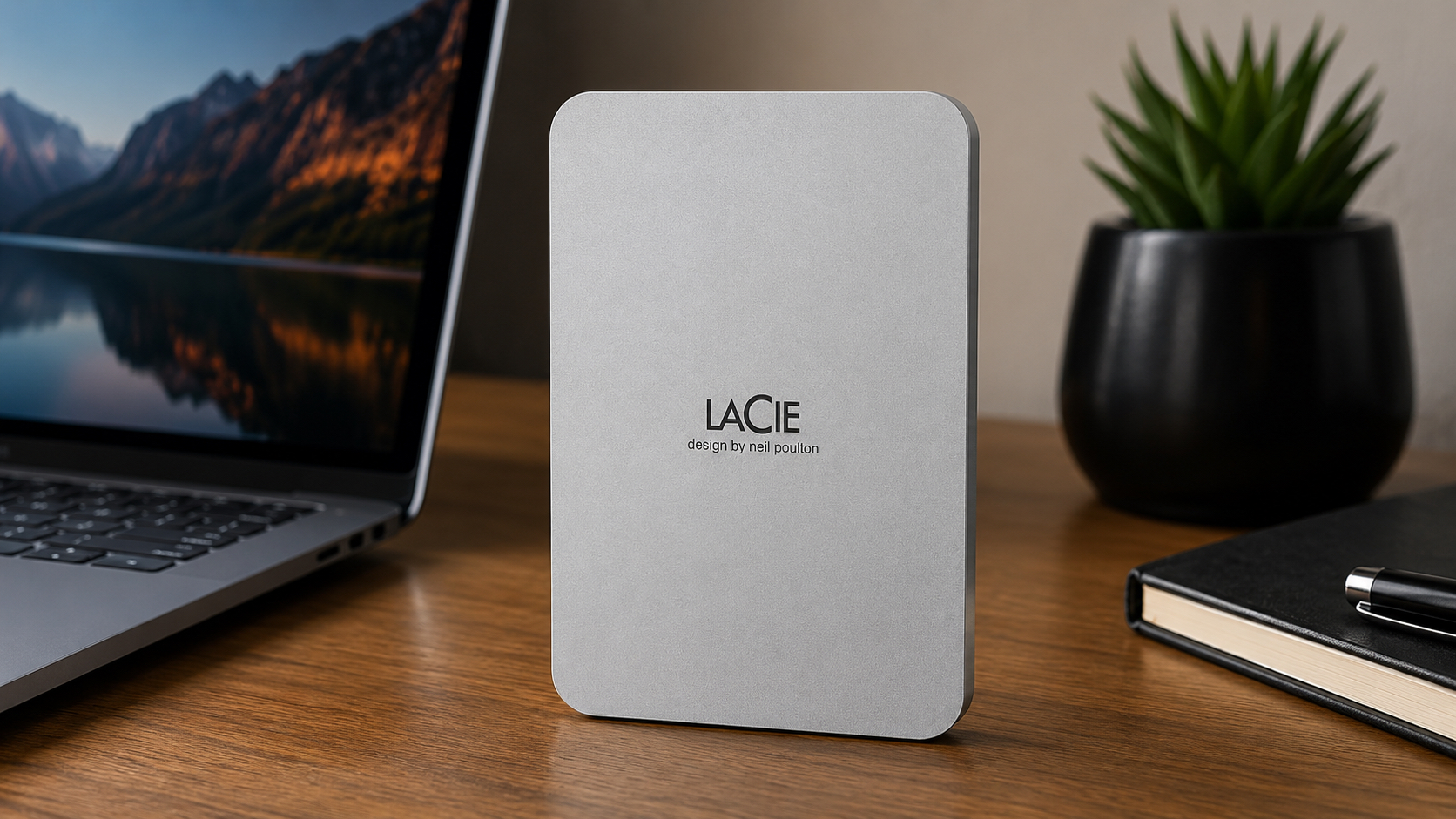
Some external drives look like office supplies. The Moon Silver LaCie Mobile Drive looks like it has seen a mood board, and that matters in studios where every piece of equipment stays visible. Under the polished aluminum is a bus-powered 5TB mechanical drive built to hold photo catalogs, finished video projects, audio sessions, design assets, and the mountain of files creative work leaves behind.
Pretty is not a performance metric, though. The real value comes from USB-C convenience, LaCie Toolkit backup and sync options, a three-year warranty, and Rescue Data Recovery Services in eligible regions. It remains an HDD, so it belongs in archive and backup duty rather than pretending to be an SSD for every 4K or 8K editing timeline. The styling is the polish; the workflow support is the actual flex.
Pros
- Five-terabyte capacity fits large photo, audio, design, and finished-video libraries.
- USB-C works across current PCs, Macs, and compatible mobile devices.
- LaCie Toolkit supports scheduled backups and folder synchronization.
- A three-year warranty and Rescue Data Recovery Services add meaningful support.
- The recycled-aluminum design looks at home in professional creative spaces.
Cons
- Mechanical performance is not ideal for demanding 4K or 8K editing workflows.
- The design premium can cost more than plain portable HDDs with the same capacity.
- The STLP5000400 model does not include self-encrypting drive hardware.
- The smooth metal shell is not a substitute for rugged drop or weather protection.
A Proper Home for Creative Archives
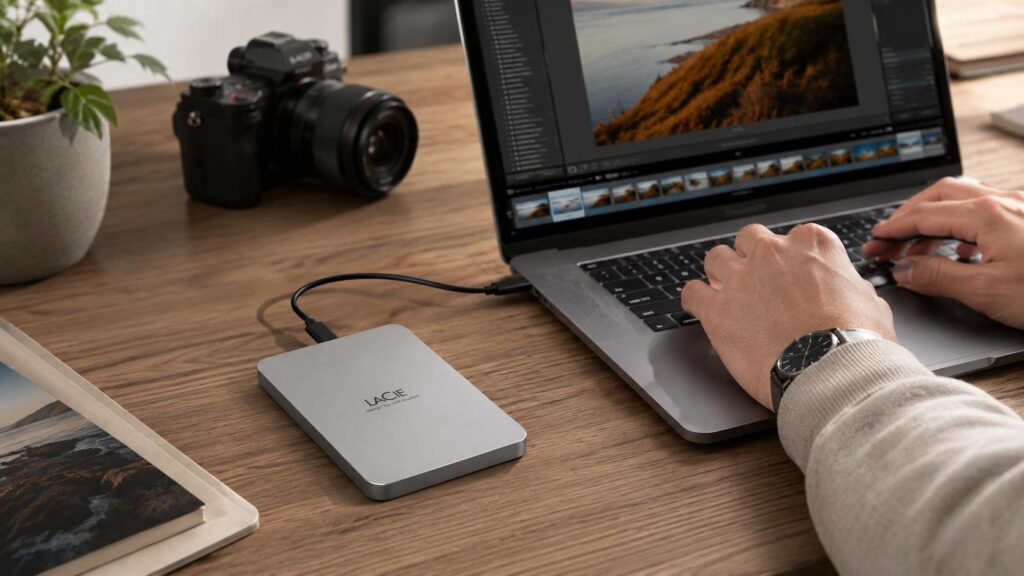
Creative work produces an unreasonable amount of data. RAW photo sets, audio sessions, exported videos, reference footage, client deliverables, and old project versions can consume terabytes while spending most of their lives waiting for somebody to need them again. The 5TB LaCie Mobile Drive gives those files a portable home and keeps more expensive SSD space available for current projects that truly benefit from speed.
Five terabytes also makes sense for people moving between a studio, office, classroom, and home setup. The drive can carry a substantial working archive without waiting for cloud synchronization or trusting a questionable internet connection. Because it draws power through USB-C, there is no adapter brick to pack. A folder structure organized by client, year, and project status keeps that generous capacity from becoming a digital junk drawer, because creative chaos is still chaos even when the enclosure is cute.
The drive should never be the only copy of paid work or irreplaceable originals. A stronger workflow keeps active projects on fast storage, mirrors them to the LaCie for local protection, and maintains another copy on a second drive, NAS, or cloud service. The Mobile Drive works best as one dependable layer in that system, not as the sole guardian of a career.
Design That Earns Its Desk Space
The Moon Silver enclosure uses a clean Neil Poulton design with crisp lines and an aluminum exterior. At roughly 6.8 by 4.3 inches and about 300 grams, the 5TB model is larger than a pocket SSD but still easy to carry in a padded laptop bag. Recycled materials in the enclosure and packaging add a thoughtful touch without making the drive feel flimsy or unfinished.
That metal shell improves feel and everyday durability, but it does not make the drive rugged. There is no thick bumper or formal IP rating, and the mechanical disk inside still dislikes drops. A fitted case is sensible, and the drive should stay still while files are moving. Metal can also transmit vibration into a hollow desk, so a soft, stable pad may quiet the low hum during long transfers. No, the elegant shell does not repeal physics.
The premium appearance makes the most sense in studios, client-facing workspaces, and carefully arranged desks where equipment remains visible. People who only want the lowest cost per terabyte can find plainer portable drives. People who appreciate gear that supports the workflow and does not look like an afterthought may find the design premium easier to defend.
USB-C Convenience With Honest HDD Speed
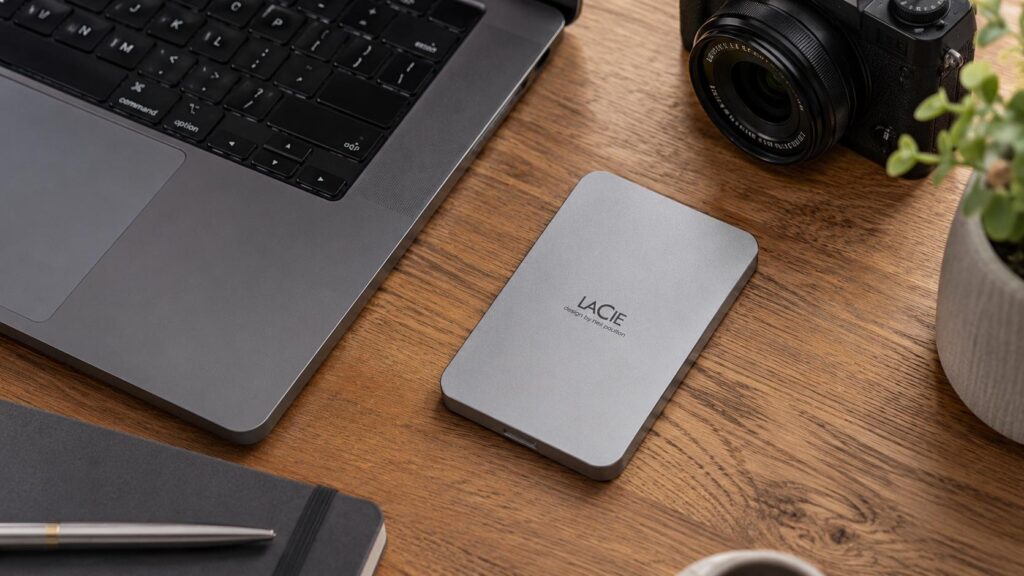
USB-C connects directly to modern laptops and works with current PCs, Macs, iPads, and compatible iPhones. It also plugs into newer Thunderbolt ports, although the mechanical disk cannot use the full bandwidth those connections offer. Rated transfers around 130 MB/s are suitable for backups, image browsing, audio libraries, and moving completed projects. The port is current; the storage medium is still old-school, and that distinction matters.
Creative workloads vary. Compressed video, audio sessions, and photo catalogs may operate acceptably from the drive, while high-bitrate multicamera footage, large effects caches, and constant scrubbing belong on an SSD. A practical arrangement is to edit from fast storage, then move finished work to the LaCie. That keeps project turnover snappy without charging SSD prices for every archived frame ever shot.
Bus power keeps the kit simple, but direct connections are safer during long transfers. Low-power hubs and questionable cables can cause disconnects, especially when several accessories compete for power. A powered dock makes sense in a permanent studio setup. Safe ejection remains non-negotiable, because an unfinished write can turn a very polished drive into a very polished problem.
Toolkit, Recovery Support, and the Right Buyer
LaCie Toolkit adds one-click backups, scheduled jobs, and folder synchronization. Scheduled backups are the most useful feature because consistency beats good intentions every time. Sync can keep a selected folder aligned between the computer and drive, but it should not be confused with a versioned backup. Depending on the settings, deleting a file in one place may delete it in the other. Read the options before clicking through like the button owes you money.
Rescue Data Recovery Services can provide help after certain failures during the covered period in eligible regions. That support is valuable, but no recovery service can promise every file will return. The drive still deserves a second backup, careful handling, and periodic checks. The three-year warranty addresses manufacturing problems; it does not insure every creative crisis or accidental loss.
The LaCie Mobile Drive 5TB suits photographers, designers, audio professionals, creative students, and anyone who wants a roomy portable archive with a refined presence. It is less appropriate for rough field work or constant high-speed editing. Its appeal comes from capacity, USB-C convenience, software, recovery support, and design working together instead of asking one feature to carry the whole show.
Should You Buy the LaCie Mobile Drive?
The LaCie Mobile Drive 5TB is a polished portable HDD for creative users who need generous capacity and a tidy USB-C workflow. Toolkit backup options, cross-platform support, recovery services, and the aluminum enclosure make it feel more complete than a bare-bones archive drive.
It is still mechanical storage, which means careful handling and realistic expectations about speed. Used for backups, completed projects, and organized archives rather than demanding editing, it delivers a strong blend of capacity, presentation, and workflow support.