
Osprey Ace 38: Adjustable Youth Backpacking Support
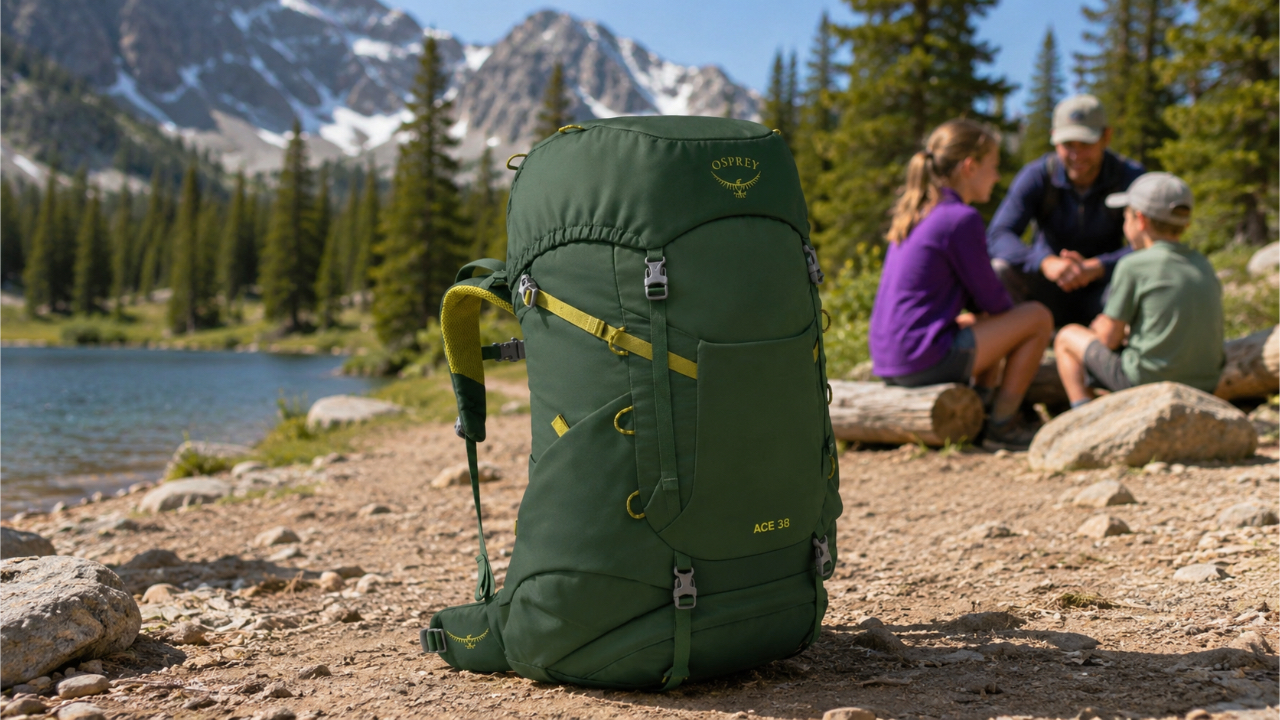
The Osprey Ace 38 gives growing hikers 38 liters, four inches of torso adjustment, AirSpeed suspension, and an included raincover. Sized for roughly ages 8 to 15, it brings adult-style load support and organization to overnight trips without forcing a child into a poorly fitting adult pack.
Pros
- Four inches of torso-length adjustment
- Designed for growing hikers roughly ages 8 to 15
- 38L capacity suits overnights and light weekends
- AirSpeed tensioned-mesh suspension
- Included raincover
- Adult-style hipbelt pocket, hydration sleeve, and gear organization
Cons
- About 2.98 pounds before gear is added
- 38L can be tight for bulky family-camping gear
- Premium price for a youth pack
- Fit still needs to be checked as the child grows
A Backpack That Can Grow with the Hiker
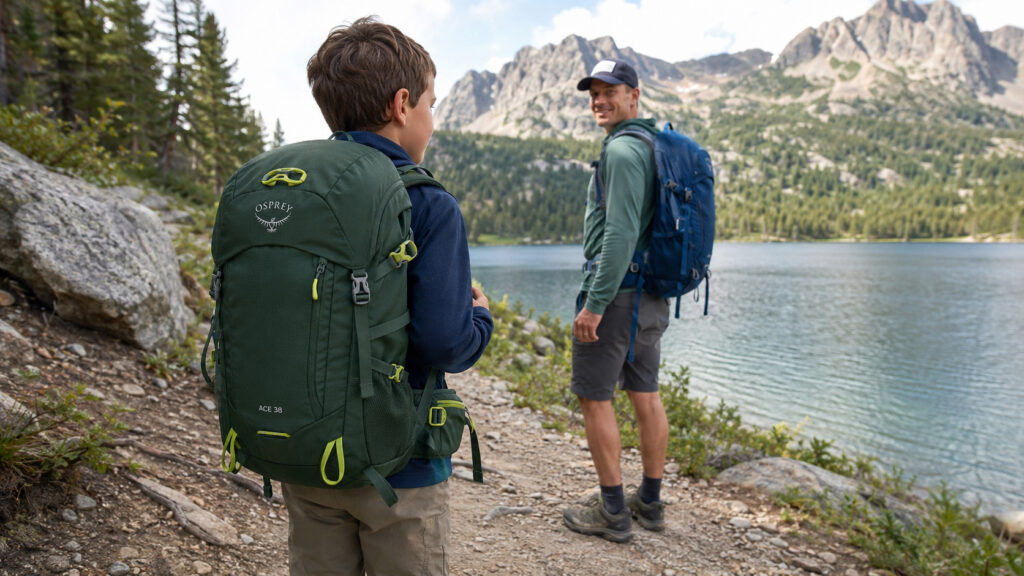
Children’s outdoor gear can become obsolete quickly because a perfectly fitted item in spring may be too small by the following season. The Ace 38 addresses that problem with four inches of torso-length adjustment. Osprey positions the pack for roughly ages 8 to 15, but age is only a starting point. Torso length, waist size, maturity, and the child’s ability to carry gear responsibly all matter more than the birthday on a calendar.
The adjustable torso system allows the harness to move so the shoulder straps can follow a growing back. That helps keep the hipbelt over the iliac crest instead of sliding too high or sitting low around the hips. The shoulder straps should curve around the shoulders without a large gap, and the load lifters should draw the upper pack toward the body without pulling the straps away from contact.
A youth pack should be refitted several times a season. Growth spurts, thicker layers, and changes in carried weight can alter the feel. The adjustment process is not difficult, but adults should resist the temptation to set the pack once and assume it remains correct for years. A fast fit check before every overnight trip can prevent rubbing and shoulder fatigue.
The strongest argument for the Ace is that the adjustment system is paired with a real suspension, not simply longer shoulder straps on a school-style backpack. A growing hiker gets a pack designed to transfer weight and stabilize a trail load, which can make early backpacking experiences more comfortable and easier to repeat.
AirSpeed Suspension Keeps the Back Off the Bag
Osprey uses AirSpeed suspension on the Ace 38. A tensioned mesh back panel creates space between the hiker’s back and the main pack body, allowing more airflow than a flat padded panel pressed directly against a shirt. Young hikers often run warm and move at inconsistent paces, so ventilation can be especially valuable during summer camps and family trips.
The suspended design also helps the pack maintain shape. When the main compartment is filled unevenly, the load is less likely to create a single hard object pressing directly into the spine. Careful packing still matters, but the frame and mesh provide a barrier between awkward gear and the back. Dense items should remain close to the center of gravity, and soft items can fill the bottom and outer spaces.
The Ace weighs about 2.98 pounds. That is not ultralight for a 38-liter pack, but the weight includes the suspension system, adjustment hardware, and raincover. The number should be considered relative to the child’s total load. A supportive three-pound pack can be a better choice than a one-pound bag that carries poorly, but the total packed weight should still be conservative.
Parents and trip leaders should avoid using the 38-liter capacity as a target that must be filled. Children are not small adults, and the pack should not become the family overflow bag. The Ace works best when the child carries personal sleep gear, clothing, water, and a few shared items appropriate to size and strength. The suspension can support the load, but responsible packing determines whether the trip stays enjoyable.
38 Liters of Straightforward Trail Storage
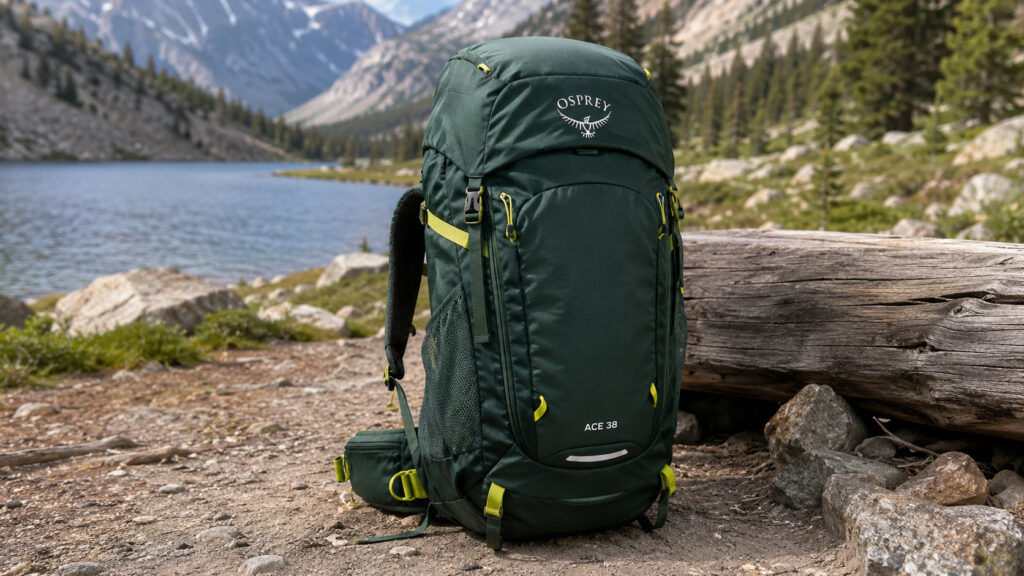
The Ace 38 uses top-loading access, which keeps the design simple. A child can open the main compartment, pack larger items vertically, and close the lid without managing multiple large zippers. The simplicity also encourages a consistent packing order: sleep system low, denser gear near the back, layers and food positioned according to when they will be needed.
Adult-style features make the pack easier to use on real backpacking trips. A hipbelt pocket gives snacks or a small trail item a close home. Stretch side pockets hold bottles, and the front pocket offers fast storage for a rain shell or another layer. An internal hydration sleeve supports a reservoir system for hikers who prefer drinking through a hose rather than reaching for a bottle.
The integrated raincover is particularly helpful for youth use because it removes one separate accessory from the packing list. The cover protects the exterior and pockets during wet weather, though sleeping bags and dry clothing should still be protected inside the pack. The pack’s recycled bluesign-approved fabric and PFAS-free DWR treatment also provide a modern material specification without requiring special care beyond normal backpack maintenance.
Thirty-eight liters is enough for an overnight and can work for a lightweight weekend. It may feel tight with bulky synthetic sleeping bags, large family tents, or heavy camp footwear. That limitation is not necessarily a flaw. A smaller pack naturally discourages overpacking, and adults can carry the group equipment that would otherwise push a youth load beyond a reasonable level.
Confidence for First Overnights and Growing Skills
The Ace 38 is best suited to young hikers transitioning from day hikes to carrying their own overnight gear. Family backpacking trips, summer camp programs, scout-style outings, and short hut or shelter routes all fit the pack’s capacity. The adult-like suspension and organization allow a child to learn the same packing habits used on larger packs.
There is also an independence benefit. A youth pack with accessible pockets gives the hiker control over water, snacks, rain layers, and personal gear. Adults do not have to stop every time a child wants a jacket or granola bar, and the child begins to understand how gear placement affects the rhythm of a hike. That practical responsibility can matter as much as the backpack itself.
The price is the main hesitation. Children grow quickly, and a premium youth pack is harder to justify for a single weekend. The four-inch torso adjustment helps extend useful life, and the pack may later be reset for a younger sibling if the size range works. Families that backpack regularly gain the most value from that adjustability and durability.
For occasional campground use, a simpler backpack may be enough. For young hikers carrying real gear over trail miles, the Ace 38 offers a much better foundation than an adult pack cinched down as far as possible. Correct fit, moderate load, and repeated adjustment as the child grows are the keys to getting the most from it.
Conclusion: Should You Buy the Osprey Ace 38?
The Osprey Ace 38 is a premium youth backpack for growing hikers who are ready to carry real overnight gear. Four inches of torso adjustment, AirSpeed suspension, a 38-liter capacity, and an integrated raincover give it the structure and utility needed for family backpacking and youth outdoor programs. The price is higher than basic kids’ packs, but regular young backpackers gain a supportive fit system that can adapt through multiple seasons.