
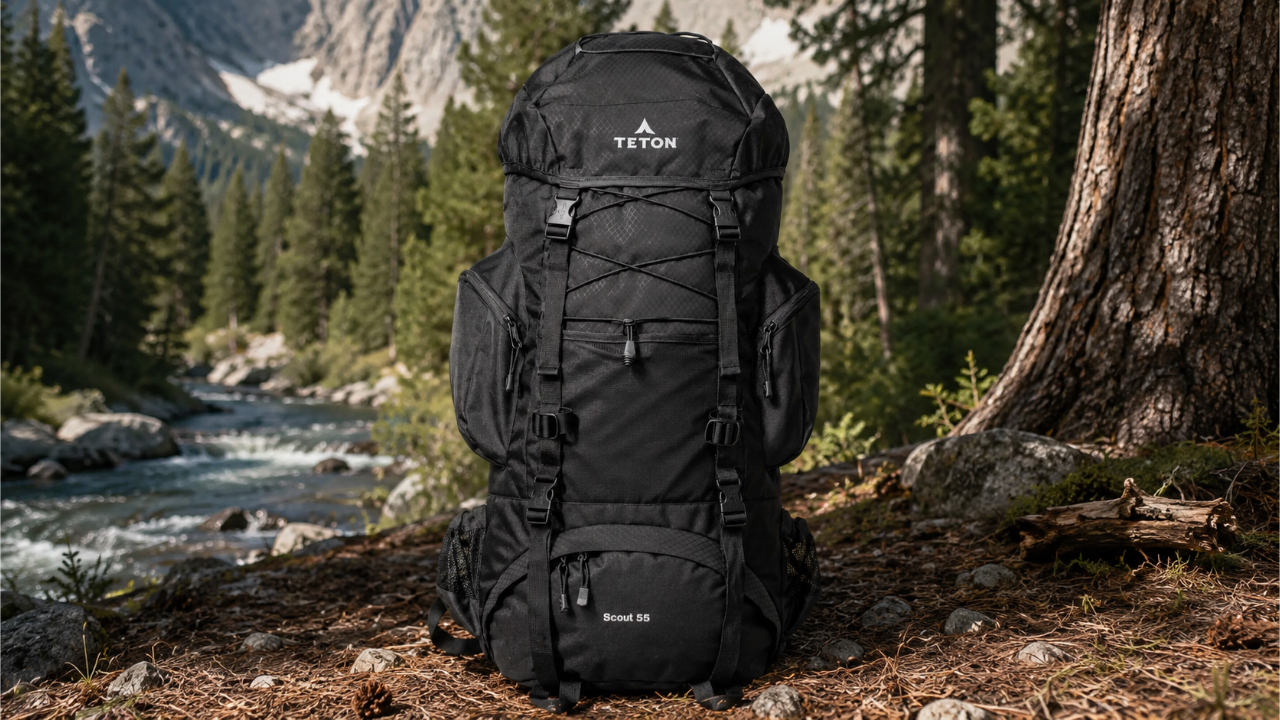
Teton Scout 55L: Affordable Internal-Frame Support
The Teton Scout 55L brings an internal frame, adjustable torso, integrated raincover, and practical organization to a value-focused pack. Its 55-liter capacity and 15- to 19.5-inch torso range suit shorter trips and smaller-to-medium torsos, giving budget-conscious hikers more structure than a lightweight frameless rucksack.
Pros
- 55L capacity for one- to three-day backpacking trips
- Internal frame with adjustable 15- to 19.5-inch torso range
- Sleeping-bag compartment and multi-directional compression straps
- Hydration space for up to a 3-liter bladder
- Integrated raincover
- Value-focused price relative to premium framed packs
Cons
- About 4.5 pounds empty
- Shorter torso range may not fit tall hikers
- Heavier materials than lightweight premium packs
- Adjustment system is less refined than top-tier suspension
Internal-Frame Support Without Premium Pricing
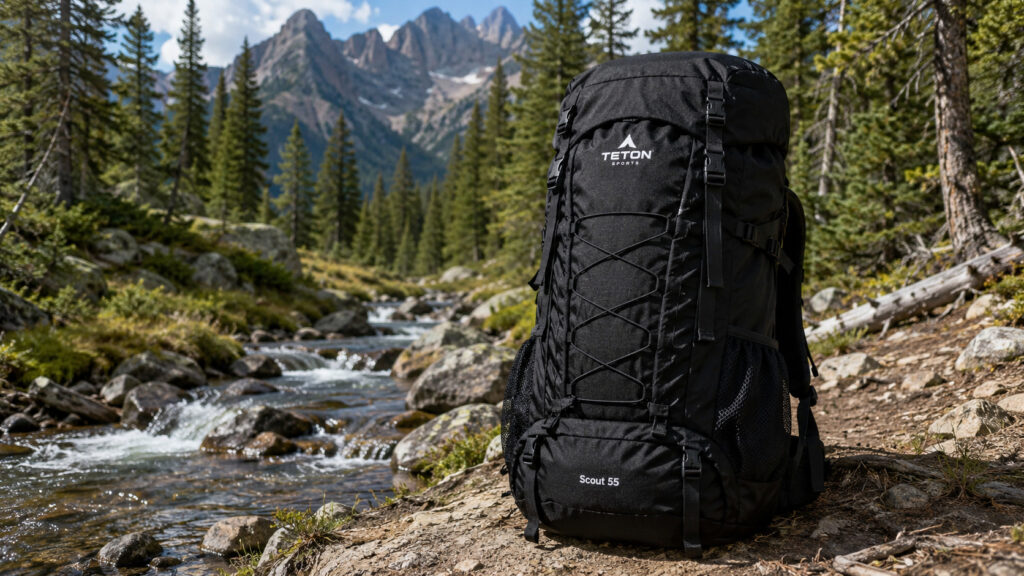
The Scout 55L sits between two common backpack categories. On one side are premium framed packs with sophisticated suspension systems and prices that can exceed several hundred dollars. On the other are inexpensive frameless rucksacks that save weight and money but require lighter loads and more careful packing. The Scout uses an internal frame and adjustable back panel to provide real structure at a more approachable price.
Teton describes the 55-liter Scout as a smaller-fit pack and uses a three-quarter-size frame. The torso adjustment range is listed at roughly 15 to 19.5 inches. That range covers many smaller and medium torsos, but tall hikers should measure before ordering. The pack may have enough volume for a tall adult while still placing the shoulder harness incorrectly if the frame is too short.
The frame and padded lumbar area help move load toward the hipbelt. Molded channels in the back pad are designed to improve airflow, although this is not a suspended-mesh system like the Osprey Atmos or Aura. The Scout keeps more padding in direct contact with the body, which can feel warmer but also creates a stable, familiar carry.
At about 4.5 pounds, the Scout is not lightweight. The value proposition depends on using the frame, compartments, and durable construction. Hikers with compact ten-pound base weights may prefer a lighter pack. Beginners and conventional backpackers carrying bulkier sleep systems or camp equipment are more likely to benefit from the Scout’s structure.
55 Liters for Shorter Multi-Day Trips
Teton positions the Scout 55L for one- to three-day backpacking trips. Fifty-five liters is a useful middle capacity because it can hold a complete three-season kit without creating the enormous empty space of a 70- or 80-liter expedition pack. The volume is especially practical for hikers moving from car-camping equipment toward smaller backpacking gear but not yet using an ultralight setup.
The lower sleeping-bag compartment provides separation for a sleeping bag or other soft gear. Keeping the bottom section distinct can make camp setup faster and reduce the need to dig through food or clothing to reach the sleep system. Multi-directional compression straps stabilize the main compartment when the pack is not completely full and can help manage long items carried externally.
A hydration pocket supports up to a 3-liter reservoir, although the bladder is not included. Three liters can be a sensible capacity for dry trails or longer stretches between water sources, but water weight adds quickly. The framed carry system is helpful when the pack must handle several pounds of water in addition to food and shelter.
The Scout is roomy enough to expose packing mistakes. Heavy items placed far from the back can pull the pack rearward, and a loose top section can sway on uneven terrain. Dense gear belongs close to the spine, lighter items should fill the outer spaces, and the compression straps should be used to keep the load compact. The frame helps, but good packing remains the foundation of a stable carry.
Trail Organization That Makes Sense
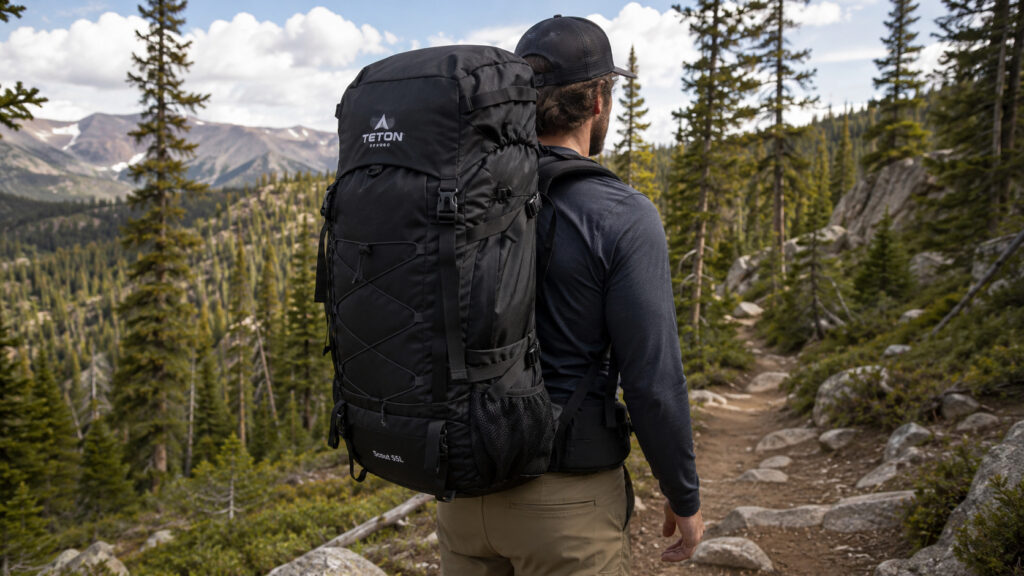
The Scout uses several compartments and pockets rather than a single minimalist tube. The sleeping-bag area handles bulky soft gear, the main compartment stores the core load, and external pockets provide places for smaller items. That layout is friendly to newer backpackers because gear can be grouped by purpose instead of relying on a collection of color-coded stuff sacks.
Compression straps run in multiple directions and create attachment options for pads or other gear. External carry should still be kept tidy. A sleeping pad or tent component that swings with every step can throw off balance and catch on brush. The Scout’s straps are most useful when they secure gear tightly against the pack rather than turning the exterior into a hanging equipment rack.
The integrated raincover is a valuable inclusion in this price range. It adds weather protection without requiring a separate purchase and gives hikers a quick response when rain starts. The cover should be paired with interior waterproofing for sleeping insulation, electronics, and dry layers. A trash compactor bag or dedicated pack liner provides inexpensive backup if water pushes past seams or enters around the opening.
Teton also backs the pack with its lifetime warranty program. Warranty terms should always be reviewed for coverage and process, but manufacturer support adds confidence to a product expected to endure repeated trail use. The Scout’s appeal is practical rather than glamorous: compartments, a frame, adjustment, hydration space, and weather protection are all aimed at basic backpacking needs.
Best for Value-Focused Backpackers With Conventional Gear
The Scout 55L is a strong match for beginners assembling a first backpacking kit, occasional hikers who take a few multi-day trips each year, and value-focused users who need structure more than minimal weight. The 55-liter size works with conventional tents, sleeping bags, and cooking gear as long as the equipment is reasonably compact.
Torso length is the biggest fit checkpoint. The 15- to 19.5-inch range means very tall hikers may not be able to position the hipbelt and shoulder harness correctly. A backpack should not be chosen by capacity alone. Measure the torso, compare it with the stated range, and load the pack with realistic weight before committing to a trip.
The 4.5-pound empty weight is the other tradeoff. A premium pack can offer more refined ventilation and adjustment at a similar or slightly lower weight, while a frameless budget bag can weigh less than half as much. The Scout earns its weight through the frame, padding, compartments, and integrated raincover. Those features need to be useful to justify carrying them.
For hikers who want a real internal-frame backpack without premium pricing, the Scout 55L remains a practical option. It will not mimic an ultralight pack, and it does not offer the wraparound suspended mesh of Osprey’s top-tier models. It does provide a stable platform, usable adjustment, and enough organization to make one- to three-day trips easier to pack and manage.
Conclusion: Should You Buy the Teton Scout 55L?
The Teton Scout 55L is a value-focused internal-frame backpack for hikers carrying conventional gear on one- to three-day trips. Its adjustable torso system, sleeping-bag compartment, hydration space, compression straps, and integrated raincover provide far more structure than a basic frameless pack. The 4.5-pound weight and shorter torso range are important limitations, but the Scout makes sense for beginners and budget-conscious backpackers who prioritize support and organization.