
Best Portable Air Conditioners for Cooling Rooms in 2026
The best portable air conditioners should do more than blow cold air. It needs the right cooling capacity for the room, a window kit that seals well, reasonable noise levels, simple drainage, and controls that do not feel like homework. The best portable air conditioners are the ones that match the space instead of trying to cool an entire house from one corner.
| Best Overall | Best Efficiency Pick | Best Budget | Most Portable | Best Personal Cooler |
|---|---|---|---|---|
| BLACK+DECKER BPACT14WT Portable Air Conditioner | Midea Duo MAP14HS1TBL Portable Air Conditioner | SereneLife SLPAC8 Portable Air Conditioner | Evapolar evaCHILL EV-500 Personal Air Cooler | Evapolar EvaLIGHT Plus EV-1500 |
 | 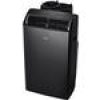 | 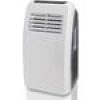 |  |  |
| A straightforward 3-in-1 portable AC for larger rooms, with remote control, casters, a washable filter, and wide availability. | A smart inverter model with a dual hose-in-hose design, strong SACC rating, heat mode, and quiet operation. | A compact, affordable single-hose unit for smaller rooms, with cooling, fan, dry mode, remote control, and a 24-hour timer. | A tiny evaporative cooler for desks, tents, and bedside use in dry climates. It cools the person, not the whole room. | A quiet desktop evaporative cooler with a larger tank, LED lighting, sleep timer, and directional personal cooling. |
What Is a Portable Air Conditioner?
A portable air conditioner is a movable cooling unit that pulls heat from indoor air and vents that heat outside through a window hose. That hose matters: compressor-based portable AC units must exhaust hot air, so the window kit and seal can make a real difference in how well the unit performs.
Personal evaporative coolers are different. They use water evaporation to cool the air directly in front of the device, which can feel refreshing in hot, dry climates. They are quiet and efficient, but they are not replacements for room-size portable air conditioners in humid spaces.
Why Buy a Portable Air Conditioner?
Portable air conditioners make the most sense when a window unit will not work, central air is not available, or one room runs hotter than the rest of the home. Renters, home-office workers, dorm residents, garage hobbyists, and people with upstairs bedrooms all tend to benefit from a targeted cooling setup.
The biggest advantage is flexibility. A portable AC can move from a bedroom at night to an office during the day, and most models include a window kit so installation is temporary. The tradeoff is efficiency: single-hose portable air conditioners can draw warm replacement air into the room, while dual-hose designs usually do a better job keeping cooled air inside.
Portable Air Conditioners: What to Look For
Before comparing the best portable air conditioners, check these practical buying points first. They matter more than a flashy spec sheet.
- Cooling Capacity: Look at the DOE/SACC rating when available. It is more realistic for portable AC performance than the older ASHRAE-only number.
- Room Size: Match the unit to the room you actually need to cool. Oversizing can be noisy and inefficient; undersizing will run constantly.
- Hose Design: Dual-hose portable air conditioners usually perform better than single-hose models because they reduce negative pressure in the room.
- Energy Efficiency: Compare CEER, inverter technology, and smart scheduling features instead of relying only on wattage claims.
- Noise Level: Bedroom and office use calls for lower dBA ratings and a sleep mode that dims lights and eases fan speed.
- Drainage: Check whether the unit has auto evaporation, a removable tank, or a continuous-drain option for humid climates.
- Filter Access: A washable, easy-to-reach filter is a simple feature that helps keep airflow steady over time.
- Controls: Remote controls, app control, and voice control can be useful, but the onboard panel should still be clear and responsive.
- Portability: Wheels and side handles matter because portable AC units are heavier than they look.
- Availability and Warranty: For older or seasonal models, confirm current stock, return policies, and replacement parts before buying.
Best Overall: BLACK+DECKER BPACT14WT Portable Air Conditioner
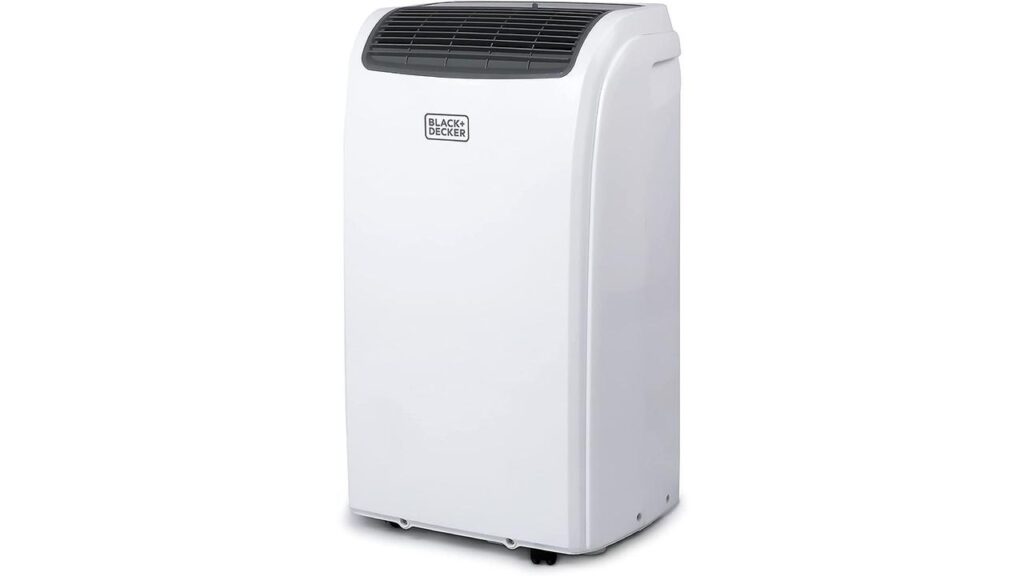
Image credit: BLACK+DECKER
Pros:
- Strong room-cooling potential for a single-hose portable AC
- 3-in-1 cooling, dehumidifier, and fan functions
- Remote control, top LED panel, 24-hour timer, and washable filter
- Casters and side handles make it easier to reposition
Cons:
- Single-hose design is not as efficient as the better dual-hose models
- Audible compressor and fan noise are part of the deal
- Window sealing takes patience for best results
The BLACK+DECKER BPACT14WT remains a sensible pick for anyone who wants a familiar, widely sold portable air conditioner without a complicated app or premium price tag. Its current manufacturer listing puts it at 7,700 BTU SACC/CEC and 14,000 BTU ASHRAE, which is a better way to frame performance than the older ASHRAE-only language many retailers still use.
In real use, this is the portable AC to choose when the priority is straightforward cooling, simple controls, and easy setup. It is not the quietest or the most efficient portable air conditioner in this guide, but it is approachable, capable, and easy to live with in bedrooms, living rooms, and home offices where a window unit is not practical.
Best Efficiency Pick: Midea Duo MAP14HS1TBL Portable Air Conditioner
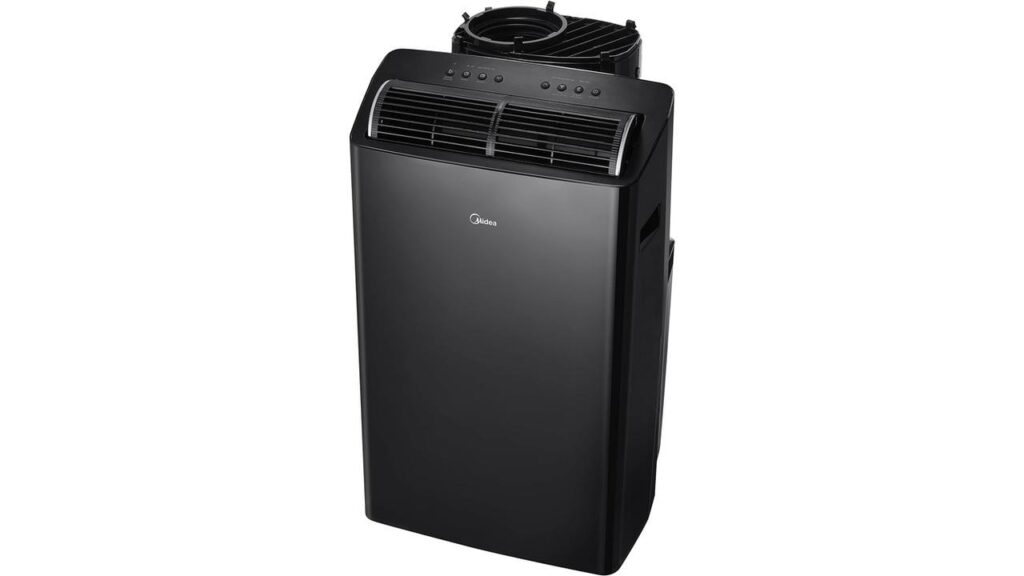
Image credit: Midea
Pros:
- Dual hose-in-hose design helps keep cooled air in the room
- Variable-speed inverter technology improves efficiency and comfort
- Cools, heats, ventilates, and dehumidifies
- Smart app and voice control support, with very quiet low-speed operation
Cons:
- Costs more than basic portable AC units
- The hose and window setup takes a little more room
- App controls may appeal more than the included remote
The Midea Duo MAP14HS1TBL is the most technically polished choice in this group. The hose-in-hose design pulls outdoor air for condenser cooling and exhausts hot air back outside, which helps avoid the usual single-hose problem of drawing warm replacement air into the room.
For 2026, this is the best portable air conditioner here for shoppers who care about efficiency, quieter operation, and whole-room comfort. The model is rated for spaces up to 550 square feet, includes heat mode, and can run as low as 42 dBA under the right conditions.
Best Budget: SereneLife SLPAC8 Portable Air Conditioner
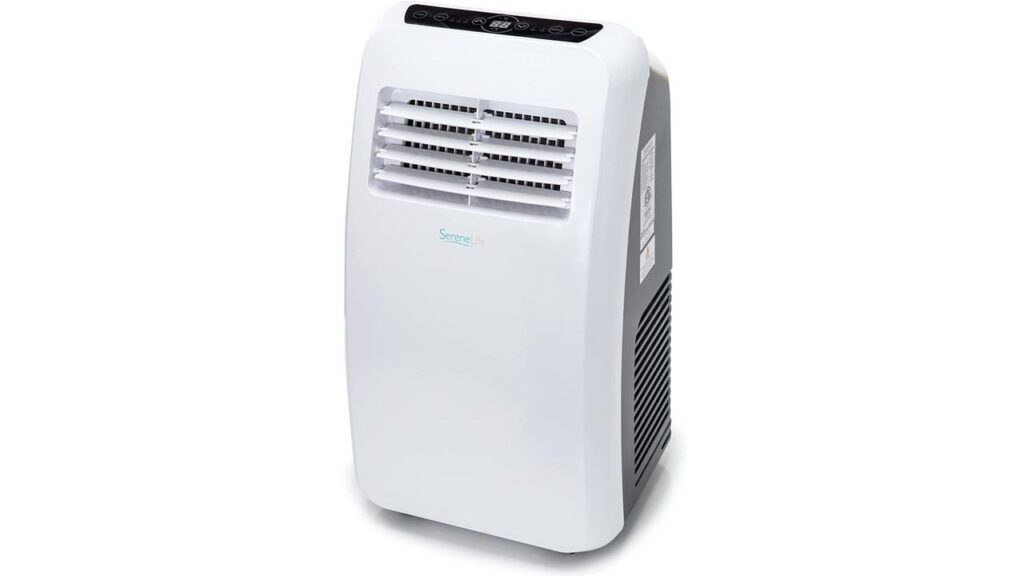
Image credit: SereneLife
Pros:
- Affordable 8,000 BTU ASHRAE portable AC for smaller rooms
- Cool, fan, and dry modes add useful flexibility
- Remote control, 24-hour timer, rolling wheels, and removable filter
- Dehumidifier mode can help in sticky weather
Cons:
- Better suited to small rooms than medium-large spaces
- Noise is noticeable at higher settings
- Official coverage is more conservative than some retailer listings
The SereneLife SLPAC8 is still a practical budget pick, but the room-size claim needed a 2026 refresh. SereneLife lists the SLPAC8 as cooling rooms up to 215+ square feet, while some retail pages stretch that number higher. The safer recommendation is to keep it in bedrooms, small offices, and compact living spaces.
This portable air conditioner earns its spot because it covers the basics well: cooling, fan, dry mode, remote control, and an easy-roll body. It is not a premium unit, but it gives shoppers a lower-cost way into room cooling without overcomplicating the purchase.
Most Portable: Evapolar evaCHILL EV-500 Personal Air Cooler
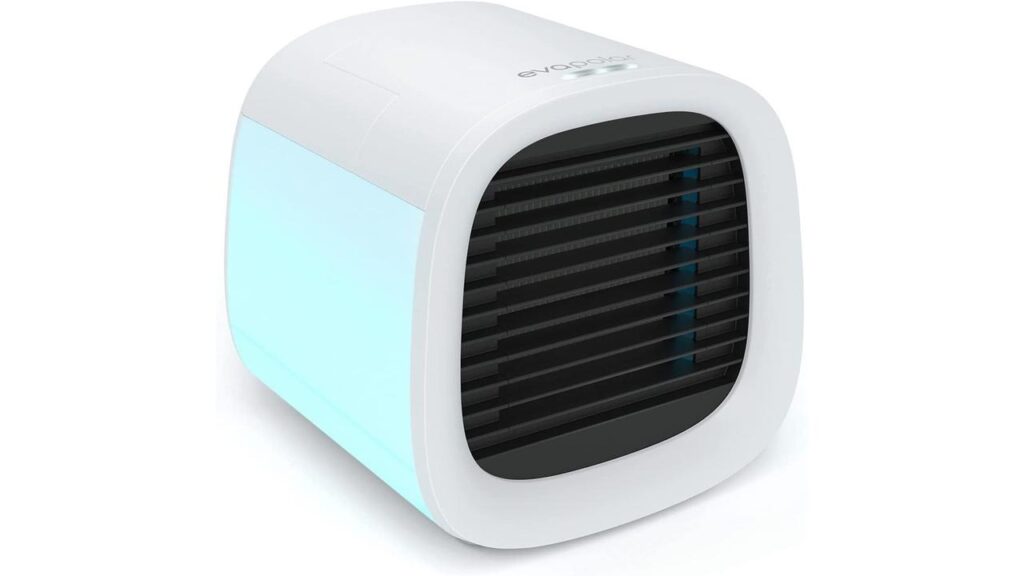
Image credit: Evapolar
Pros:
- Very small and easy to move from desk to bedside
- Uses only a few watts of power
- Four fan speeds and simple one-button control
- Works best for direct personal cooling in hot, dry air
Cons:
- Not a compressor-based portable air conditioner
- Will not cool an entire room
- Less useful in humid climates
The Evapolar evaCHILL EV-500 should be described honestly: it is a personal evaporative air cooler, not a room air conditioner. That correction matters because shoppers searching for the best portable air conditioners may expect a compressor, a refrigerant loop, and an exhaust hose. The evaCHILL has none of those.
Used correctly, though, it has a place. Put it close on a desk, bedside table, or camping setup, fill the tank, and it can deliver a cooler, humidified breeze in dry conditions. It is the lightest, simplest product in the guide, but only for personal spot cooling.
Best Personal Air Cooler: Evapolar EvaLIGHT Plus EV-1500
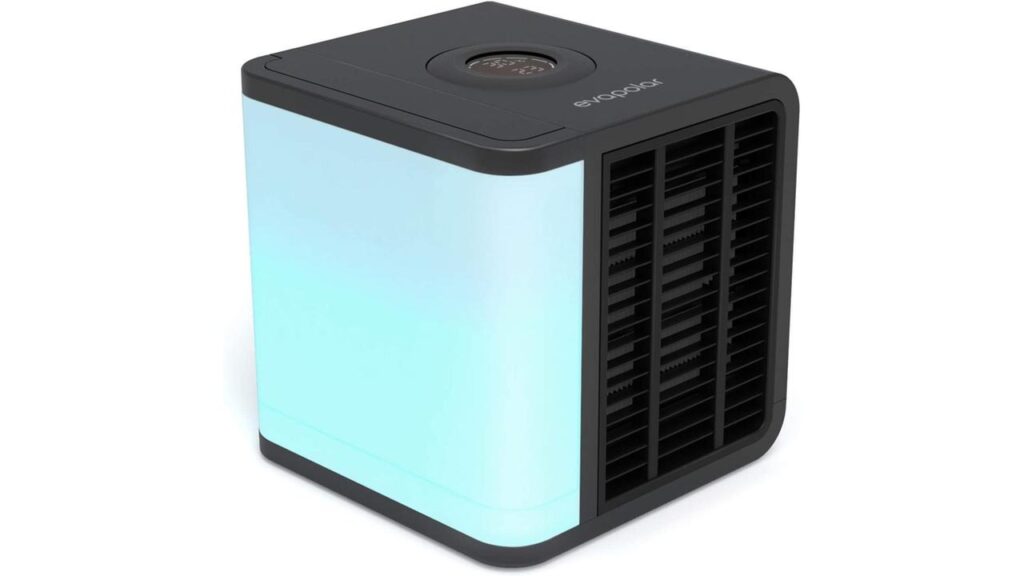
Image credit: Evapolar
Pros:
- Quiet, desktop-friendly evaporative cooling
- Larger 1-liter water tank than the evaCHILL
- Sleep timer, LED lighting, and directional airflow controls
- Low 10W power draw
Cons:
- Personal cooling only, with limited coverage
- Requires regular water refills and cartridge replacement
- Availability can be less consistent than mainstream portable AC units
The Evapolar EvaLIGHT Plus EV-1500 is a more polished personal cooler than the evaCHILL. It adds a larger tank, sleep timer, leak-resistant design, and LED lighting while keeping the same basic evaporative-cooling idea: water, airflow, and a close-range cooling effect.
This is a good fit for a desk, nightstand, or dry apartment where personal comfort is the target. It does not belong in the same performance bucket as hose-vented portable air conditioners, but it can be a quiet, low-power add-on when cooling the whole room would be wasteful.
Bottom Line
For most shoppers comparing the best portable air conditioners in 2026, the Midea Duo is the most advanced pick, the BLACK+DECKER is the easiest mainstream recommendation, and the SereneLife is the budget-friendly small-room choice. The Evapolar models are useful only when the job is personal evaporative cooling in dry air.
The smartest purchase is not always the coldest unit on paper. Choose based on room size, hose design, drainage needs, noise tolerance, and whether you need true air conditioning or just a close-range cooler.
Can portable air conditioners cool large rooms effectively?
Portable air conditioners are typically designed for small to medium-sized rooms. While some models may offer higher BTU ratings for increased cooling capacity, they may not be as effective in cooling larger spaces compared to central air conditioning systems. It’s essential to choose a portable air conditioner with the appropriate BTU rating for the size of the room you intend to cool.
Do portable air conditioners require venting?
Yes, most portable air conditioners require venting to expel hot air generated during the cooling process. This is typically done through a window venting kit included with the unit. Proper venting is essential for the efficient operation of the air conditioner and to prevent heat buildup in the room.
Are portable air conditioners energy-efficient?
Portable air conditioners can be energy-efficient, but their efficiency may vary depending on factors such as BTU rating, SEER (Seasonal Energy Efficiency Ratio) rating, and usage patterns. Models with higher SEER ratings are generally more energy-efficient and can help reduce energy consumption and utility costs.
Can portable air conditioners also provide heating?
Some portable air conditioners, like the Midea Duo Portable Air Conditioner featured in this article, offer heating functionality in addition to cooling. These units are equipped with heating elements that allow them to provide warmth during colder months, offering year-round comfort in any season.
How do I maintain and clean my portable air conditioner?
Regular maintenance and cleaning are essential to ensure optimal performance and longevity of your portable air conditioner. This includes cleaning or replacing air filters regularly, removing and cleaning the condensate tray, and ensuring proper venting to prevent blockages. Refer to the manufacturer’s instructions for specific maintenance guidelines for your model.
Can I use a portable air conditioner in a humid environment?
Portable air conditioners can help reduce humidity levels in indoor spaces by extracting moisture from the air during the cooling process. However, in extremely humid environments, additional dehumidification may be required for optimal comfort. Choosing a portable air conditioner with a built-in dehumidifier function, like the SereneLife SLPAC8 Portable Air Conditioner, can help address high humidity levels effectively.
Are portable air conditioners noisy?
Portable air conditioners may produce noise during operation, with noise levels varying depending on the model and settings. Look for units with lower decibel (dB) ratings if noise is a concern, or consider features like “ultra-quiet operation,” such as the Evapolar evaCHILL Portable Conditioner, which operates at a noise level as low as 42dB.
Can I control my portable air conditioner remotely?
Many modern portable air conditioners come with remote control functionality, allowing you to adjust settings such as temperature, fan speed, and mode from a distance. Some models also offer additional smart features, such as Wi-Fi connectivity and compatibility with smartphone apps and voice assistants for convenient remote control and scheduling, as seen with the Midea Duo Portable Air Conditioner.
Are portable air conditioners easy to install?
Portable air conditioners are generally easy to install, requiring minimal assembly and setup. Most units come with window venting kits and installation instructions, making it simple to set up the exhaust hose for proper ventilation. Additionally, portable air conditioners typically do not require permanent installation like traditional window or central air conditioning units, making them ideal for renters or temporary cooling solutions.
What is the difference between single hose and dual hose portable air conditioners?
Single hose portable air conditioners intake air from the room, cool it, and expel hot air and moisture outside through the exhaust hose. Dual hose portable air conditioners, like the Midea Duo Portable Air Conditioner, feature two separate hoses—one for intake and one for exhaust. This design helps maintain balanced air circulation indoors and prevents hot outside air from entering through gaps, resulting in more efficient cooling and energy savings.
Can I use a portable air conditioner without a window?
While portable air conditioners typically require venting through a window using an exhaust hose, alternative venting options may be possible depending on the unit and the room layout. For example, some models may offer options for venting through a sliding door, drop ceiling, or wall vent. However, proper ventilation is crucial for the efficient operation of the air conditioner and should be considered when determining the installation location.
How do I determine the appropriate size portable air conditioner for my room?
The cooling capacity of a portable air conditioner is measured in British Thermal Units (BTUs). To determine the appropriate size for your room, consider factors such as room size, ceiling height, insulation, sun exposure, and the number of occupants. A general guideline is to aim for approximately 20 BTUs per square foot of space, but it’s best to consult the manufacturer’s recommendations or use an online BTU calculator for a more accurate assessment.
Can I use a portable air conditioner in a camper or RV?
Portable air conditioners can be used in campers or RVs to provide cooling comfort during travel or camping trips. However, it’s essential to ensure the unit is compatible with the power supply available in your camper or RV and to consider factors such as size, weight, and venting requirements for installation in confined spaces.
Are portable air conditioners environmentally friendly?
Portable air conditioners can be more environmentally friendly than traditional air conditioning systems, especially if they are energy-efficient and use eco-friendly refrigerants. Look for units with high SEER ratings, inverter technology, and refrigerants such as R-32, which have lower global warming potential (GWP) compared to traditional refrigerants like R-410A. Additionally, opting for models with energy-saving features and smart controls can further reduce energy consumption and environmental impact.
Previous Years’ Best Portable Air Conditioners
Midea Portable Air Conditioner

Image credit: Midea
Pros:
Cons:
The Midea Portable Air Conditioner is a top-of-the-line unit that provides powerful cooling for spaces up to 200 sq. ft. and comes equipped with SMARTCOOL technology, which includes fan and dehumidification functions. It has an ASHRAE rating of 10,5800 BTU and meets the 2017 SACC standard. This portable AC unit is also WI-FI enabled and voice-controlled, so you can control it from anywhere using a smartphone app, Alexa, or Google Assistant. The effortless digital controls make setting the time, temperature, and mode from across the room easy, while the washable air filter ensures clean air. It has an adjustable window bracket that fits openings from 26.5-48″, and installation is so straightforward that anyone can do it. The Midea Portable Air Conditioner is the best bang for your buck portable air conditioner, offering a decent range of features at an affordable price.