
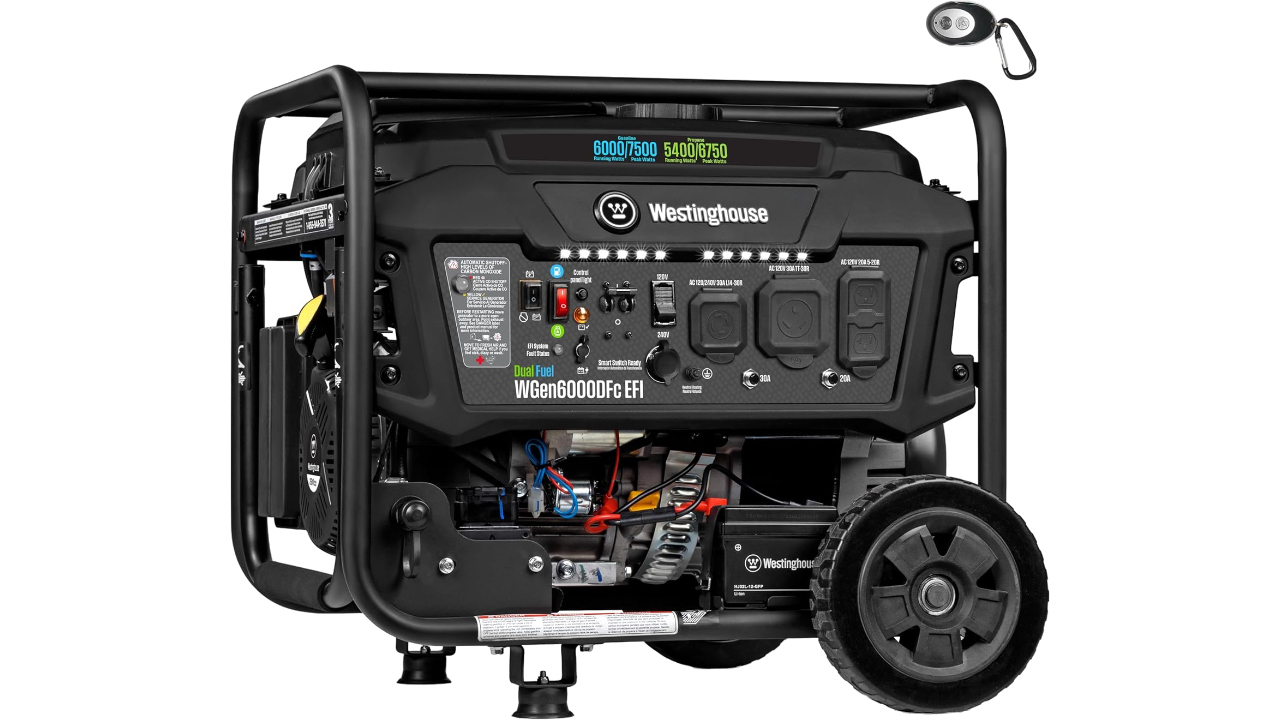
Westinghouse WGen6000DFc EFI Review: Dual Fuel Reliability With Modern EFI Simplicity
The Westinghouse WGen6000DFc EFI Dual Fuel Portable Generator sits in that very practical middle ground of home backup power, where you are not trying to run an entire household indefinitely, but you absolutely want the essentials to stay alive when the grid decides to take a long weekend. It is designed for homeowners, RV users, and preparedness-minded households who want dependable, transferable power with the flexibility of gasoline or propane operation.
This generator focuses on steady, essential circuit support rather than oversized whole-home output. With electronic fuel injection and dual fuel capability, it aims to simplify starting, improve efficiency, and reduce the usual friction points of carbureted systems. In plain terms, it is built for reliability when conditions are inconvenient, which is usually when generators are actually needed.
Pros
- 6,000 running watts with 7,500 peak watts supports essential home circuits
- Dual fuel operation (gasoline or propane) adds flexibility in emergencies
- EFI system improves starting ease and reduces carburetor-related maintenance
- Electric start with remote key fob for convenience during outages
- Transfer switch-ready outlet supports safer home integration
- CO sensor adds an important layer of operational safety
- Strong runtime performance for its class (up to ~14 hours at light load)
Cons
- Not designed for whole-home coverage in larger households
- Open-frame design produces noticeable operational noise
- Heavy enough to require wheel assistance for practical movement
- Gasoline operation requires routine maintenance and fuel management discipline
When Power Becomes Practical, Not Excess
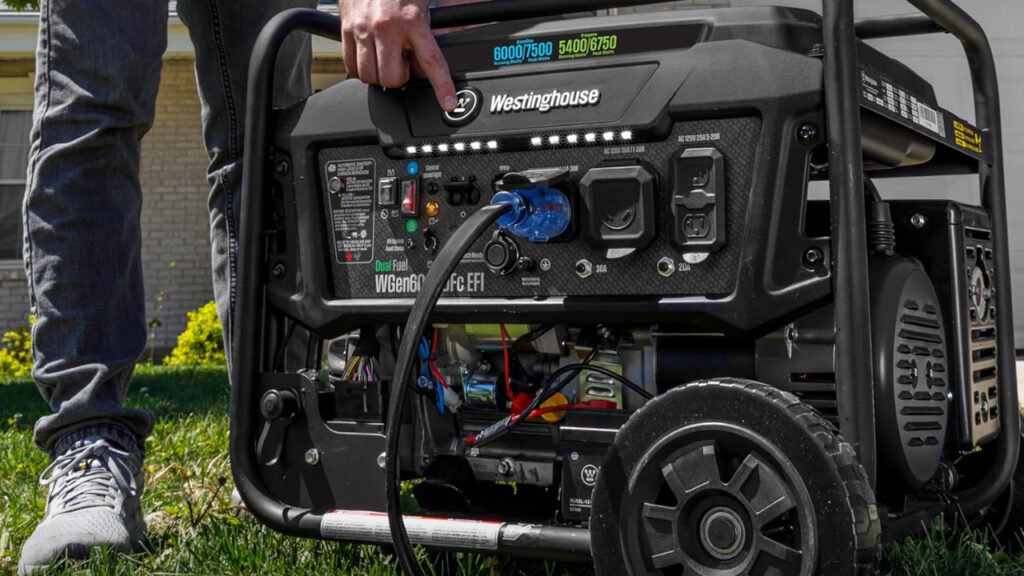
Image credit: Westinghouse
At its core, the WGen6000DFc EFI is built around a 274cc Westinghouse OHV engine paired with electronic fuel injection, and that combination fundamentally shapes how the generator behaves in real use. EFI replaces the traditional carburetor system entirely, meaning fuel delivery is electronically controlled rather than mechanically mixed. In practical terms, that translates to easier cold starts, more consistent performance after storage, and fewer of the classic small engine frustrations that tend to show up right when you need backup power most.
The generator delivers 6,000 running watts and 7,500 peak watts on gasoline, with slightly lower output when operating on propane. That output level is very deliberately positioned: it is strong enough to maintain essential household systems simultaneously, but not so large that it becomes inefficient or unwieldy for typical residential backup use. You are realistically looking at supporting a refrigerator, lighting circuits, a sump pump, and communication devices at the same time, which covers the functional core of most outage scenarios without pushing into luxury or whole-home redundancy.
Where this model becomes more strategically useful is in how it distributes that power. With both 120V and 240V capability and a transfer switch-ready L14-30R outlet, it is designed to integrate into a home electrical system rather than rely on a web of extension cords. That matters in practice because it allows circuits to be selectively powered from a panel, which is both safer and far more organized when multiple loads need to run for extended periods. It is less about raw output and more about controlled, usable distribution of that output.
Built for Utility First, Comfort Second
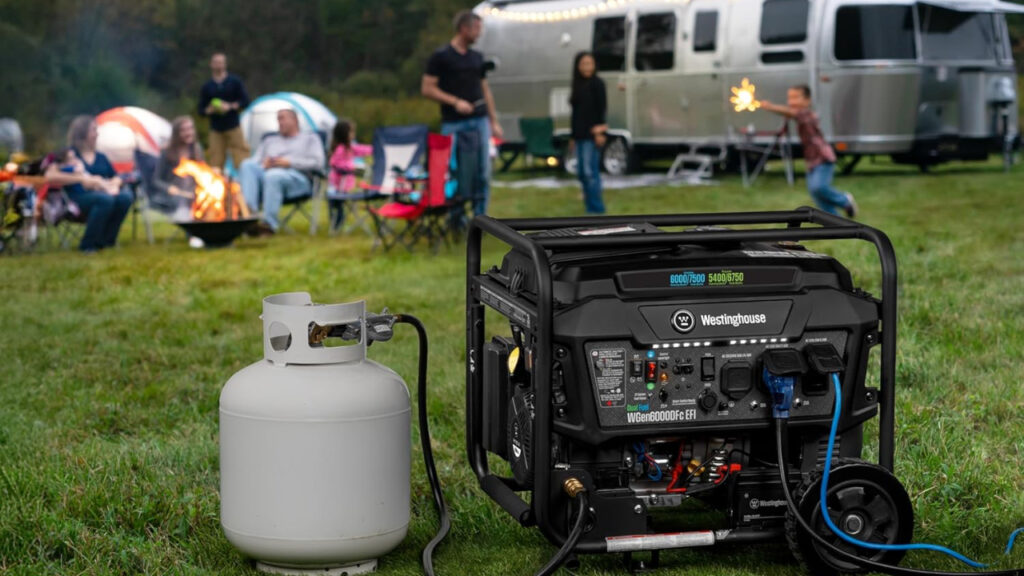
Image credit: Westinghouse
The physical design of the WGen6000DFc EFI reflects a clear priority: durability and function over portability convenience. It is built on a steel frame that is intended to handle repeated transport and outdoor exposure, with a wheel kit and folding handle system included to make movement manageable. This is not a generator you casually lift into place; it is one you roll, position, and leave to do its job until it is needed elsewhere.
Electric start capability is one of its most immediately practical features, combining a push-button ignition system with a remote key fob. That remote functionality is particularly useful in real-world scenarios where access conditions are not ideal, such as storms, nighttime outages, or cold weather when repeated manual pulling becomes both inconvenient and physically draining. The recoil backup system ensures that even if the electrical start system is compromised or the battery is depleted, the generator remains operational through manual starting.
Fuel flexibility adds another layer of practical design thinking. The ability to run on either gasoline or propane is not just about preference, but about adaptability in unpredictable conditions. Propane offers cleaner combustion and significantly better long-term storage stability, which reduces concerns about fuel degradation over time. Gasoline, on the other hand, provides a more familiar fueling structure and often longer continuous runtime under equivalent loads. Having both options available allows users to adapt based on what is realistically accessible rather than being locked into a single fuel dependency.
Steady Output Where It Counts Most
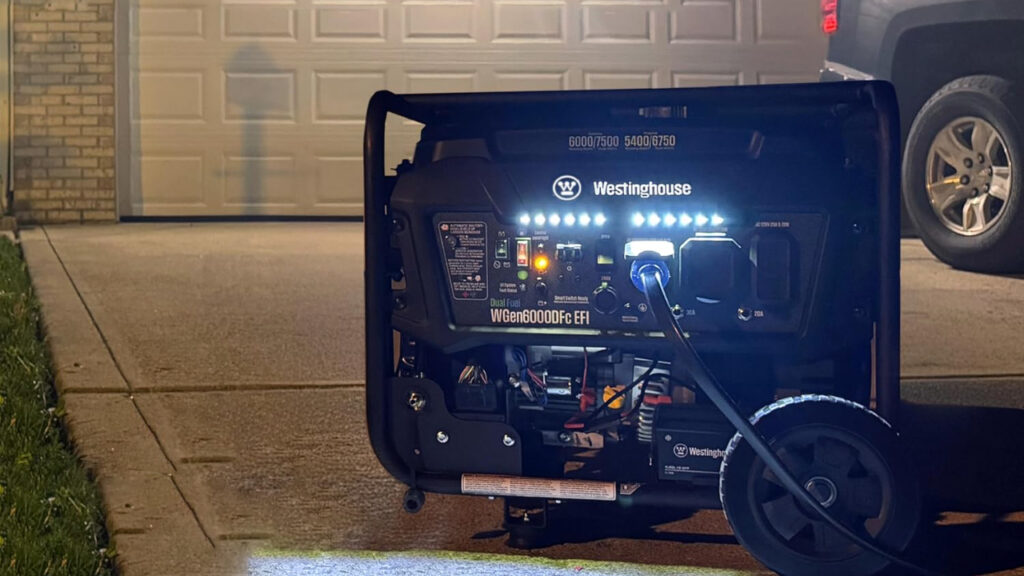
Image credit: Westinghouse
Performance in real operation is centered on stability under load rather than peak theoretical output. The generator is designed to maintain consistent voltage delivery across multiple simultaneous household demands, which is what determines whether essential systems continue running smoothly during an outage. In practice, that means it can support a balanced combination of refrigeration cycles, lighting loads, small appliances, and electronic devices without requiring constant manual load management.
Because it is not an inverter generator, it does not produce the ultra-refined sine wave output associated with sensitive electronics-focused systems. However, within its class, voltage regulation is engineered to remain steady enough for typical household use. That balance is important because it allows the generator to handle both motor-driven appliances and everyday electronics without frequent fluctuations that could interrupt operation or require constant adjustment.
Noise output sits in the expected range for an open-frame generator of this size class. It produces a consistent mechanical operating sound rather than unpredictable spikes or irregular surges in volume. While it is not quiet, the predictability of its sound profile makes it easier to accommodate during extended use periods, particularly overnight operation. Its performance strength is not in silence or refinement, but in sustained, reliable output under realistic residential loads.
Ownership Is About Maintenance, Not Mystery
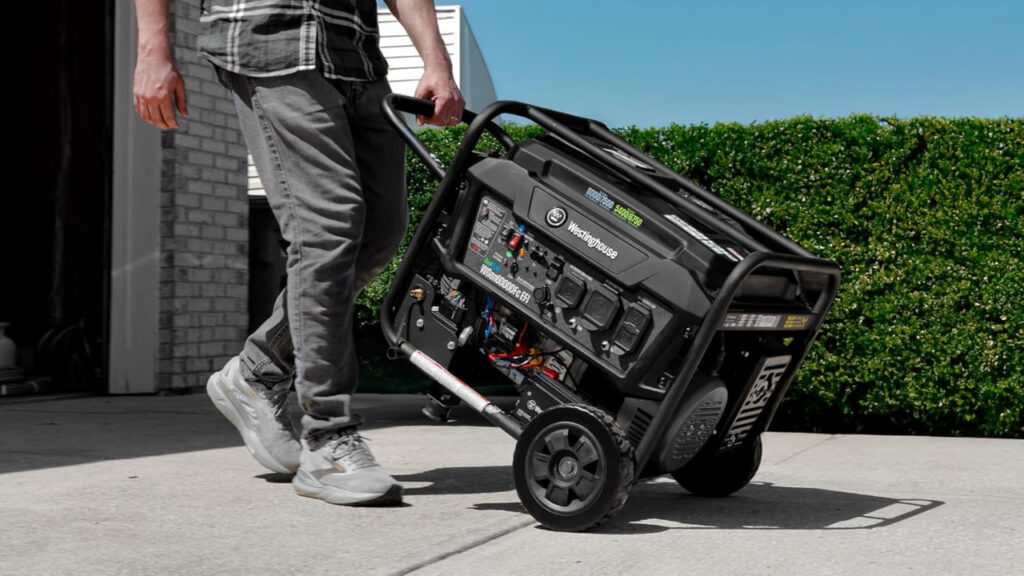
Image credit: Westinghouse
Owning the WGen6000DFc EFI comes with the standard responsibilities associated with gasoline-powered backup generators, even with the efficiency improvements introduced by EFI. Routine oil changes, air filter maintenance, and periodic inspection of fuel-related components remain part of keeping the system ready for operation. The EFI system reduces some of the traditional carburetor maintenance issues, but it does not eliminate the need for regular upkeep, especially if the unit sits unused for long stretches.
Fuel management is another practical consideration that directly affects long-term reliability. Gasoline requires stabilization and periodic replacement to prevent degradation, while propane offers a more stable storage profile and can remain usable for extended periods without the same concerns. This difference often becomes a deciding factor for users who prioritize long-term emergency readiness over frequent generator use. The dual fuel capability gives flexibility, but it also requires thoughtful planning around how each fuel type is stored and rotated.
Storage conditions and placement also play a meaningful role in overall usability. The generator is designed for outdoor operation with proper ventilation, and while it includes a CO sensor for added safety, that feature is an emergency safeguard rather than a substitute for correct placement. Keeping the unit in a dry, ventilated environment when not in use, and ensuring safe fuel storage practices, directly contributes to how reliably it performs when it is called into service. In other words, it rewards users who treat it as a maintained system rather than an occasional-use appliance.
Conclusion: Should You Buy Westinghouse WGen6000DFc EFI?
The Westinghouse WGen6000DFc EFI is a well-balanced dual fuel generator built for homeowners who want dependable essential circuit coverage without stepping into oversized whole-home systems. Its EFI system meaningfully improves usability, especially in cold starts and long storage scenarios, while dual fuel capability adds practical flexibility during emergencies. It is not intended to power everything at once in larger homes, but it performs reliably where it is designed to operate. For users prioritizing straightforward backup power with modern starting convenience and fuel adaptability, it is a solid, purpose-driven choice.