
Best Telescopes for Stargazing and Astrophotography
The best telescopes balance optical performance, setup and portability for visual observers, beginners and astrophotographers. A large manual reflector can reveal more for the money, a computerized Schmidt-Cassegrain can find and track targets, and a compact astrograph can turn a camera into the observer. None is automatically better for every person, yard or ambition.
These five picks cover distinct jobs rather than five steps on one ladder. The Celestron NexStar 8SE is the strongest all-around choice, while the Sky-Watcher Classic 200P directs more of the budget into visual performance. The Askar 60F is for a camera-led system, the AstroMaster 102AZ favors broad uncomplicated views, and the Gskyer 80mm kit offers a lower-cost first look. Start with what you want to see and how much setup you will actually tolerate.
| Best Overall | Best Value for Visual Astronomy | Best for Astro-Photography | Best Wide-Field Refractor | Best Budget Starter Kit |
|---|---|---|---|---|
| Celestron NexStar 8SE | Sky-Watcher Classic 200P | Askar 60F | Celestron AstroMaster 102AZ | Gskyer 80mm AZ |
 |  |  |  |  |
| An 8-inch Schmidt-Cassegrain with GoTo navigation in a comparatively compact package. | A manual 8-inch Dobsonian that directs more of the budget toward aperture and simple mechanics. | A compact 60mm quadruplet with a built-in flattener and full-frame 44mm image circle. | A 102mm f/6.5 achromatic refractor for broad celestial views and upright daytime observing. | An affordable 80mm f/5 refractor bundle with three eyepieces and phone accessories. |
Why Buy a Telescope?
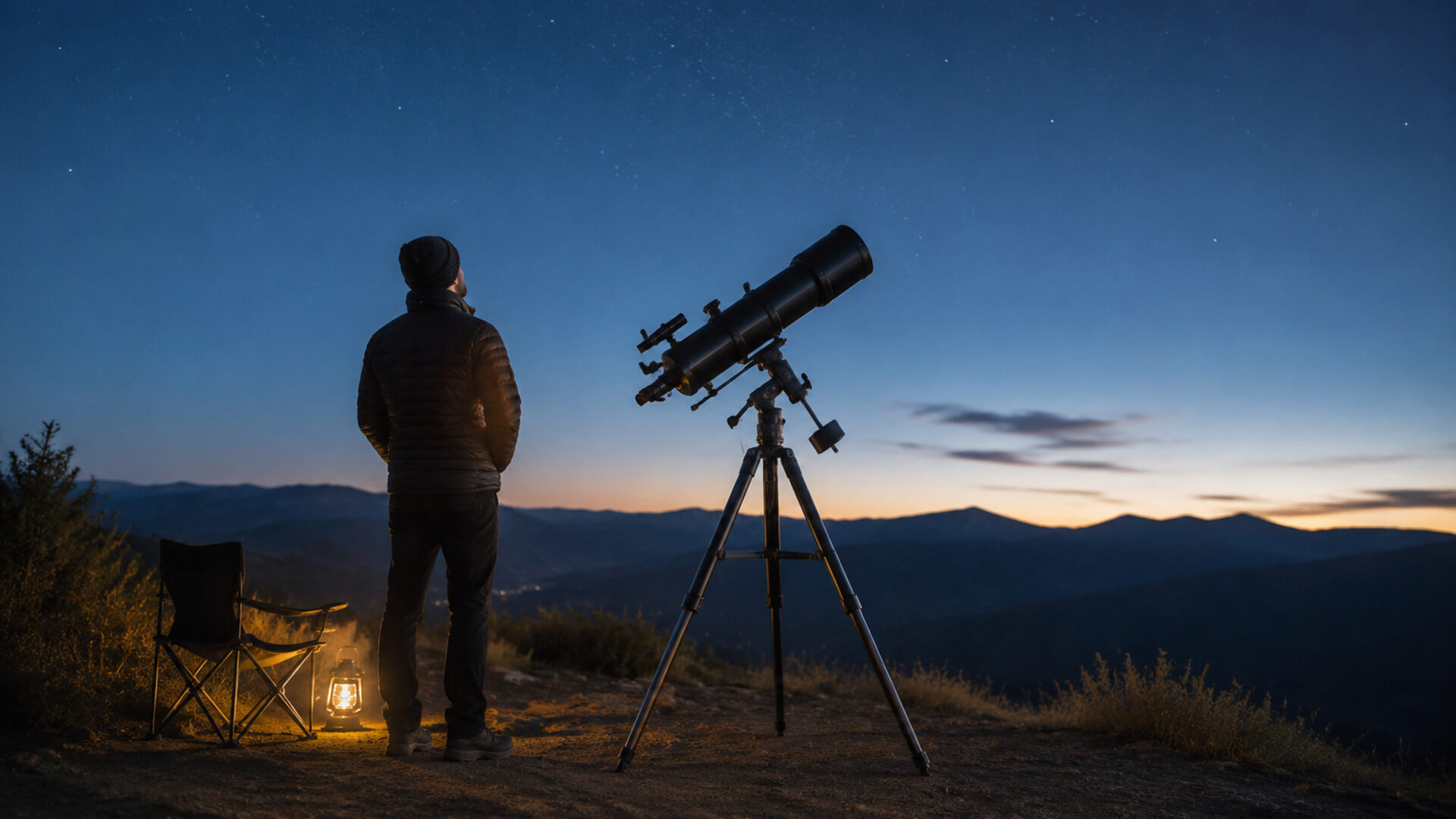
The best telescopes turn distant objects into repeatable experiences rather than pictures remembered from a screen. The Moon changes from night to night, Jupiter rotates quickly enough for its cloud features and moons to rearrange, and Saturn never quite looks like the photographs until its rings appear in a real eyepiece. Darker skies add clusters, nebulae and galaxies that become more rewarding as observing skill grows.
The instrument also provides a reason to learn the sky. A manual telescope encourages star hopping and orientation, while a computerized mount rewards accurate alignment and helps keep a target in view. An imaging refractor teaches a different set of skills involving tracking, focus, exposure and processing. The best entry point is the one whose process sounds enjoyable, because a technically superior telescope left in a closet shows nothing.
For travel, wildlife and quick looks, a telescope may not be the first tool to buy. The best binoculars guide covers handheld options with a wider field and almost no setup. Binoculars also complement a telescope by helping locate constellations and large star patterns before switching to higher magnification.
How to Choose the Right Telescope
Choose the observing goal before choosing a design. Lunar and planetary viewing benefits from sharp optics, useful focal length and a mount that settles quickly. Dim deep-sky objects benefit from aperture and dark skies. Astrophotography depends heavily on tracking accuracy and the complete imaging train, so a smaller refractor on a capable equatorial mount can be more productive than a much larger visual telescope on a simple base.
Aperture determines how much light the telescope gathers and how much fine detail it can theoretically resolve. It does not act alone. Atmospheric steadiness, optical quality, collimation, cooling and the mount all influence what reaches the eye. Magnification is calculated by dividing telescope focal length by eyepiece focal length, but a large number on a box is not a promise of a clear image. Most nights impose a useful limit well below a product’s most dramatic claim.
Study the mount as carefully as the optical tube. A stable Dobsonian base is simple but manual. An alt-azimuth tripod moves naturally up, down and side to side, though inexpensive versions can shake during focusing. A computerized alt-azimuth mount can locate and track objects after alignment, but field rotation limits long deep-sky exposures. A motorized equatorial mount is the usual imaging foundation and can cost more than the optical tube it carries.
Finally, plan the unglamorous parts. Measure the storage route, doorways and observing area. Decide whether separate tube and base pieces are manageable, whether power is available, and whether the telescope needs time outside to match ambient temperature. Budget for a red light, star map or app, a comfortable observing chair and perhaps one or two carefully chosen eyepieces. A complete-looking accessory bundle is not always a complete observing plan.
Best Overall: Celestron NexStar 8SE Computerized Telescope
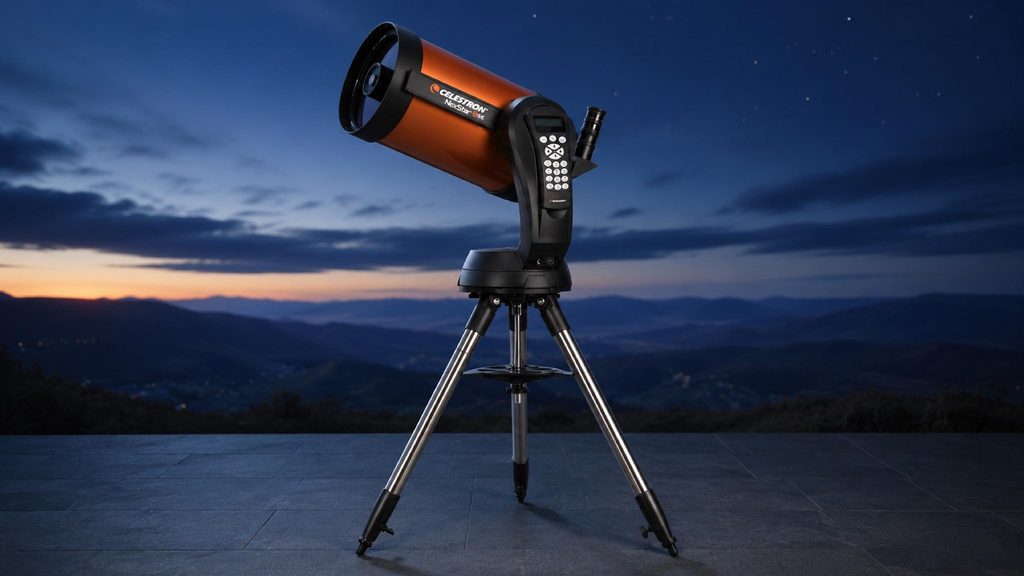
- The 8-inch aperture gathers enough light for rewarding views of planets, lunar detail and many deep-sky targets.
- SkyAlign and a database of more than 40,000 objects reduce the time spent searching after alignment.
- The short 17-inch optical tube is easier to store than a long reflector, even though the complete kit weighs 32 pounds.
Celestron NexStar 8SE Computerized Telescope offers the most balanced route into serious observing here. Its 2032mm focal length is especially satisfying on the Moon and planets, while 8 inches of aperture opens globular clusters, nebulae and galaxies under a dark sky. The computerized mount is helpful, but not automatic in the casual sense: accurate setup, alignment and a dependable 12V power source still reward preparation. The single-fork alt-azimuth mount is also better suited to visual observing and short planetary captures than to long-exposure deep-sky imaging.
Best Value for Visual Astronomy: Sky-Watcher Classic 200P Dobsonian Telescope
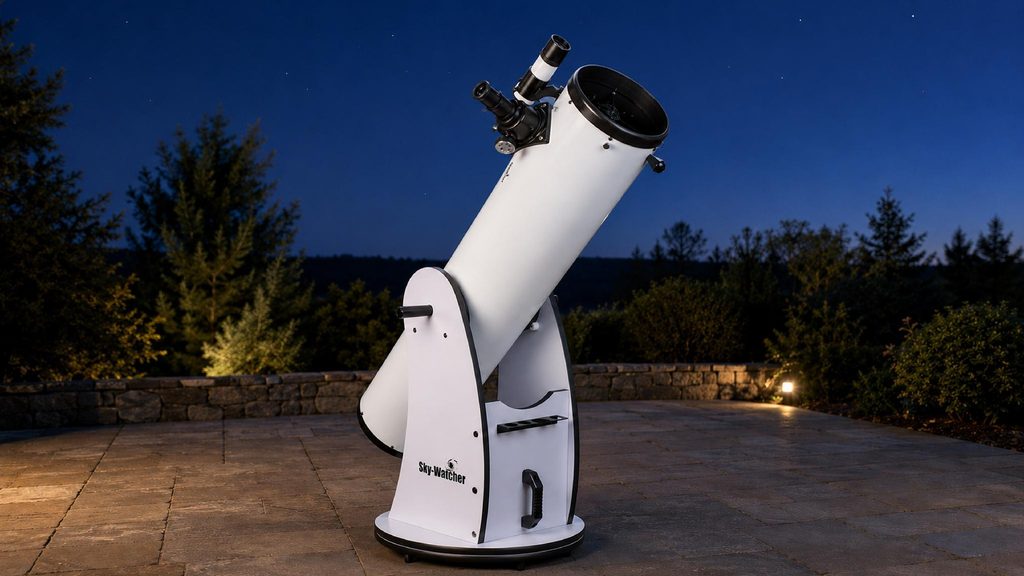
- The 200mm parabolic primary mirror provides substantial visual performance without computerized-mount cost.
- A simple rocker box makes pointing intuitive and keeps the telescope steady at ordinary observing powers.
- The 2-inch Crayford focuser accepts wide-field accessories while an adapter supports common 1.25-inch eyepieces.
Sky-Watcher Classic 200P Dobsonian Telescope is the value choice for observers who want the sky rather than a guided tour. Its 200mm mirror and 1200mm focal length can show meaningful lunar, planetary and deep-sky detail, and the manual base teaches direct navigation with a finder and star chart. The tradeoffs are physical and practical: the solid tube and particleboard rocker box need storage space, targets must be nudged as Earth turns, and occasional collimation is part of ownership.
Best for Astrophotography: Askar 60F Flat-Field Refractor
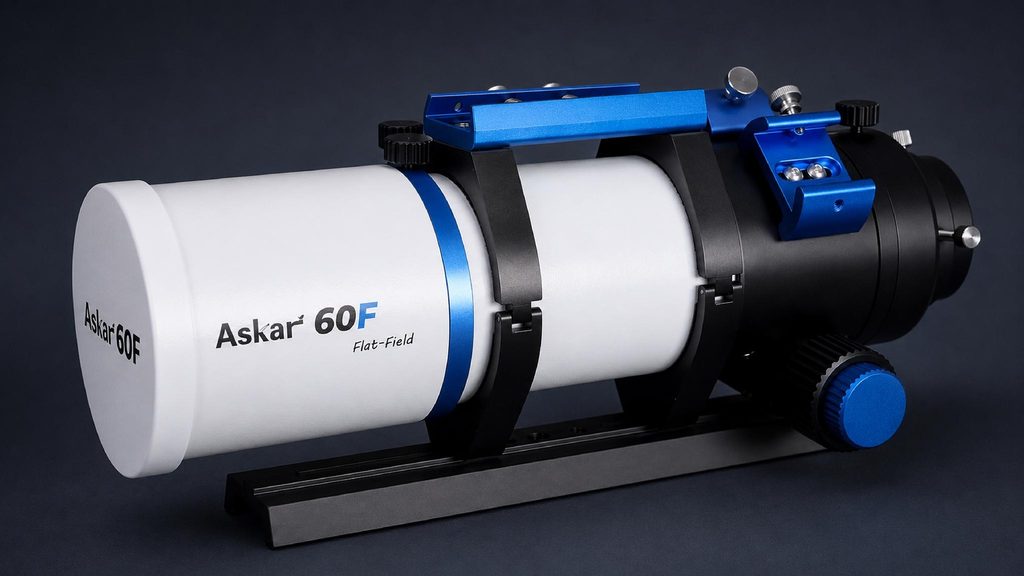
- The four-element optical design includes ED glass and an integrated field flattener for a simpler imaging train.
- A 44mm image circle is designed to cover a full-frame sensor, with M48 and M54 photographic connections included.
- The 408mm focal length suits wider nebulae, star fields and portable imaging rigs better than high-magnification planets.
Askar 60F Flat-Field Refractor is the specialist in this lineup. It is an optical tube for building an imaging system, not a ready-to-observe telescope package. The built-in flattener removes one spacing problem, the dual-speed focuser and rotator support careful camera setup, and the compact tube is friendly to portable mounts. Buyers still need a capable tracking mount, camera, control hardware and usually guiding. At f/6.8, it also favors measured exposures over the speed of a faster astrograph.
Best Wide-Field Refractor: Celestron AstroMaster 102AZ Telescope
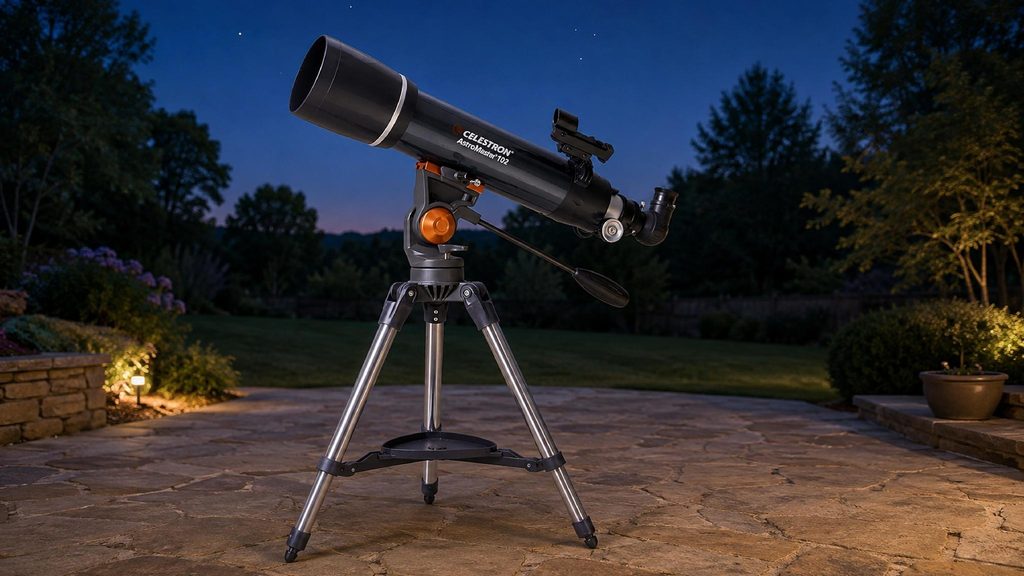
- The 102mm aperture and 660mm focal length create broad views that make larger targets easier to frame.
- A manual alt-azimuth mount and tool-free setup keep the learning curve straightforward.
- The erect-image diagonal supports daytime landscapes as well as casual lunar and deep-sky observing.
Celestron AstroMaster 102AZ Telescope is the grab-and-go refractor for readers who prize wide fields and quick setup. It can frame open clusters, sweep star-rich regions and double as an upright-view terrestrial scope. Its achromatic optics show color fringing around bright objects, however, and the light manual mount is the system constraint at high power. This is a relaxed low-to-medium-power telescope, not the lineup choice for exacting planetary study or long-exposure imaging.
Best Budget Starter Kit: Gskyer 80mm AZ Refractor Telescope
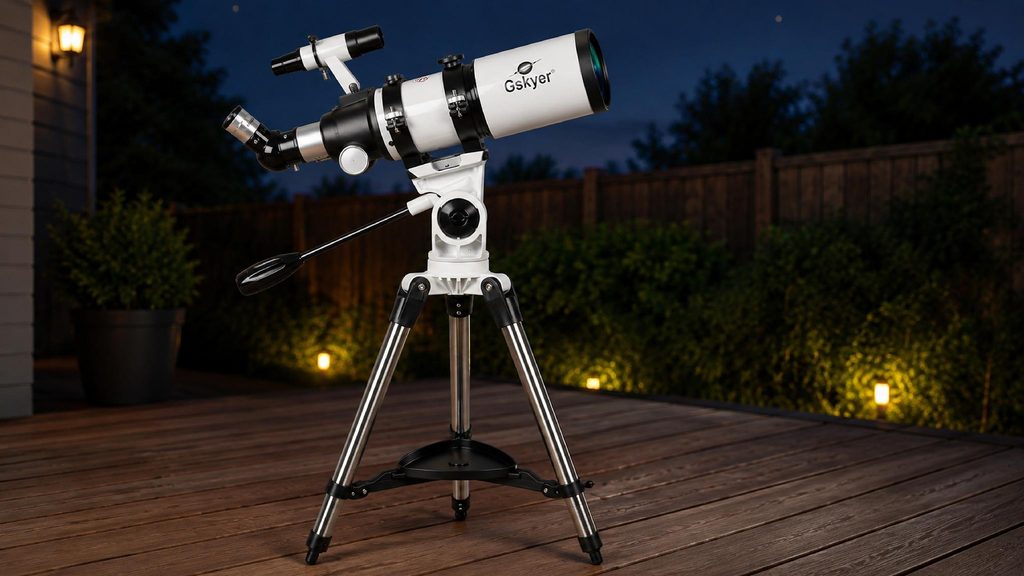
- The package includes 25mm, 10mm and 5mm eyepieces, a diagonal, finder, tripod and smartphone accessories.
- Its 400mm focal length produces broad views that are friendly to lunar observing and star-field scanning.
- The lightweight alt-azimuth setup is approachable for families and casual observers with modest expectations.
Gskyer 80mm AZ Refractor Telescope lowers the cost of trying astronomy by putting most necessary pieces in one box. The short 80mm refractor is best on the Moon, bright clusters and broad sky sweeps, while the phone adapter can capture simple lunar snapshots. The 3x Barlow and 5mm eyepiece produce a 240x combination that exceeds what this optical system and ordinary atmosphere can usually support. Sparse instructions and basic accessories also mean a patient beginner will get more from it than someone expecting polished guidance.
Match the Telescope to the Habit
When it comes to selecting the best telescopes, choose the NexStar 8SE when you want substantial aperture, GoTo assistance and a compact optical tube. Choose the Sky-Watcher when visual performance per dollar outweighs automation and storage convenience. The Askar belongs with an imaging plan, not a casual first-night purchase. The AstroMaster works best as a quick wide-field refractor, while the Gskyer makes the most sense as a low-risk starter kit with realistic expectations.
Whichever design wins, begin with the Moon and bright easy targets, learn one setup routine and resist buying a case full of accessories before the telescope reveals what is actually missing. More models and related coverage are available in the telescope archive, while readers building a camera-based system can explore the camera archive.